12/06/2019

Leonardo Dicaprio Spotlights Urgency Of Climate Crisis In New Film

CNN - Brian Lowry

 Leonardo DiCaprio: "Ice on Fire"
As you may have heard, celebrities have been using their clout to get out the message on climate change -- inviting the question, frequently, as to whether they're a hindrance or a help to that cause.
If there's any area where star power seems to be put to the most effective use, it's the documentary, where attaching names like Leonardo DiCaprio and Arnold Schwarzenegger helps projects that might evaporate into the ether get on the media's radar.

Leonardo DiCaprio's green project

DiCaprio weighs in this week with "Ice on Fire," a better-than-most film on the topic that gets beyond the dire warnings to contemplating what can actually be done to help turn, or at least significantly curb, the tide.
For his part, Schwarzenegger plays the same role on "Wonders of the Sea," a project exploring the oceans made in conjunction with Jean-Michel Cousteau, the seafaring explorer and son of the legendary Jacques Cousteau.
At this point, subtlety isn't part of the strategy, and the time for parsing sentences and pulling punches appears to be over.
Climate change, DiCaprio says near the outset of "Ice on Fire, "has changed life on Earth as we know it. ... The impact of our actions are starting to hit home. Scientists' predictions are now coming true sooner than expected."
In "Wonders," Schwarzenegger notes that the film and others like it "should be required viewing for decision makers everywhere." Cousteau adds in regard to the threat to reefs and sea life, "The ocean survives without us. We don't survive without the ocean."


Arnold Schwarzenegger: Trump wrong on climate change

Still, there are rays of hope in each film, predicated on the notion that society and governments can be rallied to act, and soon, employing some of the cutting-edge technology on display. Wisely, "Ice on Fire" directly connects a spate of natural disasters directly to the climate crisis, while dotting the globe -- to Norway and Iceland, Colorado and Alaska -- to hear from scientists and researchers exploring means of addressing the issue.
A nagging challenge for climate change has been not only the denialism among key quadrants of the political class but difficulty getting the public to focus on the problem. Celebrities, in that regard, are a way of cutting through the clutter, but not without the baggage of images that include privileged lives and private jets.
DiCaprio, it's worth noting, is no debutant when it comes to the fight, having previously visited five continents for the 2016 documentary "Before the Flood."
Others are taking action as well, including Robert Downey Jr.'s announcement of the Footprint Coalition, an initiative intended to seek high-tech fixes to save the planet, which inevitably evoked flattering comparisons to his Avengers character.
It's unclear, frankly, just how sticky serious policy questions are when sold through the prism of celebrity, or what percentage of the audience drawn to an issue by DiCaprio or Downey is apt to become a serious convert to the cause.
The passion of something like "Ice on Fire" is crystal clear, as is its message that the clock is ticking. Whether that can melt through layers of apathy -- what DiCaprio refers to in the press notes as "inaction and complacency" -- enough to move the needle, well, that remains the great unknown.

Links

Scientists Warn Ancient Desert Springs May Dry Up Under Adani Plan

Sydney Morning HeraldNicole Hasham

A group of Australia's pre-eminent water scientists say a rare desert oasis may dry up under Adani's "flawed" protections for groundwater near its proposed Carmichael mine, in a scathing assessment days out from a crucial ruling on the plan.
Queensland's Department of Environment and Science is this week due to decide on Adani's groundwater management plan – one of the last remaining barriers to construction of the coal project.
Former federal environment minister Melissa Price granted approval for the highly contentious groundwater plan days out from the federal election campaign. This came despite CSIRO and Geoscience Australia raising concerns over the energy company's modelling and proposed management.
Doongmabulla Springs, which scientists say may be destroyed by the Adani coal mine. Credit: Dean Sewell
Adani's plan includes measures to prevent the Carmichael mine from damaging the nationally significant Doongmabulla Springs. The survival of numerous native animals and plant species depends on the wetland, located 7 kilometres south-west of the mine site in the Galilee Basin.
Mining activity such as drilling through aquifers can cause groundwater levels to fall, or "draw down", and reduce water vital to the survival of connected ecosystems.
Seven leading experts from four Australian universities examined the latest groundwater plans and conducted on-site analysis at Doongmabulla Springs.
The team was led by Flinders University hydrogeology professor Adrian Werner, a former adviser to the Queensland government.
Their report concluded that the Carmichael project may cause the springs to stop flowing permanently, pushing the wetland to extinction.
It found Adani is likely to have underestimated future impacts on the springs – partly because the aquifer feeding the wetland had not been identified and Adani's estimates did not consider possible water leakage between underground formations.
The void left behind at the end of the mine's life would draw down water for many years, meaning the worst groundwater impacts would occur after the company left the site, they said.
The Adani coal mine in central Queensland has drawn staunch public opposition. Credit: AAP
The scientists rejected Adani's so-called 'adaptive management' plan to mitigate risks to the wetland. The method – essentially a learning-by-doing approach – was unsuitable partly because of lag times between mining activity and the effect on the springs, they said.
Possible cumulative impacts to the wetland from other proposed coal projects have also not been properly considered, the report added.
Professor Werner said the research showed Adani's water plan was "severely flawed" and risked the extinction of both the springs complex and the flora and fauna that depend on it.
"If we allow Adani to drain billions of litres of water with this groundwater plan then we are effectively playing Russian roulette with the very existence of a million-year-old ecosystem," he said.
The source aquifer for the Doongmabulla Springs is not known, fuelling fears that the coal mine will damage the rare desert oasis. Credit: Dean Sewell
The report was presented to officials at the Department of Environment and Science on Wednesday. A department spokesman said it was awaiting advice from CSIRO on Adani's groundwater plan before considering if any changes were required. The department's decision is due on Thursday, June 13.
An Adani spokeswoman said the department had examined 11 versions of its groundwater management plans over more than two years.
"We'll pay attention to the experts and reputable advice of those who have been involved throughout this process, including the CSIRO, Geoscience Australia, the federal Department of Environment and Energy and the Queensland Department of Environment and Science, as they are the authority as it pertains to the review and finalisation process," the spokeswoman said.

Links

Facebook’s Newest ‘Fact Checkers’ Are Koch-Funded Climate Deniers

ThinkProgress - Joe Romm

The fatal flaw in Zuckerberg’s effort to deal with fake news.
Cardboard cutouts of Facebook founder and CEO Mark Zuckerberg stand outside the US Capitol in Washington, DC, April 10, 2018. CREDIT: SAUL LOEB/AFP/Getty Images.


Facebook founder and CEO Mark Zuckerberg keeps dashing any hope that the world’s largest social media platform might be a positive force in the fight against catastrophic climate change.
In its latest disastrous move to fight the online epidemic of fake news, Facebook’s fact-checking effort announced last week that it was teaming up with CheckYourFact.com — an arm of the conservative, anti-science media site The Daily Caller.
The Daily Caller, which has published misinformation about climate science for years, was co-founded by the science-denying Fox News host Tucker Carlson and is backed by major conservative donors, including Charles and David Koch, the billionaire fossil fuel barons who are the single biggest funders of climate science misinformation.
“It is appalling that Facebook has teamed up with a Koch-funded organization that promotes climate change denial,” leading climatologist Michael Mann told ThinkProgress. Mann, whose own work has been misrepresented by The Daily Caller, added, “Facebook must disassociate itself from this organization.”
Following the 2016 election — and the growing realization that Russians, white supremacists, and many others have been using the site to promote hate speech, fake news, and misinformation — Facebook began partnering with independent fact checkers.
But this effort has been undermined by a series of missteps by Facebook and Zuckerberg.
In the fall of 2017, Facebook named the climate science-denying Weekly Standard an official fact-checking partner, against the advice of an independent report.
In May 2018, Zuckerberg brought in a right-wing think tank that spreads climate disinformation to figure out whether Facebook displays a liberal bias. Facebook even hired a PR firm with Republican ties to attack the company’s critics and competitors. It went on to smear philanthropist George Soros, who had been critical of Facebook, with anti-Semitic tropes and dog whistles.
Last July, Zuckerberg made news when he explained that Facebook wouldn’t explicitly ban even something as extreme as Holocaust denial. Then, in clarifying his remarks, he said that while he won’t block fake news from appearing on his site, his fact checkers would stop it from spreading widely.
In December, the Weekly Standard ceased publication, raising the prospect that Facebook might correct its mistake in hiring climate science deniers as fact checkers.
But then Facebook announced it was partnering with the fact-checking arm of The Daily Caller, which was launched in 2010 with $3 million from GOP donor and climate science denier Foster Friess. Since then, many of The Daily Caller’s stories have been written by its News Foundation, which has received funding from both the Charles Koch Institute and the Koch Family Foundations.
It is beyond outrageous that in 2019 — when the science of human-caused climate change has been overwhelmingly verified and every other nation but ours is desperately working to avert catastrophic impacts — the world’s largest social media site is still partnering with climate science deniers.
Indeed, given how many outstanding nonpartisan organizations could serve as Facebook fact checkers, environmental sociologist Robert Brulle asked, “Why they are partnering with an organization that is part of the right wing echo chamber?”
In an email to ThinkProgress, Brulle, who has authored numerous studies on climate communications and lobbying, added, “This is one of the sites that needs to be fact checked, not used as a reliable source. Facebook should cancel this contract.”

Links

Cutting-Edge CO2 Tracking Technology Could Boost Climate Liability Claims

Climate Liability NewsMarco Poggio

A new tool to track emissions from every power plant could bolster claims to hold polluters accountable for climate change. Photo credit: Kevin Frayer/Getty Images
Artificial intelligence coupled with satellite imagery could soon deliver plaintiffs in climate litigation real-time data on carbon dioxide emissions from power plants around the world. It potentially opens a new front in holding the energy industry accountable for the impacts of those emissions on the climate.
WattTime, an Oakland-based nonprofit, developed a system that will produce actual carbon dioxide measurements by combining image feeds from satellites in low Earth orbit. The end result will be a massive trove of data, which will then be shared with the public.
Supporters of the project say the data will provide new ammunition to plaintiffs in climate liability cases by showing how much of global warming can be attributed to particular sources.
“This will have massive far-reaching implications in the evidence to back some of those claims, or back some of those potential plaintiffs in court, if it comes to that,” Chiel Borenstein, the director of operations at WattTime, told Climate Liability News.
“You’ll have a central data set that’s reliable and that’s as empirical and precise as possible, and is readily available.”
WattTime officials said some of the data may be available free of charge to the public, but it may charge for deeper access.
Shaun Goho, deputy director of the Emmett Environmental Law and Policy Clinic at Harvard Law School said the technology could make it easier for plaintiffs to establish that power plants are violating their permit limits. It would depend on whether judges accept its results as reliable, he said.
“I am sure that defendants would contest it at first, but if courts start to accept the data from this technology, then it could lighten the information-gathering burden on plaintiffs,” Goho said.
A more accurate and independent monitoring system could help develop better regulations of those emissions, as well as help enforce compliance, said
Michael Wara, a lawyer and the director of the Woods Institute for the Environment at Stanford University.
“We need to come up with new tools, new approaches on carbon,” Wara said. “An improving measurement is the beginning of progress. This is the direction we need to be taking and it’s very exciting to see it happening.”
Wara said traditional carbon emissions monitoring, such as sensors installed in smokestacks of power plants, are prone to tampering. Satellite imaging will help overcome that problem. It will also create an objective measuring system that applies uniformly across the world, transcending individual countries’ interests, and making it more difficult to cheat.
“This is a way to have data that everyone believes, no matter what country they’re from,” Wara said.
Currently, climate liability cases rely largely on research called the Carbon Majors report to link carbon pollution to particular emitters. That research, spearheaded by Richard Heede of the Climate Accountability Institute, first revealed in 2013 that the majority of carbon pollution could be traced to 100 companies, the Carbon Majors. It was updated in 2017 with data that showed 71 percent of global warming gases were produced by the Carbon Majors, and pinpointed 25 of them as responsible for more than half of all greenhouse gases emitted from 1988-2015.
With that data already in hand, Katrina Fischer Kuh, a professor of environmental law at Pace Law School, said the new technology isn’t likely to break new ground in litigation, but will allow more accurate monitoring of pollutants to help enforce environmental laws.
“We should be excited about it. I don’t think we necessarily need it for the climate nuisance litigations, but in terms of our ability to regulate and control greenhouse gas emissions and craft effective public policy to do that, it’s extraordinarily helpful,” Kuh said.
Kuh said satellite imagery will prove more helpful in legal cases centered on pollutants other than CO2—methane, for example, which is harder to detect—and could help litigants meet the burden of proof with more precise data on individual emitters. But she said the real legal challenge is the cause-effect connection between emissions and harm done, not on the amount of emissions.
“At least right now, that hasn’t been the aspect of causation that has really been troubling,” she said. “The defendants aren’t disputing that they are responsible for the emissions of a lot of the greenhouse gases.”
The new technology can also provide a boost to measuring compliance with the Paris Climate Agreement, said Sean Hecht, a professor at UCLA School of Law and the co-executive director of the Emmett Institute on Climate Change and the Environment. He said WattTime’s technological capabilities will help in countries that produce a large quantity of CO2 emissions but have weak regulations and questionable monitoring.
“The technology seems interesting. Assuming that it’s reliable, the main impact it’s going to have probably isn’t going to be in liability but on the ability to verify emissions and compliance for regulatory purposes, which is a big deal,” Hecht said.
The data collected and shared by WattTime will be particularly useful in monitoring pollutants other than greenhouse gases, he said.
“Anything that helps people to understand what the nature sources of emissions are helps us figure out better how to manage pollution,” Hecht said. “To me, that’s what the promise of that kind of technology is.”
Satellite imaging has been used in recent years to track pollutants and the field is evolving.
Just last week, NASA deployed a new instrument, the Orbiting Carbon Observatory 3, which will measure carbon dioxide in the atmosphere while orbiting the Earth connected to the International Space Station.
The European Space Agency will decide in November the timeframe for launching a CO2 monitoring satellite, according to a spokesman for Copernicus, the European Earth-observing satellite program.
The World Resources Institute (WRI), a global research nonprofit promoting sustainability initiatives including the Greenhouse Gas Protocol, relies on a vast number of satellites that currently track pollutants.
Earlier this month, WattTime received a $1.7 million grant from Google as part of the Google Artificial Intelligence Impact Challenge to work with WRI and Carbon Tracker, a London-based nonprofit, to harness existing satellite imagery and infrared technology to measure emissions from all power plants nearly in real time.
WRI already has an open-source database of nitrogen dioxide emitted by power plants around the world using satellite imagery and aims to do the same with CO2.
“We are in the process of estimating CO2 on an annual level and publishing it as part of the database,” said Johannes Friedrich, a senior associate at WRI. “This information combined with machine learning algorithms WattTime would like to use aim to fill gaps in CO2 emissions around the globe.”
In recent days, the level of CO2 in the atmosphere exceeded 415 parts per million, the highest in recorded history. Five of the warmest years on record occurred in the past six years, 20 of the warmest have happened in the past 22 and 2019 is on track to be hotter than last year, according to the World Meteorological Organization. More accurate tracking of emissions is clearly a starting point in reducing them.
WattTime will use high-resolution feeds from government-owned satellite networks—Landsat in the U.S. and Copernicus, its European Union counterpart—but also some owned by the private companies, such as DigitalGlobe, which currently sells its imaging products to various industries, including operators of oil and gas pipelines.
Michael Brauer, a professor at the School of Population and Public Health at the University of British Columbia who contributed to the creation of the State of Global Air report, said the technology WattTime is developing is promising, but noted that the software would only track pollution from power plants, which account for a fraction of global emissions.
“Pollutants emissions from power plants, we know that pretty well,” Brauer said, “I don’t think this is really our biggest need from the data side.”
While CO2 emissions from U.S. power plants are tracked by the Environmental Protection Agency, other countries have fewer regulations and transparency. WattTime will prove crucial in bridging that divide, Borenstein said.
“This has massive implications in terms of access, in terms of transparency, and accountability from the perspective of holding organizations and the biggest emitters accountable for their actions,” he said.
In the first week after its initiative was announced, WattTime said it received pledges of varying levels of support from 85 stakeholders, including non-governmental organizations,  nonprofits and satellite-owning companies.
“It’s an exciting time for our organization,” Borenstein said. “It’s an exciting time for the world.”

Links

11/06/2019

Climate Crisis Seriously Damaging Human Health, Report Finds

The Guardian

National academies say effects include spread of diseases and worse mental health
The report anticipates the spread of infectious diseases in Europe as temperatures rise and increase the range of mosquitoes that transmit dengue fever. Photograph: Ricardo Mazalan/AP 
A report by experts from 27 national science academies has set out the widespread damage global heating is already causing to people’s health and the increasingly serious impacts expected in future.
Scorching heatwaves and floods will claim more victims as extreme weather increases but there are serious indirect effects too, from spreading mosquito-borne diseases to worsening mental health.
“There are impacts occurring now [and], over the coming century, climate change has to be ranked as one of the most serious threats to health,” said Prof Sir Andrew Haines, a co-chair of the report for the European Academies’ Science Advisory Council (Easac).
However, there were also great benefits from action to cut carbon emissions, the report found, most notably cutting the 350,000 early deaths from air pollution every year in Europe caused by burning fossil fuels. “The economic benefits of action to address the current and prospective health effects of climate change are likely to be substantial,” the report concluded.
The World Health Organization director general, Tedros Adhanom Ghebreyesus, warned in November that climate breakdown was already a health crisis. “We cannot delay action on climate change,” he said. “We cannot sleepwalk through this health emergency any longer.” In December, a WHO report said tackling the climate crisis would save at least a million lives a year, making it a moral imperative to act.
A Serbian farmer Radovan Krstic shows his damaged corn crop. Photograph: Darko Vojinovic/AP 
The new Easeac report, The Imperative of Climate Action to Protect Human Health in Europe, assessed the scientific evidence of the effects of global heating on health. Extreme weather such as heatwaves, floods and droughts have direct short-term impacts but also affect people in the longer term. “Mental health effects include post-traumatic stress disorder, anxiety, substance abuse and depression,” the report said.
The scientists were also concerned by the effect of extreme weather on food production, with studies showing a 5-25% cut in staple crop yields across the Mediterranean region in coming decades. But the report said even small cuts in meat eating could lead to significant cuts in carbon emissions, as well as benefits to health.
The report anticipates the spread of infectious diseases in Europe as temperatures rise and increase the range of mosquitoes that transmit dengue fever and ticks that cause Lyme disease. Food poisoning could also rise, as salmonella bacteria thrived in warmer conditions, the report said. It even found research suggesting antibiotic resistance in E coli increases in hotter conditions.
“We are exposing the whole of the world population to changes in climate, and this is clearly very concerning as we are moving to some extent into uncharted territory,” said Haines, professor of environmental change and public health at the London School of Hygiene and Tropical Medicine.
“We are subjecting young people and future generations to these increasing [health] risks for many hundreds of years to come, if not millennia,” he said. “We have to try to minimise the effects and move towards a low-carbon economy.
“We think reframing climate change as a health issue can help to engage the public because most people are not just concerned about their own health, but about the health of their nearest and dearest and their descendants.
“We think this is a way of mobilising the public and raising concern in a constructive way and increasing the momentum for change.”
Global carbon emissions are still rising but scientists say rapid and deep cuts are needed to limit temperature rises to 1.5C above pre-industrial levels and avoid the worst impacts.

Links

White House Blocked Intelligence Agency’s Written Testimony Calling Climate Change ‘Possibly Catastrophic’

Washington PostJuliet Eilperin | Josh Dawsey | Brady Dennis

Officials sought to excise the State Department’s comments on climate science because they did not mesh with the administration’s stance
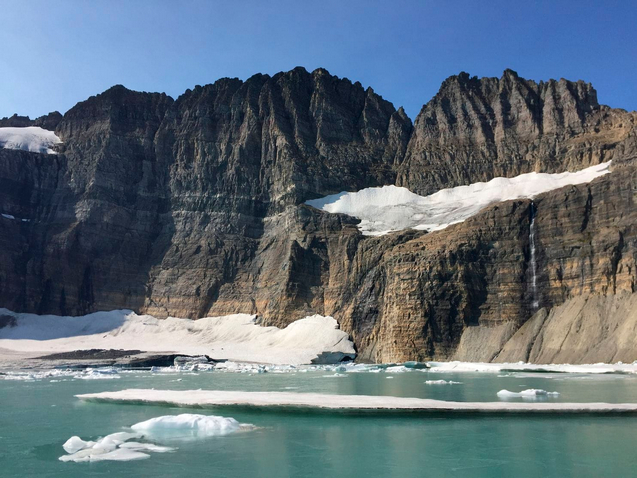
According to the National Park Service, Glacier National Park’s ice sheets are a fraction of the size they were 100 years ago. (Beth J. Harpaz/AP)
White House officials barred a State Department intelligence agency from submitting written testimony this week to the House Intelligence Committee warning that human-caused climate change is “possibly catastrophic.”
The move came after State officials refused to excise the document’s references to federal scientific findings on climate change.
The effort to edit, and ultimately suppress, the prepared testimony by the State Department’s Bureau of Intelligence and Research comes as the Trump administration is debating how best to challenge the fact that burning fossil fuels is warming the planet and could pose serious risks unless the world makes deep cuts in greenhouse gas emissions over the next decade. Senior military and intelligence officials have continued to warn climate change could undermine America’s national security — a position President Trump rejects.
Officials from the White House’s Office of Legislative Affairs, Office of Management and Budget, and National Security Council all raised objections to parts of the testimony that Rod Schoonover, who works in the Office of the Geographer and Global Issues, prepared to present on the bureau’s behalf for a hearing Wednesday.
The document lays out in stark detail the implications of what the administration faces in light of rising carbon emissions that the world has not curbed.
“Absent extensive mitigating factors or events, we see few plausible future scenarios where significant — possibly catastrophic — harm does not arise from the compounded effects of climate change,” the document said.
White House officials took aim at the document’s scientific citations, which refer to work conducted by federal agencies including NASA and the National Oceanic and Atmospheric Administration.
According to several senior administration officials, all of whom spoke on the condition of anonymity to talk about internal deliberations, Trump officials sought to cut several pages of the document on the grounds that its description of climate science did not mesh with the administration’s official stance. Critics of the testimony included William Happer, a National Security Council senior director who has touted the benefits of carbon dioxide and sought to establish a federal task force to challenge the scientific consensus that human activity is driving the planet’s rising temperatures.


The Trump administration released on Nov. 23 a long-awaited report outlining that climate change impacts "are intensifying across the country."

Schoonover’s draft testimony was peppered with comments from the National Security Council, criticizing his characterization of the threats posed by climate change.
"This is not objective testimony at all,” read one comment, according to an individual familiar with the document. “It includes lots of climate alarm propaganda that is not science at all. I am embarrassed to have this go out on behalf of the executive branch of the Federal Government.”
In another passage, Happer objected to the phrase “tipping point” when describing how a certain level of warming could trigger devastating climate-related impacts, the individual said.
"‘Tipping points’ is a propaganda slogan for the scientifically illiterate,” Happer wrote. “They were a favorite of Al Gore’s science adviser, James Hansen.”
Administration officials said the Office of Legislative Affairs ultimately decided that Schoonover could appear before the House panel but could not submit his office’s statement for the record because it did not, in the words of one official, “jibe” with what the administration is seeking to do on climate change. The official added that legislative affairs and staffers at the Office of Management and Budget routinely review agency officials’ prepared congressional testimony before they submit it.
A House Intelligence Committee aide confirmed that the panel received the written testimony of the two other intelligence officials who testified at Wednesday’s public hearing, but not Schoonover’s.
Francesco Femia, chief executive of the Council on Strategic Risks and co-founder of the Center for Climate and Security, questioned why the White House would not have allowed an intelligence official to offer a written statement that would be entered into the permanent record.
“This is an intentional failure of the White House to perform a core duty: inform the American public of the threats we face. It’s dangerous and unacceptable,” Femia said in an email Friday. “Any attempt to suppress information on the security risks of climate change threatens to leave the American public vulnerable and unsafe.”
Schoonover, who serves as a professor of chemistry and biochemistry at California Polytechnic State University at San Luis Obispo, could not be reached for comment Friday, and the State Department referred questions to the White House. A White House spokesman, who spoke on the condition of anonymity to discuss private deliberations, said in an email, “The administration does not comment on its internal policy review.”
The Bureau of Intelligence and Research’s 12-page prepared testimony, obtained by The Washington Post on Friday, includes a detailed description of how rising greenhouse gas emissions are raising global temperatures and acidifying the world’s oceans. It warns that these changes are contributing to the frequency and intensity of extreme weather events.
“Climate-linked events are disruptive to humans and societies when they harm people directly or substantially weaken the social, political, economic, environmental, or infrastructure systems that support people,” the statement reads. Noting that while some populations may benefit from climate change, it said “the balance of documented evidence to date suggests that net negative effects will overwhelm the positive benefits from climate change for most of the world.”
The document sounds the alarms on several fronts, outlining two dozen ways that “climate-linked stresses” could affect human society. It identifies nine tipping points that could transform the Earth’s system, including “rapid melting in West Antarctic or Greenland ice masses” along with “rapid die-offs of many critically important species, such as coral or insects” and a “massive release of carbon” from methane that is now frozen in the earth. It warns that because scientists have not been able to calculate the likelihood of these thresholds being reached, “crossing them is possible over any future timeframe.”
The prepared testimony also notes that 18 of the past 20 years have ranked as the warmest on record, according to NASA’s Goddard Institute for Space Studies, “and the last five years have been the warmest five.”
The White House proposed eliminating all of these scientific references.
Trump has been steadfast in shrugging off warnings from scientists about the potential impacts of climate change, reiterating in an interview with Piers Morgan on “Good Morning Britain” this week that he does not regret pulling the United States out of a 2015 global climate accord aimed at curbing greenhouse gas emissions.
“I believe that there’s a change in weather, and I think it changes both ways,” he said. “Don’t forget, it used to be called global warming. That wasn’t working. Then it was called climate change. Now it’s actually called extreme weather because, with extreme weather, you can’t miss.”
During the interview he blamed China, India and Russia for polluting the environment and insisted the United States has “among the cleanest climates,” noting that the United States had suffered extreme weather in the past. “Forty years ago, we had the worst tornado binge we’ve ever had. In the 1890s, we had our worst hurricanes.”
The United States remains the world’s second-largest emitter of carbon dioxide, behind China.
What the president meant by “worst hurricanes” is unclear. According to the National Oceanic and Atmospheric Administration, the six most costly hurricanes on record have all occurred since 2005, and three — Maria, Harvey and Irma — have hit the United States during Trump’s tenure. The Galveston Hurricane of 1900, in which at least 6,000 people perished, remains the deadliest natural disaster in U.S. history.
As for tornadoes, they have tended to follow boom-and-bust cycles over the decades. The nation saw a relatively low number of tornadoes last year, although this year already nearly 1,000 have been reported. In general, scientists have warned that climate change will make a variety of extreme weather events more likely, namely droughts, hurricanes and wildfires.
Camilo Mora, a geographer and environmental professor at the University of Hawaii, said in an email that the president is rejecting the conclusions made by scientists in his own government.
“The evidence on this issue is overwhelming,” Mora said. “The president questions our change in jargon from warming to climate change to extremes as uncertainty on our side, but in reality we have come to learn that the impacts of greenhouse gases are much broader than we originally thought. By increasing atmospheric temperature, greenhouse gases can also cause drought and heat waves, ripening conditions for wildfires. In humid places, heat causes constant soil water evaporation leading to extreme precipitation, which falls on saturated soils and thus you commonly also get floods.”
Despite the internal controversy over the testimony prepared for Wednesday’s hearing, all three witnesses detailed ways in which climate-related impacts could exacerbate existing national security risks. Peter Kiemel, counselor at the National Intelligence Council, and Jeffrey Ringhausen, a senior analyst at the Office of Naval Intelligence, talked about issues ranging from how terrorist cells could capitalize on water shortages to disputes with other nations over shifting fishing grounds.
Schoonover, for his part, said in his opening statement that the planet was warming and that it could pose a major risk to the United States and other nations.
“The Earth’s climate is unequivocally undergoing a long-term warming trend, as established by decades of scientific measurements and multiple, independent lines of evidence,” he said, adding later:
“Climate change effects could undermine important international systems on which the U.S. is critically dependent, such as trade routes, food and energy supplies, the global economy and domestic stability abroad.”

Links

The Climate Crisis Is Already Hitting Food Production: An Urgent System-Wide Response Is Needed

FoodNavigator - Katy Askew*

istock/Droits d'auteur Aunt_Spray
Feeding a future global population of 10 billion people without causing a climate catastrophe this century will require transformational change across the entire value chain.
Fresh evidence suggests climate change is already impacting crop yields.
What are the key challenges and opportunities?
Climate change presents various threats to human and planetary health. Not least among these are the risks to food and nutrition security.
This issue was flagged by a recent far-reaching report from the European Academies’ Science Advisory Council (EASAC).
According to the report, which surveyed a “large body”​ of independent studies on the health implications of climate change, global warming is already having an adverse impact on human health and risks are only projected to increase.
Current trends in greenhouse gas emissions point to a global average temperature rise of more than 3°C above pre-industrial levels by the end of the century, well above the maximum 2°C target enshrined in the Paris Climate Change Agreement.
The temperature rise will be higher over land than oceans, exposing people to “unprecedented”​ rates of climate change and contributing to the burden of disease and premature death, EASAC noted.
Working group co-chair, Professor Sir Andy Haines of the London School of Hygiene & Tropical Medicine, said he hoped the report would act as a “wake-up call”​ to draw attention to the need for action to decarbonise the economy.
“The protection of health must have a higher profile in policies aimed at mitigating or adapting to the effects of climate change,”​ he stressed. “If urgent action is not taken to reduce emissions in order to keep temperatures below the 2°C (or less) limit ... we face potentially irreversible changes that will have wide ranging impacts on many aspects of health.”​

Food supply under threat
Key commodities are already feeling the impact of climate change ©iStock
Climate change is an undeniable risk to food security because it will impact the agricultural production systems on which we reply.
Higher temperatures have long been projected to have a negative impact on crop yields. But a new study led by the University of Minnesota in collaboration with the University of Oxford and the University of Copenhagen presents fresh evidence that this is already happening.
Researchers looked at yields of barley, cassava, maize, oil palm, rapeseed, rice, sorghum, soybean, sugarcane and wheat, which account for 83% of the calories produced on arable land. They found that changes in climactic conditions are already impacting harvests.
Based on reported weather and crop data, they found climate change causes a significant yield variation, ranging from a decrease of 13.4% for palm oil to an increase of 3.5% for soybeans. An average reduction in yield of around 1% was detected.
Impacts varied by both crop type and geography. The implications of climate change on global food production are mostly negative in Europe, Southern Africa, and Australia, generally positive in Latin America, and mixed in Asia and Northern and Central America, the researchers noted.
Half of all food-insecure countries are experiencing decreases in crop production -- and so are some affluent industrialised countries in Western Europe.
"There are winners and losers, and some countries that are already food insecure fare worse,"​ said lead author Deepak Ray of the University of Minnesota's Institute on the Environment. "The research documents how change is already happening, not just in some future time.”
The EASAC researchers stressed that the economic clout of the European region would likely mean lower domestic production sparked by climate change would probably be offset by higher food imports.
“But this will have increasing consequences for the rest of the world; for example, by importing fodder for livestock from arable land that has been created through deforestation.
“It is therefore vital to develop climate-smart food systems to ensure more resilient agricultural production and to promote food and nutrition security, for the benefit of human health.”

What can be done?
Better understanding of agriculture and the food system's unique place in climate change - as both drivers of climate change and victims of it - is helping to increase support for climate action.
Nevertheless, progress across the food system is “lagging”​, according to new analysis from CGIAR Research Program on Climate Change, Agriculture and Food Security (CCAFS) led by the International Center for Tropical Agriculture (CIAT).
Ana María Loboguerrero, the head of global policy research at CCAFS, argues that climate change mitigation efforts need to stretch well beyond agricultural production systems to encompass the entire food chain.
"If you think about the two-degree increase, efforts need to go beyond the agricultural sector,"​ said Loboguerrero. "This means reducing emissions by stopping deforestation, decreasing food loss and waste, reducing supply chain emissions, and rethinking human diets, if we really want to get on track to that target."
Agricultural production accounts for about 10-12% of all emissions.
Significantly, food waste alone accounts for almost as many GHG emissions as agriculture. With one-third of all food produced thrown away, food waste contributes 8% of global emissions. If just 25% of this waste was saved, it would feed an additional 870 million people, Loboguerrero stressed.
Various barriers, ranging from economic to social factors, mean that the uptake of emission-reducing practices in agriculture is slow.
Even under the most optimistic uptake scenarios, studies have shown that by 2030 these practices will only contribute 21-40% of a one-gigaton reduction in carbon dioxide emissions, which would be about 1% of current annual CO2 emissions, the researchers stressed.
For this reason alone, Loboguerrero suggested, tackling the relatively low hanging fruit of food waste offers an important quick win.
"Food loss and waste is a big opportunity,"​ Loboguerrero said. "Addressing this issue can reduce emissions intensity, potentially improve global nutrition and boost the bottom line for smallholders, who are hardest hit by losses on the farm."
Deforestation is being driven by demand for commodity crops ©iStock/phototreat
Deforestation in tropical regions – largely driven by the growing demand for agricultural commodities, such as palm oil, soy and cocoa – must be addressed, NGOs such as Global Canopy stress.
“Our global demand for commodities such as palm oil, soy, beef and paper packaging is driving forest loss, exacerbating climate change and putting biodiversity at risk,” ​​Sarah Rogerson, a researcher in Global Canopy’s supply chain programme, warned.
In its recent ‘Forest 500’ report, Global Canopy compiled a list of the best – and worst – performers taking action on deforestation in their supply chains.
The top five manufacturers included Nestlé, Unilever and Mars alongside personal care and consumer products companies Kao Corp and L’Oreal. From retail, Marks and Spencer, IKEA, News Corp McDonald’s and Pearson ranked best.
Major global corporations in the food sector have pledged to end deforestation in their supply chains by 2020 under the New York Declaration. But, while the issue of deforestation is commanding increasing attention, Global Canopy was critical that “strong commitments​” are failing to be translated to action on the ground.
Robertson said food manufacturers need to raise their game: “The most powerful companies in forest-risk supply chains do not appear to be implementing the commitments they have set to meet global deforestation targets. With the 2020 deadline looming, it is critical that companies raise their ambition and address the stark gap between the promises they have made and activities on the ground."
One of the most significant actions that can be taken to decarbonise the food system, EASAC argues, is the promotion of “healthier, more sustainable diets​”. This includes increased fruit, vegetable and legume consumption and reduced red meat intake.
This shift would “lower the burden of non-communicable diseases and reduce greenhouse gas emissions”​, the European scientists argue.
“Promoting dietary change could have major health and environmental benefits, resulting in significant reductions of up to about 40% in greenhouse gas emissions from food systems as well as reducing water and land use demands. Such diets can also lead to major reductions on non-communicable disease burden through reduced risk of heart disease, stroke and other conditions,”​ EASAC suggested.
CCAFS researchers agree that growing global demand for animal production is a key challenge to climate mitigation efforts.
By 2000, the sector contributed an estimated 18% of all human-caused greenhouse gas emissions, when accounting for related deforestation and land-use change as well as direct emissions. Given current trends in population growth and meat consumption, the sector could account for about a quarter of all emissions by 2050, CCAFS warned.
"Reducing meat and dairy emissions needs to be a priority,"​ said Lini Wollenberg, flagship leader of CCAFS' low-emissions development research. "And the good news is that we have lots of options in the pipeline, ranging from low-emissions cattle to meat alternatives. We need more research and development to make some of these options a reality."
Loboguerrero stressed that mitigation efforts will require political will in an environment that is more open to adaption.
Adaptation - learning to cope with the problem - is a far easier sell than mitigation - reducing emissions - which is often seen as constraining farming options and increasing costs. Developing countries frequently complain that mitigation measures will limit economic growth.
"There is a lot of tension and you can see it when you go into the negotiations. Some countries don't even want to begin discussions on the mitigation side of things,"​ Loboguerrero said. 
"Adaptation is something that everyone, however, agrees is necessary. Everyone is keen on discussing adaptation. Some adaptation measures have the co-benefit for mitigation. It's like an entrance to discussing some things at some points that are a little bit taboo in the negotiations."

*Katy Askew joined FoodNavigator as editor in 2017. Katy’s areas of interest include market trends, sustainability issues and corporate development.

Links

Lethal Heating is a citizens' initiative