10/07/2019

How Taxpayers Are Funding A Huge Corporate Expansion In The Murray-Darling Basin

ABC Four CornersSean Rubinsztein-Dunlop | Mary Fallon | Lucy Carter | Michael Slezak

Webster has received $41 million in Commonwealth funds to grow its empire in the Murrumbidgee Valley.

Key points
  • Billions of dollars in Commonwealth funds have been handed out to irrigators under a scheme designed to help the environment
  • Partly foreign-owned corporation Webster Limited received more than $40 million and has expanded its irrigation operations
  • Farmers say no-one is checking whether grants given under the scheme are delivering their promised water savings
Australian taxpayers have given a huge corporation more than $40 million, enabling it to expand irrigation in the Murray-Darling Basin under an environmental scheme that has been labelled a national disgrace. Four Corners can reveal that more than $4 billion in Commonwealth funds has been handed over to irrigators, which has allowed them to expand their operations and use more water under the $5.6 billion water infrastructure scheme — the centrepiece of Australia's $13 billion Murray-Darling Basin Plan
The scheme is intended to recover water for the rivers by giving farmers money to build water-saving infrastructure, in return for some of their water rights.
Some of the beneficiaries of the scheme are partly foreign-owned corporations that have used the money to transform vast tracts of land along the threatened river system, planting thirsty cotton and nut fields.
One of the biggest operators is Webster Limited, a publicly traded company that produces 90 per cent of Australia's walnuts and is 19.5 per cent owned by Canadian pension fund PSP.
Webster has received $41 million from the water infrastructure scheme to grow its empire in the Murrumbidgee Valley, in south-west New South Wales, where it has bought hundreds of square kilometres of land.
The funding covers more than half of an ambitious $78 million capital works program by Webster Limited to build dams to store more than 30 billion extra litres of water and irrigate an extra 81 square kilometres of land, developing much of it into prime, irrigated cotton country.
Maryanne Slattery, a former director at the Murray-Darling Basin Authority, says it is horrifying that a scheme designed to help the environment is allowing irrigators to use more water.
"That program was supposed to reduce the amount of water that was going to irrigation, when it's actually increased the opportunities for irrigation … all subsidised by taxpayers," she said.
"I think Australian taxpayers will be really shocked to find out that that money is actually going to foreign investors as well."
Maryanne Slattery was a director at the Murray-Darling Basin Authority before she quit in disgust, concluding the basin plan was a fraud on the taxpayer. (ABC News: Neil Maude)
Dams paid for by the Commonwealth

On the Hay Plains, one of the flattest places on earth, Webster is one of several agribusinesses building dams to store huge volumes of water to irrigate new cotton fields on the outer reaches of the Murrumbidgee River.
UNSW river ecologist Professor Richard Kingsford, who has been studying the area for more than 30 years, says the new dams are trapping water that would have otherwise flowed downstream into habitats and farming communities in the Murray-Darling Basin.
"I find that astounding. I mean, why are we building these large dams for private gain at public cost?" he said.
"Essentially it increases the take from the river system and ultimately decreases the amount of water in the river. That to me is where, in fact, we may be seeing more water taken out of the rivers than water savings."
Ms Slattery says the region, where temperatures regularly soar into the 40s, is unsuitable for dams because of the high rate of evaporation.
"You just see dam after dam after dam, these massive on-farm dams, in a place that is as flat as a table, that just should not have dams," said Ms Slattery, who is now a senior water researcher at the Australia Institute.
"And then when you realise they're being paid for by the Commonwealth, under a supposedly environmental program, that's just horrifying."

No checks or oversight on water scheme
The water infrastructure scheme was designed to recover water for rivers in the basin. (ABC News)
Former government officials have revealed to Four Corners that no-one in government monitors whether the work paid for by the water infrastructure scheme delivers on its promised water savings.
Farmers say that to get a grant, they give the Federal Government an estimate of how much water their proposed new infrastructure will save, but that figure is never checked or monitored, even after millions of dollars in Commonwealth funds are handed over.


What is the Murray-Darling Basin Plan?
The Murray-Darling Basin Plan has remained controversial ever since its introduction back in 2012. So, what is it again and why is it back on the agenda?

Ms Slattery says the scheme is a fraud on the taxpayer.
"There's no government checking in that process at all. There is no confidence that that process has been done independently and is able to be verified," she said.
"Governments are very motivated to get the savings on paper, and they've got deep pockets … you'd have to expect that some of the savings aren't real, and that money has gone to projects that haven't yielded what they were supposed to."
UNESCO chair in water economics Professor Quentin Grafton has been calling for measurements on the impacts of the scheme since it was introduced, but he says the Federal Government has ignored him and tried to discredit his work.
"It's been incredible to say this, that we can spend [$4 billion] to date yet we haven't done those basic measurements to allow us to know what in fact we've got, net, in terms of the impact for the environment," he said.
"In the best case scenario it's less than half of what the Government claims, and in the worst case scenario we've gone backwards, not forwards; that in fact the amount of water in the environment has actually declined as a result of these efficiency subsidies.
"We don't know because we need a water audit, a hydrological audit of what's going on in the basin."

Farmers say Government overpaid them for water
Glen Andreazza says as a taxpayer, he doesn't agree with the water infrastructure scheme. (ABC: Neil Maude)
Farmers have also told Four Corners that they believe the Government has overpaid them for water under the scheme, and in many cases they have been paid to build infrastructure they would have built anyway.
Julie Andreazza and her husband, Glen, received more than $100,000 for earthworks to reduce water runoff from their farm.
"Those works were things that we were going to always do anyway," Ms Andreazza told Four Corners.
"Obviously, cost was a problem, so we were going to do it down the track. But when this opportunity turned up for available funds to be used, well of course we jumped at it."

Why did SA decide to have a royal commission?
South Australians were outraged to discover NSW irrigators were taking billions of litres of water earmarked for the environment. Find out what happened next.

Glen Andreazza estimates the Government paid double what it should have on the water buy-back on his farm.
"I'm a taxpayer, I don't agree with the scheme. I think it's too expensive," he said.
The Andreazzas were later able to buy back the same amount of water they had surrendered for the grant, and they got it on the market for a lower price.
Professor Grafton says the scheme could have delivered huge benefit for the environment and communities along the Murray-Darling, but instead it has been squandered.
"We chose to put it into pipes, we chose to put it into concrete and we chose to deliver private benefits with public money, and that is a national scandal," he said.
The Hay Plains in western New South Wales is flat, hot, and, experts say, unsuitable for dams.
Webster Limited has also been expanding its nut business, planting vast new walnut and almond orchards, as part of a boom in the nut industry, which is placing the river system under increased strain.
Nut trees are extremely thirsty, requiring water throughout every year — unlike crops such as cotton, which can be planted only when there is enough water to sustain them.
Webster Limited's deals with the Australian Government are confidential, however the company has confirmed to Four Corners it received $41 million in water infrastructure subsidies in return for surrendering water licences it valued at $22 million.
Those licences were part of an enormous water portfolio the company most recently estimated to be worth $350 million.
Under the scheme, details of who receives the subsidies and how they are spent are not publicly available. The Government has not measured what effect Webster's huge irrigation expansion will have on the river system.
Webster declined to give Four Corners figures on how its taxpayer-backed expansion had changed its water usage, but said the funding had led to a decrease in water use per hectare and was intended to make the farms more productive and efficient.
According to its environmental impact statements, the works allowed Webster to pump and store huge volumes of what they call "opportunity water" — water from heavy rain events that would have otherwise flowed downstream.
The upgrade enabled Webster to activate a stockpile of unused licences for the cheaper water, known officially as "supplementary water".
Webster says its projects have been independently audited and reported in accordance with the Government's guidelines.
The $41 million was provided to Webster via companies that are contracted by the Federal Department of Agriculture and Water Resources to distribute water infrastructure funding and administer the program.
The department relies on the companies, known as "delivery partners", to submit independently validated evidence of changes to Webster's farming practices.

Links

Directors Are In The Crosshairs Of Corporate Climate Litigation

The Conversation

Melting glaciers threaten the village of Huaraz, Peru. Uwebart/Wikimedia, CC BY-SA
The directors of RWE, a German energy company, had probably never heard of the small village of Huaraz, Peru before 2015. But Saúl Lliuya, a mountain guide and farmer there, sued RWE for climate-related harms that year.
Lliuya’s lawyers, supported by Greenpeace, argued that RWE’s historic green house gas emissions have contributed to increased global temperatures, which have, in turn, caused the glaciers around Lake Palcacocha to melt. The lake sits above Huaraz, where more than 50,000 residents now face an increased risk of severe flooding.
The Higher Regional Court of Hamm, in Germany, agreed with Lliuya’s arguments and let the case proceed to the evidentiary stage. No matter what the outcome, the court’s statements that climate harms can, in principle, give rise to corporate liability, is historic — no other court has made this decision before.
The intersection between climate change, energy and corporate law is a fast-emerging area. This case is part of a second wave of litigation against corporations, and has implications for directors and their legal duties. Corporate fiduciary duties and corporate law have traditionally been insulated from environmental and climate concerns, but as the impacts of climate change escalate, this may no longer be true.

The second wave of climate litigation
The directors of RWE are not alone. There has been an explosion of climate litigation launched against fossil-fuel intensive, or “carbon major” corporations.
The cities of Oakland and San Francisco have sued, as have New York and Baltimore. So have counties in California, Washington and Colorado, the state of Rhode Island and fishermen in Oregon and California.
Most recently, non-governmental organizations in the Netherlands have launched suits, and others are being considered in Toronto and Victoria.
These cases have been dubbed the second wave of climate litigation against carbon majors. There has never been a successful case against corporations for climate-induced harm — yet.

The first wave
The first wave of litigation against carbon majors is less than a decade old. It was characterized by several unsuccessful cases, including American Electric Petroleum vs. Connecticut in 2011, and Native Village of Kivalina vs. ExxonMobil in 2012.
The U.S. Supreme Court declined to hear the case of the Alaskan village of Kivalina against oil companies. The village, seen here in 2006, is being washed into the ocean due to rising sea levels, sea ice loss and eroding permafrost. (AP Photo/Northwest Arctic Borough via The Anchorage Daily News)
These cases against carbon majors failed largely due to problems in proving causation under tort or public nuisance claims. That is, the plaintiffs had difficulties tracing climate harms to specific emissions made by particular corporations.
The judges in these cases were also reluctant adjudicators. They felt the systemic nature and complexity of climate change was a global issue best left to governments to manage. In the American Electric Petroleum case, for example, U.S. Supreme Court Justice Ruth Bader Ginsburg wrote in a unanimous decision that the issue was governed by the federal Clean Air Act and that the court should not intervene further.
Scientific research has evolved dramatically since then. In a 2013 study, Richard Heede, from the Climate Accountability Institute, attributed 63 per cent of industrial carbon dioxide and methane emissions released from 1751-2010 to 90 carbon major entities. Heede’s work has been cited in almost all claims by plaintiffs in the second wave of corporate climate litigation.
Lliuya is claiming that RWE’s emissions contributed to the glacial melt that is endangering his community. Heede’s study established that RWE was responsible for 0.47 per cent of historic global emissions. Lliuya is asking of 0.47 per cent of the cost it will take for his community to adapt to climate change. The case may remain an outlier for some time, but it’s a historic legal development, with the court taking a broad view of causation.

Tobacco litigation
In 2018, two California cities were unsuccessful in their lawsuit against fossil fuel companies. Like Justice Ginsburg, Judge Alsup said the courts were not the place to address the issue. He also noted that the historic benefits of fossil fuels far outweighed the harm being caused by them.
Subsequent U.S. cases have been more strategic in their pleadings. Plaintiffs have tried to ground their cases more closely at the state level in order to avoid the federal barriers of the Clean Air Act. Instead, they have cited breaches of product liability statutes, failure to warn, design defect, as well as negligence and trespass.
They have patterned their pleadings more closely on tobacco litigation cases, as well as those against opioid and asbestos manufacturers.
Even if these corporate climate litigation cases are ultimately unsuccessful, they have implications for directors’ fiduciary duties.

Why these cases matter for directors
Fiduciary duties, as interpreted under Delaware law, where many of these carbon-majors are headquartered, require directors to pay attention to the risks faced by the corporation and to make informed decisions.
U.S. federal agencies such as the Department of Defense have identified climate change as a long-range, emerging threat that could adversely impact national security. Climate change is a threat to global fiscal stability, putting at risk one-third of global manageable assets.
Corporate climate litigation highlights the bidirectional risks of climate change: corporations emit greenhouse gases that increase climate impacts, but those impacts also directly affect corporations. Courts want to know that directors have considered all material information reasonably available to them, and the increasing impacts and risks of climate change to businesses mean climate risks and opportunities are now material.
Failing to monitor and manage climate risk and disclose these risks to shareholders could put directors in breach of their legal duties. Climate change poses tremendous risks to carbon major corporations whose assets and infrastructure are vulnerable to the impacts of climate change.
The impacts of wildfires, for example, have led PG&E to seek bankruptcy protection, and a recent case in the Supreme Court in Canada determined that a bankrupt oil company was still responsible for the costs of remediating its abandoned wells.
As the impacts of climate change escalate, bankruptcies and other corporate financial woes are likely to only increase.

Climate change, misrepresented
Corporate law and securities law are also being used by plaintiffs in this second wave of climate litigation, raising the stakes even further for directors of these carbon majors. New York claims ExxonMobil defrauded shareholders and a separate civil suit alleges ExxonMobil and its executives misrepresented the impacts of climate change on its business.
Directors must now consider and assess the risks of climate change to their businesses in order to comply with their fiduciary duties, particularly in corporations highly exposed to the risks of climate change. Investors will continue to be concerned about climate litigation as well as climate risks, and the issue will continue to raised by them at annual general meetings. It is likely that these are issues that RWE’s directors are now carefully considering.

Links

Australia's Emissions Reach The Highest On Record, Driven By Electricity Sector

The Guardian

Fugitive emissions from LNG are also fuelling rising national emissions, Ndever Environmental figures show
Australia’s emissions for the year to March 2019 increased to 561 million tonnes of carbon dioxide equivalent, Ndever Environmental figures show. Photograph: Dave Hunt/AAP 
Australia’s emissions are again the highest on record, driven this time by an increase in emissions from the electricity sector, which rose to their highest levels in two years, according to new figures.
Fugitive emissions from Australia’s LNG industry also continue to fuel rising national emissions.
Ndevr Environmental, an emissions-tracking organisation that publishes quarterly greenhouse gas emissions data months ahead of the federal government, says its latest research shows emissions for the year to March 2019 increased to 561 million tonnes of carbon dioxide equivalent.
That was up from 554.5 million tonnes the previous year and 551.2 million tonnes in 2017.
Ndevr’s figures exclude unreliable data from the land-use sector, but the organisation said that even when it was included emissions had still increased for four consecutive years over the same period.


The trend line for the Government's Paris emissions reduction targets assumes a linear rate of reduction to reach the final target. | Source: NGGI, NDEVR Environmental 

According to Ndevr’s research, there was an 8.2% increase in emissions from the electricity sector between the December and March quarters.
It follows three consecutive quarters of declines in electricity emissions and is the highest increase in emissions from that sector since March 2017.
However, rising emissions from electricity generation between the December and March quarters is not unusual due to higher energy use in the warmer months.

LULUCF emissions are negative from September 2011 onwards, and not represented here. Guardian graphic | Source: NGGI, NDEVR Environmental.

Ndevr’s managing director, Matt Drum, said there was less renewable generation in March 2019 than there was in the March quarter the previous year, with Ndevr’s data showing falls in both wind and hydro power.
Drum said the continued rise in fugitive emissions as a result of Australia’s LNG industry showed there was “a lot of work to be done around offsetting and reducing emissions from the LNG sector”.
“That’s offsetting particularly through land-use projects, but also energy efficiency,” he said. “And whether the carbon capture and storage nut can be cracked for that sector is going to be really important.”
Drum dismissed recent comments by Australia’s energy and emissions reduction minister, Angus Taylor, that LNG exports were contributing to emissions reductions overseas.
“I don’t think you can prosecute that argument unless you also take into account our coal exports, which have a counter effect,” Drum said.
There is no evidence to support Taylor’s claim and the biggest consumer of Australia’s LNG – Japan – is using it in place of emissions-free nuclear power.
“There’s still work to be done on policy. I sound like a broken record,” Drum said. “At the end of the day, participation in the emissions reduction fund is decreasing. Fewer projects, fewer contracts, less abatement.
“Unless something happens, something significant, this government will just be presiding over quarter after quarter, year after year, of increasing emissions. It’s as simple as that.”

Links

09/07/2019

A ‘Climate Emergency’ Was Declared In New York City. Will That Change Anything?

New York TimesAnne Barnard

The city is now the largest on earth to pass such a measure.
Credit Stephanie Keith/Getty Images
New York City, the world capital of ambition, has never been shy about grandiose declarations. The City Council has passed or proposed resolutions demanding world peace, banning a racist slur and condemning all manner of federal policies where city government has no actual say.
But for a growing global network of activists seeking to change the way the world talks about climate, the city’s sweeping resolution in late June declaring a “climate emergency” is a major victory.
Saying that the heating climate is a crisis of imminent danger, they argue that getting people and governments to describe it in far more urgent language is the only way to produce the level of global mobilization required to stop it.
New York is now the largest city on earth to pass such a measure, calling last week for “an immediate emergency mobilization to restore a safe climate.” It joined London, Sydney and a total of 722 localities in 15 countries, according to the Climate Mobilization, a Brooklyn-based nonprofit group pushing the declarations.
And on Wednesday, Los Angeles’s City Council went further. It passed a measure that will formalize its own emergency declaration, calling climate change one of the most important issues facing the city. It also established a Climate Emergency Mobilization Department and laid out steps to make city agencies and the public take newly vigorous and coordinated action against planet-warming emissions.
Margaret Klein Salamon, a founder of the Climate Mobilization, an environmental advocacy group, said emergency declarations build political pressure to take stronger actions, like New York’s recent sweeping state and city laws to curb emissions.
“Because what are elected leaders supposed to do if not protect us from emergencies?” she said.

Do these words even mean anything?
By themselves, emergency declarations have no more force than other political proclamations. And just as no individual country can stop climate change within its borders, cities and states’ toolboxes are limited without the support of federal law and international agreements.
That hasn’t stopped states and smaller jurisdictions. New York City recently mandated that the owners of its largest buildings slash their emissions impact, and new legislation requires New York State to eliminate nearly all greenhouse gas output by 2050.
But questions remain about whether even these measures — with far more teeth than a council declaration — will achieve their goals.
Government agencies need to “start making things happen — and fast,” including acting against the interests of real estate, energy and other lobbies that traditionally wield political clout, said Pete Sikora, climate justice director for New York Communities for Change. His group supported the state and city laws but contends they do not go far enough.
Groups like Extinction Rebellion are calling for nonviolent civil disobedience to spur climate action. Credit Stephanie Keith/Getty Images
Declarations have increased as public alarm has grown
The first local climate emergency was declared in Darebin, Australia, in 2016. The following year, Hoboken, N.J., became the first American city to follow suit. Groups like the Sunrise Movement and Extinction Rebellion, which calls for nonviolent civil disobedience to spur climate action, have made the declarations a centerpiece of their campaigns.
The movement has grown with extreme climate events that have been impossible to ignore: wildfires, storms and droughts, plus heat waves that set record temperatures in Europe last week and made June the world’s hottest month on record.
Last fall, the United Nations’ Intergovernmental Panel on Climate Change projected that keeping global warming at the minimum level to avert catastrophe would, as New York’s resolution put it, “require an unprecedented transformation of every sector of the global economy over the next 12 years.”
Six in ten Americans are either “alarmed” or “concerned” about global warming, according to a recent study by the Yale Program on Climate Change Communication, and the share of those choosing “alarmed” more than doubled from 2013 to 2018.

Young advocates drive the push to use words like ‘crisis’
“Climate change sounds gradual,” said Olivia Sommers, 19, one of dozens of climate activists in an overflow crowd at a City Council hearing on the measure, part of the public pressure that swayed the body to approve the resolution sooner than planned. “But to me it doesn’t feel like ‘change’. It feels like a crisis.”
Jilly Edgar, 20, a New York University student and member of the Sunrise Movement, which advocates for Green New Deal policies, said she struggled to think of the future. That should be a time, she said, when “the world is becoming my own, and moving forward in it” toward “marriage, graduate degrees, children.”
“But actually,” she said, “the world is dying. There’s just, like, a cutoff point. That does a lot to destroy the idealism of young people that usually pushes them to act.”

The ‘fear of fear' is an obstacle to action, activists say
“The idea that ‘you can’t scare people, fear paralyzes people,’ has been a guiding principle of the gradualist climate movement for decades, and it’s horribly wrong and misguided,” said Ms. Klein Salamon, 33, who trained as a clinical psychologist.
“The basic tenet of therapy is that facing hard truths is how you create transformative change,” she said. “You cannot skip the step of facing reality. It’s only when we have a national consensus that we are all personally in danger, when we feel enough fear, that we are willing to make drastic changes. Fear is literally how we translate perception of danger into action.”
The mobilization to fight World War II, she said, is the closest parallel in recent history to the scale and urgency of effort needed, she said: “Pull every lever, have all hands on deck, spend without limit to save as much life as possible.”
The young activists at City Hall said they had all been through a phase of “climate despair,” but that what gave them hope was, as Ms. Edgar put it, “deciding to push for change, and urge people with power to make that same decision.”

News media, too, are being pushed to use urgent language
Ms. Sommers, a Middlebury College student, was one of 70 people arrested outside The New York Times last month in a protest calling for the newspaper to use the phrases “climate emergency” or “climate crisis” rather than “climate change.”
The Guardian recently announced that it would adopt those terms. A Times spokeswoman said the paper devotes more resources to covering climate than any national publication.
“We should call it an emergency because that’s what it is,” Ms. Sommers said. “Tell the truth.”

Links

Greta Thunberg Thanks OPEC Chief For Complaining About ‘Threat’ Of Climate Activists

The IndependentEmma Snaith

Fossil fuel industry leader worries about ‘mass mobilisation of world opinion against oil’


Greta Thunberg thanks OPEC chief for complaining about ‘threat’ of climate activists

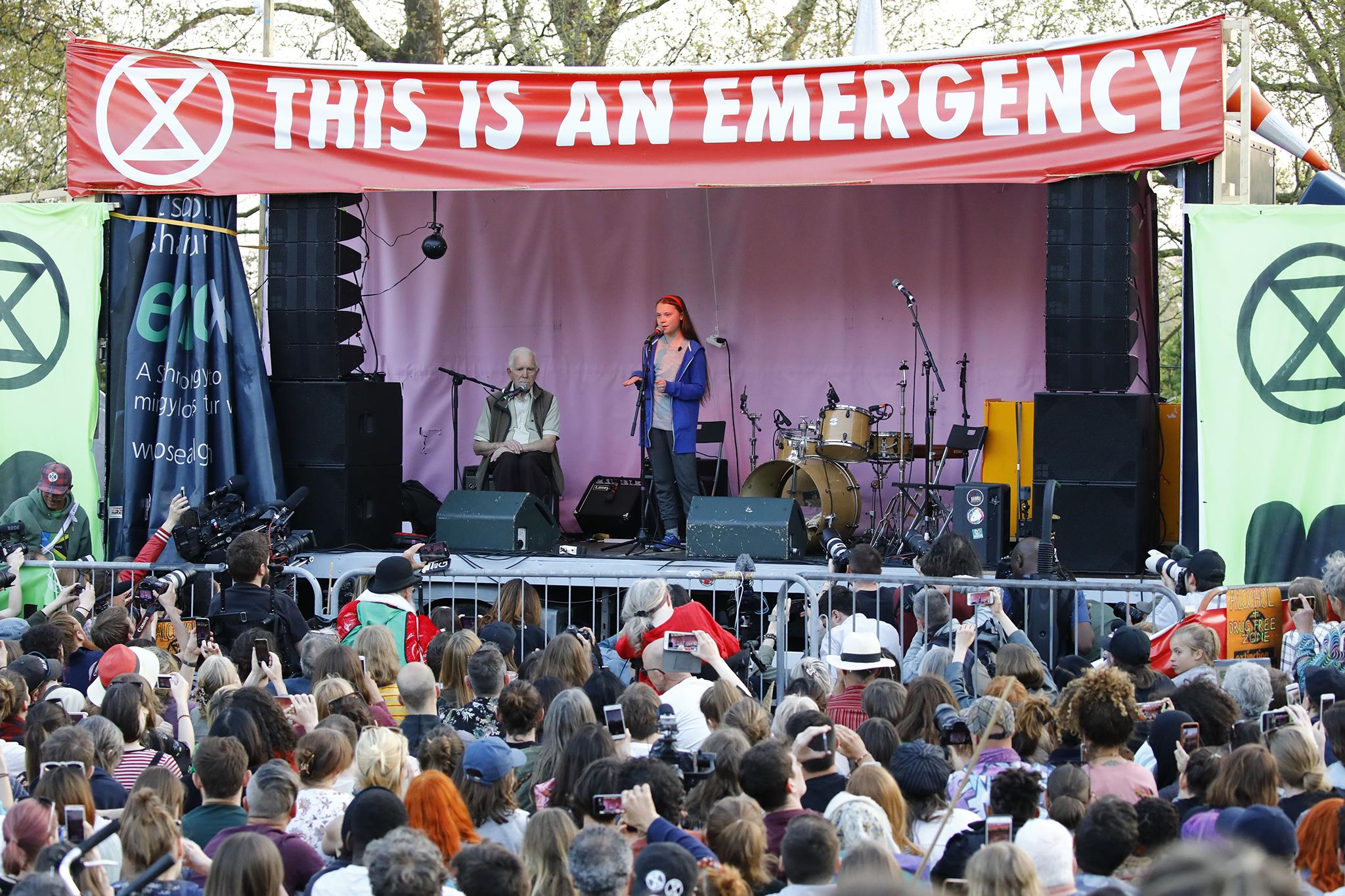
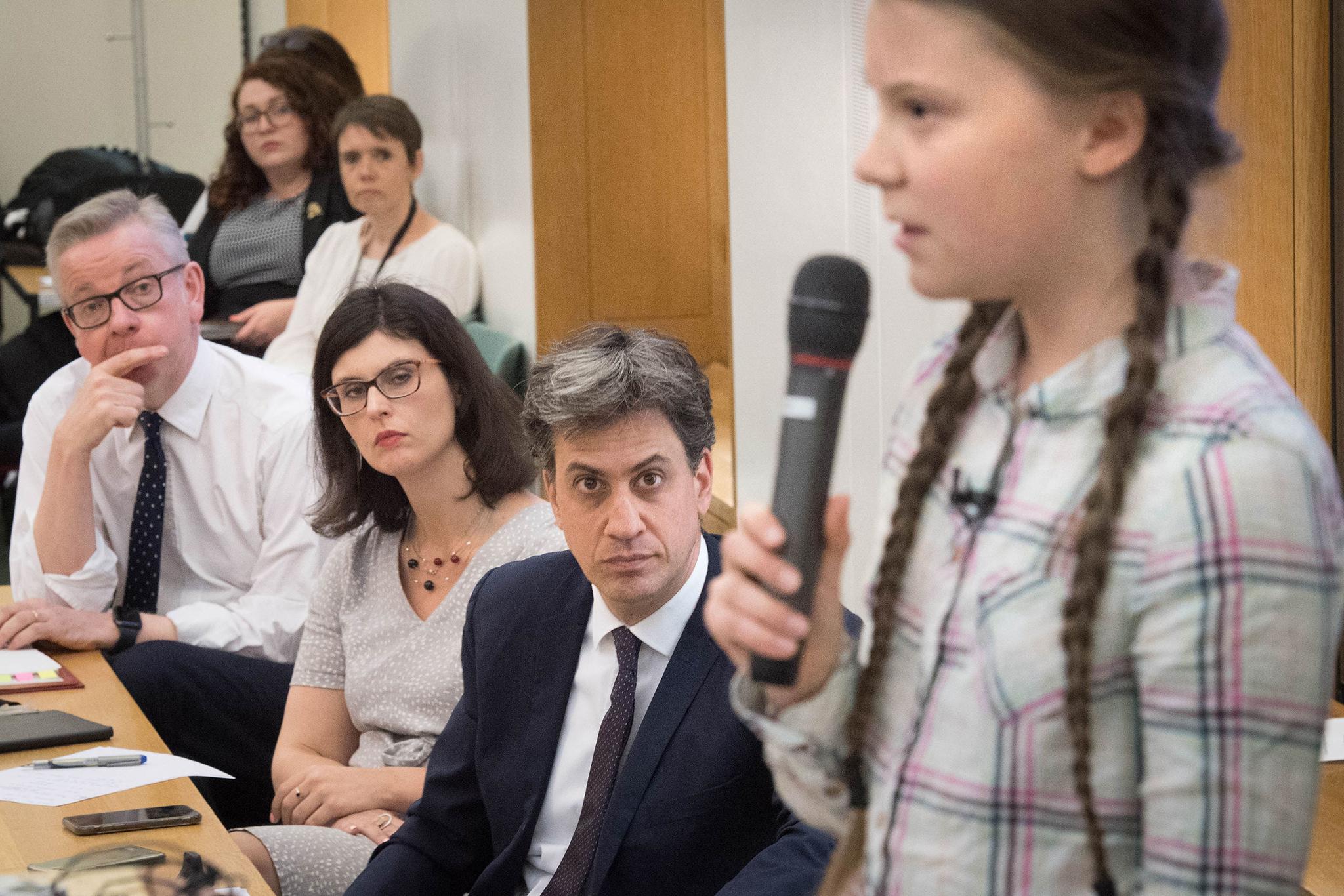
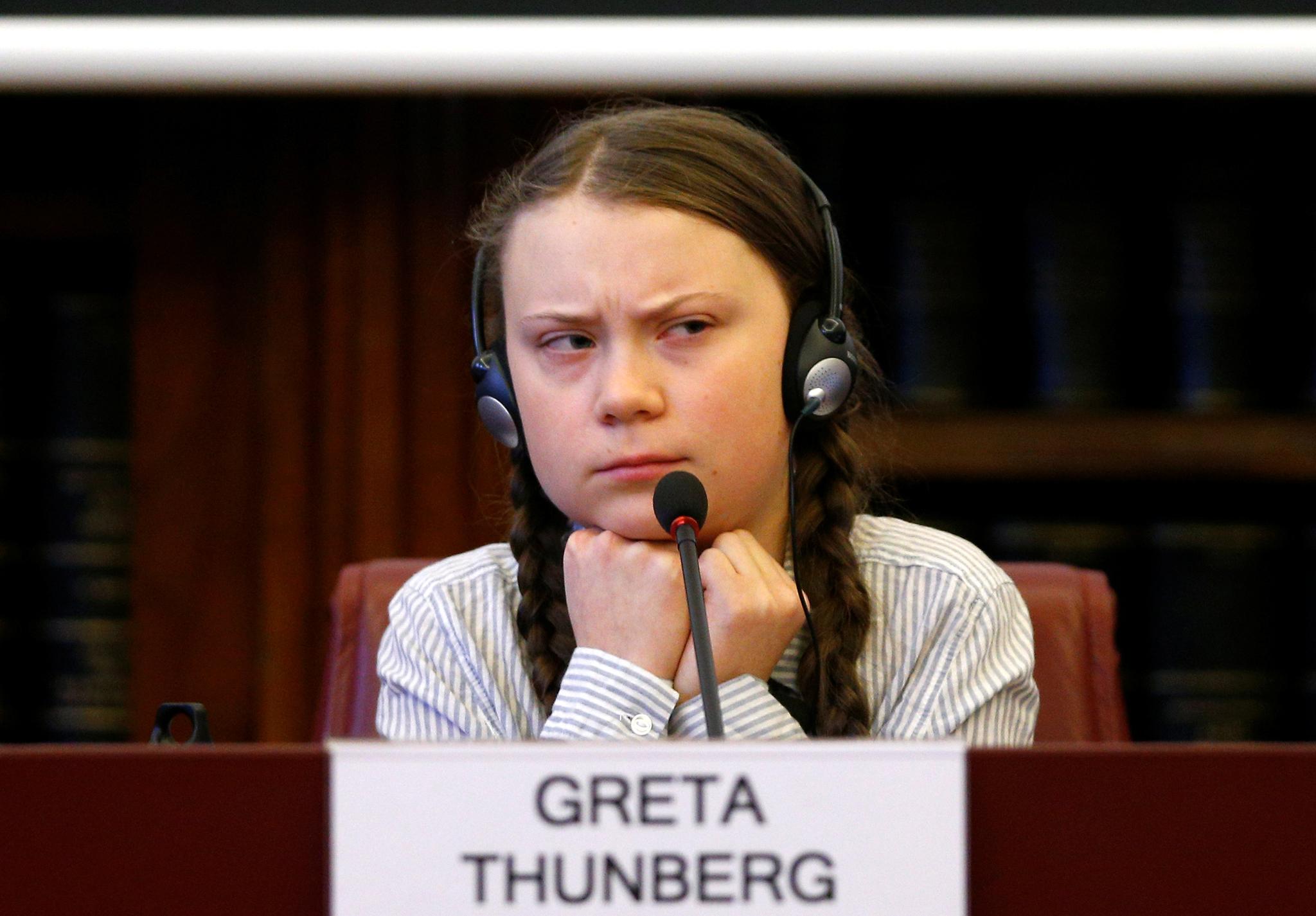
Climate change activist Greta Thunberg has welcomed criticism from a fossil fuel industry chief that environment campaigners pose “perhaps the greatest threat” to the oil sector.
The 16-year-old founder of the “School Strike 4 Climate’ movement described the comments made by the leader the Organisation of the Petroleum Exporting Countries (OPEC) as their “biggest compliment yet”.
It comes after energy ministers from 13 of the world’s most powerful oil-producing nations met in Austria to thrash out a deal restricting the amount of oil flowing into the global market to boost demand.
Speaking after the meeting earlier this week, general secretary Mohammed Barkindo said that “there is a growing mass mobilisation of world opinion… against oil”.
He said: “Civil society is being misled to believe oil is the cause of climate change.”
Mr Barkindo complained of “unscientific” attacks on the oil industry by climate change campaigners, describing them as “perhaps the greatest threat to our industry going forward”.
He said the children of some colleagues at OPEC’s headquarters ”are asking us about their future because … they see their peers on the streets campaigning against this industry”.
His comments appeared to be in reference to Ms Thunberg’s school strike movement, which began after the teenage activist started skipping classes to protest outside the Swedish parliament.
Her protest inspired millions of other children around the world to walk out school on Fridays to demand greater action on climate change.
Mr Barkindo added that the changing attitudes towards fossil fuels were ”beginning to ... dictate policies and corporate decisions, including investment in the industry”.
In response to Mr Barkindo’s comments, Ms Thunberg tweeted: “OPEC calls the school strike movement and climate campaigners their ‘greatest threat’.
“Thank you! Our biggest compliment yet!”
Bill McKibben, the founder of the climate group 350.org which calls for 100 per cent renewable energy, also welcomed Mr Barkindo’s comments.
He tweeted: “Wow! Wow! Wow! ...Thanks everyone for your good work!”
The OPEC chief’s comments come nearly a year after the UN released its landmark IPCC report that found we have 11 years to keep global warming to a maximum of 1.5C to limit the worst effects of climate change.
Since then, the Extinction Rebellion movement brought parts of London to a standstill in April to demand action on climate change. And MPs voted to declare a climate emergency in May.
In the US, Alexandria-Ocasio Cortez submitted her Green New Deal proposal to the US House of Representatives in February. The deal, which calls for the achievement of “net-zero” greenhouse gases within a decade and “a full transition off fossil fuels, has received the backing of Democratic presidential candidates including Elizabeth Warren and Kamala Harris.
OPEC is an intergovernmental organisation made up of 13 nations which seeks to coordinate oil prices to stabilise the market. Among its member nations are Saudi Arabia, Venezuela and Nigeria.

Links

08/07/2019

Climate Change Is Scaring Kids. Here’s How To Talk To Them.

New York TimesLaura M. Holson


Credit Elaine Thompson/Associated Press
Hollywood has produced quite a few fictionalized depictions of dramatic climate change. Scores of people die after Manhattan freezes in 2004’s “The Day After Tomorrow.” In “Geostorm,” released in 2017, the weather goes haywire after satellites malfunction.
Realistic scenarios, though, have been less frequent. Yet Sunday’s episode of “Big Little Lies,” the HBO show about five women living in Monterey, Calif., included a second grader who had an anxiety attack after discussing climate change with a teacher. The girl worried the world was going to end.
Psychologists say the way parents and teachers talk about climate change with children has an effect on their young psyches.
“A lot of people, when they talk to kids, are processing their own anxiety and fears,” said John Fraser, a psychologist and chief executive of NewKnowledge, a social science think tank that studies health and the environment. “Do you think kids won’t be scared, too? As a culture, we haven’t developed good tools to talk about these things.”
Janet K. Swim, a professor of psychology at Penn State University, said she emphasized several steps for parents (and teachers, for that matter) to take when talking about climate change with youngsters.
“You should start off with something positive, like, ‘We like the planet,’” she said. This should be followed with taking children outside to appreciate nature. For city dwellers, this is as simple as going to a park. Families in more rural areas can hike.
“The goal is for them to appreciate the beauty of nature,” Dr. Swim said. “They should be thinking about what is good in the environment.”
This serves a purpose: connecting children to a world larger than their own.
“There is this thinking that young kids will understand what we are talking about,” Dr. Fraser said. “But summer and fall are new. They are only beginning to understand the seasons. Nature, to them, is a tree.”


Credit Jennifer Clasen/HBO
Dr. Swim and Dr. Fraser agree that the next step is discussing the process of climate change and its effect on the planet. This is essential to demystifying the concept of global warming. But it requires parents to do some homework, too. Many parents, educators say, have as much to learn as their children.
“They have to understand the cycle,” Dr. Swim said. “If you want to talk without scaring your kids, you have to understand what is going on.”
At the New England Aquarium in Boston, William Spitzer, the vice president in learning and community, said educators there often engage families by using animals as a starting point. Myrtle, an 80-year-old green sea turtle that weighs 500 pounds, is quite popular among visitors.
One way to explain climate change, he said, is to use the analogy of the Earth being covered by a blanket of heat caused by, among other things, burning fossil fuels. That action creates more carbon dioxide, he said, which “causes the temperature of the ocean to rise.”
For sea turtles like Myrtle, temperature affects gender. “Changes to the environment affect the male-to-female ratio,” he said.
If children can understand how climate change affects an animal like Myrtle, they are more apt to expand their attitudes about the environment, Mr. Spitzer said. “We always try to connect the story back to something people already care about.”
In some situations, though, parents deny that climate change exists. In those cases, Dr. Fraser said, conversations are tricky. “The kids will have two conflicting views of what is going on in the world,” he said.
Educators at the aquarium do not try to change the minds of visitors who resist the concept, Mr. Spitzer said. “But there are not as many deniers as you might think given the noise they make,” he said. “People who go to zoos and museums and aquariums are more open.”
So what can a parent or teacher do to assuage fears? Dr. Fraser suggested that engaging children in social activities, like community gardens or a school recycling program, can give them agency over their future.
“It’s not just what an individual can do,” he said. “We have to look at what we can do as a community.”
Added Dr. Swim: “You don’t just sit down once and talk about it. It is an ongoing conversation.”
Advocates and other environmental professionals are already seeing a shift in attitudes. Community is key to addressing fear, said Meghan Kallman, a sociologist and co-founder of Conceivable Future, an organization that highlights how climate change is limiting reproductive choices.
“We are now only beginning to talk about climate anxiety,” she said. “It used to be fringe-y.”
Ms. Kallman said she has observed children asking parents what they plan to do about climate change.
“And parents should have an answer for that,” she said.

Links

Planting A Trillion Trees May Be The Best Way To Fight Climate Change, Study Says

TIMESeth Borenstein / AP


The Debates Showed America Still Doesn't Know How to Talk About Climate Change

(WASHINGTON) — The most effective way to fight global warming is to plant lots of trees, a study says. A trillion of them, maybe more.
And there’s enough room, Swiss scientists say. Even with existing cities and farmland, there’s enough space for new trees to cover 3.5 million square miles (9 million square kilometers), they reported in Thursday’s journal Science. That area is roughly the size of the United States.
The study calculated that over the decades, those new trees could suck up nearly 830 billion tons (750 billion metric tons) of heat-trapping carbon dioxide from the atmosphere. That’s about as much carbon pollution as humans have spewed in the past 25 years. Much of that benefit will come quickly because trees remove more carbon from the air when they are younger, the study authors said. The potential for removing the most carbon is in the tropics.
“This is by far — by thousands of times — the cheapest climate change solution” and the most effective, said study co-author Thomas Crowther, a climate change ecologist at the Swiss Federal Institute of Technology in Zurich.
Six nations with the most room for new trees are Russia, the United States, Canada, Australia, Brazil and China.
Before his research, Crowther figured that there were other more effective ways to fight climate change besides cutting emissions, such as people switching from meat-eating to vegetarianism. But, he said, tree planting is far more effective because trees take so much carbon dioxide out of the air.
Thomas Lovejoy, a George Mason University conservation biologist who wasn’t part of the study, called it “a good news story” because planting trees would also help stem the loss of biodiversity. Planting trees is not a substitute for weaning the world off burning oil, coal and gas, the chief cause of global warming, Crowther emphasized. “None of this works without emissions cuts,” he said.
Nor is it easy or realistic to think the world will suddenly go on a tree-planting binge, although many groups have started, Crowther said. “It’s certainly a monumental challenge, which is exactly the scale of the problem of climate change,” he said. And as the Earth warms, and especially as the tropics dry, tree cover is being lost, he noted.
The researchers used Google Earth to see what areas could support more trees, while leaving room for people and crops. Lead author Jean-Francois Bastin estimated there’s space for at least 1 trillion more trees, but it could be 1.5 trillion.
That’s on top of the 3 trillion trees that now are on Earth, according to earlier Crowther research.
The study’s calculations make sense, said Stanford University environmental scientist Chris Field, who wasn’t part of the study. “But the question of whether it is actually feasible to restore this much forest is much more difficult,” Field said in an email.

Links

Lethal Heating is a citizens' initiative