12/09/2019

Climate Change Is Bringing A New World Of Bushfires

The Conversation

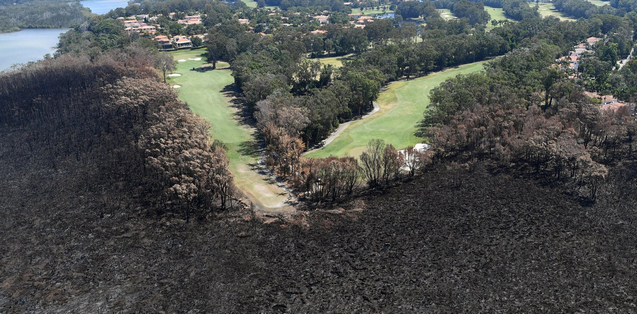
Fires are burning across Queensland and New South Wales. AAP Image/Dan Peled
Spring has barely arrived, and bushfires are burning across Australia’s eastern seaboard. More than 50 fires are currently burning in New South Wales, and some 15,000 hectares have burned in Queensland since late last week.
It’s the first time Australia has seen such strong fires this early in the bushfire season. While fire is a normal part of Australia’s yearly cycle and no two years are alike, what we are seeing now is absolutely not business as usual.
And although these bushfires are not directly attributable to climate change, our rapidly warming climate, driven by human activities, is exacerbating every risk factor for more frequent and intense bushfires.
The basics of a bushfire
For some bushfire 101, a bushfire is “an uncontrolled, non-structural fire burning in grass, scrub, bush or forest”. This means the fire is in vegetation, not a building (non-structural), and raging across the landscape – hence, uncontrolled.
For a bushfire to get started, several things need to come together. You need fuel, low humidity (which also often means the fuel itself has a low moisture content and is easier to burn), and oxygen. It also helps to have an unusually high ambient temperature and winds to drive the fire forward.
In Australia, we divide bushfires into two types based on the shape and elevation of the landscape.
First are flat grassland bushfires. These are generally fast-moving, fanned by winds blowing across flattish open landscapes, and burn through an area in 5–10 seconds and may smoulder for a few minutes. They usually have low to medium intensity and can damage to crops, livestock and buildings. These fires are easy to map and fight due to relatively straightforward access.
Second are hilly or mountainous bushfires. These fires are slower-moving but much more intense, with higher temperatures. As they usually occur in forested, mountainous areas, they also have more dead vegetation to burn and are harder to access and fight.
They burn slowly, passing through an area in 2-5 minutes and can smoulder for days. Fires in upper tree canopies move very fast. Mountainous bushfires actually speed up as they burn up a slope (since they heat and dry out the vegetation and atmosphere in front of the fire, causing a runaway process of accelerating fire movement).
About 70 blazes are still burning across Queensland. AAP Image/Dan Peled
Climate change and bushfire risk
To be clear, as previously reported, the current bushfires are not specifically triggered by climate change.
However, as bushfire risk is highest in warm to hot, dry conditions with low humidity, low soil and fuel load moisture (and are usually worse during El NiƱo situations) – all factors that climate change in Australia affects – climate change is increasing the risk of more frequent and intense bushfires.
Widespread drought conditions, very low humidity, higher than average temperatures in many places, and strong westerly winds driven by a negative Southern Annular Mode (all made worse by human-induced climate change) have collided right now over large areas of the eastern seaboard, triggering extremely unusual bushfire conditions – certainly catching many communities unawares before the start of the official bushfire season.
Different regions of Australia have traditionally experienced peak bushfire weather at different times. This has meant that individual households, communities and the emergency services have had specific periods of the year to prepare. These patterns now seem to be breaking down, and bushfires are happening outside these regular places and times.
Map of bushfire seasons. Bureau of Meteorology
New challenges for the emergency services
While experts recently forecast a worse-than-average coming bushfire season, the current emergency has essentially exploded out of nowhere.
Many Australian communities do know how to prepare but there is always some apathy at the start of bushfire season around getting households and communities bushfire-ready. When it’s still relatively cold and feeling like the last whisps of winter are still affecting us, bushfire preparation seems very far off.
Compounding our worsening bushfire conditions, we are increasingly building in bushfire-prone areas, exposing people and homes to fire. This tips the scales of risk further in favour of catastrophic losses. Sadly too, these risks always disproportionately affect the most vulnerable.
With such extensive fires over wide areas, the current emergency points to an extremely frightening future possibility: that emergency services become more and more stretched, responding to fires, floods, storms, tropic cyclones and a myriad other natural hazards earlier in each hazard season, increasingly overlapping.
Our emergency services do an amazing job but their resources and the energy of their staff and volunteers can only go so far.
Regularly the emergency services of one area or state are deployed to other areas to help respond to emergencies.
But inevitably, we will see large-scale disasters occurring simultaneously in multiple territories, making it impossible to share resources. Our emergency management workforce report they are already stressed and overworked, and losing the capacity to share resources will only exacerbate this.
Immediate challenges will be to continue funding emergency management agencies across the nation, ensuring the workforce has the necessary training and experience to plan and respond to a range of complex emergencies, and making sure local communities are involved in actively planning for emergencies.

Links

World 'Gravely' Unprepared For Effects Of Climate Crisis – Report

The Guardian

Trillions of dollars needed to avoid ‘climate apartheid’ but this is less than cost of inaction
Massive wildfires such as those in Bolivia have been mentioned as evidence that the climate crisis is here. Photograph: David Mercado/Reuters
The world’s readiness for the inevitable effects of the climate crisis is “gravely insufficient”, according to a report from global leaders.
This lack of preparedness will result in poverty, water shortages and levels of migration soaring, with an “irrefutable toll on human life”, the report warns.
Trillion-dollar investment is needed to avert “climate apartheid”, where the rich escape the effects and the poor do not, but this investment is far smaller than the eventual cost of doing nothing.
The study says the greatest obstacle is not money but a lack of “political leadership that shakes people out of their collective slumber”. A “revolution” is needed in how the dangers of global heating are understood and planned for, and solutions are funded.
The report has been produced by the Global Commission on Adaptation (GCA), convened by 18 nations including the UK. It has contributions from the former UN secretary general Ban Ki-moon, the Microsoft founder, Bill Gates, environment ministers from China, India and Canada, the heads of the World Bank and the UN climate and environment divisions, and others.
Among the most urgent actions recommended are early-warning systems of impending disasters, developing crops that can withstand droughts and restoring mangrove swamps to protect coastlines, while other measures include painting roofs of homes white to reduce heatwave temperatures.
In the foreword to the report, Ban, Gates and Kristalina Georgieva, the World Bank chief executive, write: “The climate crisis is here, now: massive wildfires ravage fragile habitats, city taps run dry, droughts scorch the land and massive floods destroy people’s homes and livelihoods. So far the response has been gravely insufficient.”
Ban said: “I am really concerned about the lack of vision of political leaders. They are much more interested in getting elected and re-elected, and climate issues are not in their priorities. We are seeing this in the US with President Trump.”
The report says severe effects are now inevitable and estimates that unless precautions are taken, 100 million more people could be driven into poverty by 2030. It says the number of people short of water each year will jump by 1.4 billion to 5 billion, causing unprecedented competition for water, fuelling conflict and migration. On the coasts, rising sea levels and storms will drive hundreds of millions from their homes, with costs of $1tn (£810bn) a year by 2050.
Patrick Verkooijen, the chief executive of the Global Center on Adaptation, said: “What we truly see is the risk of a climate apartheid, where the wealthy pay to escape and the rest are left to suffer. That is a very profound moral injustice.”
But the moral imperative alone will not drive change, he said, and the report also makes an economic case.
It is a nation’s self-interest to invest in adaptation,” Verkooijen said. The report estimates spending $1.8tn by 2030 in five key areas could yield $7.1tn in net benefits, by avoiding damages and increasing economic growth.
The chair of the UK’s Environment Agency, Emma Howard Boyd, is a member of the GCA. The agency has warned England could run short of water within 25 years and increased coastal and river flooding may force some towns to be abandoned.
Children paddle a raft through waters in Jakarta, Indonesia, where sea levels are rapidly rising. Photograph: Ed Wray/Getty Images 
In July, the UK government’s official advisers said they were shocked at the lack of proper plans to protect people from the effects of the climate crisis.
Bob Ward, the policy director at the Grantham Research Institute on Climate Change and the Environment at the London School of Economics, said: “As one of the governments that commissioned this important GCA report, the UK must heed its conclusions about the large economic benefits from adapting to those impacts of climate change that cannot now be avoided.
“This summer has shown that the UK is not adapted to the changing climate of this century, with heavier rainfall and more frequent and intense heatwaves. Successive environment ministers have failed to give this issue the attention it needs, leading to greater damage to lives and livelihoods.”
Cutting carbon emissions is vital, says the GCA report, but this has received nearly 20 times more funding than adaptation in recent years. Climate effects must be factored into decisions by those who make choices about the future, it says, such as business leaders. Verkooijen said nations should follow France in making it compulsory for large companies to report the climate risks to their businesses.

Coping with the climate storm
The GCA report focuses on several areas of adaptation:
  • Early warning systems: Just 24 hours’ warning of a coming storm or heatwave can cut the ensuing damage by 30%, saving lives and protecting assets worth at least 10 times the cost of the alert system. In Bangladesh, such systems, plus shelters and coastal protection, have already saved hundreds of thousands of lives since the Bhola cyclone in 1970 killed at least 300,000 people.
  • Climate-ready infrastructure: Such measures can add 3% to the upfront costs but save $4 for every $1 spent. Flood protection is key and Shanghai, and other Chinese “sponge cities” are deploying porous pavements, rooftop gardens and trees in parks to soak up water from downpours. Relatively simple measures can also be effective, such as painting roofs with reflective white paint. In the Indian city of Ahmedabad, this has cut temperatures in the rooms below by 5C.
  • Mangrove protection: These coastal forests buffer storms, protecting 18 million people and preventing $80bn a year in flood damage. They also provide nurseries for fish and tourist attractions worth billions. But construction, pollution and global heating have destroyed many mangrove forests, from Australia to Mexico. The GCA says the benefits of mangrove preservation and restoration are up to 10 times the cost.
Links

The Country's Top Bureaucrats Say Government Appears Unprepared For Climate Change

ABC Investigations ExclusiveMichael Slezak | FOI Editor Michael McKinnon

The public has increasingly demanded the Government do more to tackle climate change. (ABC News: Taryn Southcombe)
Key points
  • The Secretaries Group on Climate Risk includes some of the country's most senior military figures and the heads of the Federal Government's biggest departments
  • The minutes from the group's meetings noted extreme weather was already "overwhelming" the country's ability to respond to climatic events
  • The group also considered legal risks that climate change could pose for the Government
The most powerful bureaucrats in Australia have been wargaming to prepare the country for "national-scale systemic climate risks" that could impact "the full spectrum of human activity" and are already "overwhelming" the country's ability to respond.
The ABC can reveal a group called "the Secretaries Group on Climate Risk" began meeting in March 2017.
It includes some of the country's most senior military figures as well as the heads of the federal government's biggest departments.
The group has not been formally disbanded, but fell into dormancy. But before that, the group warned the government it was widely seen as trailing the private sector in addressing the impacts of climate change.
The group conducted a set of exercises called "Project Climate Ready", in which the government chiefs wargamed future scenarios that it is expected could occur because of climate change.
Despite the group planning several meetings throughout 2018, it has not met since March of that year.
A meeting planned for July 2018 never occurred, and no meeting has been arranged since, documents obtained by the ABC under Freedom of Information laws show.
A spokesperson for the Department of Environment confirmed there were no plans for another meeting.

Climate change and the ADF
Australia's Defence Department has spelled out clearly to a Senate inquiry that climate change will create "concurrency pressures" for the Defence Force as a rise in disaster relief operations continues. 

The spokesperson said the work of the Secretaries Group was now being done by a more junior deputy secretary-led group, called the "Disaster and Climate Resilience Reference Group".
That group existed prior to the Secretaries Group's first meeting, and was described in the FOI documents as "supporting" and "reporting to" the Secretaries Group's work.
Minutes and agendas for the group's meetings show the seriousness with which the federal bureaucracy treated the threat of climate change during a period when then-prime minister Malcolm Turnbull failed to win support in his own party for an emissions-reduction mechanism in the electricity sector.
In establishing the group, the documents note that climate change "influences the full spectrum of human activity".
The minutes from the meetings noted extreme weather was already "overwhelming" the country's ability to respond to climatic events. As examples, they noted:
Political storm erupts after SA loses power. (Lateline)

Project: Climate Ready
Project Climate Ready was conducted to better understand how to manage the increasing risk of catastrophic events.
It consisted of a series of scenarios jointly developed by the Department of Defence and the Department of Environment and Energy.

Babies born today will be 22 when warming hits 1.5C. What will life be like?
The details of the scenarios have been kept secret, with the government refusing to release them to the ABC under Freedom of Information laws.
But in commissioning them, the group said they "could include modelling a spring at 10 degrees (Celsius) above average" and "relate to concurrent extreme weather events, legal liability, national security or health".
They said the exercise would involve planning for the scenario over a period of "15 to 20 years".
The group noted Project Climate Ready should help the government "identify actions and prompt discussion on what decisions need to be taken to build resilience to climate change, by who, and when."

Government warned on litigation risks
In addition to direct physical risks impacting health and national security, the group also considered legal risks that climate change could pose for the government.
To prepare for the meetings, the heads of the departments were given legal advice by Noel Hutley SC outlining how company directors and trustees of superannuation funds who fail to consider climate risks could be sued, as well as news articles about ongoing climate change-related litigation.
Josh Frydenberg was environment minister when the Secretaries Group on Climate Risk began. (ABC News: Luke Stephenson)
"The intention was to understand what challenges could be presented by such events, in order to inform policy and program design and thinking," a spokesperson for the environment department said.
"Scenarios explored some of the possible impacts of extreme weather events in a number of sectors including health, infrastructure and energy."
In a brief to the then-environment minister Josh Frydenberg in 2017, outlining what the group had found, the secretary of the department of environment said "there is a broad-based perception that the public sector is behind private-sector practice".

Australian cities are declaring a 'climate emergency'. What does that actually mean?
"Many private-sector companies, including resource companies … are well advanced in their management of climate risk," the brief said.
"Public sector agencies own and manage large assets, employ staff in locations and provide or support services that are at risk of extreme weather events, which are becoming greater because of climate change."
The ABC contacted the offices of Environment Minister Sussan Ley, as well as former environment minister and now Treasurer Josh Frydenberg.
Minister for Drought and Natural Disasters David Littleproud, who has said he "[doesn't] know if climate change is manmade", was also asked to comment.
A spokesperson for the Department of Environment said the work of the Secretaries Group was being progressed by the deputy secretary group.
"For example, during 2018-19 the Group discussed development of the recently released National Disaster Risk Reduction Framework.
"The Group also supported development of Climate Compass, which is a framework for climate risk management for Commonwealth agencies developed by CSIRO and the Department of the Environment and Energy," the spokesperson said.

Australia 'probably more prone to disasters'
Professor Andy Pitman says climate change needs to be taken seriously because the consequences "are here now". (Supplied: Twitter)
Professor Andy Pitman, head of the Australian Research Council Centre of Excellence for Climate Extremes, said wargaming future scenarios was exactly what the public service should be doing.
"Climate change is really, in the context of the government, simply a risk. And risks should always be thoroughly examined," Professor Pitman said.
"The consequences of climate change are here now and are not something to be thought of as just in the future. But obviously with the emissions trajectories as they are it's inevitable that risks will continue."
He said he was not particularly worried whether this group or some other group was carrying on that work.
"What would concern me is if the scenario-planning — the stress-testing — isn't being done in government."
Former deputy commissioner of the NSW Fire Brigade Ken Thompson is more concerned.
"It does worry me because there's a lot of work that needs to be done in this space," Mr Thompson said.
"The problem with Australia is that we're probably more prone to these disasters than many other countries but we're probably one of the least-prepared simply because we don't have this overarching government framework that's needed to help us plan," he said.
Dr Sarah Boulter, a senior researcher at the National Climate Change Adaptation Research Facility, said a high-level group needs to be looking at climate risk at a whole-of government level.
She said both the impacts of climate change — and potential adaptations — have consequences that cut across government departments.
"So if one department says, 'look, the only way that we can protect this part of the coast is to build a seawall' — that will have implications for biodiversity, for fisheries, for transport."

Links

11/09/2019

Climate Change: 'Invest $1.8 Trillion To Adapt'

BBC - Victoria Gill

Investments - like the purchase of a water pump for irrigation - can provide a sustainable farming income for farmers like Sanfo Karim in Burkina Faso. Ollivier Girard/CIFOR 


Investing $1.8 trillion over the next decade - in measures to adapt to climate change - could produce net benefits worth more than $7 trillion.
This is according to a global cost-benefit analysis setting out five adaptation strategies.
The analysis was carried out by the Global Commission on Adaptation - a group of 34 leaders in politics, business and science.
They say the world urgently needs to be made more "climate change resilient".
The commission, led by former UN Secretary-General Ban Ki-moon, World Bank chief executive Kristalina Georgieva and Microsoft co-founder Bill Gates, argues that it is an urgent moral obligation of richer countries to invest in adaptation measures that will benefit the world.
Planting and restoring mangrove forests provides valuable natural protection for vulnerable coastlines. Jelajah Pangandaran
The report says those most affected by climate change "did least to cause the problem - making adaptation a human imperative".


Five things the world needs to invest in to be "climate change resilient"

Its primary aim is to put climate change adaptation on to the political agenda around the world. And to do this, it sets out "concrete solutions" and an economic plan.
There are, it says, five things the world should invest in over the next decade:
  1. Warning systems: For the vulnerable island and coastal communities in particular, early warnings about storms, very high tides and other extreme weather can save lives. Better weather monitoring and a simple app for fishing communities in the Cook Islands, for example, allows them to plan according to the sea conditions
  2. Infrastructure: Building better roads, buildings and bridges to suit the changing climate. One project in New York City has set out to paint rooftops white - a heat-reflecting strategy to cool buildings and neighbourhoods
  3. Improving dry-land agriculture: Something as simple as helping farmers to switch to more drought-resistant varieties of coffee crop could protect livelihoods and prevent hunger
  4. Restoring and protecting mangroves: Underwater mangrove forests protect about 18 million people from coastal flooding, but they're being wiped out by development. Restoration projects could protect vulnerable communities from storms and boost fisheries' productivity
  5. Water: Protecting water supplies - and making sure that water's not being wasted - will be vital in a changing climate
Each of these investments, the commission says, would contribute to what they call a "triple dividend"- avoiding future losses, generating positive economic gains through innovation, and delivering social and environmental benefits. It is that dividend that the report has valued at $7.1tn (£5.7tn).
Plant experts in Uganda are improving agricultural livelihoods in the country by introducing farmers to crop varieties with better drought and disease resistance. Georgina Smith / CIAT


Flagship Report
Commenting on the report's findings, Mr Ban said climate change "doesn't respect borders".
"It's an international problem that can only be solved with co-operation and collaboration, across borders and worldwide. It is becoming increasingly clear that in many parts of the world, our climate has already changed and we need to adapt with it."
The report calls for "revolutions" in understanding, planning and finance - to "ensure that climate impacts, risks and solutions are factored into decision-making at all levels". Turning its recommendations into action will be the next endeavour; there will be a further announcement about adaptation plans at the UN Climate Summit in September.

Links

More Than Climate Change Driving Queensland Fires, Explain Climatologists

ABC News - Ben Deacon | Penny Timms

The negative Southern Annular Mode affecting Australia is set to make conditions difficult for firefighters. (Supplied: Andrew Bedggood)
The record drought has combined with a record warm winter to fuel this year's grim fire outlook, according to climatologists and bushfire experts.
"The forests are in a state where even a small ignition source can cause major problems," warned Richard Thornton from the Bushfire and Natural Hazards Cooperative Research Centre.
"And that will only get worse as we move into summer and things dry out even further."
Andrew Watkins from the Bureau of Meteorology says the southern half of Australia has experienced the driest January to August on record.
"When we take into account temperatures as well, which have been highest on record for winter in some of those bushfire areas, we've had high evaporation," he said.
"We have very dry soils and dry fuel as well."
There is a trend in southern Australia where the number of dangerous bushfire days are increasing. (Supplied: Bureau of Meteorology)
According the BoM spring outlook, the dry conditions have been driven by cooler than average waters in the Indian ocean, which meteorologists refer to as a positive Indian Ocean Dipole, or IOD.
Pacific ocean temperatures are not driving Australia's weather right now, with no El Nino or La Nina expected to develop in the coming months.
There is another, less well-known climate driver behind the strong westerly winds fanning the flames.
"We have a period of negative SAM (Southern Annular Mode) affecting us now, as it has on and off for a while," Dr Watkins said.
When the SAM is negative, strong westerly winds like the ones experienced at the weekend reach further north than normal.

What's driving the fire season ahead?
The warm, dry conditions that have led to the early fires are predicted to continue for the rest of the year.

What to do if bushfire threatens
ABC Emergency has sourced advice from official agencies on how to plan for a bushfire, including preparing a survival kit.

"Unfortunately, the odds are high of having above normal daytime temperatures right through at least until January," Dr Watkins said.
"And likewise with rainfall, there are increased odds of drier than normal conditions for much of eastern Australia right through until January as well."
On top of this, the recent sudden stratospheric warming over Antarctica is predicted to keep SAM negative for the rest of the year, reinforcing the warm, dry conditions in New South Wales and southern Queensland.

Climate change trends
"Climate change is playing its role here, but it's not the cause of these fires," Dr Thornton said.
"We're seeing a degree on average higher temperatures than the long-term average."
Climate change expert Andrew King from Melbourne University agrees.
"It's quite clear that the type of hot weather associated with bushfires is becoming more frequent and more intense and it's also more likely to occur earlier on in the warm season," he said.
Darker red and yellow colours show an increase in the length and intensity of the fire weather season since 1978. (Supplied: Bureau of Meteorology)
But the climatologist said the story is more complicated when it comes to rainfall.
"There's not really a very clear trend," Dr King said.
"Overall, we don't really see a clear trend towards more dry conditions or more wet conditions [in southern Queensland].
"We have really highly variable rainfall in eastern Australia, linked with things like El Nino and La Nina, and also individual weather systems."
But he says further south, drought is linked to climate change trends.

The science of bushfires
How does a bushfire begin and spread, and what happens to the environment once it's moved through?

"In the south west of Australia, and in parts of Victoria, there is a decreasing trend in rainfall. Which obviously worsens bushfire conditions, overall, on average."
And when it comes to increased westerly winds like the ones that fanned this week's fires, he said climate science predicts less strong winds.
"The general climate trend is towards more positive SAM conditions, which means that we see those weather systems moving further south away from Australia and associated with that, we wouldn't see the same frequency of westerly winds that we've seen recently in New South Wales and Queensland."


What do we really think about
taking climate action?
A majority of Australians believe climate change is driving more droughts and floods, and that higher power prices are the result of "excessive profit margins".

Fire danger on the rise
The Bureau of Meteorology's state of the climate report from last year showed the overall fire danger index had increased over the past 40 years over much of southern Australia.
Dr Thornton expects this trend to continue.
"What climate change will do is it will increase the frequency, or the return rate if you like, of really bad fire weather days," he said.
"So the days like where you had Ash Wednesday or black Saturday, the return period for those sorts of days, will come back and will become shorter.
"So we really need to start thinking about how do we prepare properties better for that?
"How do we make sure that communities stay safe?"


Links

Extreme Heat A Far Greater Threat For Most Australians Than Extreme Cold Weather, Study Finds

Sydney Morning HeraldPeter Hannam

Extreme heat is a far greater threat for most Australians than extreme cold weather, with the risks falling largely on the elderly.
Research published on Tuesday in the Climatic Change journal examined the deaths of 1.717 million Australians between 2006-2017. It found about 2 per cent were attributable to heat, while "close to zero" were caused by cold days, said Thomas Longden, a senior researcher at the University of Technology, Sydney, and author of the paper.
"We're going to get some very extreme events that really may start pushing people ... over a threshold": study author Thomas Longden, a senior researcher at UTS. Credit: Ryan Stuart 
Dr Longden's research took aim at a 2015 study in The Lancet that examined 384 locations globally - including Brisbane, Melbourne and Sydney - and found a warming world would generally be beneficial, claiming mortality from cold was greater than hot weather.
That study used data from 1988-2009 and was based on a so-called minimum mortality temperature. In Melbourne's case, some 90 per cent of its days were treated as cold, based on a 22.4 degree average daily temperature.
"It such a bizarre result to find more cold deaths to heat in Brisbane, Melbourne and Sydney," Dr Longden said.
His study used median daily temperatures in six climate zones across the country, and found 2 per cent of mortality in Sydney was associated with heat and a near-zero linkage to cold weather. Melbourne showed similar results.
Only in the climate zone characterised by mild to warm summers and cold winters - Tasmania and the alpine regions of NSW, Victoria and the ACT - were more deaths associated with cold than heat, he said.
In regions with hot, humid summers - such as Townsville, Cairns and Darwin - as many as 9 per cent of deaths were related to heat.
Scientists expect climate change will create longer, more intense and more frequent heatwaves for much of Australia, a trend that would exacerbate the risks of heat-related deaths.
"In the future we're going to get some very extreme events that really may start pushing people, who have not had an issue in the past, over a threshold," Dr Longden said. "Hospitalisation, ambulance call outs and deaths can occur after that."
The elderly, in particular, will face more pressure on their health as temperatures rise, Dr Longden said.
Separately, the Australia Institute on Tuesday released its Climate Of The Nation report, which has tracked attitudes to climate change since 2007.
The survey of 1960 Australians aged 18 years and older by YouGov Galaxy was taken between July 25 and August 1. It found 77 per cent of respondents agreed the climate was changing, matching the highest level recorded in 2016. Some 81 per cent said there were concerned the shift would result in more droughts and floods, up from 78 per cent in 2018.
Other findings included 78 per cent of respondents saying they were worried climate change would lead to water shortages in Australian cities, up 11 percentage points in two years. More than two-thirds backed "an orderly phase-out of coal" and a similar ratio supported Australia reaching net-zero emissions by 2050.
“Australians are rightly concerned about more extreme heat waves, droughts and bushfires, and they want the Morrison government to show leadership on climate change and do more to prepare for the impacts that are already locked in," said Zali Steggall, the independent MP for Warringah, who launched the report.

Links

Australians Increasingly Fear Climate Change Related Drought And Extinctions

The Guardian

Climate of the Nation survey shows growing support for net zero emissions by 2050 and rapid phase-out of coal power
Drought-hit land 40km north-east of Coonabarabran in NSW. More than 80% of Australians are worried about drought and floods linked to climate change. Photograph: Brook Mitchell
Australians are increasingly concerned about droughts and floods, extinctions and water shortages associated with climate change, and most people think all levels of government aren’t doing enough to combat the effects of global warming, according to new research.
The annual Climate of the Nation survey, which has been tracking Australian attitudes to climate change for more than a decade, finds concern about droughts and flooding has risen from 74% of the survey in 2017 to 81% in 2019.
Concern about climate-related extinctions – an issue highlighted dramatically in May when a major scientific report warned that a million species across the world faced extinction – has risen from 71% in 2017 to 78% in the 2019 survey, while concern about water shortages, an issue front of mind as a consequence of Australia’s prolonged drought, has increased from 67% to 78%.
Public sentiment about phasing out coal has also shifted in the past few years. In 2017 65% of the survey thought coal power stations should be phased out gradually to help manage the costs of the transition, but the percentage has dropped to 52% in 2019. The percentage of people believing the shift from coal to clean energy needs to be accelerated, even if the transition costs more in the short term, has increased from 19% in 2017 to 26% in 2019.
There has also been an increase in the percentage of people in the survey arguing that Australia should completely end coal-fired power generation within the next 10 years. In 2017 30% of the survey agreed, and in 2019 39% agreed.
In Queensland – where the future of coal was a significant issue in the May federal election – 49% of the sample thought coal power stations should be phased out gradually and 24% said as soon as possible.
Just over half the national sample, 51%, said they would support a moratorium on new coalmines (including 49% of Liberal voters and 53% of Labor voters).
While parliamentary Nationals are the most vocal supporters of the coal industry, the survey suggests their voting constituency is split, with 48% supporting a moratorium, 40% opposing it and 12% undecided. It’s a similar picture for One Nation, another vocal supporter of coal in Canberra – 41% of One Nation supporters supported a moratorium, 36% opposed one, and 22% undecided.
The annual survey, conducted by YouGov/Galaxy, has assessed attitudes to climate change since 2007. The now defunct Climate Institute began the series, and it is now managed by the progressive thinktank the Australia Institute. The survey is national and it has a margin of error of plus or minus 2%.
The research will be launched in Canberra on Tuesday by the independent who unseated Tony Abbott in the May election, Zali Steggall, in part on a platform of climate action.
“Australians are rightly concerned about more extreme heatwaves, droughts and bushfires and they want the Morrison government to show leadership on climate change and do more to prepare for the impacts that are already locked in,” Steggall said.
“This latest report shows that Australians support far more ambitious climate and energy policies than the federal government is currently delivering.”
The 2019 survey found that 77% of respondents agreed that climate change is happening (equal to the percentage in 2016), and 61% said warming is caused by humans. For context, 64% of the sample agreed climate change was happening in 2012, 19% weren’t sure and 17% said it wasn’t happening. Now it is 77% agreement, 11% unsure and 12% said it isn’t happening.
Just under half the sample, 48%, said climate change is already causing more heatwaves and hot days – a nine-point increase in a year – and just over half the sample (51%, up from 43% a year ago) thought climate change is behind the melting of the polar ice caps.
More than half the sample, 64%, wanted Australia to adopt a target of net zero emissions by 2050, and 56% of the sample wanted Australia to limit global warming to 1.5C.
The survey indicates nuclear energy, which has been revived as a prospect by some Morrison government MPs, remains divisive with voters. Only one in five put nuclear in their top three preferred energy sources, and 59% of the survey put nuclear in their bottom three.
Breaking down the responses by demographics, women were more worried about climate change than men and, speaking generally, young people were more worried than respondents aged over 55.
Looking at perceptions in the city versus perceptions in regional Australia, people in metropolitan areas were more likely to agree that coal plants should be closed and replaced with cleaner alternatives (64% to 55%), and city dwellers were more likely to support a moratorium on new mines than regional Australians (55% to 46%).
People in the regions were more aware than their city counterparts that Australia is a signatory to the Paris agreement (62% to 57%) and more likely to blame the energy companies for high power prices (64% to 53%).
The climate and energy director at the Australia Institute, Richie Merzian, said of a looming UN climate summit in New York: “The public want to see the Australian government take a leadership role when it comes to global action on climate change.”

Links

Lethal Heating is a citizens' initiative