27/12/2019

5 Key Questions About Climate Change In The 2020s

CBS News - Jeff Berardelli*

Climate change and its impact on lives and livelihoods worldwide will no doubt be one of the biggest issues confronting us in the decade ahead. Here are five key questions and answers about the problem and what can be done about it.


Climate Change Brings Opportunities And Risk

Can we stop climate change and how will innovation help?
In short, yes, there are things we can do to help stop climate change, but it won't happen overnight. The U.N.'s Intergovernmental Panel on Climate Change says that we need to reduce our emissions 45% by 2030 if we want to keep global warming to no more than 1.5 degrees Celsius. There is very little chance of that happening. However, there is no cliff at 1.5 degrees Celsius — meaning the closer we keep warming to 1.5 degrees, even if we overshoot, the better off we'll be. The bottom line is we can still avoid the worst impacts of climate change.
Here is the good news: Unlike many other big problems in life, we know how to fix this — by reducing our use of fossil fuels. And by aggressively combating this problem we can make an even better life for ourselves and future generations. Instead of focusing on denial or avoidance, we can embrace this as an opportunity. Combating climate change will inevitably create vast new industries — it already has — and millions of jobs, a rebirth of American ingenuity and a jolt to the U.S. and world economies.
According to the Bureau of Labor Statistics, the fastest growing occupations in this upcoming decade are solar and wind technician. With median salaries of $42,000 to $55,000 per year, these are good paying jobs, already being created right now all over the nation. Per unit of energy, for every one job in fossil fuels you need several jobs in solar — so this is a net creator of opportunity. Even with larger employment, because solar and wind are technologies and not commodities like oil, the prices keep falling. In many cases sustainable energy is already cheaper, and certainly cleaner, than fossil fuels.

Where could we see rapid change over the next decade?
One big concern is tipping points. There are three primary areas climate experts are watching:
  1. The Amazon rain forest is close to a tipping point because of the way land is being abused, combined with climate change. The forest is drying out. That is because rain forests create their own rainfall. The more they are fragmented and burned, the more they dry out and lose the ability to create their own source of rainfall. This means the Amazon is in danger of turning into a savanna — an ecosystem with far less tree-cover. If that happens, the capacity of the forest to absorb heat-trapping carbon dioxide is lost. We really need the Amazon to help lessen the impact of climate change worldwide.
  2. Permafrost, the frozen ground in the Arctic, is thawing fast and releasing carbon that has been locked up for thousands of years. Just this year it seems to have crossed a threshold from being a sink, storing carbon, to being a net emitter of carbon, acting as a feedback to warm the Earth even faster. This feedback will be critical to monitor this decade to see how fast permafrost melts.
  3. Loss of ice — both sea ice in the Arctic and land ice in Greenland and South Pole — is accelerating. Ice helps cool the Earth. The more we lose the faster the climate heats up which is another feedback loop. In addition, monitoring ice shelves on glaciers for instability will be a big telltale sign of how fast sea level will rise in the coming decade.

Arctic Report Card Reveals Alarming Effects Of Climate Change

What does this mean for the economy and homeowners?
This is where climate change hits us in the wallet. As CBS News correspondent Carter Evans reported in November, homeowners are already seeing situations in California where insurance companies will not insure homes in the fire zone, or they are charging exponentially higher, unaffordable rates. As the impacts of extreme weather and sea level rise get worse, it is going to become more difficult for people who are exposed to risk to obtain 30-year mortgages to buy homes.
This pertains not only to fire-prone areas, but also to homes near sea level and along river basins at risk of flooding. When sellers or buyers can no longer obtain a reasonable mortgage or insurance, home values will plummet.


Wildfire Evacuations

Can the younger generation turn their ambition into policy?
This is what gives me hope. The younger generation is energized and engaged by this issue. They realize they will have to deal with what we adults helped cause. And they are not likely to give up until they get what they want. In one year, youth activists organized tens of millions of people all over the world in protest. They accomplished in one year what adults were not able to do in 30 years. Imagine what they can do in a decade!


Time Person Of The Year

What impacts are people most concerned about?
I asked people on Twitter about their climate-related concerns. The No. 1 answer was migration and refugees. I agree. Climate change is going to continue to cause more extreme heat waves and droughts. Farms in vulnerable areas will turn from crop producing into deserts. Later this century, parts of the Earth near the equator will become so hot as to be uninhabitable, or at the very least not supportive for people to make a living. Millions will be forced to move to survive. Some scientists say we are already witnessing this happen. The concern is that even more widespread migration will create a massive international humanitarian and security issue.

*Meteorologist Jeff Berardelli is a CBS News Climate & Weather Contributor.

Links

The 2010s Were Another Lost Decade On Climate Change

MIT Technology Review

The only measurement that matters is greenhouse-gas emissions—and they continued to rise.
Pixabay
We’ve lost another decade on climate change.
Even as greenhouse gases in the atmosphere race toward levels that could lock in catastrophic warming, the world continued to pump out more. Our collective failure to begin cutting emissions over the last 10 years almost certainly shatters the dream of halting rising temperatures at 1.5 ˚C. Indeed, it’s hard to imagine achieving the pace and scale of change now required even to prevent 2 ˚C.
Among other sharply escalating dangers, that half-degree difference could doom the world’s coral reefs and regularly expose nearly 40% of world’s population to staggering heat waves.
There were faint signs of progress. Renewables and electric vehicles finally took off, and nearly 200 countries committed to cutting their emissions under the landmark Paris climate agreement in 2016.
But nations are already falling behind on their pledges, and the US is in the process of pulling out of the deal entirely, at a point when much deeper cuts are required. And for all the momentum behind clean energy technologies, they’ve done very little so far to displace the power plants, cars, factories, and buildings polluting the atmosphere with more emissions each year.
The charts that follow reveal how much ground we lost on climate change during the last 10 years.

Rising CO2 concentrations
The measurement that ultimately matters on climate change is global emissions. And they continued to rise.
There was a brief hope that greenhouse-gas pollution had finally plateaued. Carbon dioxide from fossil fuels, which makes up about 90% of total emissions from human activities, was relatively flat from 2013 through 2016.
Improving energy efficiency, rising use of renewables, and the shift from coal to natural gas likely drove much of this, particularly in wealthy economies like the US and European Union. But emissions have surged in the years since, driven largely by economic growth and increasing energy demands in emerging nations, led by China and India.
Fossil-fuel emissions rose an estimated 0.6% to a record 37 billion metric tons in 2019, capping three straight years of growth, the Global Carbon Project reported in early December.
These trends, plus additional emissions from land-use changes and other human activities, added up to steadily rising carbon dioxide concentrations in the atmosphere throughout the 2010s.


Reaching the peak
When we reach peak emissions matters. The longer we take, the deeper we'll need to cut carbon pollution in the coming years if we hope to avoid dangerous warming thresholds, as the charts below show.
To get a sense of how much harder we've made the job of halting warming at 1.5 ˚C by frittering away the last decade, click on the chart and compare the steepness of the slope shown if we had plateaued in 2010 with what is projected should we reach the peak in 2020.


These charts were produced by Zeke Hausfather for Carbon Brief, using data and the original figure from Robbie Andrew at the Center for International Climate Research.

We’ll have to radically accelerate emissions reductions to have any hope of limiting warming to 2 ˚C as well.


In addition to aggressive emissions cuts, most models now find we'll also need to use trees, plants and other methods to remove and store vast amounts of carbon dioxide from the atmosphere to stay below these temperature targets. But achieving these so called "negative emissions" on a large-enough scale will be incredibly costly, and compete directly with other crucial land-uses, most notably the farming needed to feed a growing global population.

Environmental impacts
Decades of rising emissions continued to do what scientists have long warned they would: make the world hotter.
In early December, the World Meteorological Organization announced that 2019 is likely to be the second or third warmest on record, capping a “decade of exceptional global heat.” Average temperatures for the preceding five- and 10-year periods will almost certainly be the highest on record.


This chart, using data from the National Oceanic and Atmospheric Administration, clearly highlights the rise in global land temperatures above the 20th-century average. Note the particularly pronounced increase in the last 10 years.


Ocean temperatures rose as well, and warmer water expands. That plus the accelerating loss of ice sheets and glaciers pushed up ocean levels further, as this chart from NASA satellite data highlights.
Indeed, the 2010s mark the decade when the impacts from climate change became unmistakable, at least for any objective-minded observer. As temperatures rose, Arctic sea ice melted far faster than models had predicted. The world’s coral reefs suffered widespread and devastating bleaching events. And regions around the world grappled with some of the costliest, deadliest, and most extreme droughts, hurricanes, heat waves, and wildfires in recorded history.
Since carbon dioxide takes years to reach its full warming effect, and we have yet to even begin cutting emissions, we’ll face even starker dangers in the coming decade.

Links

Nine Things You Love That Are Being Wrecked By Climate Change

The Conversation

If coffee and wine are things you love, then you need to pay attention to climate change. Shutterstock/Ekaterina Pokrovsky
There are so many stories flying around about the horrors already being wrought by climate change, you’re probably struggling to keep up.
The warnings have been there for decades but still there are those who deny it. So perhaps it’s timely to look at how climate change is affecting you, by wrecking some of the things you love.

1. Not the holiday you hoped for
We often choose holiday destinations with weather in mind. Sadly, climate change may see your usual destinations become less inviting, and maybe even disappear entirely.
Lizard Island, in Queensland, is a popular tourist destination but it’s coral has been affected by bleaching. AAP Image/XL Catlin Seaview Survey
But there’s more to think about than your favourite beach retreat being drowned, or the Great Barrier Reef decaying before you see it.
Now we have to worry that “extreme weather events pose significant risks to travellers”. The warnings here range from travel disruption, such as delayed flights due to storms, through to severe danger from getting caught in cyclones, floods or snowstorms.
Simply getting where you need to go could become an adventure holiday itself, but not a fun one.

2. Last chance to see some wildlife
There are more and more examples of animals falling victim to climate-change induced extreme weather events, such as the horror of mass “cremations” of koalas in the path of recent Australian bush fires or bats dropping dead during heatwaves.
Hundreds of bats dropped dead during a heatwave in Campbelltown, NSW, after temperatures reached 45C in 2018. AAP Image/Supplied/Help Save the Wildlife and Bushlands
On top of that, news of the latest climate-related animal extinctions are becoming as common as reports of politicians doing nothing about it.

3. History and heritage at risk
The Italian city of Venice recently experienced its worst flooding since the mid 1960s, and the local mayor clearly connected this with climate change.
Aside from the human calamity unfolding there, we are seeing one of Europe’s most amazing and unique cities and a World Heritage site devastated before our eyes.
Tourists and residents wade through a flooded Venice, Italy, in November 2019. EPA/Andrea Merola


Climate change threatens more than 13,000 archaeological sites in North America alone if sea levels rise by 1m. That goes up to more than 30,000 sites if sea levels rise by 5m.
UNESCO is worried that climate change also threatens underwater heritage sites, such as ruins and shipwrecks. For example, rising salinity and warming waters increases ship-worm populations that consume wooden shipwrecks in the Baltic sea.

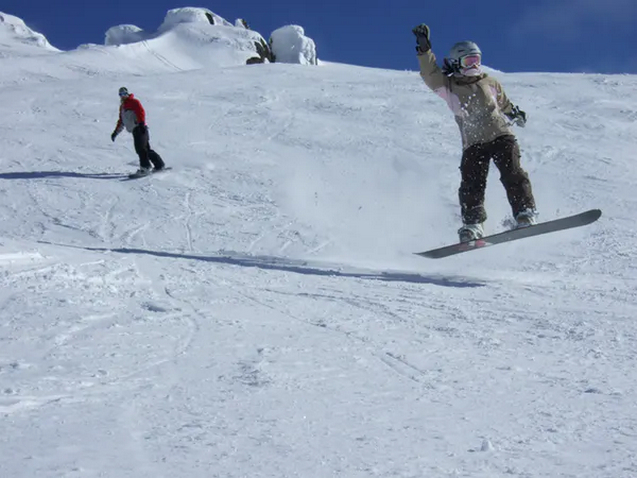
4. Taking the piste
Warming temperatures have already had negative impacts on the US snow sports industry since at least 2001.
Enjoy the skiing while the snow lasts. Yun Huang YongCC BY
In Australia, ski resorts are expected to see significant drops in snow fall by 2040 and, as temperatures warm, they will be unable to compensate for this by snow-making, because it doesn’t work if ambient temperatures are too high.
Perhaps recent efforts to make artificial snow will give us a few more years on the slopes, but I’m not holding my breath.

5. Too hot for sport and exercise
It’s not just snow sports that will be affected. As temperatures warm, simply being outside in some parts of the world will not only be less pleasant, but more harmful, causing greater risk of heat stress doing any sport or exercise.
The summer heat already causes problems for fans and players during the Australian Open in Melbourne each January. AAP Image/Julian Smith
That also means lower incentives for – and greater difficult in undertaking - incidental exercise, such as walking to the bus stop.

6. Pay more for your coffee
As the climate changes, your coffee hits will probably become rarer and more expensive, too.
Start saving up for your next coffee. Flickr/Marco VerchCC BY
A report by the Climate Institute in 2016 suggested coffee production could drop by 50% by 2050. Given how rapidly negative climate predictions have been updated in the three years since, this might now be considered optimistic. Yikes.

7. You and your family’s health
As the climate changes, the health of your children, your parents and your grandparents will be at greater risk through increases in air pollution, heatwaves and other factors.


It can be heartening to see the strong, intelligent and positive action being taken by the world’s youth in response to the lack of climate action by many governments.
But the fact this is a result of literal, existential crises becoming a normal part of every day life for young people is utterly horrifying.

8. Home, sweet home
The recent bush fires in Australia and the United States reveal how dramatic and destructive the effects climate change can be to where you live. Hundreds of houses have already burned down in Australia this fire season.
The ruins of a house destroyed by bushfire near Taree, NSW, November 9, 2019. AAP Image/Darren Pateman
Fires are getting more frequent and more ferocious. The seasonal windows where we safely used controlled burning to clear bushfire fuel are shrinking. It’s not only harder to fight fires when they happen, it’s becoming harder to prevent them as well.
Fires aren’t the only threat to homes. All around the planet, more and more houses are being destroyed by rising seas and increasingly wild storms, all thanks to climate change.

9. Not the wine, please!
Still not convinced climate change is wrecking things you love? What if I told you it’s even coming for your wine.
Less water, soil degradation and higher temperatures earlier in the season all lead to dramatic negative effects on grapes and wine-making.
The grape harvest is getting earlier each year, which experts attribute partly to climate change. AAP Image/Lukas Coch
One small upside is that disruption to traditional wine growing regions is creating opportunities to develop new wine growing areas. But there is no reason to believe these areas will maintain stable grape growing conditions as climate change progresses.

So, what now?
It’s easy to be sad. But to change our trajectory, it’s better to be mad. In the words of that great English singer songwriter John Lydon (aka Johnny Rotten), “anger is an energy”.
So maybe use this list as motivation to think, talk and act. Use it as fuel to make small, large or a combination of changes.
Share your concerns, share your solutions, and do this relentlessly.
What’s happening right now is huge, overwhelming, and also inevitable without concerted action. There’s no sugar-coating it: climate change is wrecking the things we love. Time to step it up a notch.

Links

26/12/2019

(AU) Home Affairs Warned Australian Government Of Growing Climate Disaster Risk After May Election

The Guardian

Exclusive: Department’s brief said that ‘coordinated national action’ was needed to ward off increasing disruptions
Home affairs warned Australian government of “more frequent and severe heatwaves, bushfires, floods, and cyclones”. Photograph: Dan Himbrechts/AP
 The government was warned by the Department of Home Affairs after the May election that Australia faced more frequent and severe heatwaves and bushfires, and that livelihoods would be affected without effective action on climate change.
The department’s incoming government brief to the home affairs minister, Peter Dutton, warned of “disasters” exacerbated by climate change.
“The physical effects of climate change, population growth, and urbanisation mean that without effective action more Australians’ livelihoods will be impacted by disasters into the future and the cost of those disasters will continue to grow,” the brief stated.
“Coordinated national action to drive efforts to reduce these risks and improve national resilience is required.”
The brief, obtained under freedom of information, said disasters were only going to get worse.
“Life in Australia is increasingly disrupted by disasters. Australians will experience – as we did this summer – more frequent and severe heatwaves, bushfires, floods, and cyclones. These will increasingly occur concurrently.”
The brief quoted Deloitte Access Economics figures putting the cost of disasters to the Australian economy at $18.2bn a year, rising to $39bn by 2050.
Scott Morrison has ruled out a change in climate policy in response to the bushfire crisis. Since returning to Australia from a holiday in Hawaii on Saturday night, Morrison has been touring fire-affected regions of New South Wales.
While those defending the prime minister’s decision to take leave have frequently referred to the bushfire and disaster response as primarily a state issue, a chart put together by the department in the brief puts the prime minister on equal footing with state premiers and chief ministers when it comes to crisis coordination arrangements.
Incoming government brief for home affairs showing crisis coordination arrangements. Photograph: Home Affairs
The brief noted that while state and territory governments are considered the first responders, the federal government’s role is to support the governments through national coordination of efforts in the event crises cross state borders, as well as developing and implementing national mitigation policies.
“The Australian government provides support to the states and territories when coordinated assistance is requested [or] jointly manages a crisis with state and territories if the crisis has the potential to affect, or has affected multiple jurisdictions.”
The document said the federal government had responsibility for a national crisis coordination centre for hazard monitoring across the country, as well as responsibility for the national aerial firefighting centre.
In April the government set up the national disaster risk reduction framework with $130.6m set out over five years to help state and territory governments implement the strategies in the framework.
The framework identifies climate risk as part of the overall national disaster risk, but strategies are focused on identifying potential disaster risks and collecting data on disasters, rather than specific action on climate change.

Links

(AU) How To Lose Friends And Influence The Security Of Your Nation

Sydney Morning Herald - Clive Hamilton*

It’s uncomfortable when a belief you have long held is contradicted by new facts. Even more so if an entire worldview comes under pressure from the evidence. Psychologists call it "cognitive dissonance" and it explains why it is so hard to change our minds even though we flatter ourselves that we base our opinions on the evidence.
The evidence linking bushfires to climate change is overwhelming. Credit: Nick Moir
In the political domain, perhaps the most powerful source of discomfort is the fear that if we change our views and express a new opinion then we will be cast out of the community of those who share and reinforce our beliefs. When worldviews are at stake, this community can actually give us our identity. They are "my people".
It’s not surprising that most people most of the time find ways to explain away or ignore evidence that contradicts their beliefs. So we talk to those who agree with us, limit ourselves to media that confirms our biases, and attack those presenting contradictory evidence as somehow disreputable or purveyors of fake news.
As a person from the political left, when I decided to write a book about Chinese Communist Party interference in Australia, I found myself experiencing this cognitive dissonance. As I researched and wrote the book, Silent Invasion, my worldview underwent an upheaval.
I had to discard and replace many of the assumptions and biases I had developed since my teenage years. My beliefs about modern China, the role of the United States in the world, the US alliance, intelligence agencies, the functioning of democracy and national identity – all underwent dramatic change.
The attacks on me came thick and fast, mainly from my colleagues on the left, criticisms that often upset me. One prominent left-wing intellectual began a commentary on my book by asking how a "principled, progressive writer like Clive Hamilton" could write a book like Silent Invasion. As if deciding to remain baffled, he didn’t consider the obvious answer, spelled out over the book’s 100,000 words; that is, the evidence.
Instead, many on the left believed that for some inexplicable reason I had become an anti-Chinese racist. For them, my long record of anti-racism, the fact that Silent Invasion was launched by Chinese-Australians, and the fact that it is now being read widely in a Chinese translation, defy explanation and are best ignored.
Like everyone, through my life I have clung to beliefs well after they had been disproven by any cool assessment of the facts. But in the case of Chinese Communist Party interference in Australia, I decided to confront the facts head-on and take the pain. The pain was more than I anticipated. Apart from the vicious social media and the slanders from various public figures, I lost friends, including my most valued political supporter.
For over 20 years before turning my attention to China, most of my work, including five books, was focused on climate change. When in the mid-1990s I first began reading what the climate scientists were saying I could see the enormity of the implications. For many years only a handful of people were ready to face up to the facts. Even the major environment groups, much to my frustration, took years before they worked climate change into their established patterns of thinking.
Many people on the conservative side of politics have found the evidence from scientists too threatening for their worldviews to accommodate. The more environmentalists began to raise the alarm, the more resistant they became, because accepting the facts would mean conceding political ground to their mortal enemy. So they adopted various ways of downplaying, reframing or just denying the evidence.
The Prime Minister and Opposition leader continue their tours of bushfire-affected communities.


The Prime Minister and Opposition leader continue their tours of bushfire-affected communities.

The scientists continued to go about their work, which not only confirmed their earlier analysis but showed the situation was worse than they thought and the calamities initially anticipated for later decades were arriving much sooner.
Some conservatives constructed conspiracy theories to explain why so many of the world’s top scientists and eminent scientific bodies had concocted the story of climate change or seriously exaggerated its effects. Rejecting climate science had become a core political belief. It defined who they were.
Now, any conservative who begins to think the scientists might be right risks accusations of betrayal and a kind of excommunication. Few people have the stomach for that. However, to keep one’s self-respect, when the facts become overwhelming, anyone other than a pure ideologue must sooner or later confront them, despite the discomfort and pain.
The evidence that the catastrophic bushfires ravaging our country have been intensified by climate change is overwhelming, and consistent with everything climate scientists have been warning about for more than 20 years. Nothing is more important for the future of our country than to face up to the implications of what the climate scientists have been telling us, and to take far-reaching action.
So I am appealing to the many conservatives who have admired my "courage" for tackling the issue of Chinese Communist Party interference to reassess their beliefs about climate change. I can’t promise it will be easy to undo deeply held opinions and rearrange your worldview. It means conflict with your political confreres. You may lose friends.
But the reason for opening yourself up to the evidence could not be more compelling – doing our best to save what we value above all else, our country, and the future of our children.

*Clive Hamilton is professor of public ethics at Charles Sturt University.

Links

(AU) How Is Australia Tackling Climate Change?

Jack Goodman

Australia's fire season has been unprecedented in its danger. Getty Images
The Australian government is facing criticism over its climate policies as the country deals with devastating bushfires and a historic heatwave.
It has contributed to the long-running debate about the country's approach to climate change. So what is it doing to reduce carbon emissions?
Australia is one of the world's biggest per capita greenhouse gas emitters.
Under the Paris Climate Agreement, created to tackle rising temperatures, Australia set a target of a 26-28% reduction in emissions compared with 2005 levels by 2030.
These goals have been criticised for being too low, and last year the United Nations (UN) reported that Australia was not on track.
The UN found that: "There has been no improvement in Australia's climate policy since 2017 and emission levels for 2030 are projected to be well above the target."
About half of the G20 countries (those with the biggest economies), including Australia, are falling short.
Bushfires have killed at least nine people and razed hundreds of homes. Getty Images
The Climate Change Performance Index ranked Australia last out of 57 countries responsible for more than 90% of greenhouse gas emissions on climate policy.
It highlighted the country's no-show at a UN climate summit in September and its withdrawal from an international fund to tackle climate change.
However, the Australian government maintains it is on course to meet its 2030 commitments.
Australian emissions will be 16% lower than 2005 levels in 2030, according to projections published in December.
But it says it will meet the 2030 targets by counting the quantities of carbon already reduced under the previous international climate agreement, the Kyoto Protocol.
Source: International Energy Agency BBC
More important than specific targets - Australia as a fossil fuel producer has so far failed to acknowledge the need to plan for a world of net zero emissions, says Prof Myles Allen, a climate change expert at the University of Oxford.
Net zero means balancing carbon emissions with carbon removal.

The coal industry
Australia is among the world's largest exporters of iron ore, uranium, coal and natural gas.
It was the fourth largest producer of coal in 2017, according to the International Energy Agency.
Phasing out coal is considered crucial to limiting global warming to within 1.5C, but the Australian government is continuing to back the industry for the role it plays in the economy.
Facing criticism over his handling of the bushfires and response to climate change, Australian prime minister Scott Morrison said he will not make "reckless" cuts to the coal industry.
The government recently approved the construction of a controversial new coal mine - which could be the biggest in the world and would export coal to India.

What are some of the government's climate policies?
A central climate plan is the Emissions Reduction Fund (ERF).
The government put forward an additional A$2bn (£1bn) spread over 15 years to help businesses and farmers reduce emissions, bringing up total investment to $4.5bn. The government says it will deliver 100 million tonnes of emissions reductions.
Though aspects of the ERF have been praised, "Australia has adopted a piecemeal approach to emission reduction," said the OECD (an economic body which monitors richer, industrialised nations) in a 2019 report.
The government needs to show how existing instruments, such as the ERF, can be scaled up to reach Paris Agreement goals, added the report.

Analysis - Roger Harrabin
Scientists round the world are looking aghast at the politics of climate change in Australia.
It's one of the most vulnerable countries on the planet to rising temperatures, yet there is still denial about the impacts of rising CO2 levels on events like the current wildfires.
There is no serious doubt among scientific institutions that rising global temperatures are leading to record heat.
The heatwaves are driven by a natural phenomenon but they are adding to an already over-heated planet.
In the election, the victorious Liberal (conservative) Party categorised climate change as a metropolitan fad for urban professionals, and gained support for the world's biggest coal mine.
Coal is the dirtiest fuel and scientists say we shouldn't be building more coal-fired power stations if we want to stabilise the climate.

Links

25/12/2019

(AU) Richard Flanagan: Aloha, Little Scotty From Marketing, Is It Resurrection You’re Looking For?

The New DailyRichard Flanagan*

Richard Flanagan has called out Australia's "gaslighter in chief". Photo: TND
The return of Nero was scripted by Scotty from Marketing and embellished and blown up by his colleagues in Publicity over at News Corp.
Admittedly, as some may have whispered at his office’s Xmas drinks, Scott really only had one line in copywriting, but it had in the past worked well – or well enough.
These days though all his old lines were becoming national jokes so well known even Lara Bingle was in on them.
And no matter how many cuddles would be splashed in coming days over every News Corp paper as our Prime Minister would be photographed with the bereaved and the exhausted, the soot smeared and the tear stained, none of it seemed to quite paper over the growing sense of moral failure at our nation’s centre.
The worry was Scott – who had worked so hard on his image, even inventing his own bizarre moniker, ScoMo – might now be on the way to becoming the national joke himself. Engadine Scott. Smoko. Scummo. Sooty. Smirko. The quiet Hawaiian.
Aloha? Was anyone home?
No. Australia’s answer to the Griswolds had been on Christmas vacation in Hawaii, inadvertently feeding the nation some of the most insulting images it has suffered since the days of Aboriginal ash trays: Scott in boardies, arms around some beery mates, throwing a hang loose shaka while homes burnt and people died. Scott and Jenny at a beachside café, checking, yes, their phones. Scott, alone.
And it was this last image that perhaps reveals more about where Scott was and where we had got to as a nation.
Scott Morrison at a cafe in Hawaii on the weekend after saying he’d rush home.
The café looked joyless and Scott looked overwhelmingly sad and lost.
At some point, a leader and his nation had lost sight of each other. Scott was texting, not waving; for reasons that escaped him for much of the week away the nation was burning, not cheering.
It was a problem. It was, it had to be said, a growing problem.
His return – what should have been a triumph, what should have been moving, what should have been a victory of faux humility the likes of which hadn’t been witnessed since his comrade-in-flames Rupert Murdoch fronted an English parliamentary committee investigating the horrors of his journalists’ phone hacking, and declared that it was the humblest day of his life – wasn’t working.
Scott was similarly sorry.
He invoked his wife more, one suspects, as protection so any who criticised his decision to take a holiday was criticising his family who were, of course, private and off bounds except for when Scott made them public and in bounds – just like his religion.
It was confusing, one thing meaning another thing and nothing all at the same time. That was Scotty from Marketing though. He and Jenny were sorry. He understood. And so on.
Somehow it felt as hollow as did a nation that had slowly been brought to the realisation by Scott’s holiday that it was led by people who seemed to care little about the national tragedy that was affecting millions, to say nothing of the dead, the newly homeless, the devastated business and lives, the continuing terror that still has months to be endured and hopefully survived.
His ‘everybloke’ lines were beginning to approach panicked derangement (going to Hawaii was like taking a plumbing contract on a Friday afternoon?) and every second item trending on social media seemed to involve some further humiliating take down of the Prime Minister. 
There was something vaguely Ceausescu-like about a complacent leader coming out on a platform to be cheered, only to be met with boos. His masks of concern and compassion couldn’t hold a candle to the grief and rage that was everywhere.
Almost every journalist had got the holiday to Hawaii wrong. It wasn’t the issue, they told Australia.
Australia begged to disagree.
It was the very heart of the issue.
Was the country run by leaders or by perk bludgers permanently on undeclared leave? It humiliated people to be reminded that no matter what they suffered and what they felt, no matter what they feared nor what greater horrors today awaited tomorrow, there now seemed only one certainty: Your government had abandoned you.
By the time Gretel Killeen stole the Sunrise show by stating what almost every journalist seemed to have missed, that in times of national emergency our leaders were meant to lead, Scott’s Big Hawaiian Adventure was its own bushfire.
And now, like the real thing, it was not so easily put out.
Not content with not being there, not satisfied with his office having lied about where he was for some days, and determined to remind everyone back in the country he ostensibly led that not a word he said had any meaning on this or any other planet, he promised on Friday morning he would return as a matter of urgency only to not make it back until Saturday evening. It was just one day before he was going to come home anyway.
Morrison has never been accused of lacking political calculation in his decisions.
And by taking his holidays in the middle of a national emergency, wasn’t he saying that this too was normal, as bushfires have always been with us and always will be? It was a supreme act of show, not tell.
The problem was that it showed something other than what, we can only presume, he intended: It revealed that Morrison is wholly indifferent both to the immediate crisis and more fundamentally to its root causes, climate change.
It symbolised a contempt for all Australians.
In one sense, politics is only symbols, but symbols become reality. By showing he didn’t care, he was showing he wouldn’t act. It may be our problem – our homes, our lives, our futures – but it was not the problem of his government.
Having on Sunday been finally forced to pay lip service to the notion that climate change was part of the problem, he immediately doubled down on the government’s complete dereliction of responsibility to act on climate change, continuing to mouth the now very stale lie that Australia will meet its Paris targets, that emissions are falling, and then seeking to bring the story back to one he could control, one of Just Another Bloke.
The creepy gaslighter-in-chief was soon in full pitiful mode, trying to guilt the nation over denying Jenny and the kids a family holiday just because of an unprecedented global catastrophe.
Still, he was comforted by the fact:
"… that Australians would like me to be here simply so I can be here alongside them as they go through this terrible time.’’
Scott Morrison
Really, Scott?
Don’t be scared, he had told us when he had so infamously brandished a lump of coal in Parliament.
But the nation was terrified, he had no answers, he was another door-to-door salesman selling his sham evangelism. No, he said repeatedly, he wouldn’t hold a hose – but he would, one feared, arrive at where your front door had been until yesterday wanting to hold your hand.
“I don’t expect him on the hose, he’s pathetic at everything. He would be useless at it,” Susan Alexander told ABC News in front of the smouldering ruins of her home.
“I don’t expect him on the comms, but I do expect him to lead.”
Back at the RFS headquarters, in the absence of rain, Scott from Marketing continued to rain down the sort of patronising nonsense that offended almost everybody.
“You may want to think of dropping off some toys for the children of the firefighters,” he was now saying, “who may not have had time to go out and buy some this Christmas because they have been too busy.
“These are things that people can do constructively. Australians, we need to rally together. The time for argument is not now.”
Certainly, from Scott’s point of view, it wasn’t the best of times for reflection on what his government had done constructively about the crisis these past few weeks.
Other than being absent, other than Michael McCormack suggesting that exploding horse sh-t was also to blame for the fires (which, in a sense, every time I hear Michael McCormack speak, I am inclined to think may well be the case), there was one supreme act of bastardry that was best avoided.
Morrison’s government had only the week before played a leading role in scuppering any significant agreement at this year’s international meeting on climate change action in Madrid.
It was no small achievement, one even meriting global criticism –strange, really, given we are frequently told by Scott from Marketing that we are the Little Nation that Can’t.
But it had – at this moment of, as everyone acknowledged, unprecedented catastrophe – been doing all it could to ensure the next catastrophe would be that much worse and that much more unprecedented. And who better for the task than a man whose entire political career has been serial head on collisions with reality, the boy who cried Woolf himself, Angus Taylor?
For the hapless energy minister had managed in Madrid the one success of his ministerial career to date and that was to discredit our nation in the eyes of the world by being in cahoots with such colleagues as a nation led by medieval butchers, Saudi Arabia, and Russia, a nation led by a latter-day vivisector, exactly the sort of pariah states any democratic country feels proud to have as allies.
“That is why,” Scott from Marketing continued, “Australia is the best country in the world and that is the country I am proud to lead.”  
Really?
Actually, out of 57 countries recently rated on climate change action Australia is ranked 57th. Which is not best. Which is last. Which gives us the claim to be the worst country in the world on the most important problem facing mankind. Thanks Nero. Thanks Angus.
And, in any case, is it the best country for those people whose towns ran out of water months ago? Whose insurance premiums are about to become unaffordable? Whose farms are now, according to a recent report, 22 per cent less profitable because of climate change? For those millions fearful for their children’s health, or, for that matter, their own as the smog continues?
For the hundreds of thousands more who have several more months of fear as to whether their home might be next, before the ever-shrinking respite of winter and then the return of the next and now inevitably worse fire season?
The fire season is well and truly here – and it’s just the beginning. Photo: Getty
Celebrating the resilience and strength of individual Australians is the cruellest insult if our government’s only policy is leave them to perish, to choke, to burn and, if fighting the fires, having to crowd fund such basic equipment as face masks.
The science is long in as to what is happening, why it is happening, and how to resolve it. And given this knowledge, why do the highest officers in our land, charged by us to act in our interest, continue to act in defiance of that knowledge, knowingly complicit in destroying lives, homes, and livelihoods?
Are they criminal in their dereliction of responsibility? As the law stands they are not. But the law needs to change.
Before this cruellest of summers is over more innocent people will be dead. More homes will be lost. More families and friends will be grieving. More towns and farmers will have no water. More people will have lost their livelihoods.
Australia will have become become Ground Zero for global heating and Scott from Marketing will have moved on to booking his next family holiday with Jenny and the kids.
Morrison’s Pentecostal faith teaches that the end of days is signalled by a time of fire, flood and famine, known as the Tribulation. This is a wonderful time for the elect, who ascend to heaven in the Rapture.
If Morrison is genuine in such beliefs, is he in any way a fit person to lead our country at this time of crisis that his religion sees as a joyous moment? Either he is sincere in his faith or he is sincere in his oath to office, but he cannot be both.
Which is it, Prime Minister?
This fundamental question matters and cannot be fobbed off with the line that religion is private. When an election was in full flight and votes were needed, his religion was very public.
Award-winning author Richard Flanagan: ‘Scott Morrison is no leader’. Photo: Getty
Anyone who thinks Morrison will change, that he will genuinely address Australia’s grave climate crisis, is grievously mistaken. In January he goes to India, where he will meet Gautam Adani. What promises will be made there, what further subsidies of our money offered, in order that our fires grow bigger and our droughts worse?
His government will not change its criminal course of inaction on climate change. It can’t and it won’t, in part because many of its leaders are climate change denialists, in part because of the curious, inexplicable hold the fossil fuel industry has over it, and in part because it owes Clive Palmer big time, and he wants his giant Galilee Basin coal mine in return for buying Morrison his one-seat majority.
And in part because, when all is said and done, it’s winning.
Labor appears Morrison-lite, and there is no effective political expression for the growing national anger about the climate catastrophe and our political leaders’ determination to make it worse.
When they are up against a megafire, firefighters don’t say I’m only one man or one woman, or that our crew are only six people. They do their bit. They stand up. They fight. They make a difference. Where’s the fight in Scott Morrison?
He’s a small man, a man who uses his wife and children as cover for his own bad decisions, who runs away when the heat is on.
He’s no more or less than a shill for the coal industry. When they gave him the only clean coal on the planet, a carefully varnished piece of black rock, he was a big man in Parliament waving it in all our faces: His dark master, our black future.
But when the gates of hell opened, he was in Hawaii, a little man making hang loose signs, reportedly saying fires were a state, not federal, issue.
He may be our elected Prime Minister. But he is no leader. And no matter how many die this summer his position will not change.
It is we who must.

*Richard Flanagan is an award-winning Australian writer. His achievements include journalism prizes for his essays and the Man Booker Prize for his novel The Narrow Road to the Deep North. This is his first piece for The New Daily
Links

Lethal Heating is a citizens' initiative