09/06/2020

(AU) More Than A Third Of NSW Rainforests Found To Have Been Hit By Australian Bushfires

The Guardian - 

The updated assessment also shows the fire ground includes more than 3.5m hectares of the state’s best koala habitat

The report also maps the relative severity of the fires based on how much of the tree canopy appears to have burnt. Photograph: Rob Blakers

More than a third of New South Wales rainforest was among 5.4m hectares hit by last season’s catastrophic bushfires, according to new state government data.

The report, an updated assessment of the effect of the fires on wildlife and landscapes, said 293 threatened animal species and 680 threatened plant species have habitat in the state’s fire ground. The affected area includes more than 3.5m hectares of the state’s best koala habitat.

Almost six months on from the crisis, the impact of the fire season is only beginning to be understood.

Recovery work has begun in some areas, while in others, the Covid-19 pandemic shut down early assessment work.

The fire ground includes 245 of the state’s 878 national parks and 208 out of 522 state forests.

The report maps the relative severity of the fires based on how much of the tree canopy appears to have burnt.

The maps were produced using geospatial data and will be refined over time with more on ground assessment, a NSW environment department spokesperson said.

Of the national parks in the fire ground, the analysis found 23% have had their canopy fully affected and 36% partially affected. In state forests, those figures are 17% and 32% respectively.

The report rated the ecological condition of forests in the fire ground, which is a measure of the quality and the intactness of habitat compared to its original condition.

Within the NSW RFS fire ground, 72% of the original ecological was estimated as remaining in 2013. In 2020, that figure has decreased to 44% the report states.

The analysis also looked at the ability of these locations to support native species and ecosystems, what is known as “ecological carrying capacity”.

It estimated that within the fire ground 62% of the original carrying capacity remained in 2013. That had now fallen to 38%.

As well as 37% of rainforests being affected, other findings included:
  • 52% of all heathlands in NSW has been affected by fire.
  • 50% of wet sclerophyll forests has been affected.
  • 25% of the most suitable koala habitat in eastern NSW is in the RFS fire ground. That includes 68% of the best koala habitat on the south coast, 34% of the best koala habitat in the northern tablelands and 30% of the best koala habitat on the north coast.
The report builds on earlier work which found vast areas of the Blue Mountains world heritage area and the Gondwana rainforests world heritage area were within the fire ground.

John Merson, the executive director of the Blue Mountains World Heritage Institute, said although more than 80% of the world heritage area had burnt, it had not burnt uniformly or at the same intensity.

He said there were areas of refuges, and recovery was occurring, but some critical ecosystems, including swamp communities that are important water resources had been affected on a large scale.

Merson said surveys were occurring to examine not just the short term effects of the fires but what the longer term effect of climate change would be on the recovery, noting concern about fires returning with greater frequency.

“I think we need a better understanding of how to protect this environment,” he said.

In the state’s north, the botanist Robert Kooyman has been surveying areas of the Gondwana rainforests, including in the Nightcap national park.

He said six months on there had been a significant resprouting in eucalypt forest and in the rainforest.

But he said there was also a continuation of tree mortality.

“Trees die slowly. There’s a continuing impact of the fires six months later,” Kooyman said.

“The short story is there’s signs of life but the loss of large trees is something that doesn’t get replaced quickly.

“We’re talking many decades and in some cases hundreds of years to replace that.”

The department’s spokesperson said it was expected both the ecological condition and carrying capacity of the fire-affected areas would improve as areas regenerated.

“This response will be captured in future assessments.”

Links

What Can We Learn From Indigenous Groups About Safeguarding The Environment?

Euronews - Marthe de Ferrer


One million animal and plant species are at risk of extinction right now - and that number is only growing. Ecological decline on this scale has never been seen before, with scientists and policymakers rightly concerned as to what this means for our collective future. But the solution to protecting biodiversity on this planet could lie with Indigenous communities.

This new finding was highlighted by the UN in a landmark report last year from the Intergovernmental Science-Policy Platform on Biodiversity and Ecosystem Services (IPBES). IPBES chair, Sir Robert Watson, says the report “presents an ominous picture,” as humans “are eroding the very foundations of our economies, livelihoods, food security, health and quality of life worldwide.”

Let’s face it, the figures are bleak - two-thirds of the marine environment and three-quarters of land-based environment have been significantly altered, meaning numerous species are affected. However, among it all, there are some statistics which should both give us a sense of optimism and force a major rethink in how we tackle the biodiversity crisis.

The report found that in areas held or managed by Indigenous Peoples and local communities (non-indigenous people considered to have strong ties to the land) the ecological decline was far less severe - and in some cases, had been avoided altogether.

Indigenous-governed lands are declining ecologically far less than other areas. Gabrielle de Ferrer


Indigenous-managed land is critical to species’ survival

Around a quarter of global land area is owned, managed, used, or occupied by Indigenous Peoples. These territories are located across the world, with a particular concentration in the Americas. A study from the University of British Columbia (UBC) expanded on the findings of the UN report, examining how Indigenous-managed lands “play a critical role in helping species survive.”
Collaborating with Indigenous land stewards will likely be essential in ensuring that species survive and thrive. Richard Schuster Lead author on the UBC study
The research team at UBC focused on three of the world’s biggest countries, Australia, Brazil and Canada, analysing land and species data across the nations. They observed that the highest concentration of birds, mammals, amphibians, and reptiles were consistently found on lands managed or co-managed by Indigenous communities.

Women from the Kichwa indigenous community in Ecuador protesting environmental policies. Dolores Ochoa/AP


"This suggests that it's the land-management practices of many Indigenous communities that are keeping species numbers high," says lead author Richard Schuster. "Going forward, collaborating with Indigenous land stewards will likely be essential in ensuring that species survive and thrive."

This sentiment is echoed by co-author Nick Reo, himself a citizen of the Sault Ste. Marie, Ontario tribe of Chippewa Indians. Reo explains, “Indigenous-managed lands represent an important repository of biodiversity in three of the largest countries on Earth. In light of this, collaborating with Indigenous governments, communities and organisations can help to conserve biodiversity as well as support Indigenous rights to land, sustainable resource use and well-being."

What are these communities doing to protect biodiversity?

There is no single action being undertaken by Indigenous Peoples to protect the environment; their success derives from a series of factors, practices, and efforts. Worldwide, these communities have been able to safeguard lands and species through a combined approach, including monitoring species-rich landscapes and fighting against land degradation.

Observing and tracking ecosystems is vital to conservation efforts, and Indigenous Peoples have a significant role in long-term monitoring. In part this is because some of the most remote areas in the world are home to these communities - such as in the Amazon or the Arctic.

The IƱupiat community in Alaska are increasingly at-risk because of global warming. LAURENT DICK/AP


“That monitoring role can be really important, particularly where we don’t have a long-term scientific presence,” Pamela McElwee, one of the lead authors of the IPBES report, told Scientific American. “It’s really these communities that are collecting the data, often through everyday experiences, so they can report back trends for species, population numbers over time, interactions between species, and noticeable declines.”

The IPBES report also noted that Indigenous communities create landscapes which are far more diverse than land typically used for agriculture, often combining wild and domestic species in gardens to create vital habitats. Plus, these groups are often using their unparalleled understanding of that environment to restore degraded lands.

For example, some Angola Indigenous communities, including the Herero, the Khoisan and the Muimba, collaborated with Global Environment Facilities (GEF) to help rehabilitate degraded pastoral and agricultural lands which had been devastated by drought. This improved pasture management has since been vital in protecting food security in the country.
Aboriginal social-ecological systems in the area have been found to be far more resilient and sustainable than European methods post-colonisation.
Native American tribes have also been part of restoration and conservation efforts in the USA’s Pacific Northwest, where large swathes of public lands are also Indigenous communities’ ancestral homelands. Aboriginal social-ecological systems in the area have been found to be far more resilient and sustainable than European methods post-colonisation, meaning critical food resources, like salmon, were better managed and more secure.

Cocoa trees being planted near Tamshiyacu, Peru. Gabrielle de Ferrer

Communities under threat

The UN and researchers around the world have made it clear that in order to halt the planetary extinction crisis, engaging with, learning from, and supporting Indigenous Peoples is key.

Historically, these people have been excluded from their land, threatened by loggers and other financially-motivated parties, and given no voice in the broader environmental conversation.
Though Indigenous communities are doing the most to protect the planet, statistically it is those same people who are most at-risk in the climate crisis.
The IPBES report also noted that “the areas of the world projected to experience significant negative effects from global changes in climate, biodiversity, ecosystem functions and nature’s contributions to people, are also areas in which large concentrations of Indigenous Peoples and many of the world’s poorest communities reside.”

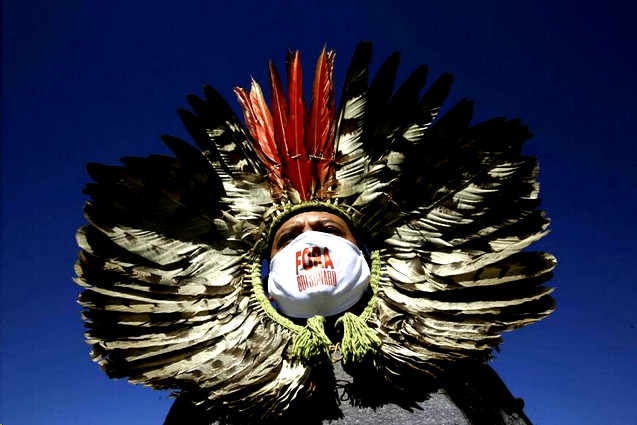
Indigenous leader Kretan Kaingang protesting Brazil's president Jair Bolsonaro for his handling of the coronavirus crisis. Eraldo Peres/AP


Effectively, though Indigenous communities are doing the most to protect the planet, statistically it is those same people who are most at-risk in the climate crisis.

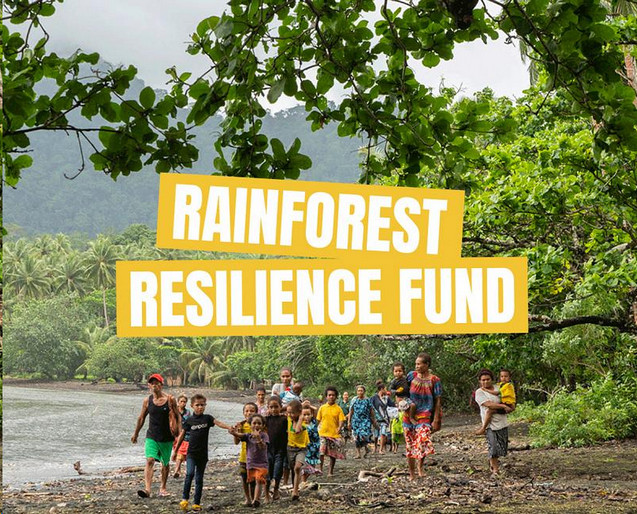
The COVID-19 pandemic has brought fresh problems for Indigenous Peoples as well, with supply chains affected and food prices rising. UK-based climate charity Cool Earth works towards ending tropical deforestation and degradation across seven countries in four continents, by empowering and supporting local people engaging in positive climate action.

The organisation recently launched its Rainforest Resilience Fund, making an urgent appeal to provide food and sanitation for Indigenous communities who are facing the impacts of coronavirus.

“Cool Earth’s long-term focus will always be protecting rainforest alongside local people, but in the last month, we have been inundated with calls for urgent aid from almost every one of our partner communities,” explains the charity’s director Matthew Owen. “Essential supplies of food and hygiene equipment are needed immediately to keep people safe and healthy, along with resources like seeds and tools to prepare for the coming months.”

The fund has seen significant support, meaning hundreds of families have already received aid during these challenging times.

Cool Earth launched the Rainforest Resilience Fund to support Indigenous communities impacted by the pandemic. Cool Earth


“By supporting Indigenous communities that live in rainforest, we can help them continue to be the guardians and custodians of the rainforest that we all need,” adds Cool Earth’s ambassador and television presenter Gillian Burke.

Cool Earth’s broader mission is exactly the approach to environmental action that researchers, and now the UN, are calling for. By placing Indigenous Peoples at the heart of environmentalism, taking their lead and following their examples, we have a chance to limit the extent of the extinction crisis and protect our vital ecosystems around the world.

As UNESCO Director-General Audrey Azoulay concludes, “our local, Indigenous and scientific knowledge is proving that we have solutions and so no more excuses: we must live on earth differently.”

Links

(AU) Logging And Fire Both Make Forests More Flammable

Sydney Morning Herald - Jamie Kirkpatrick*

The clear and overwhelming evidence is that logging makes forests more flammable.

 These are the findings of four peer-reviewed, published scientific studies from four institutions in six years, and of multiple scientific reviews.

Bushfire risks have been getting worse for eastern Australia in recent decades. Credit: NIne

The likely reasons are that after logging, increased sunlight dries out the forest floor, thousands of fast-growing saplings per hectare increases the fuel for a fire to burn, and the wind speed on hot days increases because of the lack of a tree canopy (wind speed is a key factor in creating extreme fire conditions).

Most branches that burn in a bushfire are smaller than the diameter of a human thumb. Young trees burn almost completely while big, tall trees often remain alive and standing after fire.

Climate change is already resulting in more extreme fire danger days, and the evidence is that native forest logging makes things worse.

Dense plants create a "fuel ladder" to the treetops. Dense plant growth occurs in forests growing back from either logging or fire. More severe fires produce denser regrowth. Growing trees in young forests create greater fire hazard for decades.

In logged forests, the body of evidence shows increased flammability begins in the first 10 years after logging or fire and continues for about another 30 years, depending on forest type.

The evidence is that logging and fire both make forests more flammable. Post-fire, the logging industry receives taxpayer-funded grants for additional, increased logging of burned forest, as it did last month. Peer-reviewed studies show post-fire logging also increases forest flammability for decades.

After logging, the top of the tree, the bark and the branches are left on the ground. Only the stripped trunk of the log is taken. Even if the area is then burned, excess dead branches remain, and then dense plant regrowth creates much more fire fuel.

An examination of Tasmania’s January 2019 fires found forests growing back after industrial logging burned more severely than old-growth forests.

 Another peer-reviewed paper found Victorian state forests allocated for logging burned more extensively and frequently than national parks over the past 20 years, and 28 per cent of the area VicForests had planned to log up until 2024 was burned last summer.

Two other studies found fire is more severe in logging regrowth. Studies from the US and Patagonia had similar outcomes.

The catastrophic Kilmore fire in Victoria in 2009 burned slower and with less intensity in tall, wet, old-growth forest on Mt Disappointment.

The logging industry funded a contradictory piece on fire behaviour in 2014, using members of a group called the Institute of Foresters of Australia. The paper, led by Peter Attiwill with co-authors employed by the logging industry, was titled Timber harvesting does not increase fire risks and severity in wet forests of southern Australia.

Immediately, a peer-reviewed paper called Errors by Attiwill (Bradstock and Price, 2014) responded that Attiwill had “erroneously reported our results” and pointed out other key flaws.

Speaking about mountain ash forests, Attiwill had said: “There is no evidence from recent megafires in Victoria that younger regrowth (less than 10 years) burnt with greater severity than older forest (over 70 years)”, a statement that did not address the key period of flammability found by other studies, between around years 10 and 40.

Robust analysis of the same Victorian fires shows a clear relationship between time since logging and fire severity.

There is no published scientific work suggesting logging reduces fire risk. Still, VicForests aggressively attacks scientists who publish peer-reviewed science on the subject, including those it has previously employed.

Private Forests Tasmania has claimed commercial logging is a preventative fire strategy. This claim is not supported by any peer-reviewed fire behaviour models.

Industrial logging continues near country towns including Warburton, Toolangi, Healesville, Noojee, Orbost, Mallacoota and Cann River in Victoria; around Eden and Batemans Bay and along the south and north coasts of NSW, and in areas around Geeveston, Maydena, Derby, Southport and Dover in Tasmania.

As scientists, our purpose is to inform the public and decision-makers about the peer-reviewed scientific evidence. The evidence is that logging makes forest more flammable.

*Jamie Kirkpatrick is distinguished professor in geography and spatial sciences at the University of Tasmania. This article was co-authored by Dr Jennifer Sanger, Dr Chris Taylor, Dr Robert Kooyman, Dr Phil Zylstra and Professor James Watson.

Links

08/06/2020

(AU) Renewable Energy Stimulus Can Create Three Times As Many Australian Jobs As Fossil Fuels

The Guardian - 

Government spending on clean energy would deliver 100,000 new jobs, EY assessment finds

Cows roam around near a wind farm in Bungendore. Ernst and Young has found government spending on renewable energy and a green recovery from coronavirus would create three times as many jobs as the same spending on fossil fuels. Photograph: Mick Tsikas/AAP

Stimulus programs backing clean energy as a path out of recession would create nearly three times as many jobs for every dollar spent on fossil fuel developments, according to a financial consultancy analysis.

The assessment by professional services firm Ernst & Young (EY) says a government focus on renewable energy and climate-friendly projects to drive the economic recovery from the Covid-19 pandemic could create more than 100,000 direct jobs across the country while cutting greenhouse gas emissions.

Commissioned by environment group the World Wide Fund for Nature, the EY report suggests fast-tracking wind and solar farms that have already been approved, increasing electricity transmission capacity and backing new industries in battery manufacturing, electric buses, renewable hydrogen and manufacturing powered by renewable energy.

It estimates every $1m spent on renewable energy and exports creates 4.8 full-time jobs in renewable infrastructure or 4.95 jobs in energy efficiency. By comparison, $1m on fossil fuel projects has been found to create 1.7 full-time jobs.

That suggests that if 10% of what the federal and state governments had indicated they would spend in response to Covid-19 was directed towards clean projects it could create 160,000 jobs.

“It represents a fraction of the immediate government stimulus package while generating significant job numbers and reorienting the economy towards a more strategic, low-carbon trajectory,” it says.

It follows a push by the United Nations, banks, investors and financial institutions, and a cross-sector collection of groups representing much of Australian society including business organisations for measures to help recovery from Covid-19 to also address the climate crisis.

While several countries, including the European Union, South Korea and Canada, have backed green recovery measures, an analysis by Bloomberg New Energy Finance found the vast majority of stimulus money so far announced by governments would prop up the fossil fuel economy. The Morrison government has called for a recovery built on gas.

The EY report suggests about 58,000 jobs could be created in construction by clearing the way to accelerate the development of solar and wind farms that had already been planned.

WWF also called for a federal renewables stimulus package of nearly $2bn, including 90% to be spent in the next two years, saying it could generate nearly $10bn of economic benefits. The largest portion, $520m, would be spent on improving energy efficiency and increasing renewable energy in manufacturing, with a goal of Australia becoming a global clean energy manufacturing hub.

Other recommended programs would help create manufacturing industries in batteries and electric buses and cut the cost of solar power for thousands of community organisations. It also recommends further boosting support for renewable hydrogen, which the government and industry have identified as a potential major export industry and local energy source.

Nicky Ison, WWF Australia’s energy transition manager, said federal, state and territory governments had an opportunity to rebuild the economy in a way that set it up for prosperity in a world that valued low-carbon goods, in line with the Paris agreement.

She said an energy efficiency drive was a “no regrets” approach as it cut emissions while improving productivity, and an economic rebuild based on renewable energy could re-employ people in industries that had suffered some of the biggest job losses, including construction, manufacturing and professional, scientific and technical services.

“We think that this is a moment. The economy was struggling before the Covid crisis and it is struggling even more now, but a clean stimulus package can address issues holding back renewables and get the ball rolling on more than 100,000 jobs,” she said.

A leaked report by a taskforce advising Australia’s National Covid Coordinating Commission focused on finding ways to lower the cost of gas to help manufacturing recover and did not considers alternatives. Government agencies have found renewable energy is cheaper than fossil fuels. The commission’s chair, Nev Power, later distanced himself from the recommendations in the leaked report but backed gas as central to the recovery.

An assessment by the Intergovernmental Panel on Climate Change, commissioned at the Paris summit by all signatories including Australia, found limiting global heating to 1.5C above pre-industrial levels was likely to require the world reaching net zero emissions by 2050. The Morrison government has not set this target for Australia.

Scientific analyses have found under current policies the world is currently headed for more than 3C of warming, an increase scientists have warned would lead to significant ecological collapse.

Links

Whoopi Goldberg Teams With Extinction Rebellion For Climate Change Movie

Reuters - Martyn Herman

A scene from 'The Gigantic Change'

Actor Whoopi Goldberg. REUTERS/Flavio Lo Scalzo
LONDON - American actress Whoopi Goldberg has lent her voice to an Extinction Rebellion animated film highlighting the precarious state of the planet’s natural environment.

The three-minute film entitled “The Gigantic Change” was released on Friday to coincide with World Enviroment Day.

It is set in 2050 and shows a girl asking her grandmother, voiced by Goldberg, to read a “happy” bedtime story.

After the grandmother chronicles a gloomy planet on the brink of environmental collapse back in 2020, the girl finishes off the tale, switching the narrative to one where the world came together to tackle climate change and protect nature.

While the ending is deliberately ambiguous, the film offers a message of hope.

The year 2050 is significant as it is when many nations have committed to becoming carbon neutral.


“The Gigantic Change,” a three minute animated film about climate change set in a dystopian 2050 narrated by Whoopi Goldberg for activist group Extinction Rebellion.

The film was created by Passion Pictures, the London studio behind the Rang-tan film for British supermarket chain Iceland highlighting the threat of the palm oil industry to orangutans.

With the world slowly emerging from lockdown as a result of the coronavirus pandemic, climate action group Extinction Rebellion has been pushing the message that the human race must seize the opportunity to create a greener future.

A scene from 'The Gigantic Change'


The film ends with a caption saying that unless the human race changes course, by the year 2050 one billion people will be displaced and half of all species extinct.

Asked about Oscar-winner Goldberg’s involvement, co-director George Lewin said: “We thought her iconic voice would bring a perfect sense of gravitas to the performance. Plus she is outspoken on environmental issues and had the potential to inspire her followers to take action."

A scene from 'The Gigantic Change'

The Gigantic Change went live on Extinction Rebellion’s Facebook,YouTube, Twitter Instagram platforms on Friday.

Links

(UK) Make Covid-19 Recovery Green, Say Business Leaders

BBC - Roger Harrabin

More than 200 UK business leaders have urged the government to invest in a Covid-19 recovery that is in line with climate goals. PA

More than 200 top UK firms and investors are calling on the government to deliver a Covid-19 recovery plan that prioritises the environment.

They say efforts to repair the economy should support the government's commitment to tackle the climate change crisis.

They believe ministers should use the Covid-19 lockdown as a springboard to propel a green economy.

The signatories to the letter include Lloyds Bank, Asda, Siemens and Sky.

The proposals outlined by firms such as Mitsubishi, Signify and Yorkshire Water in a letter to the prime minister include:
  • Driving investment in low carbon innovation, infrastructure and industries.
  • Focusing support on sectors that can best support the environment, increase job creation and foster the recovery - whilst also decarbonising the economy.
  • Putting strings on financial support to ensure firms getting bailout cash are well managed, and in step with climate goals.
In a speech on Thursday Boris Johnson briefly committed himself in principle to the so-called Green New Deal slogan "Building Back Better" for a more resilient society.

And there are rumours that the Treasury is planning cash for labour-intensive home insulation, and further investment in electric vehicles.

The letter signatories suggested further investment in electric vehicle infrastructure.

But the signatories to the letter urge ministers to publish detailed plans that will put the UK back on track to meet the medium-term climate goals, from which it's slipping.

They come from both multinational and national businesses across industry sectors including energy, finance, consumer goods, retail, construction, water and communication.

'Job creation'

Their letter says: “Measures that cut greenhouse gas emissions and stimulate the economy have the potential to be more effective in supporting jobs and economic growth.

"They'll also support our long-term climate goals and deliver better outcomes in other key areas of public interest, such as public health and wellbeing.

“Investments in projects such as building renovation, offshore wind, electric vehicles, environmental improvements and low carbon industrial clusters have the potential to bring investment and job creation across multiple regions of the UK."

The initiative has been co-ordinated by The Prince of Wales’s Corporate Leaders Group (CLG).

It told BBC News: “Clearly the immediate focus has been on keeping the economy going and, understandably, there will need to be some urgent support measures that have not had significant 'strings attached'.

“But as long-term support measures are introduced, there should be measures within them to ensure that the money is going to well-managed companies supportive of the UK's long term goals.

'Green strings attached'

Green groups have called for all bailout cash to go to firms that agree green objectives.

But the corporate leaders said: “While we can't say no exceptions ever, green strings should be the rule, not the exception.

“Airlines would be a very strong example of a sector that will likely need support but should also be doing its bit to adapt to the challenges of climate change and support the transition - as many senior leaders in the sector recognise.”

Liz Barber from Yorkshire Water said: “It doesn’t have to be a hard choice; I see lots of opportunities which would rebuild the economy at the same time as helping the vulnerable, securing the stable climate and protecting the natural environment.”

She gave the example of the Hull project Living With Water, which focuses many partners on making the city resilient to floods.

Meryam Omi from Legal & General warned: “The government is understandably focusing on the present crisis, but they must heed the dangers of reacting too late to threats and remember one of the gravest in the world - the climate emergency.

“Decisions policymakers take now will decide the success of the UK’s ambitious net-zero target. They’ll have implications for decades.

“Implementing an ambitious ‘green’ recovery package, with clear pathways for companies to build aligned strategies and for investors to direct capital into ‘green’ projects at scale is now matter of necessity, not choice."

The government was approached for comment..

Links

07/06/2020

This Is How Climate Change Will Increase Human Conflict

VICE - James Greig

Water wars, state repression, an Arctic 'Gold Rush' and other ways humans will be tearing each other apart as the planet heats up.


Whether or not climate change will exacerbate conflict is no longer a hypothetical question: according to the Red Cross, it’s already happening.

As long ago as 2018, Peter Maurer, the head of the organisation’s International Committee, told the Guardian: “When I think about our engagement in sub-Saharan Africa, in Somalia, in other places of the world, I see that climate change has already had a massive impact on population movement, on fertility of land. It’s very obvious that some of the violence that we are observing… is directly linked to the impact of climate change and changing rainfall patterns.”

A recent article in the Washington Post agreed with this gloomy analysis: “Climate and climate change have had modest effects on past conflicts, but these effects are expected to get much larger in the future.” A 2013 study, published in Science, confirmed the clear link between climate events and human conflicts.

All of this points to an increase in hostility as the world heats up. But why is it the case that global warming should have such a dramatic effect? And just how bad can we expect things to get?

Migration

Climate Change will create 1.5 billion migrants by 2050 and we have no Idea where they'll go. Izzie Ramirez
Global warming will increase migration for a number of reasons: there will be droughts, crop failures, water scarcity and a rise in sea levels to an extent that makes many coastal areas uninhabitable.

Discussing the threat posed to the US coastline, climate change scientist Orrin Pilkey told VICE: “We should be planning and executing the beginning of a retreat from the shoreline in response to sea level rise and increased storm severity.”

This situation is not limited to the US. In many cases, rising sea levels will affect nations in the Global South that are far less-equipped to deal with the impact. A 2016 study showed that, in countries reliant on agriculture, a 1C temperature increase correlates with a 5 percent increase in outward migration. All of this means that in the years ahead, we can expect to see migration on a scale unparalleled in human history.

Unfortunately, migration almost invariably causes tension; although not in the way you might expect (if you're a xenophobe, anyway). The problem is not migrant communities causing trouble or committing crimes but rather the treatment they receive.

For instance, the only type of terrorism that increases with immigration is the domestic, right-wing kind. To find out more about how climate change might affect conflict, I spoke with Nate Bethea, a writer and US army veteran who runs What a Hell of a Way to Die – a leftist podcast about military and veteran issues.

“I was never in Iraq,” Bethea says, “but there were a number of people who I met who were very disillusioned by their experiences there. They felt that what was done to the Iraqi people would be done to Americans sooner rather than later. It was the idea that, 'It won't be long before they have an Abu Ghraib for Americans.' I think what we're seeing in the US now, with the reactionary right basically getting top cover to run concentration camps for immigrants – and even their US citizen children – is, in some ways, a confirmation of that. I can only see that rhetoric, and the militarisation that comes along with it, getting more and more severe.”

And what does this have to do with climate change? “Global warming is going to drive huge numbers of people to flee into more temperate climates. The US and UK are pretty similar in terms of their hostility to immigration, and you're seeing this militarised response even now when immigration rates aren't particularly high.

“If it's this bad already,” he continues, “with the US letting toddlers die of influenza in concentration camps for minors, and the UK aggressively deporting elderly children of 1940s immigrants – who are very clearly British citizens – what is it going to look like when climate change worsens?"

Scarcity

These climate change arguments need to die. Joe Sandler Clarke
Climate change is expected to cause a disastrous scarcity of resources, which we may start to feel the bite of sooner – and closer to home – that we had previously anticipated.

The head of the Environmental Agency recently warned that the UK could run out of water in as little as 25 years. This would, obviously, be a disaster: an armageddon of troops on the street, evacuations, outbreaks of disease and a lot of portaloos.

We could, however, conceivably get a three-day week in which basically everything is shut except the pub – so there is some silver lining for the lazy pissheads among us.

Armed Kenyan fishermen prepare to sail their boat during a fishing expedition on Lake Turkana, northern Kenya. Photo: Siegfried Modola / Alamy Stock Photo

It makes sense that a scarcity of resources will increase tensions internally; people may find themselves forced to fight for food or water simply to survive. But it’s also likely to happen at an international level. Bethea says, “I absolutely think you will see regional conflicts due to water scarcity, but I think a prelude to that will be significant disorder and violence within affected countries.”

But for all the catastrophes that climate change will undoubtedly cause, there will be opportunities too. We could be at the beginning of a new gold rush. Take the Arctic, where the melting ice caps are expected to reveal a wealth of resources; chiefly fossil fuels but also diamonds and platinum. One government source, who wished to remain anonymous, told me, “Everything changes as a result of higher temperatures in the Arctic, from mass fish migration to fights over fossil fuels.

“As fish move in search of colder waters,” he continues, “fights between fishermen over increasingly sparse catches will become commonplace. On the international stage, there will be a scramble for the Arctic from both regional and international actors in pursuit of the fossil fuels to which that melting ice gives easier access. This same melting ice also allows easier transport of these fossils fuels once they are extracted; the first cargo ship in history sailed through Russia’s Arctic north in August last year and many more look to follow in its wake.”

Already, the US, China and Russia are jostling for dominance over the region, with the UK changing its defence policy accordingly. With so many spoils to be won, and so many Arctic territories already being contested, it wouldn't be surprising if the region becomes a major source of conflict.

The Heat

There is plenty of evidence to suggest that hot weather increases violence. Given that heat has been proven to make people more aggressive on an individual level, it's not too much of a stretch to imagine this may affect foreign policy, something that is ultimately decided by individuals. Ideally, we don’t want the people in charge of military decisions to be suffering from heat stroke.

But the impact is more likely to be felt at an intra-state level. Hot weather has served as the backdrop to a number of riots in the UK, from Brixton in 1981 to the disorder in 2011 that began in Tottenham before spreading throughout the country. Admittedly, there were no riots during the heatwave last year. But when England beat Sweden at the World Cup, a group of people did storm and trash a branch of IKEA – which is a pretty odd thing to do.

There are a number of factors at play, but if temperatures increase worldwide (as they’re predicted to) we could well see an attendant increase in civil disturbance and violent crime.

Links

Lethal Heating is a citizens' initiative