18/11/2020

(USA) Bezos Makes First Donations From $10 Billion Earth Fund For Fighting Climate Change

Washington PostSteven Mufson

Amazon chief executive and owner of The Washington Post says climate change is most urgent issue facing the planet

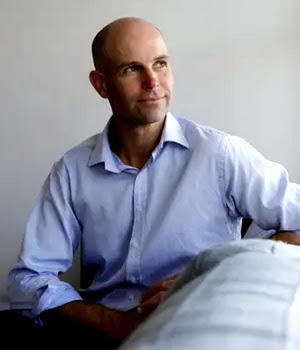
Jeff Bezos, founder and chief executive of Amazon. announced the first grants in his plan to award $10 billion to organizations fighting climate change. (Andrew Harrer/Bloomberg)

Jeff Bezos said Monday he is giving $791 million to 16 groups fighting climate change, the first grants from his Earth Fund, saying the money is “just the beginning of my $10 billion commitment to fund scientists, activists, NGOs, and others." 
 
More than half of the donations went to established environmental groups, with $100 million donations each going to the Environmental Defense Fund, the Natural Resources Defense Council, the Nature Conservancy, the World Resources Institute and the World Wildlife Fund.

Bezos, the founder and chief executive of Amazon, also bestowed money on groups concerned with environmental justice, including Dream Corps’ Green For All, the Hive Fund for Climate and Gender Justice, and the Solutions Project.

“I’ve spent the past several months learning from a group of incredibly smart people who’ve made it their life’s work to fight climate change and its impact on communities around the world,” Bezos said in an Instagram post. “I’m inspired by what they’re doing, and excited to help them scale. … We can all protect Earth’s future by taking bold action now.”

Bezos, the world’s richest man, owns The Washington Post.

Leaders of the groups receiving funds said they met earlier this year with Bezos and his partner Lauren Sánchez to discuss what they would do with the grants. Bezos has a small team, including from his personal office, helping to figure out how to parcel out the funds, they said. He will likely hire more people to assist with the Earth Fund.

“He asked a lot of questions. It was very clear that he had already learned a lot about climate change and was very knowledgeable,” said Fred Krupp, president of the Environmental Defense Fund. “He had studied the issue, and he was very focused on having the biggest impact he could with his contribution.”

The new Earth Fund catapults Bezos into the leading ranks of nonprofit climate gifts.

“Climate change is the biggest crisis facing humanity but, despite lots of great work, has been an underfunded area of philanthropy,” said Jules Kortenhorst, head of the Rocky Mountain Institute, which received $10 million. “Mr. Bezos’s grant highlights the urgency and importance of the work being done in civil society to dramatically reduce greenhouse gas emissions.”

Kortenhorst said the money would be used to promote the decarbonization of buildings and stop the burning of natural gas in water heaters, stoves and boilers. In recent years, natural gas has displaced coal, but it remains a fossil fuel that “enormous impact” on health, Kortenhorst said. The Bezos money will be used within two years, he said, an important part of RMI’s $75 million budget this year.

Krupp said that the $100 million grant to the Environmental Defense Fund would be spread over three years, and much of it would go toward fully funding a satellite the organization plans to put into orbit to monitor methane emissions. Methane is a powerful greenhouse gas that can be 80 times more potent than carbon dioxide.

The money would give a boost to the group, which ordinarily has a budget of about $230 million a year.

“Thanks to this and other funding, we will cut methane pollution from the oil and gas industry by 45 percent by 2025, which will be the same 20-year benefit of closing a third of the world’s power plants,” Krupp said.

In 2019, less than 2 percent of $730 billion in global philanthropic giving was spent fighting climate change. But as wildfires in the West and hurricanes in the East turn climate change from an abstraction into a clear and present danger in the United States, that share is starting to rise.

“Solving the climate crisis requires investment in a wide set of solutions,” Krupp said. “The obstacle isn’t finding solutions, it is securing the funding to scale solutions quickly. Our hope is that this gift encourages other philanthropists to support climate solutions on the scale needed.”

The World Wildlife Fund said it would use its $100 million grant to “harness the power of nature” including the protection and restoration of mangroves in Colombia, Fiji, Madagascar, and Mexico; the development of new markets for seaweed as an alternative to petroleum-based products; and the restoration and protection of forests.

The World Wildlife Fund’s U.S. budget is about $300 million a year. Its worldwide budget is about $900 million a year.

“This commitment recognizes that you can’t solve climate change without nature,” WWF’s chief executive Carter Roberts said. He said that the group could use the money from Bezos to leverage an additional $850 million from other partners, including investors, foundations and governments.

The World Resources Institute, which will receive $100 million over five years, said it will use the money for two major initiatives. This first is to develop a new satellite-powered land-use and carbon-emissions monitoring system to measure the impact of conservation and restoration of forests, grasslands, wetlands and agricultural lands on reducing emissions. The other project will try to spur the electrification of school buses, with a goal of converting more than 450,000 to zero-emissions vehicles by 2030, the organization said.

One of the smallest organizations to receive money from Bezos is Green for All, which promotes local, state and federal policies that put low-income people to work retrofitting homes or in other “clean energy” occupations. Michelle Romero, Green for All’s national director, said that it will receive $10 million over three years, doubling the size of the advocacy group, which currently has six full-time employees. The group falls under an Oakland, Calif.-based umbrella group, Dream Corps, which has been active in helping released prisoners find jobs.

Green for All was founded by Van Jones in 2007, before his television career.

Romero said that the group reached out to Bezos when it heard of the grant program. “We knew it would be important to get some of that investment into low-income communities and communities of color,” she said.

The other recipients are: the Climate and Clean Energy Equity Fund, $43 million; ClimateWorks Foundation, $50 million; Eden Reforestation Projects, $5 million; Energy Foundation, $30 million; the Hive Fund for Climate and Gender Justice, $43 million; Natural Resources Defense Council, $100 million; the Nature Conservancy, $100 million; NDN Collective, $12 million; Salk Institute for Biological Studies, $30 million; The Solutions Project, $43 million and the Union of Concerned Scientists, $15 million.

Links

The Secret Club For Billionaires Who Care About Climate Change

Bloomberg Green - Ben Steverman

Creo Syndicate helps the world’s richest families invest in businesses fighting global warming.

Illustration: Anna Haifisch for Bloomberg Green

A few years ago, the hundreds of members of France’s Mulliez family, with a global retail empire worth more than $38 billion, decided they should take climate change more seriously—or rather, their investment portfolio should.

But where to start? Climate change and the fight against it could transform almost every sector of the economy as companies clamor for ways to cut emissions and even pull carbon dioxide from the air. 

“This space is very broad, and it’s complicated,” says Delphine Descamps, managing director at Creadev, the Mulliez family office, which has about €200 million ($236 million) to invest each year.

Then she met Régine Clément, the head of a small, secretive nonprofit called Creo Syndicate. An exclusive club of climate-focused investors, Creo’s mission is to speed up the flow of capital into investments that can slow global warming. 

The group focuses on the richest of the rich, working with about 200 families and investment outfits with a total of more than $800 billion under management. 

Prominent members include legendary investor Jeremy Grantham and Nat Simons, the son of Renaissance Technologies’ billionaire founder James Simons. Members must pay dues—a “very reasonable” flat fee, Clément says, that makes up about half the nonprofit’s revenue—and they must prove they’re serious by planning to make their first investment in climate and sustainability within six months. 

Members must also have assets of at least $100 million and get approved by the nonprofit’s board.

When the Mulliez family joined, its staff met with experts, experienced climate-focused investors, and other family offices, who were surprisingly candid about what they’d learned. 

At online seminars and in-person meetings with carefully selected groups, often with fewer than 20 people, they discussed innovations in agriculture and other areas that may cut emissions while feeding a growing population.

 “People openly talk about their investments and what worked and what didn’t work,” she says.

“This is not philanthropy, this is investment”

Although it’s a nonprofit and doesn’t have any money of its own to deploy, Creo acts a little like an investment bank, vetting about 300 deals per year, connecting investors with possible partners, and conducting research on technologies. 

Members have invested in everything from batteries and hydrogen fuel to regenerative farmland and greener product packaging. Portfolios include still unproven technologies such as methods for carbon capture and true long shots like fusion reactors.

Creo members make a wide variety of bets that might make a difference—and make money. “This is not philanthropy, this is investment,” Clément says. 

Superwealthy families, she says, have an advantage over other players: Managing money for future generations, they can afford to wait a decade or more for investments to bear fruit. Some members in Europe have been rich for hundreds of years. Families “are naturally inclined to think long term,” she says.

Many of the investments aren’t mainstream, but “it’s fine, because these families are comfortable being pioneers,” says Spring Lane Capital managing director Christian Zabbal, who co-chairs Creo’s board. “What Creo is doing today is essentially a preview of what institutional capital will do very shortly.”

The Mulliez family owns a giant supermarket chain, Auchan—basically France’s answer to Walmart. Their conversations with other Creo members led to a decision to concentrate on food in their climate-focused portfolio. 

Agriculture accounts for about 10% of global greenhouse gas emissions, and better farming practices could fight climate change by both reducing pollution and sequestering more carbon in soils. Sustainable forms of aquaculture, meanwhile, could satisfy demand for protein with far less pollution than other kinds of meat. 

The family invested in Gotham Greens, an indoor urban farming company, and two companies involved in aquaculture: Kingfish Zeeland, which runs high-tech fish farms, and InnovaFeed, which raises insects as feed for farm-raised seafood.

“You’re talking about a complete reconfiguration of the global economy”

This year the Mulliez family office led a fundraising round for Hungry Harvest, a startup that sends consumers weekly boxes of produce. When Descamps asked Creo if it knew of any other mission-driven investors looking for deals focused on reducing food waste, she was introduced to Quadia, a Geneva-based impact investor that helped close the $13.7 million investment round in September.

Creo’s families want to “be at the front of the parade,” says Jason Scott, a board co-chair. He bristles when people suggest climate-focused investing is becoming a bubble. 

“You’re talking about changing the way food is grown and transported and what people eat, how energy is delivered to people’s homes, what people drive, the way people build cities,” he says. “You’re talking about a complete reconfiguration of the global economy.”

When Creo was formed five years ago from the merger of two climate-focused investor networks, it was just an informal gathering for like-minded families. “People would throw down their credit cards for dinner. It was pretty low-rent,” Scott says. 

Clément became Creo’s founding chief executive officer in 2016. “She’s turned it into a powerful platform,” Scott says. “There’s almost an insatiable demand for the kind of support Creo is providing.”

In four years, the nonprofit’s membership has quadrupled, and its members and affiliates’ assets have risen eightfold, from less than $100 billion in 2016. To keep up with the demand, Creo’s staff has doubled in the past year, to 10 in the U.S. and two in the U.K. 

The group doesn’t go out and recruit members. “We grow entirely through introductions. We never seek out a family,” Clément says. Although Creo doesn’t require applicants to divest from fossil fuels or other emitters, she wants to make sure all members are fully committed to the mission. 

Part of building trust with wealthy families is keeping their secrets. In addition to Grantham and Simons, the group’s ranks include other well-known billionaires whose names Creo won’t disclose. A mantra is “no tourists allowed.”

The key to Creo’s success, members say, is how it gets very wealthy investors in the same room—or on the same Zoom call. “You have people with a decade of experience and people with a month of experience,” says longtime member Reuben Munger, a hedge fund manager who founded Vision Ridge Partners as his family office and later turned it into an investment firm. With more than $1 billion under management, it specializes in sustainable assets.

It helps that families generally aren’t trying to pitch to each other and that Creo makes no fees on any deals. “There’s not a lot of hidden agendas,” Zabbal says. Creo has tried to unlock even more capital by venturing beyond families to large institutional investors that also want a head start on climate investing. 

The nonprofit is working with CDPQ, a Quebec pension fund with $333 billion in assets, which launched a $500 million investment strategy around climate and sustainability. The pension’s goal is to invest alongside families or firms in late-stage venture companies. 

The first deal, announced in September, is with S2G Ventures, a Chicago firm focused on food and agriculture that’s backed by Lukas Walton. An heir to the Walmart fortune, he has a net worth estimated to be more than $22 billion by the Bloomberg Billionaires Index.

Creo members have seen their investments pay off. QuantumScape Corp., a battery tech company recently valued at $3.3 billion, received early funding from Prelude Ventures—co-founded by Simons—and Capricorn Investment Group, both Creo members. 

Participants in the nonprofit also invested in early rounds of Tesla Inc. and Beyond Meat, two of 2020’s best-performing stocks. This kind of success helps convince skeptical family members and advisers of what Creo can do.

“The opportunities are tremendous, but it’s also overwhelming for someone who starts out,” Zabbal says. “By investing in collaboration with others who bring expertise, it allows more investors to take the leap.”

Links

Wielding $9 Trillion, Investors Warn Firms From BP To BMW To Get Real On Climate Change

ForbesDavid Vetter

Performance group The Red Brigade protesting BP's sponsorship of exhibitions at The British Museum in London. BP was one of the firms today urged by a group of institutional investors to account for climate risk in its financial reporting. Getty Images

Investors controlling more than $9 trillion in assets today called on 36 major European firms to clean up their act on climate change—specifically when it comes to their accounts.

The group of 38 institutional investors signed a joint letter urging firms including oil giants Shell and BP, energy provider EDF, airplane manufacturer Airbus and car maker BMW, to account for climate risk in their financial statements, as nations move away from fossil fuels and ramp up efforts to decarbonize their economies.

The firms targeted were identified by the investors as being exposed to the many potential impacts of a wholesale transition away from fossil fuels. 

The investors, part of the Institutional Investors Group on Climate Change (IIGCC), including J.P. Morgan Asset Management, Fidelity International and the U.K. Shareholders Association, expressed a concern that the real costs of the transition towards a “Paris aligned” future—limiting temperature increases to well below 2 degrees Celsius and ideally to 1.5 degrees Celsius—are not being reflected in the firms’ financial disclosures.

The investors included with the letter a paper on Paris-aligned accounting, which explained: “Accounts that leave out material impacts (whether in the reported numbers, or in disclosures such as sensitivities) will misinform and thus, result in misdirected capital.”

The paper set out why and how firms should go about disclosing climate risk, and further urged regulators to mandate Paris-aligned accounting and auditing. It then set out three courses of action investors would take when firms failed to meet expectations in their climate-adjusted accounting: engagement, voting and divestment. 

“If the accounts leave out material climate risks, too much capital will go towards activities that put shareholder capital at risk,” the letter stated. “Worse still, this puts all our futures at risk.”

Explaining the aim behind the call to action, Stephanie Pfeifer, CEO of the IIGCC, said: “Companies can no longer afford to ignore what climate change means for their business. Investors need financial impacts of getting onto a net zero pathway to be booked and acted on.”

“Climate change is material and the importance of alignment with the Paris Agreement is beyond doubt,” Pfeifer continued. “What investors now need is visibility from companies in their accounts. They are making this clear today and expect companies to report in line with existing global accounting standards.”

There is broad acknowledgement among developed economies that investors could be the key to spurring climate action on the scale required by the Paris Agreement. Government stimulus plans to address the economic turmoil from the coronavirus pandemic are failing to take into account the climate crisis. 

In the face of climate-denying leadership and governments apparently determined to pump Covid-19 stimulus cash into fossil fuels, it has in many cases been left to the private sector to demand institutional change.

Brunno Maradei, global head of responsible investment for Aegon Asset Management, one of the signatories to the letter, said: “Ensuring that the Paris Agreement is considered in financial statements is one way to ensure that the firms most exposed to carbon will be held truly accountable against this important global commitment, while also protecting long-term value for investors.”

Henrik Pontzen, head of ESG at signatory Union Investment, added: “Climate change is real. The costs of climate change are material. Financial accounts that do not reflect the costs of climate change are thus incomplete. In view of this we expect all companies to thoroughly examine their financial accounting practices.”

The move by the institutional investors aligns closely with research from Imperial College London that found investment in companies that don’t necessarily fit the “green” definition would be required if countries are to achieve a successful transition to lower-carbon economies.

In the report, released in September, researchers highlighted the “crucial role of transparent criteria in managing continued funding to fossil-fuel producers and energy-intensive firms.” 

Noting that while there were not yet sufficient green assets in existence to take up the several trillion dollars of capital required for “deep decarbonization,” researchers Charles Donovan, Milica Fomicov and Anastasiya Ostrovnaya suggested that conventional, “high-carbon” industries could “meaningfully contribute to climate stabilization” if companies were required to adhere to a clear set of mandatory standards.

Links

17/11/2020

(AU) Vital Signs: A Global Carbon Price Could Soon Be A Reality – Australia Should Prepare

The Conversation

John Nacion/AP

As well as restoring dignity to the Oval Office, another thing that will definitely change under a Biden presidency is US policy on the environment.
Biden's plan includes rejoining the Paris Agreement on climate change. (AP: Carolyn Kaster)

Biden’s plan for “a clean energy revolution and environmental justice” includes rejoining the Paris Agreement on climate change, investing US$1.7 trillion over the next decade in “green energy” and achieving net-zero greenhouse gas emissions by 2050.

The European Union, Japan and South Korea have already committed to net-zero emissions by 2050. China’s net-zero target is 2060.

With the US joining the fold, the implications for Australia could be huge.

A carbon border tax coming our way

The European Union has already announced it is considering a carbon border tax. This would involve a tariff on imports from nations without a price on carbon similar to the EU. The tax would be proportional to the amount of carbon in the imports, and the relative difference in carbon price between Europe and the exporting country.

This type of “border-adjustment tax” is a smart way to protect domestic industries from being undercut by imports from other countries without a price on carbon.

It would make eminent sense for the US to follow suit.

If so, things get really interesting. It would make it even harder to challenge such taxes as trade restriction before the World Trade Organisation. It would trigger similar moves by other countries serious about tackling climate change.

Joe Biden speaks about climate change and the fires affecting western US states on September 14 2020. Patrick Semansky/AP

In fact, a border-adjustment tax is part of the US Climate Leadership Council’s proposal for a carbon tax and “carbon dividend” – returning all net proceeds from the tax to the American people on an equal basis.

The carbon dividend idea is supported by 28 Nobel laureate economists, 15 former chairs of the US Council of Economic Advisers and four former chairs of the US Federal Reserve.

If most of our trading partners have a carbon border tax, then Australia will have a price on carbon – but only for exporters.

This will leave the Australian economy in a bad position.

With no price on carbon internally, no serious commitment to reduce emissions and a vain hope of meeting our Paris Agreement obligations through dodgy accounting tricks and future technological innovation, the rest of the world is unlikely to be sympathetic.

Action on the environment in the US and Europe ought to provide the impetus to put Australia's climate wars to rest. (Reuters: Simon Dawson)

A carbon dividend plan

There is a better way: enact our own carbon dividend plan.

In 2018 law professor Rosalind Dixon and I proposed a plan for Australia similar to the Climate Leadership Council’s.

University of NSW

Our Australian Carbon Dividend Plan involves a price on carbon, with the proceeds being distributed as a dividend, equally, to every voting-age citizen.

It also allows for a border-adjustment rebate so exporters aren’t penalised if exporting to countries without a similar price on carbon.

This would see a significant majority of Australians better off financially, and help protect exporters while we transition to cleaner energy.

It would also give the Australian government’s Technology Investment Roadmap (to accelerate the use of low-emissions technology) a chance of working. It makes no sense to bet on technology without using market price mechanisms to give suppliers and buyers the right incentives to develop and adopt the most effective technologies.

The world is acting

The US just voted out a climate denier and is now going to take serious action on the environment. Europe is already acting. Our major trading partners are committing to net-zero targets.

We’re getting left behind. This ought to provide the impetus to put Australia’s climate wars to rest. Even if our elected politicians don’t want to do something serious about climate change for moral reasons, they now have little choice but to do so for practical reasons.

And that involves a price on carbon. Otherwise our exporters are going to be seriously disadvantaged. Using the proceeds from that price on carbon to pay it back as a dividend to Australians would be the best way forward.

How climate change policies continues to divide parliament

Links

(AU) A Coalition Of 29 Health Groups Are Urging Climate Action In Open Letter To Scott Morrison

SBS - AAP

Health groups have banded together to send an open letter to Prime Minister Scott Morrison calling for urgent action on climate change.

Health groups have sent an open letter to Prime Minister Scott Morrison calling for urgent action on climate change. Source: Climate Media Centre

A coalition of 29 health groups have issued an open letter to Prime Minister Scott Morrison calling for the same level of urgency in tackling climate change as the COVID-19 pandemic.

The groups include Climate and Health Alliance, Public Health Association of Australia and Australian Epidemiological Association.

They warn climate change is accelerating and if the current trajectory continues unchecked, Australia faces "existential threats to humanity".

"To avoid further health and environmental disasters, governments must take heed of the science, listen to health experts and act now to reduce greenhouse gas emissions and protect the natural environment," the groups say.

Climate and Health Alliance executive director Fiona Armstrong said there can be no recovery with gas, the government's preferred measure to tackle emissions.

"The latest evidence suggests gas is just as emissions-intensive as coal," she said in a statement.

"Backing gas and fossil fuels will only accelerate the climate health emergency, further putting at risk the health of all Australians."

The coalition are calling for Prime Minister Scott Morrison to tackle climate change with the same level of urgency as the pandemic. SBS News

Public Health Association of Australia chief executive Terry Slevin said the impacts of COVID-19 had been severe and wide-reaching.

"Yet climate change is something which poses just as significant, if not a greater, challenge in terms of the impacts on human health, societies and economies," Mr Slevin said.

"We are already witnessing the public health impacts of climate change - through bushfires and smoke, through heatwaves, through communities devastated by drought."

Tackling climate change came back to the fore in the past week after US President-elect Joe Biden committed to returning his country to the Paris Agreement.

Links

(AU) Why Climate Change Is Keeping Directors Awake

AFRNina Hendy

Boards have been promising to clean up their act on climate risk for years, but 2020 is shaping up to be a year of reckoning for those yet to take decisive action.

Industry watchdogs, climate change advocates and climate-conscious consumers have been on the warpath this year. And companies that still fail to address climate change in the boardroom have been left with nowhere to hide.

Action on climate change is on the agenda of an increasing number of businesses. Nine News

Addressing climate change in the boardroom has been on the agenda for a growing number of corporate giants.

More than 80 companies have so far ruled out being involved in the increasingly contentious Adani coal project, deeming reputational risk as being too great.

It means they won’t share in the $1 billion in contracts that the project will generate. Adani itself has rebranded its Australian arm as Bravus Mining and Resources.

The big four banks are among those putting their money where their mouth is on climate change. Westpac told media at the time that backing away from the "toxic political debate around coal sends a powerful message that coal is rapidly going out of fashion in the business and finance community".

A turning point emerged this month, when a 25-year-old Brisbane man successfully sued one of Australia’s biggest super funds over its handling of climate change, forcing it to commit to zero-net emissions by 2050.

Australia has the second-highest number of litigation cases related to climate behind the US.
— Zoe Bush, 2019 John Monash Scholar

The case against the $57 billion super fund Rest forced it to join a growing number of pension funds vowing to align investment portfolios to a goal of net-zero emissions by 2050. It marks the first time a superannuation fund has been sued for failing to consider climate change and should serve as a warning to boards.

Cases against companies found guilty of "greenwashing" consumers have also been on the rise.

Climate change litigator and 2019 John Monash Scholar Zoe Bush says: “Unfortunately science tells us that what boards need to do to address climate change should have been done 20 years ago.

“It’s not broadly recognised, but the fact is that Australia has the second-highest number of litigation cases related to climate behind the US,” she says.

“A growing number of boards are acknowledging that climate risk needs to be taken very seriously, with new guidance issued by industry watchdogs forcing companies to closely watch and manage their own climate risk at a board level,” she says.

Companies are shifting their focus away from governance and towards environmental issues in increasing numbers, according to research from boutique asset manager, Perennial Value Management.

Climate change has garnered a great deal of media and shareholder attention in 2020, prompting boards to make it a strategic focus as investor and consumer pressure mounts, Perennial’s Sustainable Future Strategies portfolio manager, Damien Cottier, says.

Clearer pathway needed

Its research found that 55 per cent of respondents agree that a national energy policy would provide a clearer pathway for sustainable investment, helping companies to plan and invest in environmental considerations.

“These issues are having a greater impact on share prices, and stakeholders are increasing their expectations. Companies are looking at ways to improve, albeit there is still some way to go,” Cottier says.

Meanwhile, Deloitte this week issued a stark warning for companies in a new report: if climate change goes unchecked, then Australia’s economy will be 6 per cent smaller and have 880,000 fewer jobs by 2070.

Principal report author Pradeep Philip says the costs of climate change continues to rise, along with the costs associated with reducing the risks it presents.

“Climate change is no longer a possibility. It is a reality. Doing nothing is now a policy choice, and it is costly. Both government and private sector investment need to get cracking to accelerate Australia’s inevitable shift to a low emission future. Every day’s delay costs Australians more,” Dr Philip says.

“By 2050 Australia will experience economic losses on par with COVID every single year if we don’t address climate change. That would compromise the economic future of all future generations of Australians,” he says.

Boards yet to act on climate risk can expect some guidance to be released by the Australian Institute of Company Directors, which is working on some new resources on governing climate change risks in the year ahead for members.

The move comes after its recent Director Sentiment Index survey found that directors rate climate change risk as one of the top five issues keeping them awake at night, after COVID-19 impacts, long-term growth and global economic conditions.

CEO Angus Armour says it encourages boards to consider the implications of climate change on their organisations as part of sound risk management and reporting. “Boards have a key role in governing risks related to climate change, as well as considering stakeholder and community expectations.”

Links

16/11/2020

(AU) Suing For Climate Action: Can The Courts Save Us From The Black Hole Of Political Inaction?

The Guardian

Climate litigator David Barnden had a landmark win this month against a major superannuation fund. He tells Guardian Australia he is just getting started 

Environmental lawyer David Barnden: ‘As a nation we are starting to wake up to how exposed we are to the risks of climate change. The law will respond to that.’ Photograph: Carly Earl/The Guardian

In the public imagination, blockbuster litigation involves grand courtrooms, passionate advocacy and granite-faced judges.

These hallmarks were curiously absent from the recent denouement to a lawsuit between 25-year-old Mark McVeigh and his superannuation fund, Rest.

No grand oratory from robed barristers, no victory-speeches on the courtroom steps – just a press release and a confidential settlement agreement.

What the conclusion to McVeigh v Rest lacked in symbolism, it made up for in substance. McVeigh’s case, which has resulted in Rest committing to a net zero carbon footprint by 2050 and a suite of short-term measures, is one of the most significant climate litigation outcomes in Australia to date. Its mastermind? A softly-spoken Sydney solicitor, with dual passions for surfing and climate action.

“This is a fantastic result,” says the lawyer, 42-year-old David Barnden. “It should give people hope that big organisations can make significant changes and get on the path to net zero.”

His client is jubilant. “The entire superannuation industry is going to be looking at this case,” says McVeigh, who in September 2017 wrote to Rest asking for information on their approach to climate change – and ultimately sued them. “Outside Australia there is discussion about how pension funds should be managing climate risk,” he continues. “This case sends a message.”

 For funds that are already taking climate risk seriously, the settlement validated their approach. “The case sets a global precedent,” says Kirstin Hunter, chief executive of climate-focused fund Future Super. “We do not have to wait for companies or governments to act, individuals have a huge amount of power in their super and can use it to push for change today. For the super industry, McVeigh v Rest should act as a warning that Australians are increasingly understanding the power of their money, and how it can be used to take climate action.”

On Thursday, AustralianSuper – the country’s largest superannuation fund with $180bn under management – announced it would adopt a net zero by 2050 climate policy. “It is in members’ best interests that AustralianSuper positions the portfolio to a net zero outcome,” AustralianSuper director Andrew Gray said in a press release. As part of this strategy, the fund had divested its holding in Whitehaven Coal.

Barnden, meanwhile, has no time for celebrations. He is busy preparing for two other groundbreaking cases in the courts, trying to fill the gaps left by climate inaction. So, in the absence of effective political will, can our judiciary save us from the climate crisis?
For anyone who takes time to understand the likely predictions, it is really difficult to turn a blind eye to it
David Barnden
“Litigation is not the answer,” Barnden says. Without political action, he suggests, judges can only do so much. “But it is one of the tools that is available to people in making change. As a nation, we are starting to wake up to how exposed we are to the risks of climate change. The law will respond to that.”

* * *

Born in Adelaide, Barnden has long contemplated a career at the intersection of law and the environment. “I was fortunate to have parents who took me to beautiful places as I grew up – the Flinders Ranges, Kangaroo Island and so on,” he says. “I gained an appreciation of biodiversity and how those places were threatened.” Barnden studied dual degrees in law and environmental science at Southern Cross University, graduating in 2004.

“Even then you could see how local councils were trying to deal with the prospect of sea level rise and coastal erosion,” he recalls. “But at a federal level it was being swept under the carpet. Ever since university, I have been interested in how the law interacts with the science. For anyone who takes time to understand the likely predictions, it is really difficult to turn a blind eye to it.”

After working in Argentina, Netherlands and England, Barnden returned to Australia for a job at plaintiff law firm Maurice Blackburn. He describes this experience, working on big class action litigation, as formative. “The firm had a certain boldness in identifying misconduct and a fearlessness in chasing it down,” says Barnden. “That was an excellent grounding to begin exploring the possibilities of climate law.”

In late 2015, Barnden joined Environmental Justice Australia (EJA) to lead its work on climate finance. “The folks at EJA were visionary in understanding that financial levers could be an effective way to approach the climate crisis,” he says.

Barnden commenced work on the McVeigh case while at EJA, alongside the world-first case brought by Commonwealth Bank shareholders claiming the bank had failed to properly disclose the risks climate change posed to its business. The suit was dropped when the bank, in a major turnaround, included in its 2017 annual report an acknowledgment from CBA directors that climate change posed a significant risk to the bank’s operations.

CBA also promised to undertake climate change scenario analysis and said it would not lend money to the Adani coalmine. “The acknowledgment that climate change could have a catastrophic impact on shareholders and investors was in its infancy, but I was lucky to ride that wave,” Barnden said.

This wave animates much of Barnden’s work. He takes existing financial laws and applies them to climate change. In McVeigh, for example, Barnden argued that Rest had violated corporate law by failing to properly consider the material risk that climate change posed to its investments.

In O’Donnell v Commonwealth of Australia, a case Barnden filed in July on behalf of a young law student, he argues that the federal government misled investors by failing to disclose potential climate impact when issuing sovereign bonds.

These novel cases require no great judicial leap of imagination; instead, each treats climate change as just another financial risk, which market actors are legally required to disclose and address.

Environmental lawyer David Barnden
Photograph: Carly Earl/The Guardian


“David is one of the pioneers of next generation climate litigation in Australia,” says Prof Jacqueline Peel, an internationally-renowned climate law expert at the University of Melbourne.

Peel uses the “next generation” label to distinguish from an earlier wave of cases, which focused on stopping individual mining and energy projects. The newer approach, she argues, “seeks more systemic, transformative change through holding corporate and government actors liable for their contribution to climate change.”

EJA senior lawyer Ariane Wilkinson sat opposite Barnden during his years with the organisation. “Climate risk is real,” she says. “Companies know it. But it is not until clients take matters to court that we are clarifying the law and seeing that risk crystallise. What David and his clients do is extraordinarily courageous. The law is catching up to the science.”

Wilkinson suggests that Barnden’s scientific knowledge propels his work. “Any lawyer that sits down and reads the climate science will find the courage to apply their legal skills to the climate crisis. This is not hyperbole – I have literally sat there and watched David read through scientific reports, look horrified and say, ‘well what can we do? How can the law respond?’ At heart, David is a legal practitioner who cares about the world and the people within it.”

* * *

After almost four years at EJA, Barnden decided to venture out on his own, establishing Equity Generation Lawyers in April 2019. The firm specialises in public interest climate litigation. “It was risky,” he admits. “I had many sleepless nights, wondering if it was the right thing to do.”

The firm acts pro bono in some cases, including McVeigh and O’Donnell; Barnden says he also has paying clients, although declines to name them. Currently the energies of Barnden and his four staff are entirely consumed by climate cases. “There is plenty of work around,” he quips.

Barnden also relies on barristers appearing for his clients on a pro bono or reduced fee basis. Melbourne advocate Ron Merkel QC, a former federal court judge, was lead counsel in McVeigh and is also on the record in O’Donnell. “We are very thankful for that support [from barristers] – we could not do it without them,” says Barnden. “The professionalism and intellectual prowess they bring to these cases is phenomenal.”

Even with lawyers and barristers working for nothing, public interest litigation does not come cheap. Clients need to fund hard costs (including court fees, photocopying and travel), plus be prepared to pay the defendant’s legal fees if they lose. It is an expensive proposition.

“Australia is an outlier in terms of funding requirements compared to the rest of the world,” says Isabelle Reinecke, executive director of Grata Fund, which funds public interest litigation (but was not involved in McVeigh). “Our adverse costs burden is uniquely punitive. Clients need to not just fund the legal work, but also underwrite the risk of losing. Against the government or a big corporation, that’s hundreds of thousands of dollars.”

Grata and other organisations do their best to plug this gap. “Clients have to look at philanthropy, both local and international,” Reinecke says. But there is limited funding to go around. “What that means is that regular people and communities are being prevented from having their day in court,” she adds. “It is really difficult to bring this sort of litigation in Australia.”
I certainly hope the time comes that I am out of a job
David Barnden
Most of Barnden’s clients are teenagers or millennials, determined to overcome these hurdles. “They inspire me,” he says. “They are incredibly aware, intelligent, articulate and passionate. If these young people are tomorrow’s leaders, I have a lot of hope for the future.” Barnden sees his role as being a conduit for that passion. “It is easy to be despondent about climate change, to feel helpless,” he says. “But we pride ourselves on offering our clients the chance to make a difference. It is a privilege be able to do this work.”

Just days after settling with Rest, Barnden was back in the federal court for another of his cases – representing eight teenagers in proceedings against federal environment minister, Sussan Ley.

Barnden is seeking an order to prevent Ley approving an extension to the Vickery coalmine in northwest New South Wales, arguing that the minister owes young Australians a duty of care that would be breached if the mine expansion goes ahead. The full case will be heard in March 2021.

It’s yet another unprecedented climate lawsuit. “David’s work is critical and groundbreaking in Australia,” says Reinecke. Further litigation is likely to follow, although Barnden is tight-lipped about the legal angles he is exploring. “I think you can expect more,” he says. “There is fertile ground for corporate actions, investor actions, as well as actions against government entities. We’ll have to wait and see – watch this space.”

One day, Barnden’s services may no longer be in such high demand. “I certainly hope the time comes that I am out of a job,” he says.

“What keeps me up at night is understanding that climate change is getting worse, that people in power are not doing enough to protect younger people, that we are faced with significant biodiversity loss, ecosystem loss, in addition to the impact on people’s future – financial harm, physical harm, mental health harm,” Barnden says. “I am driven to help people find an outlet to do something about that.”

Links

Lethal Heating is a citizens' initiative