01/03/2021

Climatologist Michael E Mann: 'Good People Fall Victim To Doomism. I Do Too Sometimes'

The Guardian - 

The author and eminent climate scientist on the deniers’ new tactics and why positive change feels closer than it has done in 20 years

Michael E Mann: ‘It’s no longer credible to deny climate change because people can see it playing out in real time.’ Photograph: Jessica Hromas/The Guardian

Michael E Mann is one of the world’s most influential climate scientists. 

He rose to prominence in 1999 as the co-author of the “hockey-stick graph”, which showed the sharp rise in global temperatures since the industrial age. This was the clearest evidence anyone had provided of the link between human emissions and global warming. 

This made him a target. He and other scientists have been subject to “climategate” email hacking, personal abuse and online trolling. 

In his new book, The New Climate War, he argues the tide may finally be turning in a hopeful direction.

You are a battle-scarred veteran of many climate campaigns. What’s new about the climate war?

For more than two decades I was in the crosshairs of climate change deniers, fossil fuel industry groups and those advocating for them – conservative politicians and media outlets. This was part of a larger effort to discredit the science of climate change that is arguably the most well-funded, most organised PR campaign in history. 

Now we finally have reached the point where it is not credible to deny climate change because people can see it playing out in real time in front of their eyes. But the “inactivists”, as I call them, haven’t given up; they have simply shifted from hard denial to a new array of tactics that I describe in the book as the new climate war.

Who is the enemy in the new climate war?

It is fossil fuel interests, climate change deniers, conservative media tycoons, working together with petrostate actors like Saudi Arabia and Russia. I call this the coalition of the unwilling.

If you had to find a single face that represents both the old and new climate war it would be Rupert Murdoch. Climate change is an issue the Murdoch press has disassembled on for years. 

The disinformation was obvious last year, when they blamed arsonists for the devastating Australian bushfires. This was a horrible attempt to divert attention from the real cause, which was climate change. Murdoch was taken to task by his own son because of the immorality of his practices.

We also have to recognise the increasing roles of petrostate actors. Saudi Arabia has played an obstructionist role. Russia has perfected cyber warfare and used it to interfere in other countries and disrupt action on climate change. 

MSNBC’s Rachel Maddow has made a credible case about Russia’s efforts to hijack the 2016 presidential election and get Trump elected. Russia wanted to end US sanctions that stood in the way of a half-trillion-dollar deal between Rosneft and ExxonMobil. It worked. Who did Trump appoint as his first secretary of state? Rex Tillerson, the former CEO of ExxonMobil.

Today Russia uses cyberware – bot armies and trolls – to get climate activists to fight one another and to seed arguments on social media. Russian trolls have attempted to undermine carbon pricing in Canada and Australia, and Russian fingerprints have been detected in the yellow-vest protests in France.

And WikiLeaks? Your book suggests they were involved?

I’m not an expert but there has been a lot of investigative journalism about the role they played in the 2016 election. Julian Assange and WikiLeaks helped Donald Trump get elected, and in doing that they did the bidding of Putin. 

Their fingerprints are also all over the climategate affair 10 years ago. UK investigators have evidence of Russian involvement in that too.

It’s an unlikely alliance.

Yes, it’s a remarkable irony. Who would think you would see a US republican president, a Russian president and Rupert Murdoch working together as part of the coalition of the unwilling, doing everything in their power to prevent action on the defining crisis of our time: climate change.

What is in it for Murdoch?

The Saudi royal family has been the second-highest shareholder in News Corporation [Murdoch’s company]. And apparently Murdoch and the Saudi family are close friends, so that is a potential motive.
It's frustrating to see scientists being blamed. We've been fighting the most well-funded PR campaign in human history
You say the deniers are on the back foot and there are reasons to be hopeful. But we have seen false dawns in the past. Why is it different now?

Without doubt, this is the best chance in the 20 years since I have been in the climate arena. We have seen false complacency in the past. In 2007, after the IPCC shared the Nobel peace prize with Al Gore, there seemed to be this awakening in the media. That felt to many like a tipping point, though at the time I was very apprehensive. 

I knew the enemy wouldn’t give up and I expected a resurgence of the climate war. That’s exactly what we saw with the climategate campaign [the leaking of emails to try to tarnish scientists]. This is different. It feels different, it looks different, it smells different.

I am optimistic about a favourable shift in the political wind. The youth climate movement has galvanised attention and re-centred the debate on intergenerational ethics. We are seeing a tipping point in public consciousness. That bodes well. There is still a viable way forward to avoid climate catastrophe.

You can see from the talking points of inactivists that they are really in retreat. Republican pollsters like Frank Luntz have advised clients in the fossil fuel industry and the politicians who carry water for them that you can’t get away with denying climate change any more. It doesn’t pass the sniff test with the public. Instead they are looking at other things they can do.

Let’s dig into deniers’ tactics. One that you mention is deflection. What are the telltale signs?

Any time you are told a problem is your fault because you are not behaving responsibly, there is a good chance that you are being deflected from systemic solutions and policies. Blaming the individual is a tried and trusted playbook that we have seen in the past with other industries. 

In the 1970s, Coca Cola and the beverage industry did this very effectively to convince us we don’t need regulations on waste disposal. Because of that we now have a global plastic crisis. The same tactics are evident in the gun lobby’s motto, “guns don’t kill people, people kill people”, which is classic deflection. 

For a UK example look at BP, which gave us the world’s first individual carbon footprint calculator. Why did they do that? Because BP wanted us looking at our carbon footprint not theirs.

This leads to the second tactic – division. You argue people need to focus strategically on system change, but online bots are stirring up arguments over individual lifestyle choices. That said, you suggest there is too much emphasis on reducing meat, which is a relatively minor source of emissions compared with fossil fuels. Isn’t that likely to be divisive among vegetarians and vegans?

Of course lifestyle changes are necessary but they alone won’t get us where we need to be. They make us more healthy, save money and set a good example for others. But we can’t allow the forces of inaction to convince us these actions alone are the solution and that we don’t need systemic changes. 

If they can get us arguing with one another, and finger pointing and carbon shaming about lifestyle choices, that is extremely divisive and the community will no longer be effective in challenging vested interest and polluters.

I don’t eat meat. We get power from renewable energy. I have a plug-in hybrid vehicle. I do those things and encourage others to do them. but i don’t think it is helpful to shame people people who are not as far along as you. 

Instead, let’s help everybody to move in that direction. That is what policy and system change is about: creating incentives so even those who don’t think about their environmental footprint are still led in that direction.

Another new front in the new climate war is what you call “doomism”. What do you mean by that?

Doom-mongering has overtaken denial as a threat and as a tactic. Inactivists know that if people believe there is nothing you can do, they are led down a path of disengagement. They unwittingly do the bidding of fossil fuel interests by giving up.

What is so pernicious about this is that it seeks to weaponise environmental progressives who would otherwise be on the frontline demanding change. These are folk of good intentions and good will, but they become disillusioned or depressed and they fall into despair. 

But “too late” narratives are invariably based on a misunderstanding of science. Many of the prominent doomist narratives – [Jonathan] Franzen, David Wallace-Wells, the Deep Adaptation movement – can be traced back to a false notion that an Arctic methane bomb will cause runaway warming and extinguish all life on earth within 10 years. This is completely wrong. 

There is no science to support that.

Even without Arctic methane, there are plenty of solid reasons to be worried about the climate. Can’t a sense of doom also radicalise people and act as an antidote to complacency? Isn’t it a stage in understanding?

True. It is a natural emotional reaction. Good people fall victim to doomism. I do too sometimes. It can be enabling and empowering as long as you don’t get stuck there. It is up to others to help ensure that experience can be cathartic.

You also suggest that Greta Thunberg has sometimes been led astray.

I am very supportive of Greta. At one point in the book, I point out that even she has at times been a victim of some of this bad framing. But in terms of what she does, I am hugely supportive. 

Those I call out really are those who should know better. In particular, I tried to document mis-statements about the science. 

If the science objectively demonstrated it was too late to limit warming below catastrophic levels, that would be one thing and we scientists would be faithful to that. But science doesn’t say that.

Ten years ago, you and other climate scientists were accused of exaggerating the risks and now you are accused of underplaying the dangers. Sometimes it must seem that you cannot win.

It is frustrating to see scientists blamed. We also are told that we didn’t do a good enough job communicating the risks. People forget we were fighting the most well-funded, well-organised PR campaign in the history of human civilisation.

Another development in the “climate war” is the entry of new participants. Bill Gates is perhaps the most prominent. His new book, How to Prevent a Climate Disaster, offers a systems analyst approach to the problem, a kind of operating system upgrade for the planet. What do you make of his take?

I want to thank him for using his platform to raise awareness of the climate crisis. That said, I disagree with him quite sharply on the prescription. His view is overly technocratic and premised on an underestimate of the role that renewable energy can play in decarbonising our civilisation. 

If you understate that potential, you are forced to make other risky choices, such as geoengineering and carbon capture and sequestration. Investment in those unproven options would crowd out investment in better solutions.

Gates writes that he doesn’t know the political solution to climate change. But the politics are the problem buddy. If you don’t have a prescription of how to solve that, then you don’t have a solution and perhaps your solution might be taking us down the wrong path.

What are the prospects for political change with Joe Biden in the White House?

Breathtaking. Biden has surprised even the most ardent climate hawks in the boldness of his first 100 day agenda, which goes well beyond any previous president, including Obama when it comes to use of executive actions. 

He has incorporated climate policy into every single government agency and we have seen massive investments in renewable energy infrastructure, cuts in subsidies for fossil fuels, and the cancellation of the Keystone XL pipeline. 

On the international front, the appointment of John Kerry, who helped negotiate the Paris Accord, has telegraphed to the rest of the world that the US is back and ready to lead again. 

That is huge and puts pressure on intransigent state actors like [Australian prime minister] Scott Morrison, who has been a friend of the fossil fuel industry in Australia. Morrison has changed his rhetoric dramatically since Biden became president. I think that creates an opportunity like no other.

The book provides a long list of other reasons to be hopeful – rapid take-up of renewable energy, technology advances, financial sector action and more. Even so, the US, like other countries, is still far short of the second world war-level of mobilisation that you and others say is necessary to keep global heating to 1.5C. Have the prospects for that been helped or hindered by Covid?

I see a perfect storm of climate opportunity. Terrible as the pandemic has been, this tragedy can also provide lessons, particularly on the importance of listening to the word of science when facing risks. 

That could be from medical scientists advising us on the need for social distancing to reduce the chances of contagion, or it could be from climate scientists recommending we cut carbon emissions to reduce the risk of climate catastrophe. 

There is also awareness of the deadliness of anti-science, which can be measured in hundreds of thousands of lives in the US that were unnecessarily lost because a president refused to implement policies based on what health scientists were saying. Out of this crisis can come a collective reconsideration of our priorities. How to live sustainably on a finite planet with finite space, food and water. 

A year from now, memories and impacts of coronavirus will still feel painful, but the crisis itself will be in the rear-view mirror thanks to vaccines. What will loom larger will be the greater crisis we face – the climate crisis.

Links

Why Aren’t We More Afraid Of Global Warming? The Psychology Of Procrastinating On Climate Change

The Independent - Natasha Preskey

Unlike reports of a stabbing or terror incident, information about the dangers of the climate crisis can leave some of us cold. Natasha Preskey asks climate psychologists why

(Getty Images/iStockphoto)

“I don’t expect to die from old age,” Margaret Klein tells me matter-of-factly. The clinical psychologist-turned-climate-activist is talking to me over the phone from a New York City park, where she is walking her dog.

“It’s hard to know exactly how things are going to play out,” the 35-year-old continues. Klein is certain, though, that she won’t be around to succumb to natural causes, thanks to the escalating climate emergency. “Fifty years from now, when I would be 85? No, I do not expect that.”

Klein’s day job involves helping connect those who are feeling grief, fear and anxiety about the climate crisis with likeminded people through online guided group sessions - such is the weight of emotion they are experiencing. But many people in the general population, outside of these therapy groups, can struggle to conjure strong emotions about climate change - even if they believe the science and do not deny what is happening.

In fact, for vast numbers of people, “the environment” is just another phrase in a headline that isn’t enticing enough to click on. 

Research by YouGov published in 2019 found that just 27 per cent of Brits ranked climate change among the top three issues facing the country, with Brexit coming top (67 per cent) and health second (32 per cent).

A 26-nation survey by the Pew Research Center also found that people in eight countries including France, Italy and Russia saw terrorism as the most pressing international threat, ahead of climate change. In the US and Japan, cyberattacks from other countries were seen as the biggest cause for concern. 

Why, though? 2020 tied for the hottest year on record. The previous year, 33 people died in the Australian bushfires, which also killed or harmed over three billion animals. The destruction of natural habitats is poised to cause more and more pandemics.

According to a report by the Intergovernmental Panel on Climate Change (IPCC), if we don’t meet the aims of the Paris Agreement and keep global warming to a maximum of 1.5 degrees, 10 million more people will lose their homes to rising seas.

This month alone, almost 80 people have died in a winter storm in Texas, a freak weather event scientists say is linked to heating in the Arctic, as it pushes cold air from the north pole further south. What is it about the demise of humanity as a result of the climate crisis that, somehow, doesn’t sufficiently frighten us? 

It’s not that we’re actually not scared, Caroline Hickman, a psychotherapist and social work teaching fellow at the University of Bath, tells The Independent. In fact, she says those who believe in climate change - but just aren’t feeling the fear - are likely being defended by an automatic response in their brain. 

“When we face a threat, it triggers a defense against the anxiety that that threat will generate in us,” she explains. “It happens automatically, and it happens outside of awareness, unconsciously. And then we go into a defensive mode of fundamentally fight, flight or freeze.”
We go into a defensive mode of fundamentally fight, flight or freeze
Caroline Hickman
“People who appear to not be frightened are very defended, they’re not allowing that anxiety to penetrate,” Hickman, who is part of the Climate Psychology Alliance, continues.

As well as suppressing difficult emotions about climate change, Klein says many people aren’t aware of the “stakes” and human cost attached to the climate emergency.

“I don’t mean to sound heartless but people can’t get too worked up about polar bears,” she says, adding that it can be difficult for people to be emotionally affected by things happening geographically far from them, or due to happen in the future. Instead, we are hardwired to react to events right in front of us - like a terror incident unfolding or someone being attacked. 

Our brains are programmed to look for “evidence of threat”, says Hickman, using the example of a cave man being faced with a saber-toothed tiger or a man with a spear and making a snap assessment about which he could fight off more easily. “We’re still fundamentally fairly basic animals psychologically,” she explains. “Which way are you going to run?”

(Getty Images/iStockphoto)

People can engage with a “fighting narrative” around something like Covid-19, which has solutions we can observe taking effect, she says. “‘When we beat this, when we get back to normal, the vaccine will defeat this, we can fight this’,” Hickman says, invoking the language politicians use to talk about the pandemic. “That gives us this sense that we have agency, we have power, we can do something about this. And it’s immediate.”

For example, people witness coronavirus case numbers falling after following restrictions - there is a direct action and consequence in real time - but are unlikely to see immediate rewards from making lifestyle choices around sustainability, she explains.

“If you stop flying, or stop driving, or recycle your plastic, you don’t see the immediate feedback of the impact that’s having on the bigger threat, which is climate emergency,” Hickman says. “So the whole feedback loop gives us information that says you’re not making any difference.”

Our perception of the threat posed by climate change is also skewed by how it’s presented to us, says Klein, who points out that climate stories often aren’t written in such a “visceral” way as news stories about stabbings or cases of coronavirus.
People just aren’t getting the full story
Margaret Klein
“People just aren’t getting the full story, which is that the food system is going to collapse. civilisation is going to collapse,” she says. “Billions of people are going to die, you could very well die, your family could die, the stakes could not be higher. But we just don’t hear that.”

While the consequences are likely to be “absolutely horrifying”, Klein continues, two degrees of global warming and the loss of polar bears can sound “distant” in a way that doesn’t evoke the justified response.

Rare events like terrorism, which present a lightning-strike risk to most people, inspire far more emotional responses in many of us. Ideas of proximity are key here, says Dr Patrick Kennedy-Williams, a clinical psychologist and co-director of Climate Psychologists. 

“Terrorism, by its very nature, is designed to create a widespread, yet highly personal impact on people. You are supposed to think, ‘that could be me, that could be my kid’,” he explains. “The problem with climate change is the distance of its direct impacts on most of us is still too abstract to engage with.”

As well as making an individual assessment of personal risk, we also use the reactions of our peers to gauge how scared we should be feeling. Klein says this can lead to what is known as pluralistic ignorance.

“Humans evaluate risk socially, not rationally,” she tells me. “Why did we know coronavirus was serious? Well, the media told us and also everyone started to act differently. And people are very influenced by that. If your friends and family are taking it seriously, you’ll probably take it seriously. If they aren’t, you probably won’t.”

According to Dr Kennedy-Williams, the likelihood of your peers taking environmental issues seriously, and of you feeling proximate to the threat of climate change, can be affected by factors such as your age and whether you’ve been directly affected by it already (for example, as the result of a natural disaster).
For some, there are simply other issues that require urgent action, like ‘Where is my child’s next meal going to come from?
The other threats and pressures that already exist elsewhere in your life are also a factor, says Megan Kennedy-Woodard, climate coaching psychologist and co-director of Climate Psychologists. Socio-economics, culture and education are all important factors to consider when observing how people engage with ecological issues. 

“We are dealing with a variety of audiences who are receiving information about climate change,” she says. “For some, there are simply other issues that require urgent action, like ‘Where is my child’s next meal going to come from?’ or ‘Will we make rent this month?’”

While recognising the reality of the threat we face is key to taking action, the psychologist notes that, at a certain point, climate anxiety can become “too big” to allow us to act usefully.

“We really want people to strike the balance between their mental wellbeing and committed sustainable action,” she explains. “There is a saying, ‘When eating an elephant, take one bite at a time’, and this is the mentality we need.”

Being the right degree of scared is a tricky balance. Tackling climate apathy is a non-negotiable requirement but, if we allow ourselves to constantly feel the high-adrenaline type of fear we’d experience, for example, while witnessing a crime, we may end up being little use in the fight against climate change. 

Links

A Huge Iceberg That's Bigger Than New York City Broke Off Near A UK Base In Antarctica

CNN - David Williams

An airplane flies over the North Rift crack in the Brunt Ice Shelf in January.

A giant iceberg broke off the Brunt Ice Shelf in Antarctica on Friday, not far from a British scientific outpost.

The 490 square miles (1270 square kilometers) chunk of ice is bigger than New York City and broke free in a process called calving, according to a statement from the British Antarctic Survey (BAS).

The BAS's Halley Research Station, located on the Brunt Ice Shelf, is closed for the Antarctic winter and its 12-person staff left earlier this month.

Scientists have been expecting a large iceberg to break away for years because of vast cracks that have formed in the 150-meter-thick floating ice shelf, according to the BAS.

A new chasm, known as the North Rift, started moving toward another large crack in November and grew a kilometer a day in January.

Aerial video taken in mid-February shows the North Rift stretching as far as the eye can see.

Brunt Ice Shelf - North Rift flyover (16 February 2021)

The crack widened to several hundred meters on Friday morning -- freeing it from the rest of the ice shelf, the BAS said.

"Our teams at BAS have been prepared for the calving of an iceberg from Brunt Ice Shelf for years," said BAS Director Jane Francis in the statement.

She said they get daily updates on the ice shelf from an automated network of high-precision GPS instruments as well as satellite images.

"All the data are sent back to Cambridge for analysis, so we know what's happening even in the Antarctic winter, when there are no staff on the station, it's pitch black, and the temperature falls below minus 50 degrees C (or -58F)," she said.

Satellite imagery showing the cracks in the Brunt Ice Shelf as of Feb 12. (European Space Agency)

The BAS moved the Halley Research Station farther inland in 2016 as a precaution and staff have only worked there during the Antarctic summer since 2017 because evacuations would be difficult during the dark winter.

"This is a dynamic situation. Four years ago, we moved Halley Research Station inland to ensure that it would not be carried away when an iceberg eventually formed. That was a wise decision," BAS Director of Operations Simon Garrod said in the statement. "Our job now is to keep a close eye on the situation and assess any potential impact of the present calving on the remaining ice shelf."

An even bigger iceberg broke away from the Larsen C Ice Shelf in 2017 and floated into the open ocean late last year.

There have been six Halley Research Stations in place on the Brunt Ice Shelf since 1956 to make atmospheric and space weather observations.

The ice shelf flows toward the sea at a rate of about 2 kilometers per year and icebergs break off at irregular intervals.

"Change in the ice at Halley is a natural process and there is no connection to the calving events seen on Larsen C Ice Shelf, and no evidence that climate change has played a significant role," according to the BAS.

Scientists are now watching the iceberg to see what it will do next.

"Over coming weeks or months, the iceberg may move away; or it could run aground and remain close to Brunt Ice Shelf," Francis said in the statement.

Links

28/02/2021

(AU) Australia Accused Of 'Shamefully' Holding Back Global Action On Climate Change

The Guardian -  | 

United Nations calls on all countries to have ‘concrete plans to phase out fossil fuels as fast as possible’

Australian prime minister Scott Morrison is being urged to commit to a more ambitious carbon emissions reduction target. Photograph: Lukas Coch/AAP

Australia has been accused of “shamefully doing nothing” and weighing down global action after a UN analysis found national pledges to cut greenhouses gas emissions over the next decade have barely begun to do what is necessary to tackle the climate crisis.

The assessment of emissions reduction plans submitted to the UN by the end of last year found if all were fulfilled they would cut global CO2 by only 1% by 2030, compared with 2010 levels.

The Intergovernmental Panel on Climate Change has advised a 45% cut is needed over this time to limit global heating to 1.5C above pre-industrial levels.

While some major economies such as Britain and the EU offered substantially increased short-term commitments late last year, others made only incremental shifts and some, including Australia, re-submitted the same targets put forward at the Paris climate conference in 2015.

Further pledges are expected this year, including from the two biggest emitters, China and the US.

Australia pumped out an extra six months' worth of emissions than previously recorded.  Read more...

Scott Morrison has said his government does not intend to change its 2030 target – a 26-28% cut, compared with 2005 levels – despite rising pressure for all countries to commit to doing more before a major climate conference in Glasgow in November.

Patricia Espinosa, the executive secretary of UN Climate Change, called on all countries, including those that submitted their commitments last year, to reflect on the new assessment and lift their ambition.

“We need concrete plans to phase out fossil fuels as fast as possible,” she said.

Mohamed Adow, director of the thinktank Power Shift Africa, said it was staggering how far countries were from dealing with the crisis given the rhetoric from leaders about the need to act.

He grouped Australia with Brazil, Japan, Mexico and New Zealand as countries that had “shamefully done nothing” in recent pledges. “This state of affairs cannot continue and we need to see things change dramatically,” he said.

Tasneem Essop, the executive director of the global Climate Action Network, said: “With their woefully weak climate targets, big emitters like Japan, Australia and Brazil are weighing down overall global ambition when in fact they should be leading.”

Greenpeace International’s executive director, Jennifer Morgan, said the US and China must make commitments before a leaders’ climate summit hosted by Joe Biden in April that would “give us cause for hope”, and called on Australia and Brazil to rein in fossil fuel and industrial agriculture interests, respectively.

A spokesperson for the emissions reduction minister, Angus Taylor, said Australia’s emissions had fallen faster than many comparable countries.

Government data released on Friday found Australia’s emissions were down 4.4% in the year to September, in part due to the short-term impact of Covid-19 lockdowns and the drought, and 19% since 2005. But official projections in December suggested Australia was not on track to meet its 2030 target.

Bill Hare, the chief executive of Climate Analytics, said Australia was being called out for its “almost complete lack of action”. He said the Morrison government should set a science-based target for 2030, which meant an emissions cut of more than 60%.

Joe Biden's climate envoy admits US and Australia not on 'same page'.  Read more...

“As we get closer to Glasgow, we’ll see big players like the US and China stepping up, and Scott Morrison’s government finding itself isolated amid a growing threat of carbon border taxes and increasing diplomatic and public pressure,” he said.

The UN report clarifies the gap between the growing mass of countries promising to cut emissions to zero by mid-century, and the short-term commitments they have so far been put forward.

More than 100 countries including all G7 members have now pledged net zero emissions by 2050, and China has made that commitment for 2060, but short-term goals remain a work in progress.

Britain and the EU have set stronger 2030 targets – 68% and 55% compared with 1990 levels, respectively – the US has promised to announce a new target by April and it is expected Japan, China and South Korea will set short-term goals this year after each committing to net zero in late 2020.

The US and Britain have pledged to take global leadership roles in the lead-up to the Glasgow summit in pushing for stronger targets and immediate action plans.

Morrison has shifted his rhetoric as climate targets have been increased elsewhere, but resisted the push to commit to doing more and said only that he hoped Australia would reach net zero emissions as soon as possible, and “preferably by 2050”.

The suggestion he might go further and set a formal target has triggered outrage from some backbench government MPs from the National party.

Biden’s climate envoy, John Kerry, has acknowledged “differences” between the US and Australia in tackling the climate crisis while calling for a faster global exit from coal-fired power.

In Canberra this week, top diplomats from Italy and the UK emphasised the world needed to confront the climate crisis decisively after three decades of inadequate action.

Speaking at a climate ambition event at the Italian embassy on Wednesday, its ambassador to Australia, Francesca Tardioli, said each country had a “great responsibility” to implement concrete and lasting solutions.

“A lot has been achieved for sure, but not enough – not at all – to keep global warming within this threshold and now we have little time left,” she said. “Therefore, we need to act quickly and decisively and with new levels of ambition if we want to be successful.”

The British high commissioner, Vicki Treadell, told the same event the Glasgow summit would be “about making the tough decisions and carrying our people with us”.

The EU ambassador, Michael Pulch, said the bloc was encouraging all countries to raise their level of climate ambition, reflecting that global heating was a global problem that needed global responses.

He praised Australian states and territories for committing to net zero by 2050.

Australia’s environment minister, Sussan Ley, told the event the government’s commitment to the Paris agreement had not wavered and reiterated that it would “preferably” achieve net zero by 2050.

Links

World ‘Walking Blindfolded Into A Minefield’ Due To Climate Inaction

Sydney Morning Herald - Nick O'Malley

The United Nations has issued a stark warning that new emissions reductions targets promised by world leaders in December are nowhere near enough to limit an increase in global warming to 1.5 degrees and meet the goals of the Paris agreement.

The coal-fired Plant Scherer, one of the top carbon dioxide emitters in the US, stands in the distance in Juliette, Georgia. Credit: AP

“Today’s interim report from the UNFCCC is a red alert for our planet. It shows governments are nowhere close to the level of ambition needed,” said United Nations secretary-general Antonio Guterres.

“If this task was urgent before, it’s crucial now. This is a rare moment that cannot be lost. As we rebuild, we cannot revert to the old normal. The NDCs must reflect this reality, and major emitters, especially G20 nations, must lead the way.”

According to the new analysis of commitments made at the so-called Climate Ambitions summit in December, while most countries have incrementally increased ambition, the combined impact puts them on a path to achieve only a 1 per cent reduction in emissions by 2030 compared with 2010 levels.

The Intergovernmental Panel on Climate Change says emissions reduction ranges to meet the 1.5 degree temperature goal should be about 45 per cent lower, and 25 per cent lower to avoid 2 degrees of warming.

Australia, which has maintained its commitment to reduce emissions by 26-28 per cent by 2030, was not invited to speak at the summit because its ambitions were viewed as being too low.

According to Climate Action Tracker, which conducts independent climate analysis, Australia is one of the nations that delivered a plan that failed to improve its 2015 target, along with Japan, South Korea, Russia, New Zealand and Switzerland. Brazil’s climate plan lacked any goals to cut emissions by 2030 or stem deforestation rates, the analysis showed.

Bill Hare, chief executive of the global non-profit group Climate Analytics, said Australia had been “called out” for its “almost complete lack of action”.

“As we get closer to Glasgow, we’ll see big players like the US and China stepping up and Scott Morrison’s government finding itself isolated amid a growing threat of carbon border taxes and increasing diplomatic and public pressure to submit a stronger target for 2030,” he said.

A spokesman for Energy and Emissions Reductions Minister Angus Taylor said the Secretary General did not reference Australia in his remarks or mention individual nations.

“As the Prime Minister has said, Australia’s policies, when it comes to reducing emissions, are set here in Australia, in Australia’s national interests.”

Patricia Espinosa, executive secretary of UN Climate Change, said, “This report shows that current levels of climate ambition are very far from putting us on a pathway that will meet our Paris agreement goals.

“I call on all parties – even those who have submitted [new commitments] – to reflect on this and increase ambition. At the moment it is like we are walking into a minefield blindfolded.

“What we need is much more radical and transformative than we have now. We need concrete plans to phase out fossil fuels as fast as possible.”

Links

(AU) Against The Odds, South Australia Is A Renewable Energy Powerhouse. How On Earth Did They Do It?

The Conversation -  | 

Shutterstock

Author
  •  is Research Associate, Flinders University
  •  is Matthew Flinders Distinguished Professor, Foundation Director, Southgate Institute for Health, Society & Equity, Flinders University     
Less than two decades ago, South Australia generated all its electricity from fossil fuels. Last year, renewables provided a whopping 60% of the state’s electricity supply.

The remarkable progress came as national climate policy was gripped by paralysis – so how did it happen?

Our research set out to answer this question. We analysed policy documents and interviewed major actors in South Australia’s energy transition, to determine why it worked when so many others fail.

We found governments need enough political power to push through changes despite opposition from established fossil fuel interests.

They must also watch the energy market closely to prevent and respond to major disruptions, such as a coal plant closing, and help displaced workers and their towns deal with the change.

South Australia shows how good public policy can enable dramatic emissions reduction, even in a privately owned electricity system. This provides important lessons for other governments in Australia and across the world.

South Australia is a world leader in renewables deployment. Pictured: artist impression of solar thermal plant proposed for the state. Solar Thermal Power Plant

Why is the energy transition so hard?

In decades past, fossil-fuel-dominated energy markets revolved around a few big, powerful players such as electricity generators and retailers. Overhauling such a system inevitably disrupts these incumbents and redistributes benefits, such as commercial returns, to newer entrants.

This can create powerful - and often vocal – losers, and lead to political problems for governments. The changes can also cause hardship for communities, which can be rallied to derail the transition.

The change is even harder in a privatised energy market, such as South Australia’s, where electricity generators and other players must stay profitable to survive.

In the renewables shift, fossil fuel businesses can quickly become commercially unviable and close. This risks supply shortages, as well as price increases like those after Victoria’s Hazelwood coal plant closed in 2017.

The obstacles help explain why a wealthy nation such as Australia, with extremely high per capita emissions and cheap, plentiful renewable resources, has struggled to embrace its clean energy potential. Even frontrunners in environmental policy, such as Germany, have struggled to make the switch.

Coal workers and their communities must be assisted during the renewables transition. Dan Himbrechts/AAP

How South Australia did it

South Australia is a dry state – extremely vulnerable to climate change – with abundant wind and solar resources. These factors gave it the motivation and means to transition to renewables.

The South Australian Labor government, elected in 2002, adopted a target for 26% renewables generation by 2020. At the time, wind energy was already a competitive supplier of new generation capacity in Europe, creating an established wind farm industry looking to invest.

Some of South Australia’s best onshore wind potential was located near transmission lines running 300 kilometres from Port Augusta to Adelaide. This greatly reduced the cost of connecting new wind generators to the grid.

South Australia benefited greatly from the federal renewable energy target, established by the Howard government in 2001 and expanded under the Rudd government.

The scheme meant the South Australian government didn’t need to offer its own incentives to meet its renewables target – it just had to be more attractive to private investors than other states.

This was a relatively easy task. Under the state Labor government, South Australia’s energy and environment policy was consistent and coordinated, in contrast to the weak and inconsistent policies federally, and in other states.

To attract renewable energy investors, the government made laws to help construct wind farms in rural zones away from towns and homes. New wind farms were regularly underwritten by state government supply contracts.

As the transition progressed, the state’s largest coal generator, at Port Augusta, was wound back and eventually closed. To help workers and the town adjust, the state government supported employment alternatives, including a A$6 million grant towards a solar-powered greenhouse employing 220 people.

The Labor government enjoyed a long incumbency, and the state was not heavily reliant on the export of fossil fuels. This helped give it the political leverage to push through change in the face of opposition from vested interests.

A state government grant helped establish a solar greenhouse. Sundrop Farms

It’s not easy being green

South Australia’s transition was not without controversy. Between 2014 and 2018, the state’s consumer electricity prices rose sharply.

While critics sought to blame the increasing renewables share, it was largely due to other factors. These include South Australia’s continued reliance on expensive gas-fired power and the closure of the Hazelwood coal-fired power station in neighbouring Victoria, which fed large amounts of power into South Australia.

And in late 2016, South Australia suffered a statewide blackout. Again, renewables were blamed, when the disaster was in fact due to storm damage and overly sensitive trip switches.

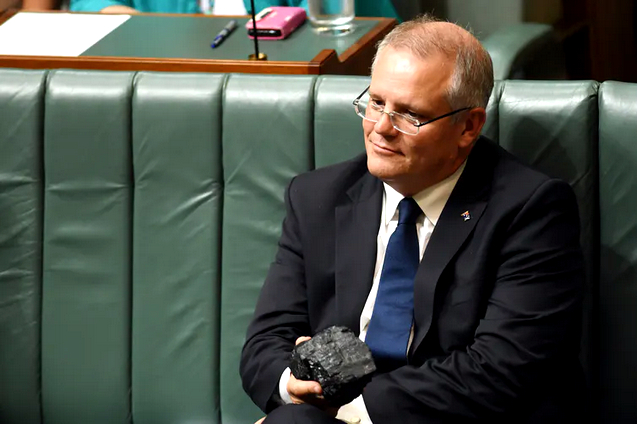
After a second, smaller blackout six months later, the then federal treasurer Scott Morrison brought a lump of coal into parliament and argued South Australia’s renewables transition was:
…switching off jobs, switching off lights and switching off air conditioners and forcing Australian families to boil in the dark as a result of their Dark Ages policies.
In 2018, Labor lost office to a Liberal party highly critical of the renewables transition in opposition. But by then, the transition was well advanced. In our view, specific legislation would have been required to halt it.

The state Liberal government has now firmly embraced the renewables transition, setting a target for 100% renewable electricity by 2030. By 2050, the government says, renewables could generate 500% of the state’s energy needs, with the surplus exported nationally and internationally.

Scott Morrison, holding a lump of coal in Parliament, said SA’s renewables policy took the state back to the Dark Ages. Lukas Coch/AAP

Leading the world

The South Australia experience shows a successful renewables transition requires that governments:
  • have enough political power to advance policies that disadvantage energy incumbents
  • monitor the energy market and respond proactively to disruptions
  • limit damage to displaced workers, businesses, consumers and communities.
It also highlights the importance of having transmission infrastructure near renewable resources before new generators are built.

As energy markets the world over grapple with making the clean energy transition, South Australia proves it can be done.

Links

27/02/2021

(AU) ‘Existential Threat To Our Survival’: See The 19 Australian Ecosystems Already Collapsing

The Conversation -  |  | Lesley Hughes | Michael Depledge

Shutterstock

xxx
Authors
  •  is Principal Research Scientist, University of Wollongong
  •  is Professor in Wildlife Ecology and Conservation, Centre for Integrative Ecology, School of Life & Environmental Sciences, Deakin University
  •  is Professor, Department of Biological Sciences, Macquarie University
  • is Professor and Chair, Environment and Human Health, University of Exeter
In 1992, 1,700 scientists warned that human beings and the natural world were “on a collision course”. Seventeen years later, scientists described planetary boundaries within which humans and other life could have a “safe space to operate”.

These are environmental thresholds, such as the amount of carbon dioxide in the atmosphere and changes in land use. Crossing such boundaries was considered a risk that would cause environmental changes so profound, they genuinely posed an existential threat to humanity.

This grave reality is what our major research paper, published today, confronts.

In what may be the most comprehensive evaluation of the environmental state of play in Australia, we show major and iconic ecosystems are collapsing across the continent and into Antarctica. These systems sustain life, and evidence of their demise shows we’re exceeding planetary boundaries.

We found 19 Australian ecosystems met our criteria to be classified as “collapsing”. This includes the arid interior, savannas and mangroves of northern Australia, the Great Barrier Reef, Shark Bay, southern Australia’s kelp and alpine ash forests, tundra on Macquarie Island, and moss beds in Antarctica.

We define collapse as the state where ecosystems have changed in a substantial, negative way from their original state – such as species or habitat loss, or reduced vegetation or coral cover – and are unlikely to recover.

The Great Barrier Reef has suffered consecutive mass bleaching events, causing swathes of coral to die. Shutterstock

The good and bad news

Ecosystems consist of living and non-living components, and their interactions. They work like a super-complex engine: when some components are removed or stop working, knock-on consequences can lead to system failure.

Our study is based on measured data and observations, not modelling or predictions for the future. Encouragingly, not all ecosystems we examined have collapsed across their entire range. We still have, for instance, some intact reefs on the Great Barrier Reef, especially in deeper waters. And northern Australia has some of the most intact and least-modified stretches of savanna woodlands on Earth.

Still, collapses are happening, including in regions critical for growing food. This includes the Murray-Darling Basin, which covers around 14% of Australia’s landmass. Its rivers and other freshwater systems support more than 30% of Australia’s food production.

The effects of floods, fires, heatwaves and storms are felt equally in agricultural areas as in natural ecosystems. AAP Image/Dan Peled

The effects of floods, fires, heatwaves and storms do not stop at farm gates; they’re felt equally in agricultural areas and natural ecosystems.

We shouldn’t forget how towns ran out of drinking water during the recent drought.

Drinking water is also at risk when ecosystems collapse in our water catchments. In Victoria, for example, the degradation of giant Mountain Ash forests greatly reduces the amount of water flowing through the Thompson catchment, threatening nearly five million people’s drinking water in Melbourne. 

This is a dire wake-up call — not just a warning. Put bluntly, current changes across the continent, and their potential outcomes, pose an existential threat to our survival, and other life we share environments with.

A burnt pencil pine, one of the world’s oldest species. These ‘living fossils’ in Tasmania’s World Heritage Area are unlikely to recover after fire. Aimee Bliss, Author provided

In investigating patterns of collapse, we found most ecosystems experience multiple, concurrent pressures from both global climate change and regional human impacts (such as land clearing). Pressures are often additive and extreme.

Take the last 11 years in Western Australia as an example.

In the summer of 2010 and 2011, a heatwave spanning more than 300,000 square kilometres ravaged both marine and land ecosystems. The extreme heat devastated forests and woodlands, kelp forests, seagrass meadows and coral reefs. This catastrophe was followed by two cyclones.

A record-breaking, marine heatwave in late 2019 dealt a further blow. And another marine heatwave is predicted for this April.

These 19 ecosystems are collapsing: read about each

What to do about it?

Our brains trust comprises 38 experts from 21 universities, CSIRO and the federal Department of Agriculture Water and Environment. Beyond quantifying and reporting more doom and gloom, we asked the question: what can be done?

We devised a simple but tractable scheme called the 3As:
  • Awareness of what is important
  • Anticipation of what is coming down the line
  • Action to stop the pressures or deal with impacts.
In our paper, we identify positive actions to help protect or restore ecosystems. Many are already happening. In some cases, ecosystems might be better left to recover by themselves, such as coral after a cyclone.

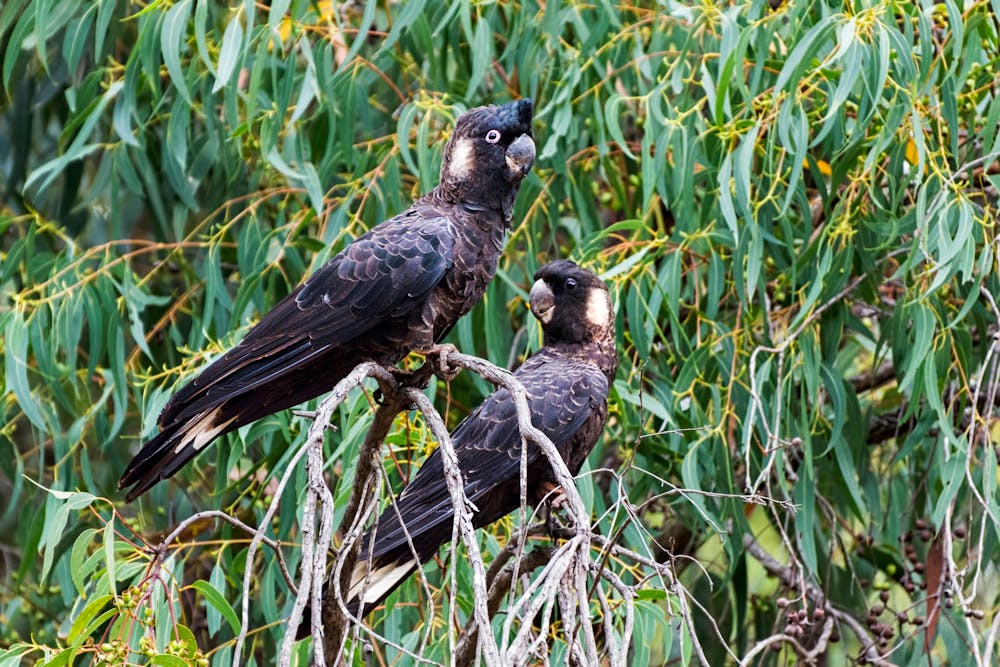
In other cases, active human intervention will be required – for example, placing artificial nesting boxes for Carnaby’s black cockatoos in areas where old trees have been removed.

Artificial nesting boxes for birds such as the Carnaby’s black cockatoo are important interventions. Shutterstock

“Future-ready” actions are also vital. This includes reinstating cultural burning practices, which have multiple values and benefits for Aboriginal communities and can help minimise the risk and strength of bushfires.

It might also include replanting banks along the Murray River with species better suited to warmer conditions.

Some actions may be small and localised, but have substantial positive benefits.

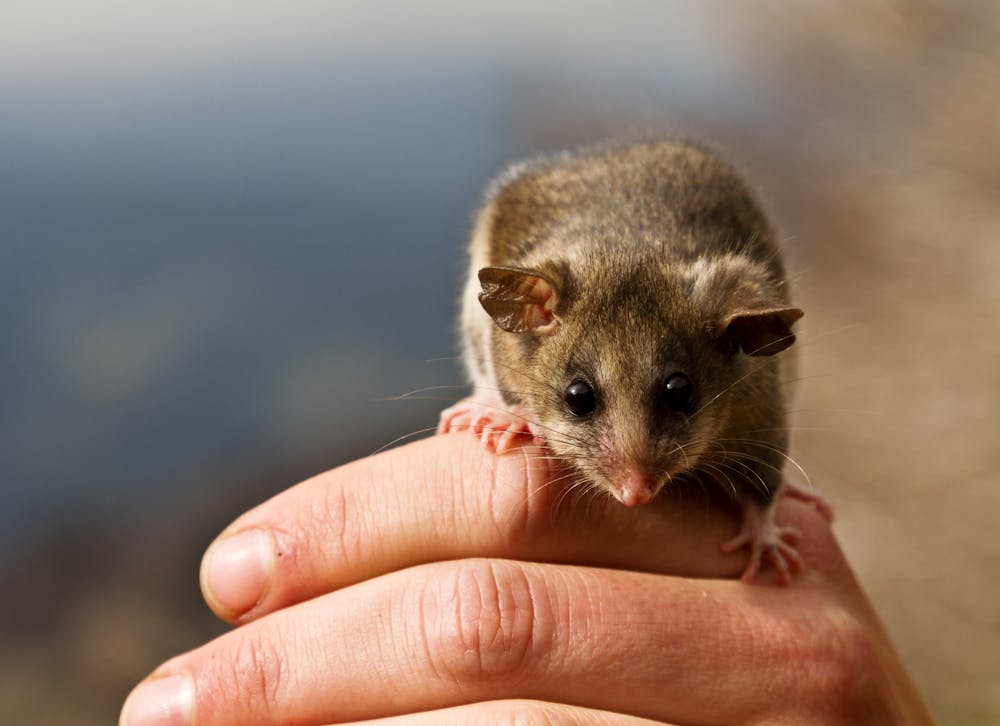
For example, billions of migrating Bogong moths, the main summer food for critically endangered mountain pygmy possums, have not arrived in their typical numbers in Australian alpine regions in recent years. This was further exacerbated by the 2019-20 fires. Brilliantly, Zoos Victoria anticipated this pressure and developed supplementary food — Bogong bikkies.

Other more challenging, global or large-scale actions must address the root cause of environmental threats, such as human population growth and per-capita consumption of environmental resources.

We must rapidly reduce greenhouse gas emissions to net-zero, remove or suppress invasive species such as feral cats and buffel grass, and stop widespread land clearing and other forms of habitat destruction.

Mountain pygmy possums were saved from potential catastrophe after Zoos Victoria developed alternative food for them. AAP Image/Department of Sustainability and Environment /Tim Arch

Our lives depend on it

The multiple ecosystem collapses we have documented in Australia are a harbinger for environments globally.

The simplicity of the 3As is to show people can do something positive, either at the local level of a landcare group, or at the level of government departments and conservation agencies.

Our lives and those of our children, as well as our economies, societies and cultures, depend on it.

We simply cannot afford any further delay. 

Links

Lethal Heating is a citizens' initiative