28/06/2021

(AU The Guardian) From Barnaby Joyce To The Great Barrier Reef, Coalition Climate Inadequacy Is On Parade

The Guardian

Australia’s government is still in denial, caught unawares by the tide of global opinion moving against it

‘The National party has just re-elected as its leader Barnaby Joyce, whose main policy position appears to be to ensure such a target is never set.’ Photograph: Mick Tsikas/AAP

How the heck can this still be happening?

It’s 2021 and we have a government within sight of an election with no policy on climate change that endeavours to reach net zero emissions, and the National party has just re-elected as its leader Barnaby Joyce, whose main policy position appears to be to ensure such a target is never set.

Climate change denial continues to be the strongest force in Australian politics.

Instead of a target we have, as foreign affairs minister Marise Payne articulated so circuitously last week on Insiders, a “broad position of the Australian government that we want to achieve net zero emissions as soon as possible and preferably by 2050”.

That is a shift from their once saying they wanted to achieve it in the second half of this century – that’s what counts as progress in this country.

The whispers continue that the government is trying to come up with an actual target, but I am not Charlie Brown, so I’ll let others try to kick Lucy’s football.

At no point has this government done anything to make net-zero emissions achievable, let alone acknowledge that 2050 will be too late to limit temperatures to rising 2C above pre-industrial levels.

To be fair, there is no pressure on them to acknowledge this, given the Labor party is stuck on 2050, and most of the media also think it is some magical timeframe that will solve all climate change ills.

It’s rather apt, given the past 30 years, that governments around the world have finally settled on an emissions target that is sold as being wonderful and yet is manifestly inadequate.

I guess this is “the good” that should not be the enemy of the perfect.

Even more apt is that this inadequate target remains well beyond the scope of the Morrison government, especially now Joyce is back.

Inadequate is not enough.

It might be easy to forget, during a cold winter, or even as we exit a La Niña period, that the world continues to warm.

Over the past 50 years temperatures have risen within an ever-rising 0.3C range.


The problem is that while we are currently experiencing lower temperatures, they are lower only relative to the most recent El Niño period.

Over the past year global surface temperatures have been 1.1C above the average of the last part of the 1800s. That is below the record of 1.3C set in 2016, but is still warmer than any time before December 2015.

It’s not just that the hot years are getting hotter; the “cold” years are less cold.

It’s not just that the policy is inadequate, it is that the Morrison government continues to hope it will skate by on such a policy with no consequences.

Clearly it has been caught unawares by the tide of global opinion moving against our inadequacies.

We already have the EU and the G7 musing about carbon tariffs that almost seem designed with Australia in mind, and then this week came the news that Unesco has recommended the Great Barrier Reef world heritage site be listed as “in danger”.

Both these aspects highlight that climate change policy is actually economic policy. And you need to act right now – not in or “preferably by” 2050.

Environment minister Sussan Ley – the same person who in 2019 went for a snorkel on the reef and declared it “vibrant” – instead blamed Unesco’s processes and argued that it blindsided the Australian government – a charge Unesco strenuously disagrees with.

It is odd, however, that this could be a shock to anyone, given Graham Readfearn reported earlier this month that such a listing was very much on the cards, and the government’s own Great Barrier Reef Marine Park Authority had listed the reef as “very poor” back in 2019.

This decision not only points to our lack of action on climate change but also the Morrison government’s complete diplomatic failure.

Failure and inadequacy – the hallmarks of this government’s climate change policy since 2013.

Links

(NZ Herald) Green Hydrogen: New Zealand Scientists Edge Closer To Climate-Friendly Fuel Future

 NZ Herald - 

Green hydrogen is being used to fuel New Zealand's first hydrogen fuel cell bus, unveiled by Auckland Transport in March. Image / Auckland Transport

Scientists are edging closer to making green hydrogen a star of New Zealand's clean energy future, as the Government injects millions more dollars into a major research effort.

Green hydrogen has become a growing focus of New Zealand's "just transition" away from oil and gas because it can be created sustainably, using renewable energy or biomass.

It's being eyed as a climate-friendly way to generate electricity, power engines and heat homes and make fertilisers.

While hydrogen is produced around the world, nearly all of it is "brown" hydrogen - or that made from coal and natural gas, and the source of hundreds of millions of tonnes of CO2 emissions each year.

But green hydrogen can be made by using electrolysis from renewable energy sources, leaving little carbon footprint.

The biggest drawback?

It remains expensive to produce.

That's a barrier a GNS Science-led research programme is aiming to overcome, through pioneering new approaches to make the energy source affordable, efficient and plentiful.

With a $9 million boost through the Government's Advanced Energy Technology Platform (AETP), scientists will push ahead in developing three ways to make green hydrogen.

That includes creating it from water using an electrolyser - currently the most common approach - but also using energy directly from sunlight to split the water, as well as high-energy plasma.

Already, GNS scientists have been working to improve a system of water electrolysis called polymer exchange membrane, or PEM.

In contrast to the more commonly used "alkaline" electrolyser, PEM is better suited to working with the intermittent nature of renewable energy sources like wind and solar that could provide electricity for hydrogen production.

While it has the advantage of being readily adaptable to large-scale hydrogen production, PEM systems still rely on catalysts based on metals that are rare, expensive or inefficient – and which ultimately make green hydrogen more expensive than fossil fuels.

GNS Science scientists (from left) Dr John Kennedy, Dr Michelle Cook and Dr Jerome Leveneur are working to make green hydrogen a viable future energy source for New Zealand. Image / GNS Science

The project's leader, Dr John Kennedy, said New Zealand had a chance to be a "world leader" in the production and export of green hydrogen – shifting us from an importer to an exporter of energy.

Currently, New Zealand brought in about 60 per cent of its energy in the form of oil and coal - and green hydrogen offered a chance to make the country more self-sufficient. Specifically, hydrogen could replace fossil fuels for stationary power and transport industries that contributed 40 per cent of our greenhouse gas emissions.

"We'll be working with partners from across New Zealand and around the world, developing our industry capability and creating innovative solutions which will lead to a globally-connected green hydrogen economy," Kennedy said.

The project also aims to scale up the hydrogen industry by training engineers, scientists and technicians.

"The AETP funding will include grants, scholarships and placements to develop skills in the green hydrogen industry – to ensure that qualified people are available to fill the jobs that will be created as the industry grows," GNS Science energy materials scientist Dr Michelle Cook said.

"We're particularly focused on partnerships with iwi and wananga, to support the learning and development of rangatahi Māori in the energy sector."

The horizon-scanning H2 Taranaki Roadmap, produced by local agencies, has already forecast that hydrogen will be increasingly produced using electricity to split water, with the only emission being oxygen.

The report found hydrogen could be utilised as a fuel, particularly for heavy vehicles, as a feedstock for products such as urea or methanol, or to store electrical energy for long periods of time from weeks to years.

A new network could include storage of hydrogen or synthetic natural gas in depleted gas fields, it said, and electricity generation using green hydrogen in Taranaki's gas-fired peaker plants.

Earlier this year, New Zealand and German scientists joined forces in a new research alliance focused on advancing green hydrogen technology.

And last month, Christchurch-headquartered cryocooler developer AFCryo unveiled a new production system to provide a cheaper and more reliable way of generating green hydrogen.

Links

( Axios ) Global Warming Makes Extreme Weather A Regular Event

AxiosAndrew Freedman

Earth's climate has drastically
shifted in three decades


Global average temperature anomalies during 1981-1990 and 2011-2020, compared to 1981-2010 average.
Data: NASA Goddard Institute for Space Studies; Graphic: Axios Visuals

The climate change the planet has seen so far, now that the world has warmed by about 1.2°C (2.16°F) since the preindustrial era, is already resulting in unprecedented and destructive events worldwide.

Why it matters: In the past few decades alone, climate change has shifted from a far-off problem disconnected from our day-to-day lives to a crisis to be grappled with here and now.
  • From the dried-out landscape of the Southwest to the rapidly warming Arctic, the shifts we've already seen have resulted in what some researchers call "weather weirding," as deadly and damaging weather events supercharged by global warming strike with increasing regularity.
The details: A look at just the past few years shows a climate that's already separated from the conditions that existed when millennials were born starting in the 1980s.
  • The last colder-than-average month globally, compared to the 20th century average, was February 1985. Each of the past three decades has been hotter than the one before it.
  • All the 10 warmest years have occurred since 2005.
  • The oceans, which absorb most of the extra heat trapped by greenhouse gases, are warming so rapidly that the National Oceanic and Atmospheric Administration's chart of ocean heat content has had to be continually adjusted upwards to accommodate the new readings.
Extreme events: Climate change has manifested itself in the form of extreme weather and climate events that have cost lives and property.
  • During 2020, California saw its worst wildfire season on record, with massive fires also occurring in other Western states as well as Siberia and Australia, among other areas.
  • Due to human-caused global warming, heat waves are becoming more severe and longer-lasting across large portions of the globe, from the American Southwest to the Middle East.
  • A burgeoning scientific field known as extreme event attribution focuses on the links between climate change and extreme weather events, with some of these studies showing that individual events could not have occurred without human-caused global warming.
  • Sea level rise is leading to a dramatic increase in so-called "sunny day flooding" — floods caused by high tides combined with higher sea levels rather than weatherin major cities along the East Coast of the U.S., a trend that is forecast to continue.
What's next: The summer of 2021 is a prime example of the costly extreme weather that's becoming the norm, with a severe drought in the West combining with record heat waves to create ideal conditions for wildfires in much of the region.

Yes, but: Studies show that the more we cut emissions of greenhouse gases — especially if we do it quickly the better our chances are of averting truly catastrophic consequences of climate change, such as the collapse of the Greenland or West Antarctic Ice Sheets.
  • Upcoming climate negotiations in November are aimed at securing enough emissions reduction commitments to avert such disastrous outcomes.
  • However, even if all emissions were to stop today, the long atmospheric lifetime of carbon dioxide — on the order of 1,000 years per each molecule — means that we will have to cope with climate change's effects for the rest of our lives.
  • Because of this, adaptation efforts are underway to make society more resilient to climate shocks.
  • Also, the relentless and steep upward march of emissions has plateaued to some degree, though the necessary cuts have not yet begun.
The bottom line: How severe the effects will be is largely up to us. Innovation in the energy sector to create the clean technologies of the future, as well as the resources we already have available, such as wind, solar and battery technology, mean we can cut emissions by large amounts starting now, depending on the political will. 

Links

27/06/2021

(USA Yale University) Yale Experts Explain Climate Change


Experts Dan Esty and Miranda Massie break down one of the most pressing environmental and social challenges of our time. 

How do we define climate change?

Climate change is the long-term change in the average weather patterns of Earth’s local, regional, and global climates.

“For about the last ten thousand years, the Holocene period in geological terms, humanity has occupied a fairly stable climate,” explains Miranda Massie (GSAS M.A. ‘92), Director and Founder of The Climate Museum.

“While there have been changes from time to time, they are slight in the context of planetary history, and overall, weather systems have been predictable and coastlines have remained in place. Those conditions of relative stability are what allowed agriculture and then civilization to flourish.

"In other words, the Holocene climate is a basic precondition for what we understand about ourselves and our society. What we are seeing now is the fundamental disruption of that stability.”

What are some of the main causes of climate change?

“The fundamental changes to the stability of our climate are primarily due to the burning of fossil fuels like oil, coal, and natural gas, which started at a mass scale during the Industrial Revolution,” Massie says. 

Dan Esty, Hillhouse Professor of Environmental Law and Policy at the Yale School of the Environment and Yale Law School, explains that when we burn fossil fuels to do things like power our homes and vehicles and engage in most agricultural and manufacturing processes, we emit greenhouse gases.

Often referred to as “GHGs”, these gases act like a heat-trapping blanket over the planet and prevent the heat that comes from sunlight from leaving the atmosphere. Some of the more common greenhouse gases are carbon dioxide, methane, and chlorofluorocarbons, and all have different heat-trapping capacities. 

“In addition to emitting greenhouse gases, another contributor to climate change is our destruction of carbon sinks, or places that would naturally store this carbon for us and keep it out of the atmosphere,” Esty says.

“Plants and trees, for example, are natural carbon sinks. When we have a forest that is cut or burned down, we lose a sink, and we therefore lose some of the ability of the earth to absorb carbon dioxide. Widespread deforestation and changes in land use patterns, therefore, are significant drivers of the climate crisis.”

Massie also points out that while burning fossil fuels and eliminating carbon sinks is the clear physical cause of the climate crisis, this fossil fuel-based economy does not exist independently from our culture. 


“The cultural and social context for the climate crisis is critical.  Inevitably, the burning of fossil fuels as our primary source of energy both comes from and reinforces basic social understandings and practices developed over time: how human beings have come to relate to the rest of the natural world and to each other.

"At the heart of this lies a culture of exploitation–the sense that the rest of nature exists, inexhaustibly, for human use alone–and that some human beings similarly exist as resources for others with more social power.

"Colonization, rigid racial hierarchies, and the simultaneous fetishization and abuse of coal miners are examples of exploitation and dehumanization in our history and culture.

"These dynamics are deeply bound up with the fossil fuel economy,” Massie says. “Therefore, the entire organization of society and culture can also be usefully understood as the cause of climate change.”

What evidence tells us that climate change is happening?

“There is copious and irrefutable evidence that climate change is happening, but a lot of it is not immediately apparent to the average person,” Massie says. “For example, the concentration of carbon dioxide and other heat trapping gases in the atmosphere is not something that you and I can directly perceive. It’s something that scientists have measured.”

Esty explains that there is an entire science dedicated to extrapolating and tracking global temperatures and carbon dioxide levels across human history.

Scientists can reconstruct human history by carving out polar ice cores or sediment from the ocean floor and examining their physical and chemical makeup to understand how the environment has changed over centuries.

“As a result of this science, we know very clearly that the level of carbon dioxide in the atmosphere has risen from a couple of 100 parts per million (ppm) in pre-industrial times to over 400ppm now,” Esty says. “That is a signal that we’ve dramatically increased the level of greenhouse gases in our atmosphere.”

Massie adds the example of the oceans becoming more acidic as they absorb higher levels of carbon dioxide, both of which can be measured by scientists and further proven by things such as the bleaching of coral reefs. 

However, for some communities around the world, climate change is already quite tangible.

“In recent years, we have seen growing evidence of increased intensity of windstorms, hurricanes, flooding, and more devastating forest fires,” Esty says, giving examples from the last decade including Hurricane Sandy and the Australian wildfires.

“We have also seen glaciers and ice sheets crack and melt, causing measurable sea level rise. All of that gives us a signal that we’ve got a real problem that needs to be addressed.”

What are the impacts of climate change, both to the environment and to humans? 

Climate change has and will continue to increase local, regional, and global temperatures and alter weather patterns. As Esty points out, these changes will lead to more severe weather events and natural disasters, ultimately disrupting communities and infrastructure around the world. 

“We also know that there will be devastating impacts to species and ecosystems that humans don’t directly connect to or rely on,” Esty adds. “The stress of increased temperatures and ocean acidification may prove too much for certain species, causing them to collapse.”

Increasing temperatures will also melt glaciers at the Earth’s poles, which will not only affect the species that live there, but will also cause global sea level rise. This will impact coastal communities and ecosystems by eroding or engulfing the land and heightening the risk of severe flooding. 

“Because of the historically stable climate, we’ve developed a robust civilizational infrastructure that is geographically anchored,” Massie explains. “You can’t just take farmland that’s been developed over the course of hundreds of years and move it north every three to five years.

As Climate Scientist Katharine Hayhoe says, if it were five thousand years ago, as the sea levels rise, we would just pick up our coastal encampments and move them further inland. But that’s hard to do, if your coastal encampment is modern New York City or Hong Kong.”

A change in weather patterns will also have serious consequences for our global food system.

“Changes in rainfall patterns and new periods of drought are particularly concerning, as they may alter the lands that are suitable for food production as well as the types and amounts of crops that can successfully grow and feed our global population,” Esty says. 

Massie points out that these disruptions to our homes, infrastructure and food systems will challenge the equitable access to the necessities of life and put great stress on the social fabric of humanity.

“The climate crisis has a number of cascading and interacting effects that are already disrupting the foundations of our civilization and causing massive public health problems–including 8.7 million deaths annually from the fossil fuel particulate matter alone.

"Very importantly, climate impacts intensify existing inequalities rather than reducing them–while also creating new ones,” Massie says. 

Massie goes on to explain that many communities around the world who will experience the most devastating effects of climate change have often contributed the least to the crisis and/or are least equipped to protect themselves. 

“Island Nations, for example, have contributed virtually nothing to climate change, and yet they may have the physical home for their sense of belonging, their national identity and culture completely wiped out by sea level rise,” Massie explains.

“In Miami, the Haitian community is under pressure to leave Little Haiti, which sits on elevated ground, as real estate developers look to make way for wealthier, mostly white new residents fleeing the beachfront flood zone as sea levels rise.

"There are examples everywhere. The fossil fuel economy requires sacrifice zones, and sacrifice zones require racism and other hierarchies … It’s important to include in the definition of the climate crisis that it is a crisis of social inequality.”

What is being done to prevent and prepare for climate change?

Our experts explain that there are two key approaches to prevent and prepare for climate change: mitigation and adaptation.

“Mitigation is the attempt to reduce the amount of greenhouse gas emissions going into the atmosphere,” Esty explains. “It also includes efforts to increase and protect the sinks that are absorbing carbon dioxide.”

There are a wide range of mitigation efforts happening at the local, regional, country, and international scales. A key area of focus is moving towards energy efficiency and a transition to a clean energy grid, which is one that relies on renewable energy sources like solar, wind, and hydro power that do not emit greenhouse gases.

This shift has implications for transportation and shipping, industry and manufacturing, agriculture, construction, and our material consumption as we know it.

"For decades, countries around the world have collaboratively committed to reducing global emissions through international treaties like the Paris Climate Agreement, and individual regions, states, and cities have put forth policies and plans to reduce emissions domestically. 

Esty mentions a new component of climate change mitigation currently being researched by scientists that is meant to deal with the GHGs we have already emitted.

This area of research is called “geoengineering”, which is the deliberate large-scale manipulation of an environmental process that affects the Earth’s climate, in an attempt to counteract the effects of global warming.

Esty explains that this strategy involves everything from designing technologies to reflect solar radiation back into space to developing man-made ways to capture or ‘sequester’ carbon and store it in the ground. 

Importantly, while geoengineering may help to reduce some of the severe impacts of climate change as we transition our energy grid, the human alteration of natural global processes comes with its own set of ethical concerns.

The second key approach to preparing for climate change is called adaptation. 

“Adaptation is simply figuring out how we as a society can live with at least some of the impacts of climate change,” Esty says. “Sometimes this is described as resilience, or hardening ourselves to the changes in weather, temperature, and systems that will undoubtedly come.”

This might involve moving or retrofitting coastal homes, roads, rail lines, and power plants that are under increased risks of flood due to sea level rise, or adding additional green spaces to cool down urban areas that will experience extreme heat as temperatures rise. 

Massie explains that the inequities of climate change are also apparent within access to mitigation and adaptation resources. For example, while adaptation efforts are expected to save money down the line, they take a large amount of upfront investment, which is something that not all communities have. 

Truly mitigating and equitably adapting to climate change, Massie believes, will require a shifting of individual mindsets and social policies. 

“You cannot imagine getting to a resilient, zero-carbon economy and society without major interventions toward equality and toward a different set of relationships among humans and with nature,” Massie says.

“Our entire mode of being has developed as a complex, interconnected system, and our energy source can’t be simply severed from that.”

What role do individuals play in mitigating and/or adapting to climate change?

“To meaningfully take on climate change, we need to be hugely ambitious,” Massie says. “It is not just the responsibility of government, but also all of society and all of culture. Scientists have agreed that the worst impacts can almost certainly be avoided, but to do that we need the broadest possible public engagement.”

When it comes to mitigating climate change, Esty adds that in the near future, we should expect incentives to switch to more sustainable forms of transportation, like electric vehicles or biking, as well as renewable energy. The impact associated with one’s food choices will likely also become a public concern.

“People should be prepared to pay for the harms they are in effect causing when they consume high greenhouse gas emitting products, with meat consumption being a particularly notable example,” Esty says.

In terms of adaptation, Esty says that it is imperative for individuals to think about their risk to climate impacts like severe weather and to prepare themselves, their property, and their community accordingly.

Massie points out that we will also need individuals to stand up for their communities in an activist capacity to demand that their elected officials move away from the interests of and reliance on fossil fuel companies and take ambitious climate action.

“These are huge challenges that we as a society can meet, if we establish the correct social, political and cultural context in which decisions get made,” Massie says. “To get started properly, we have the technology we need–what we don’t have yet is the will to implement it at the required scale and speed.

"We need intensely ambitious and community-minded action by government at all levels and across the private sector, sustained for a long time. In turn that requires a broad cultural shift toward civic engagement and action–the mobilization of people coming together to push that forward–both activists who are already deeply involved with the climate justice struggle and, critically, the broader public as well.”            

What is Yale Doing?


In 2020, Yale met its greenhouse gas emissions goal of reducing emissions by 43% below 2005 levels, despite a 21% growth in the campus footprint. This achievement was made possible by countless individuals and academic and operational departments on campus.

Some notable contributions to this goal include:
  • Significant investments in our energy supply. We updated our power plants and increased our reliance on renewables like solar and geothermal energy.
  • Retrofits of older campus buildings to become more energy efficient.
  • Employment of new design guidelines to ensure for the highest standards of efficiency in new construction and renovations while improving the usage of existing campus space.
  • Personal energy reductions through participation in initiatives like the Yale Carbon Charge Recess Checklist.
In summer 2021, Yale announced a new emissions reductions target that includes achieving zero actual carbon emissions — in other words, reducing carbon emissions to zero without having to purchase carbon offsets — by 2050, and reaching net zero emissions by 2035, or “zero” emissions after offsets and other campus reductions in emissions are factored in.

More information can be found in the full announcement from Peter Salovey and Scott Strobel.

Links

(USA CNBC) Big Oil’s Rise In Climate Lawsuits Draws Parallels To Big Tobacco

CNBC - Sam Meredith

Members of the environmental group MilieuDefensie celebrate the verdict of the Dutch environmental organisation’s case against Royal Dutch Shell Plc, outside the Palace of Justice courthouse in The Hague, Netherlands, on Wednesday, May 26, 2021. Shell was ordered by a Dutch court to slash its emissions harder and faster than planned, dealing a blow to the oil giant that could have far reaching consequences for the rest of the global fossil fuel industry. Peter Boer | Bloomberg | Getty Images

Key Points
  • The prospect of a rising tide of climate litigation cases against heavy emitting businesses comes shortly after a landmark courtroom defeat for Royal Dutch Shell.
  • Since the turn of the century, more than 2,000 climate litigation cases were found to have been filed in a trend that is widely expected to have global implications for carbon-intensive companies.
  • Analysts believe this is merely scratching the surface of what is to be expected in the future — drawing parallels to the so-called tobacco trials of the 1950s and 1960s.
LONDON — Big Oil is likely to face an exponential increase in climate lawsuits over the coming years, a trend that analysts say is reminiscent of activists turning to the courts to take on the tobacco industry.

The prospect of a rising tide of climate litigation cases against heavy emitting businesses comes shortly after a landmark courtroom defeat for Royal Dutch Shell.

The Hague District Court on May. 26 ordered the Anglo-Dutch oil giant to set more ambitious emission reduction targets. It also said Shell is responsible for its own carbon emissions and those of its suppliers, known as Scope 3 emissions. A Shell spokesperson said at the time that the company fully expected to appeal the court’s “disappointing” decision.

To be sure, the ruling marked the first time in history that a company had been legally obliged to align its policies with the Paris Agreement and reflected a watershed moment in the climate battle.

“You will see the ruling on Shell being used as precedent to add new pressure,” Elizabeth Hypes, senior environment and climate change analyst at risk consultancy Verisk Maplecroft, told CNBC via telephone.

Electricity pylons are seen in front of the cooling towers of the coal-fired power station of German energy giant RWE in Weisweiler, western Germany, on January 26, 2021. INA FASSBENDER | AFP | Getty Images

A report published by Verisk Maplesoft last month found that businesses associated with oil and gas, coal and electric utilities were currently most at risk of climate liability lawsuits. They described this finding as “unsurprising” since 83% of global greenhouse gas emissions resulted from fossil fuels in 2018.

Since the turn of the century, more than 2,000 climate litigation cases were found to have been filed in a trend that is widely expected to have global implications for carbon-intensive companies. The U.S. and EU account for 90% of climate-related lawsuits since 2000, but cases are starting to move into new territories — such as Argentina, South Africa and India, among others.

“I think definitely the momentum is one aspect of it and that we are actually seeing more successful cases, but I also think you see a lot of cases that are just incentivizing or motivating others to follow suit — even if they are not successful,” Franca Wolf, Europe and Central Asia analyst at Verisk Maplecroft, said on the same call.

“The amount of media attention that a lot of these cases get, it is a great way to pressure governments and force corporations [to change],” Wolf said.

Tobacco trials

This year alone, more than 70 climate lawsuits have been filed worldwide, according to data compiled by Verisk Maplesoft, significantly higher than the number of litigation cases filed during the first six months of previous years.

“We are seeing a lot more cases being picked up in jurisdictions outside of the U.S. and the EU and that’s just going to see those numbers grow exponentially,” Hypes said, reflecting on the fact that 60% of cases outside the U.S. had resulted in favorable outcomes for the prosecution.

Analysts believe this is merely scratching the surface of what is to be expected in the future — drawing parallels to the so-called tobacco trials of the 1950s and 1960s.
Billions of dollars lost, it hit their bottom lines, it changed regulation ... It’s a good proxy for what might happen in the U.S.
Elizabeth Hypes Senior environment and climate change analyst at Verisk Maplecroft
Decades before the oil and gas industry sought to sow doubt over the necessity of climate action, tobacco companies attempted to undermine the emerging links between smoking and lung cancer.

Policymakers were seen to be reticent to act against the tobacco industry at the time and legal challenges were unsuccessful for years. That is, however, until a landmark ruling in 2006 found U.S. tobacco firms guilty of fraudulently misrepresenting health risks associated with smoking.

“Ultimately, why I think it is most important to draw that parallel is because it started out slowly, with some cases here and some cases there … and then over time, really building momentum into these massive trials that really changed the landscape for tobacco companies,” Wolf said.

Hypes agreed. “The repercussions from that were significant. Billions of dollars lost, it hit their bottom lines, it changed regulation,” she said. “It’s a good proxy for what might happen in the U.S.”

Gas pumps sit empty at an Exxon gas station in Charlotte, North Carolina on May 12, 2021. LOGAN CYRUS | AFP | Getty Images

In addition to lawsuits targeting carbon-intensive companies, governments are also being tasked with increasing the regulatory burden on companies in order to protect the rights of future generations.

Guyana’s government is being taken to court by two citizens that pushes back on U.S. oil giant ExxonMobil’s plans to boost fossil fuel production off the South American country’s coast. The case, filed last month, says the expansion violates Guyanese citizens’ rights to a healthy environment. The lawsuit is the first in the Caribbean to challenge fossil fuel extraction on constitutional grounds.

In Europe, meanwhile, climate activists and environmental NGOs have asked the European Court of Human Rights to rule against Norway’s plans for more oil drilling in the Arctic. The case argues it deprives young people of their future.

Nonetheless, it is the Dutch court ruling against Shell that is thought to have emboldened climate activists into taking on corporates directly.

Ecocide

The risks of a surging number of climate litigation cases for businesses include a changing regulatory environment, significant reputational damage and the expanding nature of the cases being brought.

It comes amid a crucial decade for climate action, with policymakers and business leaders under intensifying pressure to deliver on promises made as part of the Paris Agreement.

Among the new arenas of climate litigation risk, analysts say, are fraud and consumer protection liabilities, planning and permitting laws and environmental performance.

Some in the legal community are also calling for “ecocide” to be recognized as an international crime. This umbrella term refers to all forms of the mass damage of ecosystems, from industrial pollution to the release of micro plastics into the oceans.

A man paddles on a boat as plastic bags float on the water surface of the Buriganga river in Dhaka on January 21, 2020. MUNIR UZ ZAMAN | AFP | Getty Images

A panel convened by the Stop Ecocide Foundation published a legal definition of ecocide on Tuesday, seeking to pave the way for acts of environmental destruction to be incorporated into the International Criminal Court’s mandate. It could see ecocide established alongside war crimes, genocide and crimes against humanity in the Hague.

Jojo Mehta, co-founder of the Stop Ecocide campaign, told CNBC she expects the crime of ecocide to be established at the ICC within five years.

Links

(AU SMH) ‘Wasted So Much Time’: New Global Panel To Say Carbon Must Be Pulled From Atmosphere

Sydney Morning HeraldPeter Hannam

The world needs to develop new technologies to suck excess carbon dioxide out of the air, because efforts to cut emissions are moving far too slowly, said the only Australian-based scientist on a major new international science group.

Nerilie Abram, a paleoclimatologist at the Australian National University, said the new Climate Crisis Advisory Group, to be officially launched later on Thursday, would aim to provide “the best scientific advice” on the urgency of slashing greenhouse gas emissions.

The ANU’s Dr Nerilie Abram after returning from an expedition with the British Antarctic Survey in early 2018. Credit: Paul Rogers

“We’ve wasted so much time,” Professor Abram said. “I hope that we are able to make a difference.”

The group will be chaired by Sir David King, the former UK government’s chief scientific adviser, and includes a range of 14 experts including Fatih Birol, the head of the International Energy Agency.


China relations
‘Utter nonsense’: CSIRO blasted for dropping Chinese climate partner

The organisation plans monthly seminars open to the public to livestream from 9pm AEST on Thursday, and will argue that nations must triple their pledges to cut emissions to limit the damage from global warming.

The launch comes a day after the AFP news agency reported on a leaked draft of the next Intergovernmental Panel of Climate Change (IPCC) report.

It warned “the worst is yet to come”, with species extinction, more disease, unlivable heat and cities hit by rising sea levels among the coming calamities, according to a summary carried by Al Jazeera.

“We need to take much more action than the current trajectory we’re on,” Professor Abram said.

However, since temperature increases are likely to exceed the Paris Climate Agreement of curbing warming to 1.5-2 degrees compared with pre-industrial levels, technologies will be needed to remove greenhouse gases from the atmosphere and also restore damaged climate systems.

Steam rises from cooling towers at the Niederaussem coal-fired power plant in Germany. The electricity sector has low-carbon alternatives but other sectors are so far lagging. Credit: Getty

Pep Canadell, chief research scientist at CSIRO and executive director of the Global Carbon Project, said the main challenge remains cutting emissions but because the last 10-15 per cent of the effort to reach carbon neutrality would likely be “so incredibly difficult”, other technologies will be needed.

“It’s very reasonable to think that we can create new industries and also rejuvenate the biosphere,” Dr Canadell said. “There are plenty of potential wins if done well.”

So-called direct air capture machines that extract carbon dioxide remain in their early stages of development. Other methods could include mass afforestation or the development of so-called blue carbon sinks that foster new seagrass beds and other marine vegetation to remove C02.

“We need all the weapons,” Dr Canadell said.

Andy Pitman, head of the ARC Centre for Excellence for Climate Extremes, said there was considerable concern “across the climate community that emissions are not being reduced remotely fast enough”.


Great Barrier Reef
Australia criticises United Nations warning that Great Barrier Reef is in danger

Professor Pitman said while the lower end of the Paris target of keeping warming to 1.5 degrees now appears unachievable, “2 degrees remains in play”.

Professor Abram also weighed in on this week’s revelation that UNESCO’s World Heritage Committee had recommended lowering the status of the Great Barrier Reef to “in danger” because of climate change.

Federal Environment Minister Sussan Ley has vowed to fight the change, claiming the move reversed earlier assurances the status of the World Heritage site would be unchanged.

“It’s already in great danger,” Professor Abram said. “No amount of political spin changes that scientific evidence.”

The Great Barrier Reef lost about half its coral cover in three mass bleaching events in five years to 2020. Scientists, including at the reef’s Marine Park Authority, warn that global warming of 2 degrees will likely kill off the great bulk of the remaining coral.

The IPCC meets in early August, with the formal release of its Group 1 report scheduled for August 9.

Links

26/06/2021

(Phys.org) Crushing Climate Impacts To Hit Sooner Than Feared: Draft UN Report

Phys.org - Marlowe Hood | Patrick Galey | Kelly MacNamara

The report details the sobering consequences of humanity's greenhouse gas pollution.

Climate change will fundamentally reshape life on Earth in the coming decades, even if humans can tame planet-warming greenhouse gas emissions, according to a landmark draft report from the UN's climate science advisors obtained by AFP.

Species extinction, more widespread disease, unliveable heat, ecosystem collapse, cities menaced by rising seas—these and other devastating climate impacts are accelerating and bound to become painfully obvious before a child born today turns 30.

The choices societies make now will determine whether our species thrives or simply survives as the 21st century unfolds, the Intergovernmental Panel on Climate Change (IPCC) says in a draft report seen exclusively by AFP.

But dangerous thresholds are closer than once thought, and dire consequences stemming from decades of unbridled carbon pollution are unavoidable in the short term.

"The worst is yet to come, affecting our children's and grandchildren's lives much more than our own," the report says.

By far the most comprehensive catalogue ever assembled of how climate change is upending our world, the report reads like a 4,000-page indictment of humanity's stewardship of the planet.

But the document, designed to influence critical policy decisions, is not scheduled for release until February 2022—too late for crunch UN summits this year on climate, biodiversity and food systems, some scientists say.

In response to AFP's reporting, the IPCC released a statement saying it "does not comment on the contents of draft reports while work is still ongoing".

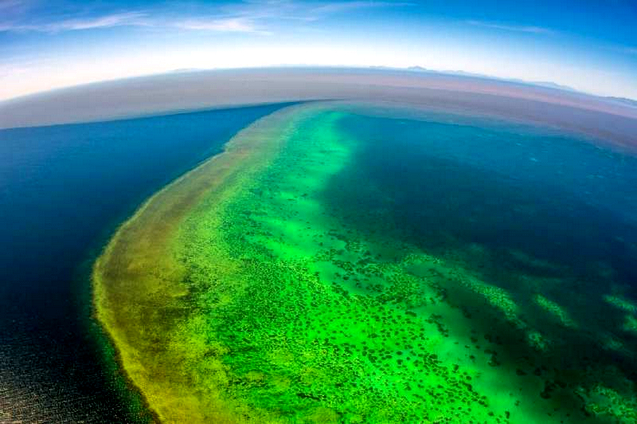
Coral reefs, like Australia's Great Barrier Reef pictured here, are particularly vulnerable.

Allies into enemies

The draft report comes at a time of global "eco-awakening" and serves as a reality check against a slew of ill-defined net-zero promises by governments and corporations worldwide.

The challenges it highlights are systemic, woven into the very fabric of daily life.

They are also deeply unfair: those least responsible for global warming will suffer disproportionately, the report makes clear.

And it shows that even as we spew record amounts of greenhouse gases into the atmosphere, we are undermining the capacity of forests and oceans to absorb them, turning our greatest natural allies in the fight against warming into enemies.

It warns that previous major climate shocks dramatically altered the environment and wiped out most species, raising the question of whether humanity is sowing the seeds of its own demise.

"Life on Earth can recover from a drastic climate shift by evolving into new species and creating new ecosystems," it says.

"Humans cannot."

The health impacts are broad, from increasing malnutrition to heat stress and disease.

'Irreversible consequences'

There are at least four main takeaways in the draft report, which may be subject to minor changes in the coming months as the IPCC shifts its focus to a key executive summary for policymakers.

The first is that with 1.1 degrees Celsius of warming clocked so far, the climate is already changing.

A decade ago, scientists believed that limiting global warming to two degrees Celsius above mid-19th century levels would be enough to safeguard our future.

That goal is enshrined in the 2015 Paris Agreement, adopted by nearly 200 nations who vowed to collectively cap warming at "well below" two degrees Celsius—and 1.5 degrees if possible.

On current trends, we're heading for three degrees Celsius at best.

Earlier models predicted we were not likely to see Earth-altering climate change before 2100.

Drought risk worldwide.

But the UN draft report says that prolonged warming even beyond 1.5 degrees Celsius could produce "progressively serious, centuries' long and, in some cases, irreversible consequences".

Last month, the World Meteorological Organization projected a 40 percent chance that Earth will cross the 1.5-degree threshold for at least one year by 2026.

For some plants and animals, it could be too late.

"Even at 1.5 degrees Celsius of warming, conditions will change beyond many organisms' ability to adapt," the report notes.

Coral reefs—ecosystems on which half a billion people depend—are one example.

Indigenous populations in the Arctic face cultural extinction as the environment upon which their livelihoods and history are built melts beneath their snow shoes.

A warming world has also increased the length of fire seasons, doubled potential burnable areas, and contributed to food systems losses.

Climate change puts at risk the ecosystems that millions of people rely on.

Get ready

The world must face up to this reality and prepare for the onslaught—a second major takeaway of the report.

"Current levels of adaptation will be inadequate to respond to future climate risks," it cautions.

Mid-century projections—even under an optimistic scenario of two degrees Celsius of warming—make this an understatement.

Tens of millions more people are likely to face chronic hunger by 2050, and 130 million more could experience extreme poverty within a decade if inequality is allowed to deepen.

In 2050, coastal cities on the "frontline" of the climate crisis will see hundreds of millions of people at risk from floods and increasingly frequent storm surges made more deadly by rising seas.

Some 350 million more people living in urban areas will be exposed to water scarcity from severe droughts at 1.5 degrees Celsius of warming—410 million at two degrees Celsius.

Deforestation, drought and fires in the Amazon could transform part of the rainforest into a grassland.

That extra half-a-degree will also mean 420 million more people exposed to extreme and potentially lethal heatwaves.

"Adaptation costs for Africa are projected to increase by tens of billions of dollars per year with warming greater than two degrees," the report cautions.

Point of no return

Thirdly, the report outlines the danger of compound and cascading impacts, along with point-of-no-return thresholds in the climate system known as tipping points, which scientists have barely begun to measure and understand.

A dozen temperature trip wires have now been identified in the climate system for irreversible and potentially catastrophic change.

Recent research has shown that warming of two degrees Celsius could push the melting of ice sheets atop Greenland and the West Antarctic—with enough frozen water to lift oceans 13 metres (43 feet)—past a point of no return.

Other tipping points could see the Amazon basin morph from tropical forest to savannah, and billions of tonnes of carbon leech from Siberia's permafrost, fuelling further warming.

Arctic species like polar bears are expected to be among the first affected.

In the more immediate future, some regions—eastern Brazil, Southeast Asia, the Mediterranean, central China—and coastlines almost everywhere could be battered by multiple climate calamities at once: drought, heatwaves, cyclones, wildfires, flooding.

But global warming impacts are also amplified by all the other ways that humanity has shattered Earth's equilibrium.

These include "losses of habitat and resilience, over-exploitation, water extraction, pollution, invasive non-native species and dispersal of pests and diseases," the report says.

There is no easy solution to such a tangle of problems, said Nicholas Stern, former chief economist at the World Bank and author of the landmark Stern Review on the Economics of Climate Change.

"The world is confronting a complex set of interwoven challenges," said Stern, who did not contribute to the IPCC report.

"Unless you tackle them together, you are not going to do very well on any of them."

Urgent and significant reductions in pollution can limit the climate damage.

'Transformational change'

There is very little good news in the report, but the IPCC stresses that much can be done to avoid worst-case scenarios and prepare for impacts that can no longer be averted, the final takeaway.

Conservation and restoration of so-called blue carbon ecosystems—kelp and mangrove forests, for example—enhance carbon stocks and protect against storm surges, as well as providing wildlife habitats, coastal livelihoods and food security.

Transitioning to more plant-based diets could also reduce food-related emissions as much as 70 percent by 2050.

But simply swapping a gas guzzler for a Tesla or planting billions of trees to offset business-as-usual isn't going to cut it, the report warns.

"We need transformational change operating on processes and behaviours at all levels: individual, communities, business, institutions and governments," it says.

Links

Lethal Heating is a citizens' initiative