17/10/2021

(Salon) We Now Know How Badly Our Cities Will Be Flooded Due To Climate Change

Salon - Matthew Rozsa

Even if carbon emissions are curbed today, hundreds of millions will be displaced as vulnerable cities see flooding

A vehicle passes through a flooded street. All the major roads are flooded after the heavy rain during monsoon at Kolkata, West Bengal, India (Dibakar Roy/Pacific Press/LightRocket via Getty Images)

When it comes to climate change, the point of no return has already passed.

That is the message of a new report published in the esteemed scientific journal Environmental Research Letters.

It paints a picture of a future Earth in which, regardless of actions taken today, hundreds of millions of people will be displaced from their homes by rising sea levels. The carbon dioxide emissions already released into our atmosphere will linger for hundreds of years, warming the oceans and thus causing sea levels to rise. The only question now is whether the damage can be limited.

The answer, according to the report, is yes — but humans will need to take specific, drastic actions as soon as possible.

"Meeting the most ambitious goals of the Paris Climate Agreement will likely reduce exposure by roughly half and may avoid globally unprecedented defense requirements for any coastal megacity exceeding a contemporary population of 10 million," the authors write. (The report was co-written by Benjamin H. Strauss and Scott A. Kulp of Climate Central, DJ Rasmussen of Princeton University and German scientist Ander Levermann.)

The long-term goal of the Paris Agreement is to limit the mean increase in global temperatures to no more than 1.5°C above pre-industrial levels. Even if that happens, however, oceans will continue to swell, meaning there will be millions upon millions of drenched city dwellers.

"Roughly 5 percent of the world's population today live on land below where the high tide level is expected to rise based on carbon dioxide that human activity has already added to the atmosphere," Strauss told AFP. With roughly 7.8 billion human beings alive today, this means approximately 390 million currently live on land that will be under the high tide level as a result of climate change.

That said, reducing the temperature rise is crucial, experts say. If Earth's average temperature increases by even half a degree Celsius, an extra 200 million people will be vulnerable to the effects of sea level rise and increased storm surges. Each successive degree only increases the damage, as sea levels progressively rise and thereby displace more people.

In the report, the scientists offer detailed projections for the 20 most-affected large countries (those with at least 25 million people) in terms of the percentages of their populations that currently occupy land below high tide lines based on different warming scenarios.

If the planet merely warms by 1.5°C, 2.8 percent of the population of the United States could be directly impacted. Increase that by half a degree, and suddenly 5.9 percent of Americans could deal with rising sea levels. If it goes up by 3°C or 4°C, 7.9 percent or 9.9 percent of the American population could see rising sea levels where they live.

Things will be particularly bad in New York City, where officials are already considering sea walls and other measures to fortify its population against rising sea levels. Even under the most ambitious Paris Agreement target, land will fall under the high tide line that is currently home to 6.7 percent of the population. At 2°C, that rises to 13 percent; at 3°C, it reaches 19 percent; and at 4°C, it hits 28 percent.

The most vulnerable region, however, is Asia. Nine of the ten megacities at the highest risk are on that continent, and many of the countries with the starkest projections are also located there.

The jump from 1.5°C to 2°C makes the difference, in Vietnam and Bangladesh, between more or less than half of their total populations living below the high tide line.

If the planet's temperature rises to 4°C above pre-industrial levels, more than 60 percent of those nations' populations could fall below the high tide line.

More than 30 percent of the populations of Egypt, Thailand, Malaysia, the Philippines, Japan and Myanmar would also suffer that fate in a scenario where the temperature rises by more than 4°C.

Climate Central has also released visual illustrations of how prominent American landmarks will look after sea level rises. Almost all of the land around the Statue of Liberty National Monument will be submerged, as will the area surrounding Space Center Houston.

Yet these and other major landmarks would almost certainly have to be abandoned long before sea levels rose that high, as there will be an increase in heavy rainfalls and storm surges.

Links

(NYT) The Most Important Global Meeting You’ve Probably Never Heard Of Is Now

New York TimesCatrin Einhorn

Countries are gathering in an effort to stop a biodiversity collapse that scientists say could equal climate change as an existential crisis.

Credit...Agence France-Presse — Getty Images

As 20,000 government leaders, journalists, activists and celebrities from around the world prepare to descend on Glasgow for a crucial climate summit starting late this month, another high-level international environmental meeting got started this week.

The problem it seeks to tackle: A rapid collapse of species and systems that collectively sustain life on earth.

The stakes at the two meetings are equally high, many leading scientists say, but the biodiversity crisis has received far less attention.

“If the global community continues to see it as a side event, and they continue thinking that climate change is now the thing to really listen to, by the time they wake up on biodiversity it might be too late,” said Francis Ogwal, one of the leaders of the working group charged with shaping an agreement among nations.

Because climate change and biodiversity loss are intertwined, with the potential for both win-win solutions and vicious cycles of destruction, they must be addressed together, scientists say. But their global summits are separate, and one overshadows the other.

“Awareness is not yet where it should be,” said Hans-Otto Pörtner, a biologist and climate researcher who has helped lead international research into both issues. He calls them “the two existential crises that humankind has elicited on the planet.”

Why biodiversity matters

Apart from any moral reasons for humans to care about the other species on Earth, there are practical ones. At the most basic level, people rely on nature for their survival.

“The diversity of all of the plants and all of the animals, they actually make the planet function,” said Anne Larigauderie, an ecologist who directs a leading intergovernmental panel on biodiversity. “They ensure that we have oxygen in the air, that we have fertile soils.”

Lose too many players in an ecosystem, and it will stop working. The average abundance of native species in most major terrestrial biomes has fallen by at least 20 percent, mostly since 1900, according to a major report on the state of the world’s biodiversity published by Dr. Larigauderie’s panel, the Intergovernmental Science-Policy Platform on Biodiversity and Ecosystem Services. An estimated million species are threatened with extinction, it found.

Credit...Galih/Agence France-Presse — Getty Images

Climate change is only one driver of biodiversity loss. For now, the major culprit on land is humans destroying habitat through activities like farming, mining and logging. At sea, it’s overfishing. Other causes include pollution and introduced species that drive out native ones.

“When you have two concurrent existential crises, you don’t get to pick only one to focus on — you must address both no matter how challenging,” said Brian O’Donnell, director of the Campaign for Nature, an advocacy group. “This is the equivalent of having a flat tire and a dead battery in your car at the same time. You’re still stuck if you only fix one.”

How it works

This week, environment officials, diplomats and other observers from around the world gathered online, and a small group assembled in person in Kunming, China, for the meeting, the 15th United Nations biodiversity conference.

The United States is the only country in the world besides the Vatican that is not a party to the underlying treaty, the Convention on Biological Diversity, a situation largely attributed to Republican opposition. American representatives participate on the sidelines of the talks, as do scientists and environmental advocates.

Because of the pandemic, the conference has been broken into two parts. While this virtual portion was largely about drumming up political will, nations will meet again in China in the spring to ratify a series of targets aimed at tackling biodiversity loss. The aim will be to adopt a pact for nature akin to the Paris Agreement on climate change, said Elizabeth Maruma Mrema, the executive secretary of the convention.

Last year, officials reported that the world’s nations largely failed to achieve the targets of the previous global agreement on biodiversity, made in 2010.

If the new commitments are not translated into “effective policies and concrete actions,” Ms. Mrema said this week at the meeting, “we risk repeating the failures of the last decade.”

What’s next

The working draft includes 21 targets that act as a blueprint for reducing biodiversity loss. Many are concrete and measurable, others more abstract. None are easy. They include, in summary:
  • Create a plan, across the entire land and waters of each country, to make the best decisions about where to conduct activities like farming and mining while also retaining intact areas.
  • Ensure that wild species are hunted and fished sustainably and safely.
  • Reduce agricultural runoff, pesticides and plastic pollution.
  • Use ecosystems to limit climate change by storing planet-warming carbon in nature.
  • Reduce subsidies and other financial programs that harm biodiversity by at least $500 billion per year, the estimated amount that governments spend supporting fossil fuels and potentially damaging agricultural practices.
  • Safeguard at least 30 percent of the planet’s land and oceans by 2030.
A turtle that became caught in a fisherman’s net was released into the Watamu National Marine Park in Kenya last month. Credit...Brian Inganga/Associated Press

In the lead-up to the conference, that last measure, pushed by environmentalists and a growing number of nations, has received the most attention and resources. Last month, nine philanthropic groups donated $5 billion to the effort, known as 30x30.

“It’s catchy,” said E.O. Wilson, an influential biologist and professor emeritus at Harvard University. He said he hoped 30x30 would be a step on the way to one day conserving half of the planet for nature.

Indigenous groups have watched with hope and worry. Some welcome the expansion, calling for a higher number than 30 percent, while others fear that they will lose the use of their lands, as has happened historically in many areas set aside for conservation.

The debate underscores a central tension coursing through the biodiversity negotiations.

“If this becomes a purely conservation plan for nature, this is going to fail,” said Basile van Havre, a leader, with Mr. Ogwal, of one of the convention’s working groups. “What we need is a plan for nature and people.”

With the global human population still increasing, scientists say that transformational change is required for the planet to be able to sustain us.

“We actually need to see every human endeavor, if you will, through the lens of biodiversity and nature,” Dr. Larigauderie said. Since everyone depends on nature, she noted, “everyone is part of the solution.”

Links

(AU The Guardian) ‘We All Have A Role’: More Than 260 Australian Rules Footballers Sign Up To Climate Campaign

The Guardian
‘I’m not a scientist, but I listen to the climate experts and they’re telling us we need to act now.’ North’s Tom Campbell helped launch AFL Players For Climate Action. Photograph: Graham Denholm/Getty Images

Australian rules footballers have come together to tackle the climate crisis with more than 260 players from the men’s and women’s competitions signing up to the newly formed AFL Players For Climate Action group.

The group is thought to be the largest from any single Australian professional sporting code – all of which leave heavy carbon footprints due to the regular and extensive travel involved – to collectively put their names to a climate campaign.

North Melbourne’s Tom Campbell and retired Kangaroos and Port Adelaide player Jasper Pittard on Sunday launched the initiative, which includes recent AFL premiership winner Ben Brown and other high-profile players such as Dyson Heppell, Jordan Roughead and Luke Parker, along with AFLW stars Daisy Pearce, Erin Phillips and Darcy Vescio.

The group aims to provide players with guidance on how to reduce their individual impact on the environment by reducing their emissions, as well as using their profiles to build support for greater climate action from clubs and fans.

The AFL said it “fully supports” the initiative, but initially there will be no official involvement from the league or its clubs. The next step for the group is to begin conversations with clubs and encourage change in the way they build infrastructure and travel. There will also be a push to use more renewable energy and cut down on waste.

A recent survey of 580 AFL and AFLW players suggested 92% were concerned about climate change but most were unsure how they could be part of the solution. AFL Players For Climate Action aims to provide players with credible information from experts in an attempt to effect change.

The idea was born out of conversations between Campbell and Pittard when they had time to research and educate themselves while stuck in the AFL’s Queensland Covid bubble last season. Prompted by Australia’s catastrophic bushfires in the summer of 2019-20, the pair engaged teammates in discussions about how climate change was worsening extreme weather events.

Campbell and Pittard found their views struck a chord with a number of players and vowed to do something about it.

“Talking to other players and others about climate I can really see the passion come out – people care about each other and the places we love, and they want to be a part of the solution. It’s just hard to know where to start,” Pittard said.

“Being involved in footy since I was a young kid, I know the power of teamwork and the importance of having a strong collective voice. I believe the opportunity to leverage our platform as current and former AFL players to help normalise climate action in this country is important. People listen to what athletes have to say.”

The latest assessment by the Intergovernmental Panel on Climate Change published in August found human activities were unequivocally heating the planet and causing changes not seen for centuries and in some cases thousands of years.

“You don’t have to look far to see the devastation climate change is having on Australians, and our sport, including the impacts of extreme weather events,” Campbell said. “I’m not a scientist, but I listen to the climate experts and they’re telling us we need to act now to tackle global warming. We all have a role to play.”

Carlton star Vescio, who was the AFLW’s leading goalkicker in 2017 and 2021, said she was looking forward to joining up with like-minded players to use their high-profile platforms to speak to fans of the game, clubs and the league.

“Things are changing really quickly and it’s scary,” she said. “Global warming and worsening extreme weather can be hard to deal with, so for a long time I haven’t engaged in the conversation. But now it’s urgent and scientists and experts say we need to take action.”

Changes in the world’s climate is “Australia’s big elephant in the room”, said another member of the group, Sydney Swans’ Tom Hickey.

“Our government doesn’t want to talk about it,” he said.

“As sportspeople we have a platform where we can talk about things we are passionate about and encourage the conversation. Climate activism is essentially about just giving a shit. Giving a shit about the world we live in and the creatures on it. Wanting to protect the natural world. Climate change will affect all of us so it seems like it’s an important thing to care about and we need to take urgent action.”

An AFL spokesperson said many clubs and stadia were already engaged in actioning initiatives on climate change and the league was working through next steps on how the football industry as a whole could make contributions to environmental sustainability.

An “overwhelming majority” of members of the players’ union, the AFLPA, also support the initiative, which has prompted a review of its own workplace processes “to see how we can do better”, the organisation’s chief executive, Paul Marsh, said.

A number of members are already involved in a wider sporting scheme headed by the Wallabies great David Pocock and signatories of an open letter to the federal government calling for cuts to Australia’s emissions by at least half by 2030 and net zero before 2050.

“Australia has a huge opportunity to be world leaders in the clean energy transformation – just look at our renewable energy resources,” Pittard said. “We want to be part of the winning team that helps to make this happen and helps safeguard the future of the people, the places and the sports we love.”

Links

16/10/2021

(ABC) Times Square Billboard Ads Shame Australia's Climate Change Policies

ABC News

Australian comedian Dan Ilic raised the money through a crowdfunding campaign. (AP:  Mary Altaffer)

Key Points
  • Comic Dan Ilic raised $14,000 for the slot
  • Scott Morrison will attend the COP26 climate summit next month
  • Ilic told CNN: "We have to lead our leaders"
With Prime Minister Scott Morrison bound for Glasgow for next month's COP26 climate summit of world leaders, Australian comic Dan Ilic took the opportunity to highlight the federal government's contentious environmental policies.

In a post on crowdfunding website Indiegogo, Ilic, who refers to himself as an "investigative humourist",  asked fans for "financial support to do something silly".

Ilic originally planned to buy advertising space in the Scottish city during the conference hosted by the United Nations.

The images appear in Times Square for 10 minutes. (Supplied)

But when his crowdfunding campaign rocketed to $14,000, his budget suddenly allowed for a slightly higher-profile space: the biggest billboard in Times Square.

Images displayed during the 10-minute slot on Thursday (local time) included slogans such as "Cuddle a koala (Before we make them extinct)".

One ad referred to the PM as Coal-o-phile Dundee, while another contained an open letter to the world:
"Dear World, … yeah, look … sorry about our government bullsh**ing you about our emissions targets. Kind regards, People of Australia."
The federal government has not committed to net zero emissions by 2050, amid tensions between the Liberal and Nationals arms of the Coalition.

The stunt got plenty of traction on social media, with supporters like Australian actor Russell Crowe sharing the exploits.
In an interview with CNN, Ilic criticised Mr Morrison for "running away from a crisis".

"This is what we have to do in this country, we have to drag our leaders to lead us," he said.

"We have to lead our leaders, because our leaders don’t work for us, they work for the fossil fuel companies." 

Links

(BBC) Queen 'Irritated' By Climate Change Inaction In COP26 Build-Up

BBC News - Alex Kleiderman

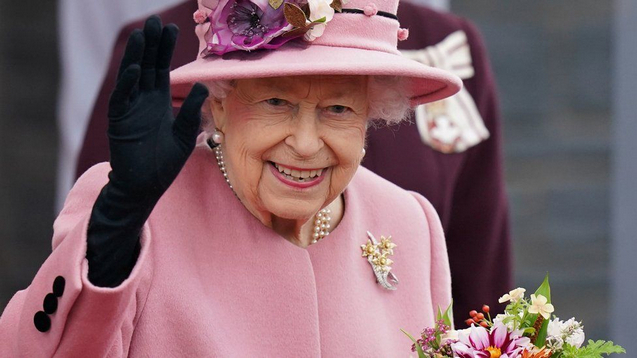
The Queen appeared to suggest she was irritated by leaders' slow response to the climate crisis.

The Queen has appeared to suggest she is irritated by people who "talk" but "don't do", ahead of next month's climate change summit.

Her reported remarks were overheard during the opening of the Welsh parliament on Thursday.

The monarch, who is due to attend the UN's COP26 climate conference in Glasgow, said she did not know who was coming to the event.

Prince Charles and Prince William have also spoken of their climate concerns.

Global leaders are meeting in Glasgow between 31 October and 12 November to negotiate a new deal to stall rising global temperatures.
US President Joe Biden and members of the G7 nations will be attending COP26. On Friday, after weeks of hesitation, Australia's Prime Minister Scott Morrison also confirmed he will be at the summit.

But there are reports China's President Xi Jinping would not be attending, although the country will be represented by its government officials in Glasgow.

Downing Street said it was up to individual countries to confirm attendances at COP26.

Video clips featuring the Queen's conversation during the opening of the Senedd were picked up by the event's live stream camera, according to the Daily Mail.

The clips - parts of which are inaudible - show the Queen chatting with the Duchess of Cornwall and Elin Jones, the Senedd's presiding officer.

The Queen appears to say: "I've been hearing all about COP... I still don't know who's coming."

In a separate clip, she remarks "we only know about people who are not coming", before adding: "It's really irritating when they talk, but they don't do."

Ms Jones appears to reference the Duke of Cambridge in her reply to the Queen's remarks, saying she had been watching him "on television this morning saying there's no point going into space, we need to save the Earth".


Analysis

Sean Coughlan, BBC royal correspondent

Image source, Reuters


This wasn't a formal intervention from the Queen, but a few private words that were overheard.
That her comments about climate change are making headlines shows how unusual it is to hear the Queen's private thoughts on public matters - because her role requires her to stay outside of political debate.

This rare insight suggests the 95-year-old Queen remains very engaged with the current issues around the COP26 summit - in a week when Prince Charles and Prince William were also talking about protecting the environment.

But it also shows the occupational hazard of being followed everywhere by cameras and microphones.

And in her comments about having "no idea" who was coming to COP26, there was also a glimpse of a slightly exasperated host, not sure who was going to turn up for an event.


Prince William spoke to the BBC's Newscast on Thursday, and suggested entrepreneurs should focus on saving Earth rather than engaging in space tourism.

He also warned the COP26 summit against "clever speak, clever words but not enough action", saying it was "critical" for the world leaders to "communicate very clearly and very honestly what the problems are and what the solutions are going to be".

In an interview with the BBC's climate editor Justin Rowlatt, the Prince of Wales said he was worried that world leaders would "just talk" when they meet, saying: "The problem is to get action on the ground".

Links

(The Guardian) The Climate Disaster Is Here

The Guardian - Oliver Milman | Andrew Witherspoon | Rita Liu | Alvin Chang

Earth is already becoming unlivable. Will governments act to stop this disaster from getting worse?


The enormous, unprecedented pain and turmoil caused by the climate crisis is often discussed alongside what can seem like surprisingly small temperature increases – 1.5C or 2C hotter than it was in the era just before the car replaced the horse and cart.

These temperature thresholds will again be the focus of upcoming UN climate talks at the COP26 summit in Scotland as countries variously dawdle or scramble to avert climate catastrophe. But the single digit numbers obscure huge ramifications at stake. “We have built a civilization based on a world that doesn’t exist anymore,” as Katharine Hayhoe, a climate scientist at Texas Tech University and chief scientist at the Nature Conservancy, puts it.

The world has already heated up by around 1.2C, on average, since the preindustrial era, pushing humanity beyond almost all historical boundaries. Cranking up the temperature of the entire globe this much within little more than a century is, in fact, extraordinary, with the oceans alone absorbing the heat equivalent of five Hiroshima atomic bombs dropping into the water every second.


Until now, human civilization has operated within a narrow, stable band of temperature. Through the burning of fossil fuels, we have now unmoored ourselves from our past, as if we have transplanted ourselves onto another planet. The last time it was hotter than now was at least 125,000 years ago, while the atmosphere has more heat-trapping carbon dioxide in it than any time in the past two million years, perhaps more.

Since 1970, the Earth’s temperature has raced upwards faster than in any comparable period. The oceans have heated up at a rate not seen in at least 11,000 years. “We are conducting an unprecedented experiment with our planet,” said Hayhoe. “The temperature has only moved a few tenths of a degree for us until now, just small wiggles in the road. But now we are hitting a curve we’ve never seen before.”

No one is entirely sure how this horrifying experiment will end but humans like defined goals and so, in the 2015 Paris climate agreement, nearly 200 countries agreed to limit the global temperature rise to “well below” 2C, with an aspirational goal to keep it to 1.5C. The latter target was fought for by smaller, poorer nations, aware that an existential threat of unlivable heatwaves, floods and drought hinged upon this ostensibly small increment. “The difference between 1.5C and 2C is a death sentence for the Maldives,” said Ibrahim Mohamed Solih, president of the country, to world leaders at the United Nations in September.

There is no huge chasm after a 1.49C rise, we are tumbling down a painful, worsening rocky slope rather than about to suddenly hit a sheer cliff edge – but by most standards the world’s governments are currently failing to avert a grim fate. “We are on a catastrophic path,” said AntĂłnio Guterres, secretary general of the UN. “We can either save our world or condemn humanity to a hellish future.”


This year has provided bitter evidence that even current levels of warming are disastrous, with astounding floods in Germany and China, Hades-like fires from Canada to California to Greece and rain, rather than snow, falling for the first time at the summit of a rapidly melting Greenland. “No amount of global warming can be considered safe and people are already dying from climate change,” said Amanda Maycock, an expert in climate dynamics at the University of Leeds.

A “heat dome” that pulverized previous temperature records in the US’s Pacific northwest in June, killing hundreds of people as well as a billion sea creatures roasted alive in their shells off the coast, would’ve been “virtually impossible” if human activity hadn’t heated the planet, scientists have calculated, while the German floods were made nine times more likely by the climate crisis. “The fingerprint of climate change on recent extreme weather is quite clear,” said Michael Wehner, who specializes in climate attribution at Lawrence Berkeley National Laboratory. “But even I am surprised by the number and scale of weather disasters in 2021.”


After a Covid-induced blip last year, greenhouse gas emissions have roared back in 2021, further dampening slim hopes that the world will keep within the 1.5C limit. “There’s a high chance we will get to 1.5C in the next decade,” said Joeri Rogelj, a climate scientist at Imperial College London.

For humans, a comfortably livable planet starts to spiral away the more it heats up. At 1.5C, about 14% of the world’s population will be hit by severe heatwaves once every five years. with this number jumping to more than a third of the global population at 2C.

Beyond 1.5C, the heat in tropical regions of the world will push societies to the limits, with stifling humidity preventing sweat from evaporating and making it difficult for people to cool down. Extreme heatwaves could make parts of the Middle East too hot for humans to endure, scientists have found, with rising temperatures also posing enormous risks for China and India.

A severe heatwave historically expected once a decade will happen every other year at 2C. “Something our great-grandparents maybe experienced once a lifetime will become a regular event,” said Rogelj. Globally, an extra 4.9 million people will die each year from extreme heat should the average temperature race beyond this point, scientists have estimated.

At 2C warming, 99% of the world’s coral reefs also start to dissolve away, essentially ending warm-water corals. Nearly one in 10 vertebrate animals and almost one in five plants will lose half of their habitat. Ecosystems spanning corals, wetlands, alpine areas and the Arctic “are set to die off” at this level of heating, according to Rogelj.


Across the planet, people are set to be strafed by cascading storms, heatwaves, flooding and drought. Around 216 million people, mostly from developing countries, will be forced to flee these impacts by 2050 unless radical action is taken, the World Bank has estimated. As much as $23tn is on track to be wiped from the global economy, potentially upending many more.

Some of the most dire impacts revolve around water – both the lack of it and inundation by it. Enormous floods, often fueled by abnormally heavy rainfall, have become a regular occurrence recently, not only in Germany and China but also from the US, where the Mississippi River spent most of 2019 in a state of flood, to the UK, which was hit by floods in 2020 after storms delivered the equivalent of one month of rain in 48 hours, to Sudan, where flooding wiped out more than 110,000 homes last year.


Meanwhile, in the past 20 years the aggregated level of terrestrial water available to humanity has dropped at a rate of 1cm per year, with more than five billion people expected to have an inadequate water supply within the next three decades.

At 3C of warming, sea level rise from melting glaciers and ocean heat will also provide torrents of unwelcome water to coastal cities, with places such as Miami, Shanghai and Bangladesh in danger of becoming largely marine environments. The frequency of heavy precipitation events, the sort that soaked Germany and China, will start to climb, nearly doubling the historical norm once it heats up by 2C.


Virtually all of North America and Europe will be at heightened risk of wildfires at 3C of heating, with places like California already stuck in a debilitating cycle of “heat, drought and fire”, according to scientists. The magnitude of the disastrous “Black Summer” bushfire season in Australia in 2019-20 will be four times more likely to reoccur at 2C of heating, and will be fairly commonplace at 3C.

A disquieting unknown for climate scientists is the knock-on impacts as epochal norms continue to fall. Record wildfires in California last year, for example, resulted in a million children missing a significant amount of time in school. What if permafrost melting or flooding cuts off critical roads used by supply chains? What if storms knock out the world’s leading computer chip factory? What happens once half of the world is exposed to disease-carrying mosquitos?

“We’ve never seen the climate change this fast so we don’t understand the non-linear effects,” said Hayhoe. “There are tipping points in our human-built systems that we don’t think about enough. More carbon means worse impacts which means more unpleasant surprises.”


There are few less pleasant impacts in life than famine and the climate crisis is beginning to take a toll on food production. In August, the UN said that Madagascar was on the brink of the world’s first “climate change famine”, with tens of thousands of people at risk following four years with barely any rain. Globally, extreme crop drought events that previously occurred once a decade on average will more than double in their frequency at 2C of temperature rise.

Heat the world a bit more than this and a third of all the world’s food production will be at risk by the end of the century as crops start to wilt and fail in the heat.


Many different aspects of the climate crisis will destabilize food production, such as dropping levels of groundwater and shrinking snowpacks, another critical source of irrigation, in places such as the Himalayas. Crop yields decline the hotter it gets, while more extreme floods and storms risk ruining vast tracts of farmland.

Despite the rapid advance of renewable energy and, more recently, electric vehicles, countries still remain umbilically connected to fossil fuels, subsidizing oil, coal and gas to the tune of around $11m every single minute. The air pollution alone from burning these fuels kills nearly nine million people each year globally. Decades of time has been squandered – US president Lyndon Johnson was warned of the climate crisis by scientists when Joe Biden was still in college and yet industry denial and government inertia means the world is set for a 2.7C increase in temperature this century, even if all emissions reduction pledges are met.

By the end of this year the world will have burned through 86% of the carbon “budget” that would allow us just a coin flip’s chance of staying below 1.5C. The Glasgow COP talks will somehow have to bridge this yawning gap, with scientists warning the world will have to cut emissions in half this decade before zeroing them out by 2050.

“2.7C would be very bad,” said Wehner, who explained that extreme rainfall would be up to a quarter heavier than now, and heatwaves potentially 6C hotter in many countries. Maycock added that much of the planet will become “uninhabitable” at this level of heating. “We would not want to live in that world,” she said.

A scenario approaching some sort of apocalypse would comfortably arrive should the world heat up by 4C or more, and although this is considered unlikely due to the belated action by governments, it should provide little comfort.

Every decision – every oil drilling lease, every acre of the Amazon rainforest torched for livestock pasture, every new gas-guzzling SUV that rolls onto the road – will decide how far we tumble down the hill. In Glasgow, governments will be challenged to show they will fight every fraction of temperature rise, or else, in the words of Greta Thunberg, this pivotal gathering is at risk of being dismissed as “blah, blah, blah”.

“We’ve run down the clock but it’s never too late,” said Rogelj. “1.7C is better than 1.9C which is better than 3C. Cutting emissions tomorrow is better than the day after, because we can always avoid worse happening. The action is far too slow at the moment, but we can still act.”

Links

15/10/2021

(SMH) ‘A Matter Of Survival’: What’s COP26?

Sydney Morning HeraldNick O'Malley

What is a “COP”? How did we get here? And what needs to be achieved at Glasgow?

It was the NASA scientist James Hansen who introduced the wider world to the threat of climate change. His testimony before a US Senate committee in 1988 shook Washington and became a driving force of the global movement to address the threat.

That same year, the United Nations formed the Intergovernmental Panel on Climate Change (IPCC). It was to provide the world with detailed assessments of the science of climate change, to chart the risks and lay out possible responses. Its assessments of global warming were to become the largest scientific peer review process in history. Based on the IPCC’s advice, the world negotiated the United Nations Framework Convention on Climate Change (UNFCCC), which was launched in Rio in 1992.

Today, the UNFCCC has 195 national signatories, whose representatives normally gather annually at what is now known as the COP, or Conference of the Parties. COP1 was held in Berlin in 1995. This year COP26 will be held in Glasgow from October 31 to November 12, the event delayed for a year due to the pandemic. The meetings are usually attended by around 10,000 diplomats and negotiators, scientists, activists and people from civil society groups. The particularly significant COPs such as those held in 1997, 2009, 2015 and this year – those at which key commitments are to be renegotiated – generally attract world leaders as well. Prime Minister Scott Morrison has announced he will be going to Glasgow.

James Hansen in 2018, 30 years after his historic warning on global warming. Credit: AP

This year’s meeting will resemble something like a UN General Assembly crossed with the Davos meeting of the World Economic Forum. The COP has not yet said which leaders have confirmed their attendance, but organisers expect more than 100 will be there, along with members of the British royal family, corporate heavyweights and celebrities.

To many observers, COP26 is the most crucial yet because it will test whether the framework for co-operative emissions reductions agreed to in Paris can, in fact, curb climate change. According to the IPCC, the world has warmed more than 1 degree over pre-industrial levels. Under the Paris Agreement, the parties to the COP undertook to hold warming to under 2 degrees. The same assessment says that to limit warming to 2 degrees we must achieve net zero emissions by 2050, and around 50 per cent by 2030.

Thirty years on from Hansen’s famous testimony in Washington, The New Yorker magazine asked him if he had a message for the next generation. His response was blunt. “The simple thing is, I’m sorry we’re leaving such a f---ing mess.”So, how did we get here? And what needs to be achieved at Glasgow?


How did we get here?

The first major climate treaty was thrashed out at the second Earth Summit in Rio de Janeiro in 1992 – the meeting at which the Conference of the Parties was also created. The central aim of the UNFCCC was to stabilise greenhouse gas concentrations “at a level that would prevent dangerous anthropogenic (human-induced) interference with the climate system”.

While this aim has not been realised so far, the COPs were the forums to try to make it happen.

The first agreement made under the auspices of the UNFCCC was the 1997 Kyoto Protocol, in which 36 developed nations agreed to reduce greenhouse gases during a set period (2008 to 2012) by 5 per cent compared to 1990 levels. Acknowledging that developed nations had already benefited from the process of industrialisation, it allowed for poorer nations to continue to build their carbon-intensive economies. As a result, while signatories to Kyoto managed to reduce their emissions in keeping with the agreement, global greenhouse gas emissions continued to rise, jumping by 32 per cent between 1990 and 2010, according to a 2019 IPCC report.

A new approach was needed.

Have other COPs succeeded?

By the most crucial measure – the rate at which the world is warming – the process has not yet worked, but it has seen the world agree on the scale of the problem and a course of action.

Some meetings, such as the gathering in Copenhagen in 2009, have been standout failures. There, divisions between developed and developing nations became even more entrenched, with the former declining to set concrete reduction levels by 2020 and the latter insisting on their right to carbon-intensive growth.

In the dying hours of two weeks of negotiations, the US delegation couldn’t even find key players from the major developing nations bloc, let alone negotiate with them. At the last moment US president Barack Obama, still as much a global superstar as politician after his election victory the year before, flew in, hoping to force a useful outcome.

In her memoir, then secretary of state Hillary Clinton recounts discovering that China was hosting a secret meeting attended by leaders of high-emitting emerging economies including India, Brazil and South Africa.

She and Obama decided to crash it.

She recounts racing down long corridors with Obama, their staff in tow, before ducking into the meeting room as White House press secretary Robert Gibbs tangled himself up with Chinese security guards at the door. Those inside were stunned. Despite her breezy description of diplomatic derring-do, all that came of the Copenhagen COP was a political statement affirming the need to keep warming to 2 degrees, with no attendant commitments as to how that might be done.

After Copenhagen, crucial years were lost as emissions continued to rise. COP meetings rolled on and something like a consensus formed that the replacement for the expiring Kyoto Protocol would be negotiated in Paris in 2015.

Then French president Francois Hollande, centre, shakes hands with Indian Prime Minister Narendra Modi as then US president Barack Obama looks on at COP21 in Paris in 2015. Credit: AP

What was agreed in Paris (and what’s the ‘ratchet effect’)?

Two principles were made central to the talks in Paris, both designed to help overcome the critical gulf between richer and poorer nations: all nations would commit to voluntary emissions cuts, but wealthier countries would help pay for the developing world to meet their targets and adapt to a warmer world. Developed nations agreed to make their emissions peak as soon as possible, and then decline to net zero by 2050.

To achieve the goal, all nations would set “ambitious” reductions targets that would be updated and increased over time. This is often described as the agreement’s ratchet effect.

The president of this year’s COP, British cabinet minister Alok Sharma, has noted that the Paris summit put the world on track for a rise of global temperatures of just under 4 degrees. Commitments made since, should they be met, have put us on course to 2.4 degrees.

President of COP26, Alok Sharma, during a press conference at UNESCO headquarters in Paris in October. Credit: AP

This level of warming would be catastrophic, and to critics it is evidence of a failure of the process. But the decline is the point.

Loose language in the Paris agreement has also prompted criticism.

The financial commitment of the developed nations was absolutely crucial to any agreement being secured at all. But the language of the Paris accord was deliberately muddy. Under the agreement, rich nations would create a Green Climate Fund to “mobilise” $100 billion for mitigation and adaptation projects by poorer ones. But what did “mobilise” mean? And which countries would be donors and which recipients? In order to secure agreement, negotiators were not clear on these points.

“Mobilise,” one of Australia’s former top climate diplomats Howard Bamsey has said, “is one of those UN verbs, so you have to parse it very carefully.”


Even the goalposts set by the IPCC shifted in Paris. Tony deBrum, a former president of the Marshall Islands (halfway between Australia and Hawaii), believed that while a 2-degree goal might be tolerable in some parts of the world, it would lead to the complete destruction of many small island nations. He quietly set about forming a bloc of nations that eventually became known as the High Ambition Coalition, which appeared as if out of nowhere moments before the talks’ final session.

Demonstrating the power of smart negotiators from small nations equipped with little more than moral authority and a sense of urgency, deBrum secured 90 votes and reshaped the Paris accord. The agreement’s intent would now be to limit global warming to “well below 2, preferably to 1.5 degrees Celsius, compared to pre-industrial levels”.

The water off Taro in the Solomon Islands. Pacific island representatives are a strong presence at COPs. Credit: Penny Stephens

So, what’s on the table at Glasgow?

When the world met in Paris in 2015, nations accepted the IPCC’s advice that it must massively reduce emissions to keep it on a path to holding warming to beneath 2 degrees, and as close to 1.5 degrees as possible. In Glasgow, they must reset their reductions targets to make that goal possible.
As Sharma puts it, Paris promised, Glasgow must deliver.

For around two years, Sharma has travelled the world pressing the need for nations to bring to the Glasgow conference emission reductions commitments in line with that target. For vulnerable countries, Sharma said in his last major speech before the conference, “‘1.5 to stay alive’ is not a hollow slogan. It is a matter of survival.”

Future Power

Sharma and British Prime Minister Boris Johnson have been unequivocal about their terms for success. They say COP26 must result in nations committing to new emissions reductions targets that close the gap between our current warming trajectory and the 1.5-degree goal raised in Paris. To get to that point, the science suggests, most nations must not only commit to net zero emissions by 2050, but agree to 2030 reductions targets that collectively add up to 45 per cent.

This would be a significant feat.

It would mean securing increased ambitions from more than 70 countries accounting for 41 per cent of global emissions. They include China, Russia, India, Indonesia, Brazil, Mexico and Australia, which has so far neither committed to net zero nor raised its 2030 target beyond the 26 to 28 per cent reduction it committed to in Paris.

There is also debate about the mushy language of the agreement. Some nations interpret the prime Paris goal to be 1.5 degrees warming, others 2 degrees.

Former French prime minister Laurent Fabius, who was president of the Paris talks, recently told Politico the 1.5-degree goal was aspirational and that the Paris Agreement would survive even if it was not met. (He and Laurence Tubiana, the former diplomat who was France’s lead negotiator in Paris, warned Sharma over a breakfast not to allow the issue to turn his COP26 presidency into a battle, Politico reported.)

John Kerry, here at COP21 in 2015, is back for COP26. Credit: AFP

The potential failure of the $100 billion Climate Fund could be used as an excuse for any number of reluctant nations to abandon the agreement, experts have warned. Sharma has confessed that the thought of the financial target being missed keeps him up at night.

“We are now within touching distance of the $100 billion … please step forward now in these few days before COP,” he said.

Since President Joe Biden was elected in the US, Sharma has been joined by the US State Department – the world’s largest diplomatic machine – and US climate envoy John Kerry, an infamously relentless negotiator, in cajoling world leaders to commit to greater efforts.

But success is far from assured.


Well, what would success look like?

“The measure of success at Glasgow is we will have the largest, most significant increase in ambition [on cutting emissions] by more countries than everyone ever imagined possible. A much larger group of people are stepping up,” Kerry said in a recent interview with The Guardian.

But there are or markers of success. There is a push for the meeting to deliver an even faster “ratchet” mechanism, with Denmark and Grenada tasked by Sharma to pursue an agreement for reductions targets to be reset annually rather than every five years.

Global warming
And some key decisions will be made on the sidelines of the meeting, with Johnson making it clear he wants nations to agree to “consign coal to history” by laying out a rapid phaseout of the world’s dirtiest source of energy. That effort is being championed by a push known as the Powering Past Coal alliance.
The cost of failure in Glasgow is unthinkable, says Sharma.

“At 1.5 degrees warming, 700 million people would be at risk of extreme heatwaves,” he said in his recent speech. “At 2 degrees, it would be 2 billion.

“At 1.5 degrees, 70 per cent of the world’s coral reefs die. At 2 degrees, they are all gone.

“If temperatures continue to rise we will step through a series of one-way doors, the end destination of which is climate catastrophe.”

Links

Lethal Heating is a citizens' initiative