22/12/2021

(AU Surviving C21) Julian Cribb: The Rise And Rise Of Petrofascism

Surviving C21 - Julian Cribb

A new world superpower is arising. One that is unelected, borderless, controls most governments and, increasingly, employs the familiar tools of repression and deception to attain its goals.


Author

Julian Cribb AM is an Australian author and science communicator. 

He is a Fellow of the UK Royal Society for the Arts, the Australian Academy of Technological Science and Engineering (ATSE) and the Australian National University Emeritus Faculty.

His career includes appointments as scientific editor for The Australian newspaper, director of national awareness for CSIRO, editor of several newspapers including the National Farmer and Sunday Independent, member of numerous scientific boards and advisory panels, and president of national professional bodies for agricultural journalism and science communication. 
In Australia, the US and Britain, young people calling for urgent climate action are being arrested and gaoled.

Harsh new laws are being passed to prohibit free expression of opinion about climate and fossil fuels on the internet.

At COP26, the largest single delegation was from the fossil fuels sector with 508 representatives, compared to 165 from the USA, 312 from Russia, 279 from Canada, 134 from India and 60 from China.

Petrodelegates outnumbered the largest country delegation, Brazil with 479, rubbing home the message that fossil fuels are not just a ‘country’ – they are a superpower.(1.)

The political muscle of the petro sector (coal-oil-gas-petrochemicals) is flexed publicly almost every day.

Politicians from a dozen countries and different parties chant the same carefully scripted anti-climate-action ‘talking points’, like the trained parrots they have become.

Social media are awash with industry-funded bots, trolls and agents of disinformation.

Meanwhile Governments pour billions of taxpayer dollars into the pockets of fossil fuel barons – over $420bn in 2020 alone, according to the BBC.(2.) 

So corrupted has politics worldwide become that it now freely spends its citizens’ hard-earned money on destroying the very climate all humans rely on for their survival.

Many countries now spend more on subsidies to the petro sector than they do on renewable energy. Many countries who vowed to act on climate at COP26 were at the same time opening up new coal, oil and gas fields.

Worldwide the petro sector is tightening its grip on politics and locking in its power base. Collectively the sector is worth $7 trillion a year, making it the third largest economy on Earth after the US (GDP $17tr) and China ($10tr), an autocratic superpower without borders but with global reach into every government on Earth. Oil and gas are worth $2.1tr, coal $0.8tr and petrochemicals $4tr annually.

In tweaking the reins of government in countries autocratic, democratic and in between, the petro sector pursues three agendas:
  • To sabotage, weaken or retard attempts by governments and the public to bring under control the Earth’s increasingly destructive climate, for its own immediate profit;
  • To consolidate their emerging role as a de facto world political power, through the influence they collectively wield over individual governments, parties and politicians.
  • Increasingly, to suppress, gag or eradicate any opposition, whether from students, indigenous people, ordinary citizens, scientists or greens.
At the same time, the petro sector is anxious to cover up the worst crime against humanity in history: the needless deaths of up to 13.7 million people every year due to environmental poisoning caused by the toxic pollution of air, water, food and living environment.

According to the World Health Organisation, one person in four now dies as a result of this chemical assault, and 602 million are crippled by it.(3.) This is twice the annual death toll in World War II.

Transcending the tired and obsolescent nationalism of the 20th Century, a new, unelected global political force is arising – the seizure and exercise of world power by corporate macro-interests, whose wealth and influence far outmatch those of the atrophying nation states they are gradually replacing.

Being corporate, however, they do not wish to govern the whole of society – only the bits from which they draw their profit and powerbase. For education, health, equality, the environment, they care not a fig. About the fate of humanity, they give not a damn.

It is time this force had a name and, with its increasingly brutal exercise of physical and mental control over the citizenry, petro-fascism seems appropriate.

Our police, our media, even our militaries and courts are being turned against their own citizens to serve the interests of fossil fuels corporates, with the naked compliance of the cabinets, parliaments and media it has already suborned.  

Some may argue that fascism, as a concept, applies only to countries – not to industries. However, consider its main features:
  • An authoritarian, centralist philosophy generally disdainful of democratic methods, at times expressing extreme nationalism
  • Hatred of anyone deemed to be on the political left, including communists, socialists, environmentalists, indigenous people, journalists, peace activists and small ‘l’ liberals.
  • Extreme economic conservatism.
  • Worship of corporate power; control of labour.
  • Militarist values; identification of common ‘enemies’
  • Male domination, sexism and opposition to feminist principles.
  • Violence and repression.
  • Rampant cronyism and corruption.
  • Control of the mass media.
  • Disregard of human rights.
  • Manipulation of elections.
Many, if not all of these defining features apply equally to the rising potency, influence and control exerted by the petro sector. It may be more a global economic consortium than a nation state – but so what, if its methods are those of the autocrat? If it leaves the same boot-prints on the face of society, to borrow the Orwellian image?

One of its most heinous tactics is to employ disinformation to so confuse the citizenry that they do not know what is going on or whom to vote for.

The climate lie-factories funded by big US coal barons have now metastasized into a global industry, using a range of psychological warfare tactics to deceive, misinform and distract the populace. 

Recent studies indicate the five oil majors alone spend $200m a year buying political influence.(4.)  The fact that governments then pay the petro sector $420bn a year makes it a pretty lucrative exercise.

By denying the public the right to understand the very real threats which now confront us and take timely action to remedy them, the petro sector is denying humanity the right to survive.

That their own grandchildren will perish in the ensuing holocaust is of less importance to them than today’s ‘shareholder value’.

Meanwhile, through our parliaments and leaders, they will continue to deploy the methods of brute force and brainwashing against the young, the clean and the valiant, until all hope is erased.

The age of the petrofascist has begun.

Links - Recent articles by Julian Cribb

(AU The Guardian) NSW Approves Morrison Government’s $600m Kurri Kurri Gas-Fired Power Plant

The Guardian -  

Critics say ‘polluting’ plant in the Hunter region – which will only operate 2% of the year – makes little commercial sense

The Liddell coal power station in Muswellbrook. Angus Taylor says the Kurri Kurri gas plant is needed to avoid increases in electricity prices when Liddell shuts in 2023. Photograph: Dan Himbrechts/AAP

The NSW government has approved the construction of a $600m gas-fired power station backed by the Morrison government in the state’s Hunter region.

Snowy Hydro’s application to build the 660-megawatt power station in Kurri Kurri was approved by Rob Stokes in one of his final decisions as the state’s planning minister before Anthony Roberts takes over the portfolio.

The Morrison government announced in May it would spend up to $600m on the project after warning it would step in if the private sector did not commit to building 1,000MW to replace the Liddell coal-fired generator in 2023.

 The NSW government declared the project critical state significant infrastructure and fast-tracked its environmental assessment.

The government confirmed on Monday night it had approved the project after the NSW planning department earlier emailed stakeholders – apparently in error – to notify them of the approval.

A spokesperson for the NSW department of planning, industry and environment said the plant was approved “following rigorous assessment and consideration of community feedback”.

The power station will be built on part of the site of the former Kurri Kurri aluminium smelter, which ceased operations in 2012 and has since been demolished.

According to the environmental impact statement lodged with the NSW government, the plant is expected to run at just 2% of its full capacity across the year, filling gaps at times of peak demand.

“This project will improve energy reliability and security in the national energy market as it brings on renewable energy from wind and solar farms, and transitions away from coal-fired power generation over the next 10-15 years,” the department’s spokesperson said.

“The project will provide on-demand energy when the grid needs it and will only operate on average 2% over a year.”

The project is subject to environmental conditions.

The department’s spokesperson said Snowy Hydro was required to prepare a net zero power generation plan to support the transition toward net zero emissions.

“This may include using hydrogen gas, which would be subject to further planning assessment,” they said.

The federal energy minister, Angus Taylor, said the approval was an “important next step” for the project which aimed “to keep prices low and the lights on while creating jobs in the Hunter region”.

“The Morrison government will continue to take the necessary steps to safeguard the delivery of affordable and reliable power and ensure Australian households and businesses get a fair deal on energy,” Taylor said on Monday.

The project still requires environmental approval under commonwealth laws from the federal environment minister Sussan Ley.

Nic Clyde, a spokesperson for the Lock the Gate Alliance, said the project was a waste of public funds and a white elephant that Australia did not need.

“It’s disappointing that as the world shifts towards renewable energy and zero carbon technology, the Perrottet and Morrison governments are spending more than half a billion in public money propping up this polluting gas plant, and many more millions on the fossil fuel industry as a whole,” he said.

The Gas Free Hunter Alliance said the approval showed “total disregard to the hundreds of locals who oppose the development”.

“It is particularly disturbing that this project has received the green light from the NSW state government after it has made commitments to net zero emissions by 2050,” alliance representative Fiona Lee said.

Earlier this year, the federal Labor opposition called for the Morrison government to release its business case for spending taxpayer funds on the project.

The chair of the Energy Security Board has said the project makes little commercial sense and an analysis by Victoria University’s energy policy centre found the project had no prospect of generating enough revenue to justify its cost.

Snowy Hydro declined to comment.

Links
  • Morrison government’s $600m gas power plant at Kurri Kurri not needed and won’t cover costs, analysts say
  • Labor demands government release business case for $600m Hunter Valley gas plant
  • Why is Australia building a $600m gas power plant as world experts warn against fossil fuels?
  • Morrison government to fund $600m gas-fired power plant in NSW Hunter region
  • Energy Australia confirms new gas plant in Illawarra after Morrison government threatened to intervene
  • Scott Morrison refuses to commit to net zero emissions target by 2050
  • Scott Morrison strikes $2bn deal with NSW to boost gas supply
  • Morrison government to underwrite two new gas power stations

(VICE) 15 Bleak Photos From 2021 That Sum Up The World’s Climate Crisis

VICE - Ruby Lott-Lavigna

Wildfires, droughts, flooding, toxic rivers, and more wildfires. Here are the pictures that captured a year of extreme weather events, which scientists have tied the number and intensity of to climate change.

A woman leaves her home amid forest fires in Evia, Greece. Photo: Konstantinos Tsakalidis/Bloomberg via Getty Images

In 2021, the world experienced a multitude of extreme weather events, from unprecedented floods to terrifying wildfires.

The Intergovernmental Panel on Climate Change (IPCC)
has tied the increasing number and intensity of weather events to climate change, warning that rising CO2 emissions will only increase the number of natural disasters. While these events cause damage and often death, they also lead to a mass movement of people fleeing to safer surroundings.

At the UN's climate summit COP26, countries agreed to limit greenhouse gas emissions, aiming to allow no more than a 1.5 degree rise in global temperatures. Countries also agreed to a “phase down” of coal power, though many activists were disappointed that this was changed from “phase out” in the final agreement.

Wildfires in Greece


Greece experienced the worst forest fires the country had seen since 2007, after record-breaking temperatures and strong winds caused fires to destroy homes and crops, killing three. The World Meteorological Organisation linked the fires directly with global warming.

A man looks on as fires approach the village of Pefki in Evia, in August. Photo: ANGELOS TZORTZINIS/AFP via Getty Images

Droughts in Turkey

A lack of rainfall in Turkey this year saw extreme droughts threaten the livelihoods of farmers across agricultural lands, such as in southeastern Anatolia.

A shepherd leads his flock across drought-striken planes. Photo: Chris McGrath/Getty Images.

Toxic foam in the Yamuna River, Delhi

This highly polluted river in Delhi became covered in a snow-like foam in November as a result of “heavy sewage and industrial waste” according to the government. For years authorities have promised to clean the river but have failed to do so.

People bathe in one of the most polluted rivers in India. Photo: Sajjad Hussain / AFP via Getty + Sunil Ghosh / Hindustan Times via Getty

Rubbish floating in Lim River near the city of Priboj, Serbia

Heavy rains in January meant failing waste systems near the city of Priboj flooded Serbia’s rivers with waste.

Waste in the Lim River. Photo: Vladimir Zivojinovic/AFP via Getty Images.

Kenyan drought

A prolonged drought in the north east of Kenya this December caused the death of livestock and threatened agricultural communities. The area has received a third of normal rainfall since September.

Six giraffes lie dead on the outskirts of Eyrib village in Sabuli Wildlife Conservancy. Photo by Ed Ram/Getty Images

German and Belgium Floods

Rainfall and melting snow in the Eifel mountain region of western Germany and eastern Belgium destroyed thousands of homes and killed 200 people.

A train passes through a flooded area in Nidderau near Frankfurt, Germany. AP Photo/Michael Probst.

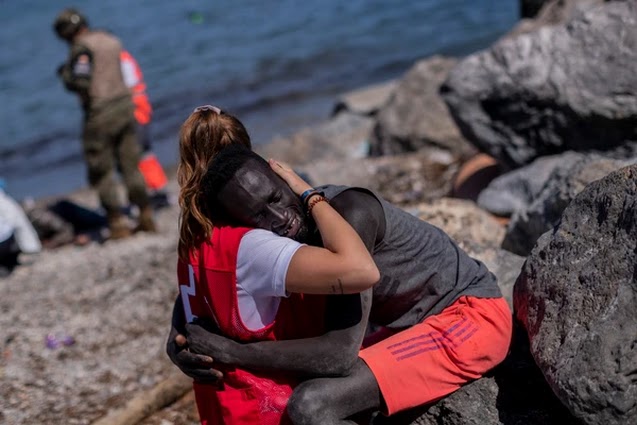
Mass migration across the world

Climate disasters across the world as well as political unrest have forced the mass movement of people to more stable ground, often seeking asylum in Europe and facing increasingly hostile governments.

A migrant is comforted by a member of the Spanish Red Cross. AP Photo/Bernat Armangue.

Drought in Colombia

In February, climate change caused extensive droughts which led to the drying up of lakes like Lake Suesca in Colombia.

A dried out Lake Suesca in Colombia. AP Photo/Fernando Vergara.

Fires in California

Greece wasn’t the only place to be hit with extensive wildfires this year. In July and August, California faced another year of forest fires, burning 2,569,009 acres and killing three people.

An idle chairlift at Sierra-at Tahoe ski resort in California. Photo: Justin Sullivan/Getty Images.

Russia was somehow also on fire

Russia’s fires dwarfed all other fires across the world this year, with wildfires in Serbia emitting seven times as much CO2 as wildfires in the US.

A firefighter working on fires in the village of Kuel in Yakutia, Sakha, Russia. Photo by Ivan Nikiforov/Anadolu Agency via Getty Images.

Hurricane Ida

In Louisiana and the Gulf Coast, Category 4 Hurricane Ida decimated homes in an area already heavily impacted by COVID.

A man wipes sweat from his eyes after his home was destroyed by Hurricane Ida. AP Photo/John Locher

COP26

This year, climate activists protested in the hope of forcing global leaders to act on climate change at COP26. In the end, many were disappointed with the resulting agreement.

Activists at COP26 protest ocean pollution. Photo: AP Photo/Alastair Grant.

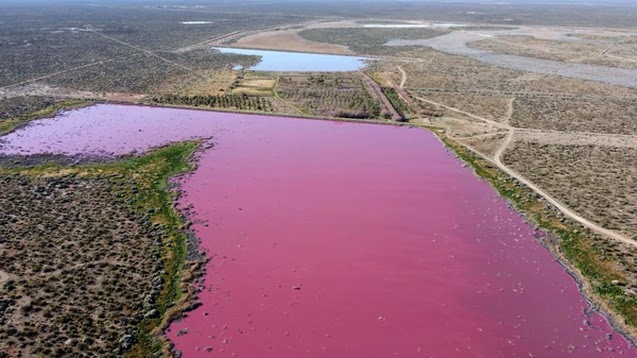
Pink Lake in Argentina

In July, a lagoon in the Patagonian province of Chubut, Argentina turned bright pink as a result of dumped chemical waste – specifically sodium sulfite, an antibacterial product used in the fishing industry.

The Corfo lagoon in Argentine, pink from pollution. AP Photo/Daniel Feldman.

Chile’s mountain of clothes

An estimated 39,000 tonnes of unsold clothes from the US and UK ended up dumped in the Atacama desert in Chile.

Piles of clothes dumped in the desert in Chile. Photo: Martin Bernetti/AFP via Getty Images.


Links

21/12/2021

(AU SMH) Eyewitness To Climate Change

Sydney Morning Herald - Nick Moir

With a warming climate driving weather to new extremes, the Herald’s chief photographer Nick Moir spent much of the year battling giant hail, floods, huge waves and even tornadoes.

The photographer stopping for an active storm off the Sydney coastline in October, 2021. Credit: Nick Moir

Two years ago we were staring down the barrel of an unparalleled bushfire threat following a vicious drought.

Now we are coming out of the wettest November on record. Many of our rivers are flooding. Bureau of Meteorology alerts have been laced with tornado threats and giant hail warnings.

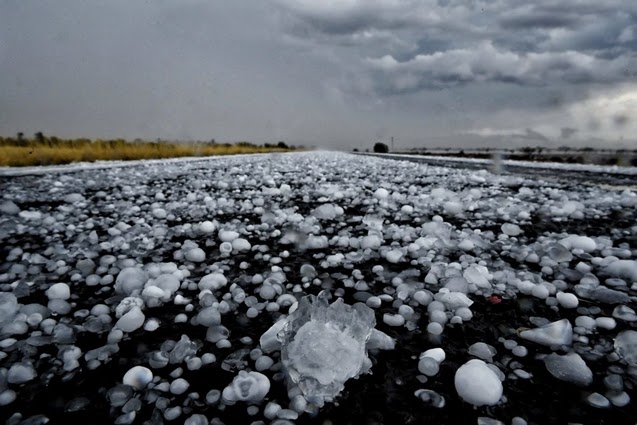
Giant hail North of Bourke during severe storm outbreak in September, 2021. Credit:Nick Moir

I’ve covered severe weather, droughts and fires for a quarter of a century, and in recent years it seems each season brings us new extremes.

So this year what happened?

Sharp upper level troughs which reached far north into Queensland caused instability and a developing La Nina added moisture.

Strong westerly winds which surround Antarctica appeared further south than usual, driving yet more moisture to feed into the Queensland and NSW interior, an event known as a positive Southern Annular Mode.

All this combined to cause floods and violent thunderstorms.

“All the ingredients were there this year,” says Weatherzone meteorologist Ben Domensino.

From September on meteorologists noted an increase in severe storm activity driving across the state.

On radar screens these weather patterns appeared with a “hook echo”, the signature of the sort of strong rotation that can cause tornadoes, and sure enough tornadoes did hit towns across the state including Bathurst and Armidale.

A resident of St Georges Caravan park along the Hawkesbury River stands on a building as the remains of his home and many others are slowly swept away in March this year. Credit: Nick Moir

To cover one outbreak at the end of September I based myself in far west NSW near Bourke when atmospheric instability and wind shear (increasing winds at height) suggested strong storms were likely to hit.

I managed to place myself on the north-west edge of a violent system. At one point I found myself in the perfect position to witness the storm, but unable to move through it due to the lack of roads in the area.

After one front roared over I measured hailstones that ranged from 7cm to 11.5cm. Fortunately, for Bourke residents, the storm passed them by about 30km.

Two weeks later a very distinctive hook echo developed on a storm in western Sydney. I approached it from the north to see a tornado developing in the storm structure.

So concerned was the BOM that it declared it a “Very Dangerous Storm” and issued a tornado alert.

Wyangala Dam water release exploding downstream into the Lachlan River. Credit: Nick Moir

Sydney got off lightly compared to Coffs Harbour on October 20 when a supercell storm dumped 30cm of hail, damaging homes, businesses and vehicles.

Many other severe storms hit the Liverpool Plains and surrounds the same day, some of them lasting hours and covering hundreds of kilometres.

On October 10 another surge of activity saw lines of storms dump rain across the central west near Mudgee.

I saw a funnel appear from one and drove towards the ground before I got lost behind a thick curtain of rain.

In the United States a series of unseasonably late and historically large tornadoes devastated towns across the mid-west in recent days. With the death toll now approaching 100, scientists are investigating the impact of climate change on the storms.

A storm’s super cell structure in Sydney’s west. Credit: Nick Moir

It is thought that the warmer northern winter is causing the violent weather season to extend into what were once quieter months.

Similarly in March, NSW went through a period of record-breaking daily rainfall totals, causing the worst flooding the Hawkesbury/Nepean river had seen in 30 years.

Parts of the Hawkesbury that just over a year earlier had been hit by the largest known bushfire in Australian history were lost under metres of water.

Thousands were forced from their homes across the east of the state.

Floods are challenging events for photographers to cover. It is difficult to keep cameras going and lenses unfogged while wading through fast moving water under drenching rain.

Several photographers had expensive equipment destroyed in the March floods. All of the dealt with the discomfort of feet left wet for too long and the danger of dodging detritus and sewage in flooded streets.

Large swell rolls into Newport in July. Credit: Nick Moir

When the strong low pressure systems that caused the floods hit the coast, winds drove surf to new heights, stripping coastlines of sand and vegetation.

Gallery
21 images
Surfers braved some of the brutal waves and photographers turned to drones to capture images of offshore breaks.

As the wet summer continues NSW firefighters are nervously eyeing off the burgeoning grass and undergrowth the rains have fostered.

In the wet conditions firefighters have fallen behind in hazard reduction work.

“These grasslands are sitting there waiting to burn,” says NSW RFS Inspector Ben Shepherd.

Links

(AU The Guardian) As The Coalition And Labor Inch Closer On Emissions, Are Australia’s Climate Wars Ending?

The Guardian -

With big business backing Labor’s climate policy and net zero gaining bipartisan support, the climate battle is transitioning into a new phase

ALP leader Anthony Albanese and PM Scott Morrison during question time. On the issue of the climate crisis, Albanese has accused the Coalition government of being ‘frozen in time while the world warms around it’. Photograph: Lukas Coch/AAP

If a week is a long time in politics, three years is a geological age. Long-held assumptions can change dramatically in that time. Just ask the Business Council of Australia.

In 2018, before the last federal election, the lobby group representing 100 of the country’s biggest businesses described a Labor pledge to cut greenhouse gas emissions by 45% by 2030 as “economy wrecking”.

The Coalition’s more modest and less scientifically based goal of a 26-28% cut was deemed “appropriate and achievable”. (To its credit, the business council has chosen not to delete its incriminating tweet.)

Three years of worsening science news and a once-in-a-century pandemic later, the BCA has turned on its heel. It believes Labor’s new, fractionally reduced 2030 target – a 43% cut compared with 2005 levels – and the policies that support it are a “sensible and workable plan”. Remarkably, given its history of opposing a national carbon price, it recently called on both major parties to do more.

The BCA is not the only establishment heavyweight to have embraced greater ambition and offered support for Anthony Albanese and his climate change shadow minister, Chris Bowen, since the ALP emissions policy was released earlier this month.

The Australian Industry Group – the country’s largest employer group – said Labor’s target could be delivered with “sensible policy reforms, greater collaboration and a close focus on industry competitiveness”.

The Australian Chamber of Commerce and Industry said it offered “a pathway to achieve the economic and technological transition towards a more sustainable future”. And the Australian Automobile Association said it was a “win for consumers”.

This response is not a complete surprise. Most major corporates are persuaded the world will inevitably move on climate and that it is in their interests to do the same – or at least be seen to. But the support from business for Labor’s more ambitious stance reflects a sea change in the battle-weary world of Australian climate politics.

Some observers have wondered if this is how the “climate wars” end, having helped bring down multiple political leaders on both sides and held back policy for more than a decade. Political disagreements and attacks will continue, but will the potency of a dishonest campaign over emissions policy have diminished by the time next year’s election rolls around?

‘There’s no going back’

 Analysts mostly say: let’s not get ahead of ourselves. But they also say people should not underestimate what it means that the Coalition has promised the country will reach net zero emissions by 2050.

Scott Morrison’s net zero plan, released shortly before the Cop26 climate summit in Glasgow, includes no new policies, largely relies on unproven technology and does not actually get the country to net zero, but the long-delayed decision to set the target means for the first time Australia’s major political parties agree on the destination. It narrows the scope for political attack.

“I think the war is over in the sense the fundamental differences about doing anything about climate change is over,” says Tony Wood, the energy program director with the Grattan Institute.

“There is a rump of people on both sides who don’t want there to be bipartisan support for climate change and who see benefit in differentiation, but I think the question is whether we’re now entering a stage of cold wars and skirmishes.”

Frank Jotzo, professor of climate change economics at the Australian National University Crawford School of Public Policy, says the centre of debate has shifted and bipartisan support for a net zero target opened “many, many opportunities and really changes the tone of the debate”.

“There’s no going back on that,” he says. “Now that a conservative government that had a ‘no-action’ point of view supports a net zero target, there’s really no room for saying we shouldn’t be doing anything.

“If you went just by what business says and what civil society says, then you would say there’s really nothing that could hold back a shift to effective and sensible climate policy in Australia. Large parts of the spectrum now agree on the fundamentals – they want ambitious targets and meaningful policies of some kind.”

Of course, things are not that simple.

“This agreement doesn’t necessarily translate into how elections are campaigned,” Jotzo says. “The preconditions for an end to the climate wars are there, but I think it’s too early to call.”

Unanswered questions about the 2022 campaign include whether News Corp newspapers, which have run misleading campaigns against the cost of climate policies and attacked the scientific consensus, have moved on since launching a “mission zero” series on climate before the Glasgow summit or will return to their old ways.

Scott Morrison during an aerial tour of the Snowy Hydro site near Tantangara Dam, NSW on 3 December. Photograph: Alex Ellinghausen/AAP

To date, the response has been more muted than some in Labor expected. There have been news stories describing the ALP policy as targeting big emitters – which is true, with the important caveat that it is gradual and has the support of business groups.

Others have raised doubts about whether it would create more than 600,000 jobs and the extent to which it would lead to a reduction in energy bills – though it was not disputed that they would be cut.

The most aggressive media attack was on the front page of News Corp’s Brisbane daily, the Courier Mail, which quoted backbencher Matthew Canavan creatively describing a plan to use an existing Coalition policy – the safeguard mechanism – to start to cut emissions from big industry as “Labor’s revenge” on Queensland.
The animosity and ridiculous scare campaigns about climate change that we’ve seen are unlikely to dominate this election
Richie Merzian
Morrison and his ministers have not gone as hard and the initial attack was quickly over, but it’s early days, and campaign lines have been tested. The prime minister claimed Labor’s policy would be bad for coal regions and manufacturing, and several MPs described the promised changes to the safeguard mechanism as a “sneaky new carbon tax”.

In reality, Labor is proposing a more gentle use of the safeguard than promised by its architect, Liberal cabinet minister Greg Hunt, back in 2015.

In response, Albanese said the Coalition was “frozen in time while the world warms around it” and that he expected the government to lie about Labor’s policy.

Closing the climate policy gap

Analysts expect Coalition criticism to be more targeted than in previous campaigns, reflecting not only the shared net zero target, but that the government is under pressure from climate-focused independents in heartland Sydney and Melbourne seats.

A differentiated campaign – trying to convince inner-city residents the government is acting, while telling some parts of Queensland and New South Wales a Labor government would be devastating for them – is not impossible, but harder to land than in the past.

Allegra Spender, an independent candidate who is running against Dave Sharma in the seat of Wentworth in Sydney’s east. Her message is that action on the climate crisis is an economic as well as an environmental imperative. Photograph: Carly Earl/The Guardian

Labor’s policy was designed with this in mind. There is a gap between the parties on 2030 targets, but it is relatively narrow once the government’s rhetoric is factored in.

The prime minister still backs a target set under Tony Abbott six years ago, but claims official projections show the country would cut emissions by 35%.

Whether you accept this or not – and there is reason not to – it leaves Labor promising just eight percentage points more than the Coalition. Albanese accurately described the ALP’s target as modest.

The gap between the parties on renewable energy is similarly difficult to exploit. The government forecasts that 69% of electricity in the national market will be zero emissions by 2030, largely due to the tumbling cost of solar energy and incentives offered by state governments. Labor says it would lift that to 82% just by bringing forward construction of transmission lines to planned renewable energy zones.

Richie Merzian, the climate and energy program director for the Australia Institute, says Labor has gone out of its way to avoid any area where it was at risk of being wedged by the government or other opponents.

“It means the animosity and ridiculous scare campaigns about climate change that we’ve seen are unlikely to dominate this election,” he says.

If this proves correct, it may leave the biggest battleground where those who believe the debate should be led by climate science say it should have always been – over what Australia has to do to live up to its global commitment to try to limit global heating to 1.5C.

Politically, they include the Greens, who want a 75% cut by 2030 including a rapid phaseout of coal power, and some independent candidates.

Merzian, a former diplomat representing Australia at climate talks, is among those who believe this is where the debate is finally headed, saying: “The battle will not be over until we have a decent climate policy that reflects the reality of what’s needed.”

Links

(AU Reuters) Aussie Climate Ambition Will Restart At Ballot Box

Reuters -
Office workers walk past a mural of a drought scene in the business district of Melbourne July 1, 2008. REUTERS/Mick Tsikas

2022 Federal Election

Australia will hold a federal election by May 2022 at the latest.

The country requires a federal election every three years, and the last one was in May 2019.

A majority requires securing 76 of the 151 seats in the House of Representatives.
MELBOURNE - Expect some green shoots at Australia’s 2022 general election.

Although previous efforts to tackle global warming have foiled five prime ministers since 2007 and may have cost the opposition Labor Party the 2019 ballot, votes cast early next year will give independent, climate-savvy candidates a starring role.

Around 20 of them, mostly women, are running for federal parliament.

Clean-energy investor Simon Holmes à Court’s fundraising group, Climate 200, provides financial and logistical support.

All else being equal, winning four of the 151 House of Representatives seats would make them kingmakers.

Australia has pretty much all it needs to become an energy-transition leader, including sun and wind to displace the coal and gas responsible for 75% of the country’s electricity supply.

Magnates such as mining billionaire Andrew Forrest are pushing for action.

Moreover, severe drought, bushfires and floods, all exacerbated by climate change, have battered the country in recent years.

The ruling Liberal-Nationals coalition touts a more than 20% decline in greenhouse-gas emissions since 2005, as Treasurer Josh Frydenberg emphasised during a December discussion with Breakingviews.

The government, however, has presided over a 2% increase, excluding land-use changes, between 2013 and the start of the pandemic.

Emissions from producing fossil fuels grew 28%. The current government also has not expanded its 2015 pledge to cut 2005 levels 28% by 2030, and its net-zero 2050 plan read more is weak.

Labor’s 2030 target is a 43% decline.

A government relying on independents would have to turbocharge its plans. It shouldn’t be controversial: The Business Council of Australia, which opposed Labor’s 2019 target, wants a 50% emissions cut by 2030 and board directors are crying out for leadership on the issue. Stronger climate policy also would accelerate growth opportunities.

The country could create 1.8 million climate-related jobs, reckons consultancy Beyond Net Zero, which also estimates that exports of green hydrogen, steel and the like can be a A$333 billion ($239 billion) export market in three decades, almost triple what fossil fuels generate.

Such figures may be overly optimistic, but Australia’s A$2 trillion ($1.4 trillion) economy would nevertheless benefit from a government that acts more quickly on climate.

The 2022 ballot box will provide the spark.

Links

Lethal Heating is a citizens' initiative