06/03/2022

(Grist) Big Oil Is Exiting Russia. What Does That Mean For The Climate?

Grist -

Withdrawing from Russia may hinder plans to transition to clean energy.
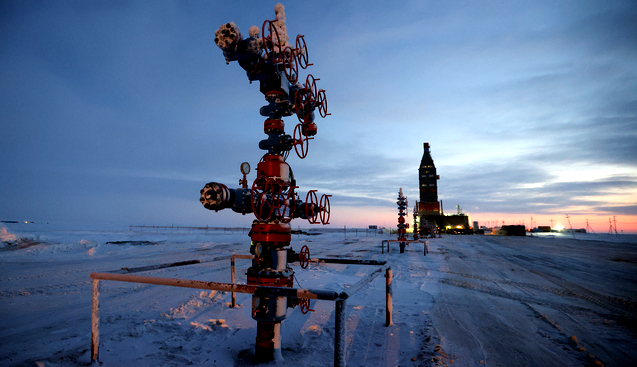
Stanislav Krasilnikov\TASS via Getty Images

Major international oil companies began dumping their investments in Russian oil and gas this week following the country’s invasion into Ukraine.

But experts say it’s unlikely these decisions will mean anything good for the transition to clean energy, and could actually set the companies back with their plans to achieve net-zero emissions. It started with BP.

Last weekend, under pressure from the U.K. government, the British oil giant decided to exit it’s nearly 20 percent stake in the Russian company Rosneft.

Russian crude makes up about a third of BP’s oil production, and the company said it would take a financial hit of as much as $25 billion.

In a statement, BP Chair Helge Lund said, “The Rosneft holding is no longer aligned with BP’s business and strategy.”

Shell, Exxon, and the Norwegian oil company Equinor have since followed, withdrawing from various joint ventures in oil and gas projects in Russia.

While abandoning oil and gas production is exactly what climate advocates want these companies to do, the moves do not represent a shift in strategy for Big Oil.

For one thing, when BP first announced its plans to achieve net-zero emissions in 2020, the company made it clear that the plan did not apply to its stake in Rosneft.

Now, the exit from Russia might actually hurt that plan, according to Jonathan Elkind, a senior research scholar at Columbia University’s Center on Global Energy Policy.

Both BP and Shell have said they planned to fund their forays into clean energy with profits from the fossil fuel side of their businesses.

“So this creates, at a minimum, a crosswind that they have to figure out a way to manage,” said Elkind, referring to the two companies’ exit from Russia. “That may translate into a need to rethink some of what their priorities had been.”

In other words, the situation in Russia won’t stop demand for fossil fuels, and major oil companies may decide to replace their Russian investments with new oil and gas ventures elsewhere.

According to the International Energy Agency, Russian oil and gas production is not the most carbon-intensive in the world, but it’s also not the cleanest.

If this leads BP, Shell, or Exxon to move into parts of the world with dirtier production, their emissions could increase.

It’s also unclear whether oil companies will be able to sell off their Russian assets or if they’ll be forced to walk away from them.

Even if they are able to sell assets, the proceeds may not be put toward clean energy.

When Shell sold off its assets in the U.S. Permian Basin last year for $9.4 billion, it said that it would spend some of the cash for the energy transition, but returned $7 billion of the proceeds to shareholders.

“There’s not generally a straight line you can draw from oil majors selling out of oil and gas plays to buying into clean energy,” said Lorne Stockman, research co-director at the advocacy organization Oil Change International.

Stockman also takes issue with the idea that BP and Shell need oil and gas funds to transition to clean energy.

“Companies that are in the clean energy business don’t need to run that business off of fossil fuel profits. There’s a thing called credit markets. You can get loans. You could issue shares. There are many ways to raise money to invest in clean energy,” he said.

Another question is whether Big Oil’s withdrawal of capital, and the technical expertise that comes with it, will have consequences for Russia’s plans to expand oil and gas development in the Arctic Circle — development that has been made possible due to climate change’s rapid warming of the area.

For example, Rosneft is building a multi-billion dollar oil production and export hub called the Vostok Oil project on the Taymyr peninsula, threatening a fragile ecosystem and the Indigenous communities that depend on it.

On Wednesday, a key international investor in the project, Trafigura, said it was reviewing its stake.

Elkind said it’s hard to tell whether the withdrawal of investment and trade ties with Russian companies will be a short-term phenomenon or more enduring.

But another factor is whether Russia can complete a project like Vostok without technological support from the West.

“All of this would create headwinds for Vostok,” he said. “Whether they can be overcome by Rosneft, it is too early to tell.”

Links

(AU The Guardian) ‘Unscientific’: Morrison Government Wanted IPCC To Say Great Barrier Reef ‘Not Yet In Crisis’

The Guardian - |

Australian officials attempted to water down language around health of world’s largest coral reef in latest climate change report

The latest report from the Intergovernmental Panel on Climate Change said the Great Barrier Reef was already heavily affected by ocean heating, leading to more frequent and severe coral bleaching. Photograph: HOGP/AP

The Australian government pushed to soften the wording of a major report by the Intergovernmental Panel on Climate Change, the world’s leading climate science authority, to say the Great Barrier Reef is not yet in crisis.

It has prompted accusations that the Morrison government had been unscientific, and was trying to play down the damage already being caused by global heating to avoid making deeper cuts in greenhouse gas emissions.

The latest major assessment by the IPCC, released this week, included a section headed: “The Great Barrier Reef is in crisis”.

It said the world’s largest coral reef was already heavily affected by climate change, particularly ocean heating, which was leading to more frequent and severe coral bleaching.

The 2,300km reef system has endured mass bleaching events in three of the past six years.

A bulletin by the International Institute for Sustainable Development, a global thinktank, said Australian government officials suggested in a meeting about the wording of a report summary that it should say the reef was “not yet in crisis” and “coral reefs are under increasing pressure, but targeted measures and management could reduce risk”.

They were supported by officials from Saudi Arabia.

The proposal, which Guardian Australia has confirmed independently, was opposed by France and several Caribbean island countries including Trinidad and Tobago, which argued coral reefs were already experiencing loss and damage.

The original wording was ultimately retained in the report by consensus.

The director of Blue Ocean Consulting and an adviser to the Australian Marine Conservation Society, Imogen Zethoven, said the trajectory of the reef was dire and the government’s attempt to not have that reflected in the IPCC report was “unscientific”.

“Scientists through the IPCC have said that the Great Barrier Reef is in crisis, and there’s a lot about it in the report, but the government has completely denied the crisis the Great Barrier Reef and coral reefs around the world are facing,” she said. “Anything other than claiming coral reefs are in crisis is dishonest.”

Some IPCC scientists emphasised that the Australian government had ultimately joined 194 other countries in agreeing to the final wording of the summary report. They said negotiations over the text was normal practice.

But the chief executive of Climate Analytics and former IPCC lead author, Bill Hare, said the Morrison government’s attempt to change the wording was consistent with its previous attempts to play down the risk facing the reef.

“The claim that the reef is not yet in crisis is quite fundamentally wrong, but it’s symptomatic of what the Australian government had been doing,” Hare said. “This is just the latest iteration.”

Guardian Australia last year revealed the government had tried to block the passage of a Unesco recommendation that countries should try to keep global heating to 1.5C to protect world heritage sites such as the reef from the impacts of the climate crisis.

Hare said Australian government representatives had also unsuccessfully tried to water down a section of the IPCC report that said ecosystems including some ​​warm water coral reefs were already reaching or surpassing “hard adaptation limits” at which they had limited capacity to adapt to further heating.

He said the final report, which summarises thousands of published peer-reviewed scientific studies, was essentially saying that coral reefs were “on the edge”.

It said there was “very high confidence” that some natural systems in Australia, including the Great Barrier Reef, had already experienced irreversible change.

It found extreme events exacerbated by emissions – heatwaves, droughts, floods, storms and fires – were causing death, injury and financial and emotional stress, and their impacts were “cascading and compounding” across Australia’s nature, society and economy.

“There are so many things in this report that are so bad, and the government just wants to ignore them because the only way to deal with them is to get [greenhouse gas] emissions down,” Hare said. “The report shows it is urgent that we increase our emissions reduction target for 2030 to a cut of more than 50%.”

The Morrison government has resisted international and domestic pressure to increase its six-year-old target of reducing emissions to at least 26% below 2005 levels by 2030.

Official projections suggest the country will cut emissions by 30%.

Scientists say this is inconsistent with limiting global heating to well below 2C, a key goal the government signed up to at the landmark 2015 Paris climate summit.

A spokesperson for the environment minister, Sussan Ley, confirmed Australia had attempted to change language in the report and said the proposal “was both science-based and accurate, in line with normal practice”.

“We fully accept that global climate change needs to be addressed as the biggest threat to the world’s reefs,” the spokesperson said.

“The Great Barrier Reef is the best managed reef in the world and our investments in science-based adaptation, regeneration and on-water management show that local science-based strategies are needed to improve resilience as the world reduces emissions, and that they can have a positive impact.”

The government announced in January an additional $1bn funding for Great Barrier Reef conservation projects over the next decade. It said more than half would be spent on improving water quality, including by limiting pollution from agriculture.

The IPCC report published this week is the second part of its sixth major assessment of the climate crisis.

It found global warming caused by humans was causing dangerous and widespread disruption, with many effects expected to be more severe than predicted.

It said there were options to limit the impacts if there was proper planning, but progress on adaptation was uneven.

A 2018 IPCC report found coral reefs were likely to decline between 70% and 90% if global heating surpassed 1.5C.

If the temperature rise reaches 2C, more than 99% of coral reefs were projected to decline.

Average global temperatures have already increased about 1.1C.

The Australian government last year successfully lobbied against UN scientific advice that the reef should be placed on a list of world heritage sites in danger.

The 21-country world heritage committee is due to consider the reef’s plight again in June.

Links

(AU SMH) Floods Are The Right Time To Talk About Climate Change

Sydney Morning Herald - Editorial


The floods that have devastated the east coast of Australia demonstrate yet again the dire consequences of climate change but Australia’s response is still far too feeble.

A dozen lives have already been lost in the floods on the NSW North Coast and in south-east Queensland and in Sydney 200,000 people were evacuated from their homes on Thursday as the Hawkesbury and Georges rivers broke their banks.

The damage bill will be billions of dollars.

Yet, if greenhouse gas emissions are not reduced quickly and the planet warms by 3 degrees this century, these extreme weather events will only grow more damaging, according to a United Nations report on the impacts of climate change released on Monday.

The Intergovernmental Panel on Climate Change update of previous reports says it has ever higher confidence in predicting “compounding and cascading” effects of climate change.

Bushfires and droughts will grow in severity and frequency; floods will be more severe; it could be too hot for normal outdoor activity in parts of northern Australia; the Great Barrier Reef will likely die; snowfields will shrink or disappear.

NSW Premier Dominic Perrottet said Lismore was hit by a “1-in-1000 year” flood but this phrase is meaningless now that floods are becoming more frequent and breaking records every year.

The federal government belatedly seems prepared to accept the scientific consensus that there is a direct link between specific instances of extreme weather and climate change.

Emergency Management Minister Bridget McKenzie told ABC TV that “given all the predictions of climate change we are going to see more intense and irregular events”. She added: “The IPCC is dead right.”

Yet her government is still not taking all the steps needed to avoid the worrying predictions of the IPCC’s report.

While the Coalition government took an important step before the recent Glasgow Summit by adopting a target of zero net emissions by 2050, it is still lukewarm, at best, in its efforts to cut emissions.

The Coalition’s interim target of a 26-28 per cent cut in emissions below 2005 levels by 2030, is less than other comparable countries and the ALP’s election promise of a target of 43 per cent.

More importantly, it is not consistent with keeping the rise in global temperatures below 1.5 degrees, seen as a threshold for mitigating the most serious impacts of climate change.

Rather than taking the lead in cutting emissions, the government too often sides with the fossil fuel lobby.

Ms McKenzie is a key supporter of the NSW coal industry.

When tech billionaire Mike Cannon-Brookes last week launched an $8 billion takeover bid for AGL, which involved closing down the company’s coal-fired power plants more quickly than planned, Energy Minister Angus Taylor described the plan as “a significant risk to electricity consumers”.

The government is missing a huge opportunity.

Australia’s resources of wind and solar put it in an ideal position to reduce the role of coal and gas in its power grid, unlike Europe which is desperately trying to end its dependence on imported Russian gas.

Alongside faster reductions in emissions, Australia must better prepare for the inevitable natural disasters that lie ahead.

NSW will have to invest more in emergency response infrastructure. Many vulnerable people trapped in their homes by rising waters waited too long to be rescued.

Governments tend to over-promise but under-deliver when it comes to promising emergency financial assistance.

Around flood-prone areas, the government faces a difficult choice of whether to invest in more dams and levees or whether to abandon some areas and offer help to residents to move to higher ground.

The flood waters will recede in the next few days but the myriad threats posed to Australia by climate change will only compound for decades.

Links

05/03/2022

(AU SMH) Australian Government Pushes Oil And Gas Regulator To Do Less About Emissions

Sydney Morning Herald - Peter Milne

A federal government directive that the offshore environment regulator ignore the oil and gas sector’s massive indirect emissions but consider its economic benefits could open decisions to legal challenge.

Resources minister Keith Pitt told the National Offshore Petroleum Safety and Environmental Management Authority he expected it to only consider the direct emissions from projects it assessed as later indirect, or scope 3, emissions were managed by countries that bought Australian oil and gas.

Gas is good: Resources Minister Keith Pitt. Credit: Alex Ellinghausen

In February, Mr Pitt wrote to NOPSEMA chief executive Stuart Smith listing his expectations of the independent regulator, which also included exercising its powers “consistent with government policy” and considering the “economic and commercial environment”.

Environmental Defenders Office managing climate lawyer Brendan Dobbie said Mr Pitt’s expectation on emissions conflicted with NOPSEMA’s legal obligations.

“The regulations specify that NOPSEMA must consider both direct and indirect impacts of offshore gas projects,” Mr Dobbie said, including scope 3 emissions.

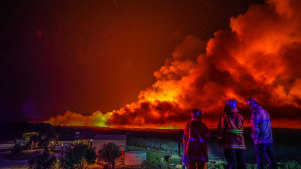
Firefighters at the scene of the blaze near Margaret River in Western Australia in December.

“The importance of local decision-makers recognising the global impacts of fossil fuel projects has been acknowledged by the courts.

“At a time when the scientific consensus tells us that the development of any new fossil fuel project will cause us to miss our Paris targets, it is imperative that NOPSEMA consider the full scope of greenhouse gas impacts caused by Australian offshore gas projects.”

Like Mr Pitt, the Australian gas industry has argued scope 3 emissions are not its responsibility, but its customers’.

However, most direct emissions from many Australian gas projects are classified as scope 3 emissions by NOPSEMA as the heavily polluting plants that cool the gas to a liquid for export are located onshore, outside its jurisdiction.

Woodside’s Scarborough, the LNG project most recently assessed by NOPSEMA, will emit about 0.5 million tonnes of carbon pollution a year offshore, processing onshore at Woodside’s Pluto plant will produce 2.8 million tonnes and use by its mostly overseas customers another 25 million tonnes.

If NOPSEMA ignored what it considered to be scope 3 emissions then 85 per cent of the emissions within Australia under the control of the gas producer would escape its attention.

The exclusion of scope 3 emissions would ease the regulatory path for offshore gas producers.

Woodside’s $16.6 billion Scarborough project and Santos’ $5 billion Barossa project have both had high-level project proposals accepted by NOPSEMA but must still get numerous environment plans approved by the regulator for each stage of construction and operation.

Existing projects, such as Chevron’s Gorgon and Wheatstone, would also benefit as NOPSEMA reviews their environment plans every five years.
Firefighters at the scene of the blaze near Margaret River in Western Australia in December.

Mr Pitt’s letter to NOPSEMA, posted on the regulator’s website, also said the regulator played an important part in encouraging investment in the “globally competitive” oil and gas industry that is expected to produce exports of $76 billion this financial year.

“I expect NOPSEMA to consider the broader social, economic and commercial environment,” Mr Pitt said in the letter.

Mr Dobbie said regulations required NOPSEMA to only consider environmental issues when assessing environmental approvals.

“If NOPSEMA were to take into account economic and commercial matters when determining environmental approvals, it may fall into legal error and those approvals may be subject to challenge in the courts,” he said.

Mr Pitt’s expectation that NOPSEMA has a role in encouraging investment contrasts with the previous ministerial statement of expectations in 2019 by then-resources minister Senator Matt Canavan who said the regulator was kept separate from agencies that promoted the petroleum industry “to ensure its regulatory independence”.

Mr Pitt said the purpose of a ministerial statement of expectations was to provide greater clarity about government policies and objectives that were relevant to the regulator.

“It is regulatory best practice for an independent regulator to fully consider the broader social, economic and commercial environment,” Mr Pitt said.

Mr Pitt was asked if he sought legal advice on whether NOPSEMA could meet his expectations to ignore scope 3 emissions and consider non-environmental issues and still meet its legal obligations but did not respond.

NOPSEMA chief executive Stuart Smith has two months to respond to Mr Pitt outlining how the regulator will meet the minister’s expectations.

Links

(The Conversation) Five Key Points In The IPCC Report On Climate Change Impacts And Adaptation

The Conversation - | |

Climate change has increased the risk of huge bushfires in Australia. josh.tagi / shutterstock

Authors
  • is Environmental Social Science Reserch Fellow, University of Oxford
  • is Professor of Climate Urbanism, University of Sheffield
  • is Associate Professor of Science, Technology and Society, Singapore Management University
The latest report from the UN’s Intergovernmental Panel on Climate Change (IPCC) looks at the impacts, adaptation and vulnerabilities associated with the climate crisis, and we are three of the 270 scientists and researchers who wrote it.

The document reports stark new findings on the way current global warming of 1.1℃ is impacting natural and human systems, and on how our ability to respond will be increasingly limited with every additional increment of warming. Here are five key points in the new report:

1. Risks will be magnified if warming is unchecked

Since the previous IPCC report on impacts and adaptation back in 2014, heatwaves, droughts, wildfires and other extremes have increased in frequency and intensity far beyond natural variability.

These hazards have substantially damaged ecosystems across the globe, and in some cases led to irreversible losses such as species extinction.

Humans are also hit too, through heightened food and water insecurities, greater incidences of food-, water- and vector-borne diseases, and worse physical and mental health.

If global warming is left unchecked, these climate hazards will unavoidably increase. Every increment of global temperature rise magnifies the resulting loss and damage.

2. Adaptation is hitting limits

The report says that much of the world’s current climate adaptation measures are not necessarily effective. In fact, there are both “hard” and “soft” limits.

In natural systems, the hard limits mean that no amount of human intervention (beside reducing greenhouse gas emissions) can make a difference.

For example, warm water coral reefs may completely disappear if ocean temperatures continue increasing – you can’t simply “adapt” to that.

Corals in Indonesia begin to bleach as the sea gets too warm. Ethan Daniels / shutterstock

In human systems, soft limits include obstacles like insufficient finance and poor planning, which could be addressed through more inclusive governance.

However there are also hard limits such as limited water in small islands, as rising seas and extreme weather can mean sea water contaminates fresh water. And once we lose an island to sea-level rise, no amount of adaptation will bring that island back.


The IPCC also finds that adaptation cannot prevent all losses and damages, which are unequally distributed around the world.

3. ‘Maladaptation’ can make things worse

The IPCC cites evidence of adaptation actions that further deepen existing social inequities and lead to adverse outcomes – what’s known as “maladaptation”.

One example would be when a sea wall is built to protect a settlement from sea-level rise and instead prevents rainwater from draining, leading to the emergence of flooding as a new hazard.

Unfortunately, there is ample evidence of maladaptation and it especially affects marginalised and vulnerable people.

‘Free from oil, gas and deforestation’: an indigenous Amazonian protester. Sebastian Moreira / EPA
For this latest report, the IPCC also made a conscious effort to bring in philosophers, anthropologists and other authors from many different disciplines which may not be seen as traditional areas of climate change research.

This meant drawing on more qualitative social sciences and providing a richer picture of topics like vulnerability and climate justice.

Unlike any other IPCC report before it, this one attempted to involve indigenous knowledge.

However there are strict rules in the IPCC about what sort of knowledge can be included, with anything not peer-reviewed seen as secondary or questionable by member countries.

While this new report is an inclusive step, there is still significant work needed to ensure that knowledge such as indigenous oral history has a place in IPCC assessments.

4. Cities are a challenge – and an opportunity

Among the figures reported, more than one billion people in low-lying settlements face hazards such as sea-level rise, subsiding coasts, or flooding at high tides, while 350 million urban residents live with the threat of water scarcity.

Climate change impacts such as extreme temperatures also worsen ongoing problems in cities, such as air pollution.

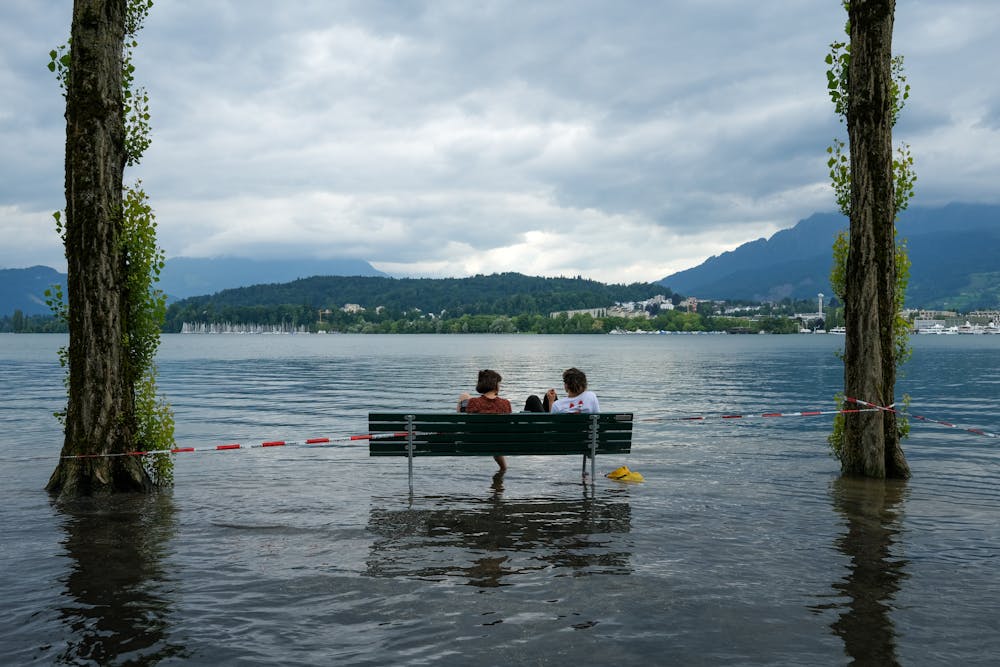
Flooding in Lucerne, Switzerland. cinan / shutterstock

Yet cities are also sites of opportunity, and the IPCC report maps a wide range of options for urban adaptation.

These include physical barriers to stop floods and rising seas, or more nature-based solutions such as planting trees upstream to slow excess river flows and shade homes in heatwaves, or restoring mangroves that protect communities from coastal flooding.

The report also cites social policy measures such as cash transfers to provide safety nets, insurance and other types of livelihood support.

5. The window of opportunity is closing, rapidly

The new report emphasises the need to couple adaptation measures with greenhouse gas emission reductions to enable “climate resilient development”.

This will require adequate financing, inclusive governance, transparency in decision making, and the participation of a wide range of people and groups.

Yet, the world is on a path to exceed 1.5℃ warming within the next decade. Current development policies which accelerate greenhouse gas emissions actually increase climate maladaptation risks and widen social inequalities.

To urgently shift our collective course from 1.5℃ of warming and beyond, the report charts paths for climate-resilient development that policymakers can apply, all of which reduce climate risks while improving lives, especially among those most vulnerable to global warming.

Time, however, is running short.

Links

(AU The Guardian) Tasmania Records Driest Summer In 40 Years As La Niña ‘Swings The Wind Around’

The Guardian -

Weather pattern slashes rainfall in Australia’s southernmost state while temperatures soar

The view over Hobart from Mount Wellington on a sunny day. As La Niña has sent more rain to the Australian mainland, Tasmania has endured a hot, dry summer. Photograph: Genevieve Vallee/Alamy

While Queensland and New South Wales have been hit with historic rainfall and floods, Tasmania has endured its driest summer in 40 years.

The island state’s west and south-west – both sparsely populated and typically wet – recorded their lowest levels of rainfall on record, the Bureau of Meteorology said.

This meant that across the state it was driest summer since 1980-81, and the fourth driest since records began more than a century ago.

Total rainfall was 43% below the long-term average. Parts of the south-west had between 200mm and 400mm less rain than they normally would in summer.

This was consistent with projections of changed rainfall across the state due to rising temperatures caused by greenhouse gas emissions.

A major report by the Intergovernmental Panel on Climate Change published this week found that global heating was expected to lead to more winter rain in Tasmania but a reduction in summer rain in the state’s west.

Anna Forrest, a meteorologist with the bureau, said the impact of the La Niña weather pattern that has helped drive the extraordinary rain further north was likely to have played a role in reducing the amount of rain in Tasmania.

During a La Niña event, strong trade winds blow west across the Pacific Ocean, pushing warm surface water towards Asia and the seas north of Australia.

The warmer waters lead to increased rainfall across northern and eastern Australia but play a different role further south.

“The predominant wind direction for Tasmania is westerly but this summer we’ve had a lot of easterly winds,” Forrest said. “It is highly unusual but that is the impact a La Niña has on Tasmania’s climate. It basically swings the wind around.”

The Tasmanian dry spell coincided with one of the state’s hottest summers on record. The mean temperature across days and nights was 1.3C higher than average, making it the fifth warmest summer since records began. The average maximum day time temperature was 1.7C above the long-term average.

Across the country, it was the 17th warmest summer on record. It was 0.73C above the long-term average measured across the years 1961 to 1990, but cooler than some recent summers, reflecting La Niña’s impact. Summer rainfall was close to average for Australia as a whole.

The IPCC last year reported that human activities were unequivocally heating the planet, affecting weather and climate extremes in every region across the globe and helping to cause increased heatwaves, heavier rainfall events and more intense droughts and tropical cyclones.

In Australia it found that average temperatures above land had already increased by about 1.4C since 1910. Annual changes in temperature were now above what could be expected from natural variation in all regions across the continent.

A scientific review has concluded that the frequency of El Niño, which is associated with higher temperatures in eastern Australia, and La Niña events were expected to increase under business-as-usual scenarios of greenhouse gas emissions.

Links

04/03/2022

(AU Financial Times) Catastrophic Floods Pile Pressure On Australian Government

Financial Times - |

PM’s administration criticised over climate change stance as soldiers called in to help disaster relief operations

Residents evacuate after flooding in Lismore, northeastern New South Wales. The extreme weather has claimed seven lives and flooded 18,000 homes so far. © JASON O'BRIEN/EPA-EFE/Shutterstock

Devastating floods that have submerged cities and towns insland and New South Wales and triggered thousands of insurance claims are stoking criticism of the Australian government’s stance on climate change.

The wild weather, described by meteorologists as a “rain bomb”, moved south from Queensland over the weekend and has claimed seven lives and flooded 18,000 homes.

The flooding is the latest in a series of natural disasters to hit Australia in recent years that included bushfires in 2019 and the bleaching of the Great Barrier Reef, and has piled pressure on Prime Minister Scott Morrison’s conservative government to tackle climate change more robustly.

Josh Frydenberg, Australian treasurer, declined to mention climate change when asked on Monday about the floods, saying “forever it’s been thus”.

Australia was criticised last year when it reluctantly signed up to a “net zero” greenhouse gas emission target by 2050 but refused to phase out fossil fuel production. It also declined to set more stringent 2030 decarbonisation targets, saying it would not be lectured to by other countries.

Simon Bradshaw, head of research at the Climate Council, countered that for every 1C of warming, the atmosphere could hold 7 per cent more moisture, which would lead to more severe rainfall.

Bradshaw said governments at local and state levels were trying to address the risks but there was a lack of leadership at the federal level.

“We don’t see any signs that the national level decision makers are willing to take the steps required to ensure Australia plays its part in tackling climate change, protecting communities and unleashing the huge opportunities in renewable energy and climate solutions,” he said.

Dozens of people remain stranded on the roofs of their houses with some buildings, including a historic town hall near Byron Bay, washed away entirely, according to reports. The government has deployed 200 soldiers to help with disaster relief in the region.

Carbon capture and storage
Water levels on the Brisbane river reached almost 4m, the highest level since severe flooding hit Queensland’s biggest city in 2011, while the regional town of Gympie suffered its worst flooding since the 1880s.

“No one has seen this much rain in such a short amount of time,” said Anastacia Palaszczuk, premier of Queensland.

She said emergency services had made 113 water rescues and 1,544 people had been evacuated in the state, which has also been hit by power outages.

Insurers have classified the floods as catastrophic, which means claims will be given priority status.

Andrew Hall, chief executive of the Insurance Council of Australia, said: “It’s too early to understand the extent of the damage to property in affected areas and to estimate the insurance damage bill. However, insurers have received more than 3,500 claims in south-east Queensland over the last three days.”

David Wilkes, a general manager at insurer IAG, said it had received 3,200 claims by Sunday night.

The former head of the government’s National Resilience Taskforce, Mark Crosweller, said: “What we are seeing unfold is what we had long predicted.”

Links

Lethal Heating is a citizens' initiative