24/02/2019

Climate Change-Related Litigation Was Once Seen As A Joke, But It Could Soon Become Business Reality

ABCNassim Khadem

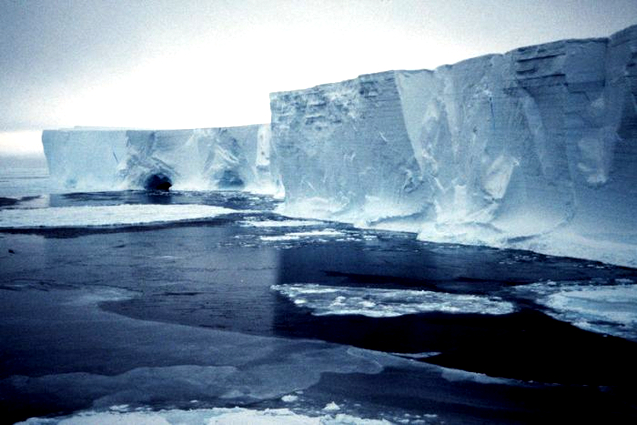
Climate change is a financial risk companies are starting to prepare for. (Australian Antarctic Division)

Australian company directors have
started caring about climate change
Australian company directors nominate climate change as the number one issue they want the government to address in the long-term, in a survey of more than 1,200 business leaders.

CEOs of Australia's largest companies are hearing the message and realising that on issues from climate change to gender diversity the need to act is not just a moral one.
On Wednesday, Australia's largest coal miner, Glencore, joined a growing list of global companies that have succumbed to shareholder pressure to act on climate change.
The Swiss-based resources giant, headed by billionaire Ivan Glasenberg, recognised there is a business case for freezing its global coal production at current levels.
It said it would instead shift focus to producing commodities including copper, cobalt, nickel, vanadium and zinc.
The announcement was made after the company held talks with the Climate Action 100+ initiative, whose global members collectively manage more than $US32 trillion in assets.The group includes a number of major Australian superannuation funds such as AMP Capital, AustralianSuper, Cbus, IFM Investors, QSuper and BT Financial Group.
It's shown it has sway when it comes to pressuring companies to implement changes aimed at achieving the goals of the Paris climate agreement.
In recent months the group has worked with other companies, including Shell, BP and Maersk, and convinced them to take steps that show they are serious about meeting the Paris climate agreement goals.
Emma Herd, chief executive of the Investor Group on Climate Change and member of the global Steering Committee for the Climate Action 100+, said the change in sentiment was because of greater recognition by CEOs that climate change is not just an ethical issue.
"This is about financial risk, as well a company's social licence to operate," she said.
"Super funds were first onto the issue because they take a 30-year investment horizon. These are very big mainstream funds asking very big mainstream companies to have a business plan on climate change."


Banks increase exposure to fossil fuels 
Australia's major banks have been getting back into fossil fuels over the past year, casting doubt on their seriousness in tackling climate change through their investments.

Climate change-related litigation on the rise
Climate change-related litigation is no longer a joke.
Regulators are weighing in as the prospect of lawsuits becomes more realistic.In a speech in June, ASIC Commissioner John Price said directors "would do well" to carefully consider a 2016 legal opinion by Noel Hutley SC and Sebastien Hartford-Davis that they could face lawsuits for failing to consider risks related to climate change.
Meanwhile, the Australian Prudential Regulation Authority (APRA) has been pushing ASX200 companies to run "stress tests" on potential climate risk scenarios.
In November, 2017 APRA executive Geoff Summerhayes warned that "should extreme weather events become more frequent and intense as scientists predict", there could be "adverse economic impacts" that threaten financial system stability.
That same year, Melbourne law practice Environmental Justice Australia had launched a case arguing the Commonwealth Bank had breached corporate law by not disclosing climate change as a major or material risk in its annual report.
The case was dropped when the bank subsequently disclosed climate risk in its annual report.
In July last year Industry super fund REST — the default industry super fund for many retail workers — faced a federal court legal battle over claims it breached its trustee duties by failing to properly factor climate change-related risks into its investment decisions.
Mark McVeigh, a 23-year-old ecology graduate, took on the legal case against the super fund, accusing it of breaching superannuation law by failing to act in his best interests.
Then in October, the New York Attorney-General's office sued ExxonMobil, accusing the fossil fuel giant of defrauding investors by misleading them about the financial risks the company faced from climate change regulations.
Oil giant Shell was first threatened with a lawsuit last year by the Dutch branch of Friends of the Earth. Greenpeace, ActionAid and other groups have now joined in, accusing Shell of "deliberately obstructing" efforts to keep global warming well below 2 degrees Celsius.
They have threatened they will move to a court summons on April 5 if Shell does not change its business model to comply with the Paris climate accord.
A study released on Monday by environmental campaign group Market Forces found just 14 per cent of Australia's top 100 companies have disclosed detailed scenario analysis demonstrating their viability in a 2-degree policy pathway.
As investors, regulators and litigators continue to exert pressure, it's only a matter of time before companies act.

Links

A Terrifying Look At The Consequences Of Climate Change

The Economist

But David Wallace-Wells is optimistic about humans’ ability to reverse some of the damage

CLIMATE CHANGE is a devilish problem for humanity: at once urgent and slow-moving, immediate and distant, real and abstract. It is a conundrum for writers, too.
Relegating it to a human-interest story—a Bangladeshi displaced by rising sea levels, say—downplays its civilisation-wide significance; sticking to scary forecasts—200m climate refugees by 2050, the UN warns—diminishes its visceral relevance.
That may be why, for all its existential gravity, the subject has yet to produce a great work of literature. It lends itself instead to dystopian science-fiction, or to compendiums of scary science facts, sometimes derided as “climate porn”.
The latest in that genre, “The Uninhabitable Earth” by David Wallace-Wells, is unabashedly pornographic. It is also riveting.
Mr Wallace-Wells, an editor at New York magazine, freely admits that he is not an environmentalist. He has never willingly gone camping, and rarely recycles. Nor is he an environmental reporter. He is a voyeur, seduced at first by stories that appeared allegorical—Arctic scientists trapped by melting ice on an island inhabited by polar bears, or a Russian boy killed by anthrax from a reindeer carcass uncovered by thawing permafrost.
Yet, as the author makes starkly clear, global warming is no parable. Far from being a problem only for future generations, it is wreaking havoc now. Five of the 20 worst fires in California’s history blazed in 2017; the deadliest incinerated the town of Paradise last year. Floods are becoming wetter, droughts drier and hurricanes fiercer.
Such calamities, Mr Wallace-Wells notes, are not the “new normal”; they mark “the end of normal”, as climate change tips Earth beyond the conditions that allowed humans to evolve in the first place. And that is with barely 1°C of man-made warming since the industrial revolution.
Things will get much worse. The world is on course to become at least 3°C hotter than in pre-industrial times. Within a few decades, this could mean that temperatures in Mecca render the haj physically impossible for many of the 2m Muslims who make the pilgrimage each year.
With a rise of 7°C— plausible if humanity remains wedded to fossil fuels—swathes of Earth’s equatorial band would become uninhabitable. Even if warming did not exceed 2°C, as stipulated in the Paris climate agreement of 2015, rising seas may engulf $1trn-worth of American property.
“Numbers can numb,” Mr Wallace-Wells writes. Yet like fellow climate-porn addicts, he cannot resist piling statistic on dismal statistic. In the hands of a lesser writer, this litany of woe might have degenerated into one of the dry treatises on which he draws.
But whereas his chapters—on the impacts of extreme weather, sea levels, human health, economic consequences and so on—echo reports by the Intergovernmental Panel on Climate Change, his elegant, accessible prose does not.
He has a point when he says that exercising caution over warning signs is tantamount to complacency. Occasionally, however, he could exercise a bit more of it himself. For example, he acknowledges that humans are an adaptive species, then cites projections of lives lost to heatwaves, air pollution and the like, which typically do not factor in adaptation measures.
He nevertheless gets the big things right. His insistence that electing leaders with climate-friendly policies matters immeasurably more than forgoing a plastic straw in your cocktail is surely correct.
Yet he is perversely optimistic: because humans are responsible for the problem, they must be capable of undoing at least some of it, he thinks.
 If Americans’ carbon footprints matched those of average Europeans, the United States would emit less than half as much carbon as it does.
The book does not dwell on the policies that might achieve such outcomes; it is more expository than prescriptive.
Some readers will find Mr Wallace-Wells’s outline of possible futures alarmist. He is indeed alarmed. You should be, too.

Links

‘The Uninhabitable Earth’ Puts Words To A Future You Don’t Want To Live In

Grist

Grist / Amelia Bates
Prepare yourself for grisly descriptions of how the body breaks down in overwhelming heat, predictions of prehistoric plagues springing back to life beneath melting permafrost, and the possibility of an economic collapse several times worse than the Great Depression.
David Wallace-Wells’ dystopian vision of where we’re headed is guaranteed to scare the bejesus out of readers of his new book, The Uninhabitable Earth. Some will surely have to look away. Wallace-Wells, perhaps surprisingly, seems OK with that. More than a hundred pages in, he writes, “If you have made it this far, you are a brave reader.”
Penguin Random House
Based on the viral New York Magazine article that portrayed out a hellish future for humanity, the 230-page book is an immersion in seemingly all of the worst-case climate scenarios. It’s terrifying. The point is to get readers to confront “the scarier implications of the science,” Wallace-Wells told me an in email. More terrifying still: There are scarier scenarios that he didn’t touch.
When his original magazine article came out in 2017, science communicators and climatologists like Michael Mann criticized it for being “overly bleak.” Wallace-Wells argues that our dire situation merits an array of storytelling approaches, including ones that embrace the worst possibilities.
“[T]here is no single way to best tell the story of climate change, no single rhetorical approach likely to work on a given audience, and none too dangerous to try,” he writes in the new book. “Any story that sticks is a good one.”
Probably to distance myself from the book’s intentionally upsetting depictions of our predicament, I started writing down all the new words and phrases I encountered while reading it. (Yes, Grist writers have coping mechanisms, too.) Almost every page unveiled a term that would be new to the general public, like “forest dieback,” for when a bunch of trees suddenly die, or “hothouse,” which is actually a nicer way of saying hell on Earth.
The book unfolded much like Lemony Snicket’s A Series of Unfortunate Events, a childhood favorite of mine: You knew from the start that the outcome would be unpleasant, but you were guaranteed to learn a few vocabulary words along the way.
So for those too afraid to read it, I picked out a few of the terms likely to stick around. To find out the meaning of “airpocalypse,” “designer climates,” and more, read on: You might just learn some of the most fascinating concepts from the book.
Wallace-Wells coined a few of the words but most aren’t brand new. They’re borrowed from scientists and journalists. “To get a whole new language of climate change doesn’t require a Shakespeare,” he wrote in his email, “just someone who’s very thoroughly cutting and pasting the news” from Twitter.

Airpocalypse. Dense, dangerous smog.
A catchy word that captures your attention can spread a message farther than, say, “air quality index.” Such is the case for “airpocalypse,” a word that’s been used to describe bouts of noxious air choking cities in China and India. Wallace-Wells described it to me as “a kind of pop-journalism phrase in the spirit of ‘Snowzilla.’” Or the “slushpocalypse” in Seattle.
Air pollution was responsible for 9 million deaths worldwide in 2015, according to a recent report from The Lancet. And it’s likely messing with everyone’s brains, too. Oxygen rates tend to decline as more carbon enters the atmosphere. If atmospheric carbon levels doubled to 930 parts per million, the reduced oxygen in the air could shrink general cognitive ability by 21 percent.
Yogendra Kumar / Hindustan Times / Getty Images
Climate apathy. Indifference toward climate change.
“The world of two degrees seems nightmarish — and the world of three degrees, and four, and five yet more grotesque,” Wallace-Wells writes. But rather than descend into despair, it’s probable that people will “normalize climate suffering at the same pace we accelerate it” and find ways to “engineer new indifference.” (Feeling apathetic? We’ve got just the cure for you: a 21-day apathy detox.)

Climate caste system. A new term for “environmental justice.”
It’s well-established that climate change tends to hit the poor and communities of color the hardest. “This is what is often called the problem of environmental justice; a sharper, less gauzy phrase would be ‘climate caste system,’” Wallace-Wells writes.

Coral dying. What happens when killer-hot water meets coral reefs.
As ocean waters warm up, stressed-out corals expel algae from their tissues, shedding their color and their main source of food. It’s called “coral bleaching.” Wallace-Wells recast the term as “coral dying.” According to the World Resources Institute, the double whammy of warming and ocean acidification will endanger 90 percent of the planet’s reefs by 2030.
“[Y]ou can read right past phrases like ‘environmental justice’ and ‘coral bleaching’ without really feeling the impact of what they imply — both of them quite horrifying,” Wallace-Wells said in the email. “Phrases like ‘climate caste system’ and ‘coral dying’ are a little harder to look away from, I think.”

Designer climates. Human-engineered climates modified to suit local needs.
Someday soon, geoengineers may not be satisfied with reflecting the sun’s rays to stabilize the planet’s temperature. Maybe they’ll remake local climates to help a certain reef system survive global warming, for instance. These interventions, which are  decades away, could reach a micro scale, “down to particular farms or soccer stadiums or beach resorts,” he writes. If it sounds like the premise of a cli-fi novel, that’s no coincidence. “I wanted to be sure to highlight the drama of what is contained in the science, whenever I can,” he said.

Hidden hunger. Micronutrient deficiencies.
One of the many weird side effects of having more CO2 in the atmosphere is that it makes our crops less nutritious and more like junk food. Higher CO2 levels mean bigger, more sugary plants, and less protein, calcium, iron, and vitamin C in every bite we take of them. There are more than a billion people who experience “hidden hunger” — not starvation, but a lack of nutrients — and climate change could make that much worse. The health of 600 million people could be at risk from the nutrient collapse of rice. And that’s just one crop.
Narayan Maharjan / NurPhoto / Getty Images
Sunny-day flooding. When high tide creeps into town without the help of a rainstorm.
Seas are rising much faster along the East Coast than the global average, and floods are inundating low-lying cities like Miami on clear-weather days. “Sunny-day flooding,” a phrase coined by scientists, wasn’t supposed to happen until decades from now under most sea-level rise projections, Yale Environment 360 reported.

Long thaw. Sea-level rise over the long haul.
If all the glaciers on Earth melted, we could ultimately see 260 feet of sea-level rise, according to the U.S. Geological Survey. It would take centuries or millennia to get there — again, we’re talking about the “long thaw” — but that water would totally reshape the world’s coasts. For perspective, Wallace-Wells noted, some 600 million people live within 30 feet of the sea level.

Wet-bulb temperature. A method to measure heat and humidity together.
To determine wet-bulb temperature, you put a thermometer in a damp sock and swing it through the air. Why on earth would you do this? Well, many temperature projections leave out humidity, which can magnify the dangers of heat. And dangerous it is. With 5 degrees C of warming (9 degrees F), whole swaths of the globe would be “literally unsurvivable for humans.”
Sure, the science is complicated, and that’s part of the reason why the text is peppered with unfamiliar words. There’s another reason, though: Wallace-Wells wanted to create “a whole new way of thinking about climate,” and language is part of that. We’re headed to a world full of new, terrifying questions that our existing lexicon just doesn’t cover.

Links

23/02/2019

Australia Will Plant 1 Billion Trees To Combat Climate Change

Global CitizenMadeleine Keck

The tree-planting initiative will help move Australia closer to the Paris climate agreement targets.
Australia will plant 1 billion trees by 2050 in an effort to fight climate change. The new trees are expected to remove 18 million tons of greenhouse gases from the environment each year between now and 2030. Casey Horner Unsplash
Australia has set an ambitious target to plant 1 billion trees by 2050 in an effort to fight climate change, enhance natural landscapes, and boost the nation’s overall economic prosperity.
Prime Minister Scott Morrison announced the scheme, part of a new National Forest Industries Plan, will remove 18 million tons of greenhouse gases from the environment each year between now and 2030 and, in turn, allow Australia to meet its Paris climate agreement targets.
“Australia’s forest industries are part of the solution to climate change,” Morrison announced in a statement. “I'm interested in growing more trees and growing more jobs — it's as simple as that.”
According to Morrison, the AUD 12.5 million tree planting initiative will work to support tens of thousands of jobs.
“Around 52,000 Australians are directly employed in growing and processing our forest products,” he announced. “Tens of thousands of additional jobs are indirectly supported by a sector that contributes more than AUD 23 billion to the national economy.”
Four preliminary tree planting hubs will be set up in New South Wales, Tasmania, Western Australia, and along the South Australia and Victoria border. An additional five hubs will be developed in 2020.
The new measures follow a recent report from the Organization for Economic Co-operation and Development (OECD), which revealed Australia needed to sharply cut carbon emissions in order to honor its promise to reduce greenhouse gas emissions by 26% to 28% by 2030. The nation currently creates over 500 million tons of CO2-equivalent each year.
"Australia’s emissions are projected to increase by 2030,” the OECD report stated. “Australia needs to develop a long-term strategy that integrates energy and climate policies. The country will fall short of its climate targets without a major effort to move to a low-carbon model.”
Despite the stark findings, Morrison has long remained confident Australia will meet the targets. With the new tree planting initiative in tow, it seems Australia could be closer than ever to making the climate objectives a reality.
“If there’s anything that Australia should be known for, it is that when we make commitments, we stick with them,” he stated. “We will meet our 2030 Paris climate agreement targets at a canter.”

Links

Massive Restoration Of World’s Forests Would Cancel Out A Decade Of CO2 Emissions, Analysis Suggests

The IndependentJosh Gabbatiss

New findings suggest trees are 'our most powerful weapon in the fight against climate change', says scientist

Trees already store an enormous amount of carbon, and planting more would suck more CO2 from the atmosphere

Replenishing the world’s forests on a grand scale would suck enough carbon dioxide from the atmosphere to cancel out a decade of human emissions, according to an ambitious new study.
Scientists have established there is room for an additional 1.2 trillion trees to grow in parks, woods and abandoned land across the planet.
If such a goal were accomplished, ecologist Dr Thomas Crowther said it would outstrip every other method for tackling climate change – from building wind turbines to vegetarian diets.
Lack of accurate information meant for years experts severely underestimated the number of trees on Earth.
Combining data from ground-based surveys and satellites, Dr Crowther and his colleagues arrived at a figure of three trillion – over seven times more than a previous Nasa estimate.
Parliament Square, London on February 15. PA
The same approach, using machine learning and AI to analyse the enormous data set, allowed the researchers to predict the number of trees that could feasibly be planted in empty patches around the world.
Dr Crowther said undervaluing trees means scientists have also been massively underestimating the potential for forests to combat climate change.
Project Drawdown, a group that compares the merits of different emission-cutting techniques, currently places onshore wind power and improved recycling of fridges and air conditioners at the top of its list.
If rolled out on a realistic scale, each of these techniques would cut over 80 gigatons of emissions, while growing forests languishes in 15th place with a saving of just 18 gigatons.
New research undertaken by Dr Crowther has used the 1.2 billion figure to estimate the potential scale of carbon capture that could be achieved by planting trees, and reveal their true potential.
“There’s 400 gigatons now, in the 3 trillion trees, and if you were to scale that up by another trillion trees that’s in the order of hundreds of gigatons captured from the atmosphere – at least 10 years of anthropogenic emissions completely wiped out,” he said.
While the exact figures are yet to be released, he said trees had emerged as “our most powerful weapon in the fight against climate change”. Dr Crowther discussed his findings at the American Association for the Advancement of Science (AAAS) meeting in Washington DC.
Full restoration of all sites identified is clearly unrealistic, but tree planting is increasingly being recognised as a critical activity to preserve life on Earth
The United Nations initially ran a project known as the Billion Tree Campaign, but in light of Dr Crowther’s findings this has been renamed the Trillion Tree Campaign. It has already seen 17 billion trees planted in suitable locations around the world.
“We are not targeting urban or agricultural area, just degraded or abandoned lands, and it has the potential to tackle the two greatest challenges of our time – climate change and biodiversity loss,” said Dr Crowther.
“It’s a beautiful thing because everyone can get involved. Trees literally just make people happier in urban environments, they improve air quality, water quality, food quality, ecosystem service, it’s such an easy, tangible thing.”

Links

Planting 1.2 Trillion Trees Could Cancel Out A Decade of CO2 Emissions, Scientists Find

Yale Environment 360

Fox Maple Woods in Wisconsin. Joshua Mayer / Flickr


There is enough room in the world’s existing parks, forests, and abandoned land to plant 1.2 trillion additional trees, which would have the CO2 storage capacity to cancel out a decade of carbon dioxide emissions, according to a new analysis by ecologist Thomas Crowther and colleagues at ETH Zurich, a Swiss university.
The research, presented at this year’s American Association for the Advancement of Science conference in Washington, D.C., argues that planting additional trees is one of the most effective ways to reduce greenhouse gases.
Trees are “our most powerful weapon in the fight against climate change,” Crowther told The Independent. Combining forest inventory data from 1.2 million locations around the world and satellite images, the scientists estimate there are 3 trillion trees on Earth — seven times more than previous estimates. But they also found that there is abundant space to restore millions of acres of additional forests, not counting urban and agricultural land.
“There’s 400 gigatons [of CO2 stored] now in the 3 trillion trees,” Crowther said. “If you were to scale that up by another trillion trees, that’s in the order of hundreds of gigatons captured from the atmosphere – at least 10 years of anthropogenic emissions completely wiped out.”
Tree planting is becoming an increasingly popular tool to combat climate change. The United Nations’ Trillion Tree Campaign has planted nearly 15 billion trees across the globe in recent years. And Australia has announced a plan to plant a billion more by 2050 as part of its effort to meet the country’s Paris Agreement climate targets.

Links

21/02/2019

Glencore Moves To Cap Global Coal Output After Investor Pressure On Climate Change

ABCNassim Khadem

Coal accounted for 35 per cent of Glencore's total emissions in 2016. (Rio Tinto.)

Key points:
  • Glencore will cap its global thermal and coking coal production at the current level of about 145 million tonnes
  • The move comes after much global investor pressure, including from major Australian super funds
  • The company will also review its membership of trade associations, including the Minerals Council of Australia
Australia's largest coal miner Glencore has succumbed to shareholder pressure to take action to address climate change, and announced it will cap its global coal output.
The Swiss-based resources giant said it would freeze coal production at current levels, and instead focus on commodities including copper, cobalt, nickel, vanadium and zinc, as part of its "global response to the increasing risks posed by climate change".
The company, headed by billionaire Ivan Glasenberg, acquired Rio Tinto's thermal coal business in 2017.
It said it would cap its global thermal and coking coal production at the current level of about 145 million tonnes after holding talks with the Climate Action 100+ initiative.
The group, whose global members collectively manage more than $US32 trillion in assets, includes a number of major Australian superannuation funds such as AMP Capital, AustralianSuper, Cbus, IFM Investors, QSuper and BT Financial Group.
"To deliver a strong investment case to our shareholders, we must invest in assets that will be resilient to regulatory, physical and operational risks related to climate change," the company said in a statement.
"To meet the growing needs of a lower carbon economy, Glencore aims to prioritise its capital investment to grow production of commodities essential to the energy and mobility transition and to limit its coal production capacity broadly to current levels."

Glencore to meet Paris Agreement targets
Glencore said it would implement recommendations that have been developed by the G20 Task Force on Climate-related Financial Disclosures (TCFD), which aim to help investors understand their financial exposure to climate risk and help companies better disclose this information.


Banks increase exposure to fossil fuels 
Australia's major banks have been getting back into fossil fuels over the past year, casting doubt on their seriousness in tackling climate change through their investments.

The guidelines, released in June 2017, take into account the Paris Agreement's pledge to keep global warming to below 2 degrees Celsius.
"Glencore recognises the importance of disclosing to investors how the company ensures that material capital expenditure and investments are aligned with the Paris Goals," it said.
"Glencore will continue to disclose the metrics, targets and scenarios we use to assess and manage relevant climate-related risks and opportunities."
This included each material investment in the exploration, acquisition or development of fossil fuel, including thermal and coking coal production.
"In 2017, we announced our first target of reducing our greenhouse gas emissions intensity by 5 per cent by 2020 compared to a 2016 baseline," the company said. "We are currently on track to meet this target".
Glencore is also developing new, longer-term targets based on policy and technological developments that support the Paris goals, and intends to make these public in its 2020 annual report.

Minerals Council of Australia membership under review
Glencore also said it would examine its membership of trade associations to ensure those groups aligned with the Paris climate agreement and Paris goals. These associations include the Minerals Council of Australia.


Australian company directors have
started caring about climate change
Australian company directors nominate climate change as the number one issue they want the government to address in the long-term, in a survey of more than 1,200 business leaders.

Director of climate and environment at the Australasian Centre for Corporate Responsibility (ACCR), Dan Gocher, said the move by Glencore debunked mining industry lobby groups' claims about the future of coal.
"This announcement demonstrates that Resources Minister Matt Canavan and his fellow coal cheerleaders are wildly out of touch with the investment sector, and it should send shockwaves throughout the Australian coal industry," he said.
Glencore is the largest coal-producing member of the Minerals Council.
"This announcement should bring to an end to the MCA's single-minded coal growth advocacy," he said.
"Australia can no longer budget on the infinite flow of revenues from coal exports, and must begin to plan for a life beyond coal, as the world transitions to a low-carbon economy."
Minerals Council chief executive Tania Constable said the group welcomes any review and accepts that "the minerals industry needs to ensure its approach is attuned to community expectations as well as commercial imperatives".
"Any organisation which seeks to participate in public debate and policy should welcome transparency and vigorous scrutiny of its policy positions," she said.
"MCA has worked closely with its member companies to ensure our positions on a range of issues - including climate and energy policy - reflect contemporary views and global reality."

Climate change a major election issue
The Australia Institute said the announcement had major repercussions for Glencore's Australian operations. The miner has invested over $23 billion into Australia since 2008, including in a number of coal mines.
The Institute said coal accounted for 35 per cent of Glencore's total emissions in 2016, and its half-owned Hunter Valley operations produce 69 million tonnes of coal per annum.
"It is a major blow to fossil fuel interests in Australia to have a multinational like Glencore, that has been investing on average $6 million a day, every day for the past 10 years, to make this move," said the Australia Institute's climate and energy program director, Richie Merzian.
"One by one major investors are turning away from coal and it will soon become all but impossible for new mines to find funding, despite the Federal Government's local and international support and advocacy for the coal industry."
He said this week Japanese giant Itochu also announced it was pulling out of coal in the interest of climate change, selling its stake in the Rolleston thermal coal mine in Queensland.
"On both sides of the world, companies are divesting and Australia may be stuck holding lumps of worthless coal," he said. "Come May, climate change will, without doubt, feature heavily in the federal election."
Australian Bureau of Statistics (ABS) data shows coal last year overtook iron ore as the nation's biggest export earner. Australia exported a record $66.2 billion worth of coal last year.
But greater investor and community concern about its environmental impacts has meant new mines often face tougher regulatory hurdles.
The NSW Land and Environment Court earlier this month upheld a decision by the NSW government to block the development of Gloucester Coal's proposed Rocky Hill coking coal mine, because of such concerns.

Links

Lethal Heating is a citizens' initiative