09/06/2021

(AU SBS) Climate Change A Security Threat: Report

SBS - AAP

A new report by former defence and security leaders suggests climate change presents a clear and present danger to the world's collective security.

A new report by former defence and security leaders suggests climate change presents a clear and present danger to the world's collective security. Source: Getty

Australia's 2020 bushfires have been showcased in a new global report as an example of the security risk from climate change.

The World Climate and Security Report, released on Monday by the International Military Council on Climate and Security, looks at the threats posed by the convergence of climate change with other global risks, like COVID-19.

It also examines the intensification of climate risks, with new disasters hitting before communities can recover from or adapt to previous ones.

"Fragile regions of the world will continue to face the most severe and catastrophic security consequences of climate change, yet no region is immune, as demonstrated - for example - by the unprecedented wildfires in the United States and Australia in 2020," the report says.

Evacuees from Mallacoota, Victoria, being transported on a landing craft to Royal Australian Navy (RAN) MV Sycamore during bushfire relief efforts. Source: AAP / Royal Australian Navy

The COVID-19 pandemic showed many countries were unprepared to manage multiple crises simultaneously.

As well, the report points out militaries will be increasingly overstretched as climate change intensifies.

"As the pace and intensity of extreme weather events increases, countries are increasing their reliance on military forces as first responders.

"While direct climate change effects regularly threaten military infrastructure and threaten to reduce readiness, the most pressing security threats will come from climate change-induced disruptions to social systems."

Former Australian defence chief Chris Barrie, who is part of the Australian Security Leaders Climate Group, said addressing the link between climate and security risk should be a priority.

"This new report reiterates that climate change presents a clear and present danger to our collective security," he said.

"Climate change is already harmfully impacting security environments, infrastructure, institutions, lives and livelihoods.

"A growing number of world leaders, including US President (Joe) Biden, are recognising climate change is an existential security threat and prioritising action on climate and security.

"However, in our region we have yet to come to terms with climate security risks. Australia is being left behind our closest ally and European nations."
 
Audio: Admiral (ret) Chris Barrie, former Chief of the Defence Force; executive member of the Australian Security Leaders Climate Group. Source Radio National Breakfast

The group says the federal government should commit to an urgent and comprehensive whole-of-nation climate and security risk assessment.

A survey of security experts, which formed part of the report, found that while "water security" was the issue deemed to be most risky this year, the top issue would switch to "ecosystem security" in 2031 and "national security" in 2041.

The report cites a wide range of examples of climate action taken by governments which could at the same time improve security.

"For instance, a land restoration project may be initiated as a climate adaptation effort, but concurrently create a new carbon sink (mitigation), new opportunities for food production and new livelihoods, and thereby an alternative to joining a local militia."

Climate and security will both be on the agenda of the G7 summit in the UK, which Prime Minister Scott Morrison will attend this weekend as a guest.

Links

(The Conversation) Climate Change: World’s Lakes Are In Hot Water – Threatening Rare Wildlife

The Conversation

Jdross75/Shutterstock

Author
 is Lecturer in Physical Geography, Keele University     
The Earth’s surface is splotched with 117 million lakes. Some are scarcely more than ponds, while others are so big they can be seen from space.

At 395 miles long, 49 miles wide and just over 1 mile deep,
Lake Baikal in Siberia is one of the world’s largest and it’s home to 2,500 species, including the Baikal seal – Earth’s only species of freshwater seal.

Lakes and rivers occupy just 1% of the Earth’s surface but are incredible hotspots for biodiversity, sheltering 10% of all species globally. Particularly in older and deeper lakes, life has had millions of years to evolve and adapt to the peculiarities of that habitat, giving rise to unique forms.

But since 1970, numbers of freshwater vertebrates, including birds, fish, amphibians, reptiles and mammals, have declined by a staggering 83% through the extraction of lake water, pollution, invasive species and disease. Now, climate change threatens to drive even deeper losses.

Lake heatwaves – when surface water temperatures rise above their average for longer than five days – are a relatively new phenomenon. But by the end of this century, heatwaves could last between three and 12 times longer and become 0.3°C to 1.7°C hotter.

In some places, particularly near the equator, lakes may enter a permanent heatwave state. Smaller lakes may shrink or disappear entirely, along with the wildlife they contain, while deeper lakes will face less intense but longer heatwaves.

Lake Baikal’s age and depth has thrown up several evolutionary quirks. Nature Picture Library/Alamy Stock Photo

In a new study, researchers examined 393 lakes worldwide between 1981 and 2017 and found their temperatures rose by 0.39°C every decade, while dissolved oxygen fell by 5% at the surface and 19% in the depths.

It’s in these cooler, deeper parts of lakes where trout, burbot and salmon usually thrive thanks to sufficient oxygen, especially in the summer. Largely due to warming air temperatures, 68% of the lakes in the study had lost this important niche to rising temperatures and falling oxygen levels.

So what do these changes mean for the other forms of life that call lakes home?

How lake life will change

Most organisms that live in lakes can only thrive in water with just the right temperature and concentration of nutrients and oxygen. Warmer lakes hold less oxygen and lose more water through evaporation, forcing species to live in saltier and less oxygenated habitats.

Things won’t be easy for species which live above the water for most of their lives either. Dragonflies are a common sight flitting among the reeds on the lake side. They lay their eggs in the shallows, but as lakes are lowered or dry out during more frequent and severe heatwaves, this protection is lost. Those larvae which survive are likely to emerge early, when food and habitat may be lacking.

Climate change will shift the types of organisms we find in lakes. Cold water fish, such as trout and salmon, need cooler temperatures and higher oxygen concentrations than warm water species such as largemouth bass and white perch. One cold-loving species, Arctic char, could vanish from 73% of its Swedish range by 2100 just as a result of warming.

Meanwhile, rising temperatures could mean parasites that infect fish grow faster and larger. In one study, parasitic worms infecting stickleback fish grew four times faster in water at 20°C compared to 15°C.

Heatwaves could accelerate the spread and size of pathogens in fish, with huge consequences for the aquaculture industry and wild populations. Human diseases, transmitted by freshwater organisms, may also increase.

Naegleria fowleri is a lake parasite that flourishes in warmer temperatures. Known as the brain-eating amoeba, this microbe can cause fatal meningoencephalitis if it enters the body through the nose. Prolonged periods when lake waters remain warmer than average could see this parasite expand into more temperate waters.

Since warmer surface waters hold more nutrients, climate change could cause an explosion in the number of microscopic algae that live in lakes. These microorganisms are the base of the food web and the foundation of life in these habitats. But this isn’t the good news it seems.

When nutrients are abundant, huge quantities of these algae can form a thick green (or sometimes red) blanket on the lake surface. These algal blooms not only look unsightly, they often produce harmful toxins.

Heatwaves are increasing the frequency of harmful algal blooms and causing mass mortality events where thousands of animals die in a few days. Algal blooms block out the light and suffocate fish, either by crashing oxygen levels or clogging up their gills. A 100 metre-wide, 15cm-deep algal bloom in Loch Leven in Scotland in 1992 killed 1,000 brown trout over 24 hours.

Lake algal blooms are likely to be more frequent and severe as Earth warms. O Partime Photo/Shutterstock

Unlike those living elsewhere, most lake animals cannot simply move to another habitat once their lake becomes uninhabitable. But even migratory species will suffer. In August 2004, 15,000 flamingos died on a lake in Tanzania after consuming toxins produced by algal blooms.

As heatwaves proliferate and oxygen levels decline, mass fish die-offs are predicted to double from the 2040s in lakes in the northern hemisphere and increase fourfold in the southern hemisphere from the 2080s onwards.

Without immediate action to curb emissions and slow climate change, many of the world’s lakes are on course for a sweltering, breathless and lifeless future.

Links

(Forbes) Climate Change Could Batter World’s Wealthiest Economies Twice As Badly As Covid, Oxfam Says

ForbesCarlie Porterfield

G7 countries will lose $5tn a year by 2050 if temperatures rise by 2.6C

Ocean Rebellion protesters portrayed Prime Minister Boris Johnson and an oil company’s archetypal corporate shill over the weekend in Cornwall. In Pictures via Getty Images

The world’s seven richest countries are in danger of losing nearly $5 trillion a year within the next three decades over the catastrophic results of climate change, British charity Oxfam said Monday, a loss double that of the damage done by the coronavirus pandemic.

Ocean Rebellion protesters portrayed Prime Minister Boris Johnson and an oil company’s archetypal corporate shill over the weekend in Cornwall. In Pictures via Getty Images

Key Facts

  • G7 countries can expect to count an average GDP shrinkage of 8.5% annually by 2050 if existing climate change trends continue, according to an Oxfam analysis of Swiss Re Institute research.

  • The coronavirus pandemic, which triggered widespread unemployment, sharp drops in spending and record stimulus packages, only saw those seven countries’ GDP drop by an average of 4.2%.

  • Oxfam pointed out that, unlike the coronavirus pandemic, the economy won’t “bounce back” from the damage brought on by climate change—researchers project its economic effects will only grow worse each year.

  • Climate change could adversely affect the economy through an increase in storms, floods and droughts, which could result in mass human migration, property damage, trade disruptions and falling productivity, according to the Swiss Re Institute

  • Poorer countries are even worse off, according to Oxfam: India could lose 27% of its economy by 2050, and the GDP of the Republic of the Philippines could shrink by 35% within the same time frame.
“The climate crisis is already devastating lives in poorer countries, but the world’s most developed economies are not immune,” Oxfam GB CEO Danny Sriskandarajah said in a statement Monday.

Big Number

132 million. That’s how many additional people worldwide could be forced into extreme poverty between now and 2030 over climate change, according to the World Bank.

What To Watch For


Oxfam is calling for G7 countries to strengthen their climate action goals and cut more carbon. The move would have economic benefits, according to Oxfam. While current projections show the U.K. economy shrinking by 6.5% by 2050, the country could reduce damage to a 2.4% slide if G7 countries were to shift gears to better follow the Paris Agreement.

Key Background


The world’s seven richest countries are slated to come together this week in Cornwall, England, for the first in-person G7 Summit since the onset of the coronavirus pandemic. 

While the United States, Japan, Germany, Britain, France, Italy and Canada have all set carbon emission goals, most fall short of necessary adjustments that will keep global warming below 1.5°C, the level outlined in the Paris Agreement that experts say would trigger catastrophic climate change, according to Oxfam. 

A study released in March found that the world would need the equivalent of a coronavirus lockdown every two years to meet the goals set forth in the Paris Agreement. The U.K. will host G7 talks dedicated to climate change this fall in Glasgow.

Links

08/06/2021

(AU SMH) Survey Reveals A World Still Hooked On Coal Despite Best Intentions

Sydney Morning HeraldNick O'Malley

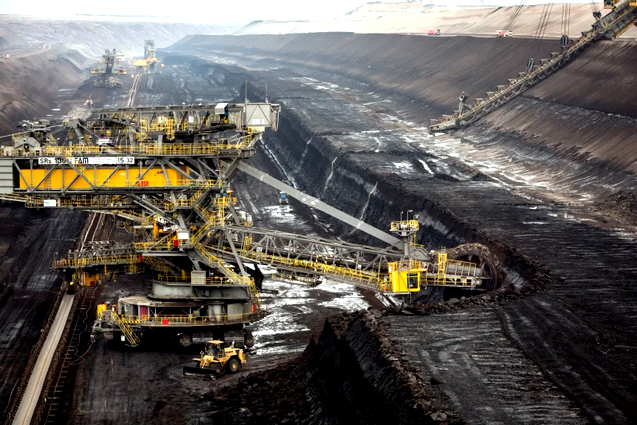
Plans are in place to increase global coal capacity by almost a third of the 2019 total despite global ambitions to abandon it to reduce greenhouse gas emissions and meet the Paris Agreement goal of limiting global warming to 1.5 degrees.

The Mount Arthur coal mine near Muswellbrook in the Upper Hunter. Credit: Janie Barrett

The new coal capacity of 2277 million tonnes per annum, which includes both mines planned and those under construction, runs contrary to the International Energy Agency’s roadmap to global net zero emissions by 2050, which shows the world would need to reduce capacity by 11 per cent a year over the coming decade to hit Paris Agreement targets.

   
If all 432 new mines developments and expansions went ahead without unprecedented cutbacks in existing production over the next decade, proposed capacity could boost supply to over four times a 1.5 degrees-compliant pathway, according to a survey of the industry published on Friday by Global Energy Monitor, a United States-based environmental organisation.

Australia is one of the four nations with the biggest plans for new coal development, along with China, India and Russia. Together the four nations have 1750 million tonnes of coal mine capacity in the pipeline, or over three-quarters of the global total.

The world’s largest energy conglomerates, such as Glencore, Mechel, and BHP, remain invested in new mines and mine expansions, though small and independent firms have shown the greatest appetites for new projects, especially in Australia and Russia.

Climate policy
Climate concerns resume rise as coal mine ban draws support, Lowy says
About 70 per cent of the new coal capacity planned is for thermal coal used to make electricity, rather than metallurgical coal that is needed for steel production. Should the capacity come online, it would produce as much greenhouse gas emissions as the United States.

The report’s chief author Ryan Driscoll Tate said demand for coal is plummeting and financing for new coal projects is drying up.

“New mines and expansions of existing mines will be producing coal for a world in which coal is unviable economically and untenable for the environment,” he said.

The report comes as the Group of Seven wealthy nations increases its efforts to step away from coal. In May the G7 announced its members had agreed to end international finance of coal projects that emit carbon by the end of the year and to phase out all fossil fuels.

The Welzow-Sud open-cast coal mine in Germany’s Brandenburg state. Credit: The New York Times

The declaration was considered significant because it included the support of Japan which has wavered on the issue, and because it was made in the weeks before the coming G7 summit on June 11, to which Australia has been invited even though it is not a G7 member.

United Kingdom Prime Minister Boris Johnson, who is the host of both the G7 summit and this year’s COP26 climate talks in Glasgow, is expected to use the summit to push for increased climate action, particularly from Australia which is yet to announce a more ambitious 2030 emissions reduction emissions target.

The COP26 president Alok Sharma said in a speech in mid-May, “If we are serious about 1.5 degrees, Glasgow must be the COP that consigns coal to history… we are working directly with governments, and through international organisations, to end international coal financing. This is a personal priority. And to urge countries to abandon coal power, with the G7 leading the way.”

Prime Minister Scott Morrison has emphasised Australia’s preference to get to net zero by 2050 and the government’s so-called technology roadmap to achieve emission reductions without increasing taxes.

Climate policy
Britain’s top diplomat to Australia urges more climate ambition as Morrison vows to do it our way
A UK government official told the Sydney Morning Herald and The Age on Friday that Australia’s policies were not viewed as credible in climate diplomacy circles.

“You can have a roadmap to lose 10 kilos in six months, but if you’re not exercising now and if you’ve got no plans to start, it’s really hard to see how you are going to get there.”

She said Japan’s support for the G7’s declaration was particularly significant for Australia because it signalled a shift away from coal for Australia’s biggest coal customer.

Japan imports 170 million tonnes of coal each year, around 60 per cent of it from Australia, and burns around twice as much Australian coal as Australia does, according to a new report released by the Australia Institute this week.

Japan has 162 coal-fired power plants operating and a further 16 are planned for the future.

At a US-Japan Leaders’ summit in April, US President Joe Biden and Japanese Prime Minister Yoshihide Suga signed the US–Japan Climate Partnership on Ambition, Decarbonization and Clean Energy.

Japan announced it would cut its GHG emissions to 46 per cent below 2013 levels by 2030, with the aim of achieving a 50 per cent reduction.

Links

(UK The Telegraph) Climate Goals Caught In A Litigation Trap

The Telegraph

Energy giants are using international trade tribunals to claim damages over governments’ green policies

It was hailed as a “stunning victory” for climate change activists. A Dutch court last month ruled that Shell would have to cut its CO2 emissions by 45pc by 2030 compared to 2019 levels.

It was the first time a large company had been legally obliged to comply with the Paris Climate Agreement, marking what some said was a historic moment in the fight against global warming.

But this was just one victory in a wider political war. Behind the scenes a far more brutal battle has been playing out between politicians and corporations – one that threatens to derail climate targets all together.

Energy giants are increasingly using an obscure legal system to bypass domestic courts and sue governments for billions in earnings they deem to have been unfairly lost as a result of government action on climate change.

German energy giant RWE, for instance, is suing the Netherlands for €1.4bn (£1.2bn) for its plans to phase out coal. Uniper has filed a similar claim, while UK company Rockhopper is suing Italy over a ban on new oil and gas drilling near the country’s coast.

‘Chilling effect’

“They’re aiming at a chilling effect so the target is not just the Netherlands government, they are trying to send a warning signal to other governments,” says Jean Blaylock, a policy manager at campaign group Global Justice Now.

The legal rights to sue are written into thousands of investment treaties worldwide, including the Energy Charter Treaty (ECT), which allows companies to sue any of the 53 signatory countries – including the UK – if they feel they have been treated unfairly.

Oil rig platforms at sea. The UK is extremely vulnerable to legal action by the biggest polluting companies because it has fossil fuel infrastructure worth more than £120bn, according to analysis by Investigate Europe.  Credit: iStockphoto 

Politicians, keen to secure post-Brexit trade deals, are also continuing to consider them as part of free trade agreements.

The British trade minister recently confirmed that the legal mechanism, known as investor-state dispute settlement (ISDS), is being discussed in the final negotiations for the Australia-UK free trade agreement.

Proponents of ISDS say it encourages foreign investment because it stops governments from taking action that companies deem to be unfair.

But its impact could be devastating, experts warn. Blaylock says the ISDS is an “appallingly biased system” that gives large corporations a powerful tool to challenge decisions made following democratic processes. “It needs to be understood as completely disreputable for a company to use it.”

The UK is extremely vulnerable to this kind of legal action because it has fossil fuel infrastructure worth more than £120bn, according to an analysis by Investigate Europe.

Lawsuits expose gulf between polluters’ words and actions

In November, the UK will host the COP26 climate talks in Glasgow, where it is hoped that leaders will devise a global plan to drive greenhouse gas emissions to an average of zero to stabilise the climate.

“Everything good you envision coming out of [COP26] is in jeopardy if you don’t take proactive steps to remove this litigation trap that has been set in treaties that hardly anyone has ever heard of,” says Gus Van Harten, law professor at York University, Toronto.

The ISDS system was designed to protect corporations that invested in countries with uncertain legal situations from expropriation of assets and other mistreatment.

Its scope, however, is so broad that companies now use it to sue for compensation if government policy might affect current or future earnings, and has been used to challenge decisions where courts have ruled in favour of climate campaigners.

Fossil fuel demand goes into precipitous decline under the IEA's net zero scenario

Source: IEA

There is no cap on the damages that tribunals can award – which totalled $50bn (£35bn) in one case – and a state’s goods and assets abroad can be seized in payment.

Countries cannot use the system to sue companies, nor is it open to domestic companies. In practice, the only companies that can afford to bring cases are deep-pocketed multinational corporations and investors.

The lawsuits shine a light on the apparent gulf between companies’ words and actions on climate change. RWE, for example, has committed to becoming carbon neutral by 2040 and trumpets its €5bn (£4bn) investment in wind and solar power by 2022. But it remains Europe’s largest emitter of carbon dioxide and does not plan to stop burning lignite, the most polluting grade of coal, until 2038.

While the Netherlands can afford a costly lawsuit, Blaylock says developing countries might delay taking climate action for fear of being landed with legal bills they cannot pay.

China is by far the world's largest emitter of C02
Top 10 global carbon emitters in 2019 plus the UK (billions of tonnes C02)


Billions of tonnes C02
Source: Our World In Data/GCP/CDIAC
Even if the companies lose, she claims these cases could slow down action on climate change with devastating effects.

“In the context of the climate crisis, we’ve already wasted so much time. If it ends up being delayed for just another five years, we can’t afford that.”

Climate targets in jeopardy

Adriaan van der Maarel, a spokesman for RWE, said: “We are not against the phase-out of coal but we are against the fact that there is no compensation in this law.”

He says RWE is not trying to influence other governments’ actions on climate change.

Uniper says its case is focused on the legality of the Netherlands phasing out coal without compensation. It says it is not seeking a specific level of compensation, although the coal plant in question cost €1.6bn.

There have been attempts to reform the ECT but progress is slow and France and Spain, along with a number of MEPs from across the EU, have suggested withdrawing from the treaty, which they say poses a serious threat to their climate targets.

The UK’s Department for Business, Energy and Industrial Strategy says it supports efforts to modernise the ECT but would not be drawn on what that entails. A spokesman says: “The UK supports the work of the Energy Charter Treaty in promoting investment in the energy sector and fostering international energy cooperation, including in the development of renewable energy worldwide.”

As campaigners increasingly use the courts to push for a tougher response to climate change, governments now face legal action on two fronts: from companies, if they bring in policies to tackle climate change that damage earnings; and from campaigners, if policies are not considered sufficient to meet their commitments to meet the Paris climate agreement.

Greenhouse gas emissions targets
Source: Energy Systems Catapult 

Van Harten says that is another reason countries should remove themselves from treaties that include ISDS, but notes that not all forms of litigation are created equal.

“The tools available to people trying to protect their future by suing for climate action are vastly weaker than the tools available to fossil fuel companies.”

The imbalance risks undermining the world’s environmental efforts and setting countries back decades on their climate goals.

Links

(AU AFR) Global Bankers Warn Australian Investors On Carbon Risk

AFRJacob Greber

Australian government bond issuers, companies and boardrooms face an accelerating global push towards forced disclosure of climate risks that investors warn could hamper or raise the cost of the country’s access to global capital.

A major meeting late last week of central bankers – organised and hosted by the Switzerland-based Bank for International Settlements – and a separate G7 finance ministers’ meeting in London on Sunday also put Australian regulators as well as state and federal treasurers on notice that international scrutiny of carbon risks and emissions could soon become mandatory.

US Treasury Secretary Janet Yellen and OECD Secretary-General Mathias Cormann at this weekend’s G7 summit that included a new call for better climate change financial disclosures. AP

The global shift, which has quickened following the election of Joe Biden and ahead of this year’s UN climate summit in Britain later this year, raises the stakes for Australian money managers, particularly if the country fails to counter a deepening global perception that it is a laggard on climate policy.

“There’s active discussion going on at the G7, G20 and central banks are co-ordinating, and if Australia is not careful and takes a wait-and-see approach, many of our international institutions are going to be covered by mandatory regimes,” said Erwin Jackson, director of the Sydney-based Investor Group on Climate Change, whose members include industry and retail super funds overseeing more than $2 trillion in assets.

“We’ll have a dog’s breakfast for investors and companies because we won’t have the clarity we need to play in those markets,” Mr Jackson said.

While Australia’s prudential regulators are increasingly telling companies that expectations on disclosures are rising – including remarks last week by ASIC commissioner Cathie Armour to resources companies – Mr Jackson said there is an urgent need for a co-ordinated approach.

“There’s an exponential rate of growth in these kind of measures going on globally and we need clarity from Australia and Australian regulators about what Australia’s role is going to be.”

G7 pledges to ‘green the financial system’

The Reserve Bank of Australia and Treasury are understood to be monitoring developments closely and have found themselves answering questions about Australia’s fossil fuel exports from foreign counterparts that buy sovereign debt. So far, the Australian government has been silent on the latest global developments.

Group of Seven finance ministers and central bank chiefs declared after their meeting that there is a growing need to “green the financial system so that financial decisions take climate considerations into account” and backed calls for mandatory climate-related financial disclosures on a uniform basis.

The group said in a post-meeting statement that there is growing demand for more information on the impact that firms have on the climate and the environment.

“We recognise that many jurisdictions and organisations are already developing impact reporting initiatives, including but not limited to reporting on net zero alignment and broader sustainability metrics.”

Officials pose after the G7 meeting. From left: EU Economy Commissioner Paolo Gentiloni, Eurogroup President Paschal Donohoe, World Bank President David Malpass, Italian Finance Minister Daniele Franco, French Finance Minister Bruno Le Maire, Canadian Finance Minister Chrystia Freeland, British Chancellor of the Exchequer Rishi Sunak, IMF Managing Director Kristalina Georgieva, German Finance Minister Olaf Scholz, US Treasury Secretary Janet Yellen, Secretary-General of the OECD Mathias Cormann and Japanese Finance Minister Taro Aso.

The G7 push was bolstered by the world’s most powerful central bank chiefs, who attended the BIS’ virtual Green Swan summit, underscoring a twin challenge for Australian governments and companies; momentum is growing for global standards of disclosure, and that costs may rise for sovereign debt issuers in economies with high carbon emissions.

European Central Bank President Christine Lagarde told the BIS summit that central banks would be failing to do their jobs if they didn’t account for climate when understanding and measuring inflation.

“We would be failing on our mandate if we do not measure the impact that climate change has on the assets that we hold, on the assets that we buy, and on the collateral that we have in stock,” Ms Lagarde said.

US Federal Reserve chairman Jerome Powell said that “anything that can affect the outlook for the economy can, in principle, affect monetary policy”.

“So climate change would certainly qualify for that.”

China to make climate disclosure mandatory

People’s Bank of China Governor Yi Gang urged the world’s politicians to ramp up efforts to make global finance more green and revealed China has plans to make disclosure of climate and carbon emissions mandatory in future.

“Our goal is to make a uniformed disclosure standard, and in the future, we will go in the direction of mandatory disclosure of climate-related information,” said People’s Bank of China governor Yi Gang.  AP

“Our goal is to make a uniformed disclosure standard, and in the future, we will go in the direction of mandatory disclosure of climate-related information,” Mr Yi said on Friday.

The remarks underscore the degree to which central banks and regulators are becoming entangled in questions of how and whether to manage the consequences of climate change on financial markets and assets. Such comments were rare even a year ago.

France’s central bank governor, FranƧois Villeroy de Galhau, told the Financial Times last week that talks between government and central bank officials on new climate risk disclosure rules were progressing faster than expected.

He also implied an international framework could be agreed in time for November’s UN COP26 climate conference in Glasgow.

“Proper disclosure should become mandatory – I would expect this as a first step,” he said. “Nobody expected six months ago for us to go as quickly as we did and to say perhaps we could have a positive conclusion on mandatory disclosure at the COP26.”

Developments are ‘significant and fast moving’

Bank of England
governor Andrew Bailey said the central bank’s interest rate setting committee for the first time discussed the economics of climate change.

“When it comes to climate change, we cannot stand still,” Mr Bailey told the BIS conference. “We need to continue to be bold and learn from our work so far to deepen our understanding and inform future actions.”

Simon O’Connor, chief executive of the Responsible Investment Association Australasia – which led the establishment of last year’s Australian Sustainable Finance Initiative to help banks and insurers increase transparency on climate risks – described the weekend’s BIS and G7 meetings as “significant and fast moving”.

“You’ve got the major global central banks sitting around talking about climate change and the financial consequences,” Mr O’Connor said. Meanwhile, the “climate conversation in Australia misses the global shift”.
I would be boggled if we are immune from those trends and we’re already showing we’re not.
— Tennant Reed, Australian Industry Group
“But unfortunately, our capital markets are linked globally. All our banks and insurers have to navigate this and it’s made difficult for our country not having strong nationalised targets in place.

“It means we have to navigate global regulatory requirements without a strong net zero trajectory in Australia.”

Australian companies are already adjusting to the looming changes, particularly across resources and energy sectors, said Tennant Reed, Australian Industry Group’s principal national advisor on public policy.

“And that’s been happening more or less in the absence of a national policy requirement,” he said. “This has been happening in the private sector and a sense of growing awareness from financial regulators and [Australian state] treasuries that this was important.”

Creating standard governance and disclosure rules around climate will also depend on the size of businesses involved, Mr Reed said, adding the government is already encouraging voluntary reporting.

Whether those efforts are enough for offshore jurisdictions is an open question.

“If these expectations become cemented overseas, inevitably that is going to affect Australian finance and businesses which are deeply intertwined with overseas operations in overseas jurisdictions.

“I would be boggled if we are immune from those trends and we’re already showing we’re not.”

Mr Jackson cautioned there is a significant financial danger for Australia in taking a wait-and-see approach to the global developments.

“Traditionally we’ve allowed [global] regulatory standards to sit for a while and p

lay out – we’re no longer in that environment.”

“We need financial regulations to keep up, and it’s emerging as one of the key planks for the role governments can play unlocking trillions in low-carbon investments.

“Global capital markets will come to Australia when they feel more confident the disclosures being put forward are real and actionable,” Mr Jackson said.

“Investors aren’t going to come to countries where disclosure is very poor.”

Links

07/06/2021

(AU New Daily) SA Leads On Climate Change Action As States And Territories Pick Up Federal Government’s Slack

New DailyCait Kelly

South Australia is leading the way on transitioning to renewable energy. Photo: Getty

In lieu of a national policy to help Australia transition from fossil fuels the states and territories have picked up the slack – and one state has done a lot better than others, according to a new report.

South Australia offers vital lessons for other jurisdictions on transitioning from a fossil fuel-based electricity grid to a low emissions, high renewables grid, a report released by the Institute for Energy Economics and Financial Analysis (IEEFA) this week found.

“The proportion of South Australia’s electricity demand met by large scale and small scale variable renewable energy generation grew from 0 per cent to 60 per cent in just 14 years,” the report’s author Johanna Bowyer said.

“Coal was phased out in 2016. Today the grid is dominated by wind and solar backed up by battery storage and interstate grid connectivity, with peaking gas being used as a temporary generation technology until South Australia moves to net 100 per cent renewables.”

The IEEFA report follows last month’s announcement by the world’s largest advanced economies, the powerful G7 group of nations, that they they would stop international financing of coal projects in a bid to tackle climate change and limit the rise in global temperatures to 1.5 degrees Celsius above pre-industrial levels.

The move further isolated Australia on the global stage when it comes to the Morrison government’s stance on climate change and funding and investing in coal.

SA shows the potential of renewable energy

South Australia has the largest proportion of demand provided by rooftop solar of all states in Australia’s National Electricity Market, and a staggering 40 per cent of homes have rooftop solar installed.

“But the records don’t stop there,” IEEFA report co-author Gabrielle Kuiper said.

“South Australia has shown that 100 per cent solar generation is possible during the daytime to meet users’ energy demands,” Dr Kuiper said.

There is now broad agreement across state and territory governments that Australia needs to take action to combat the threat of climate change.

All state and territory jurisdictions have adopted a target of net zero emissions by 2050 but SA has led the pack and is expected to achieve its net 100 per cent renewable energy target by 2025, five years ahead of schedule.

“SA is not just a good example for Australia, it’s a good example worldwide in terms of having a large jurisdiction move to renewables,” Australia Institute climate change and energy director Richie Merzian said.

As other countries grapple with making the transition, South Australia shows the world how it can be done, he said.

“The timing is great – the US is looking at how it can get to 100 per cent renewables in 14 years. These lessons will be drawn on, and we have them right here in our backyard,” Mr Merzian said.

But the states and territories will need more support from the federal government, he said.

“The Australian government knows its main trading partners are going to net zero,” Mr Merzian said.

“But in the meantime, they’re trying to promote and expand and sell as much fossil fuels as they can.”

Links

Lethal Heating is a citizens' initiative