15/10/2021

(AU ABC News) Scott Morrison To Attend COP26 Climate Change Conference In Glasgow, No Decision On Net Zero

 ABC NewsGeorgia Hitch

Scott Morrison has announced he will travel to Glasgow for the COP26 conference. 1min 26sec

Key Points
  • It was unclear whether Mr Morrison or another government representative would go to the conference
  • Prince Charles and other world leaders had urged him to attend in person
  • The government has still not struck a deal on whether Australia will commit to a net zero emissions target by 2050
Prime Minister Scott Morrison has confirmed he will attend the United Nations COP26 international climate conference in Glasgow in November.

Mr Morrison said the government's position on net zero would be outlined before he left for the conference.

"It is an important event," he said.

"The government will be finalising its position to take to the summit.

"We're working through those issues with our colleagues and I look forward to those discussions over the next couple of weeks."

His decision to join global leaders in Glasgow is his strongest indication yet that the government is likely to adopt the target.

Earlier this year, Mr Morrison said the government's goal was to reach net zero as soon as possible, "preferably" by 2050.

The Prime Minister had been urged to attend the conference by other world leaders, including UK Prime Minister Boris Johnson and US President Joe Biden — who are both attending.

Why do some Nationals fear
net zero by 2050?
Not for the first time, the 21 members of the Nationals party-room find themselves as the centre of Australia's climate change debate, with some adamant to refuse a net zero target regardless of what policy is behind it. Read more
More recently, Prince Charles also joined the calls, saying Mr Morrison and other world leaders should be there in person, describing it as a "last chance saloon" to save the planet.

A draft plan to meet the net zero target was put to Cabinet during the week.

The next step is for it to go through both the Liberal and National party rooms separately, before a joint meeting of both the party rooms before it is formally adopted.

The plan may also outline an interim 2030 emissions target as well.

The Nationals party room will meet on Sunday to discuss the target, with some senior members flagging they want assurances the plan will not come at the cost of jobs in regional Australia.

Climate policy has continued to be a contentious issue for the Nationals, with a handful of MPs, mainly Queenslanders, publicly adamant they will never support the target.

The government's plan on emissions reduction targets will be discussed by both the Liberal and Nationals party rooms next week. (ABC News: Michael Barnett)

But there are many others who are at least opening to consider net zero, as are some of the major advocacy groups for key Nationals constituents.

Both the Minerals Council and the National Farmer's Federation support Australia moving to a net zero economy by the middle of the century.

The Glasgow conference runs from October 30 until November 12.

Unlike previous overseas trips, Mr Morrison will not have to quarnatine on his return, after New South Wales announced it would scrap quarantine for fully vaccinated Australian travellers from November 1.

Links

14/10/2021

(AU The Guardian) More Australians Than Ever Are Worried About The Climate Crisis, Annual Survey Suggest

The Guardian | 

A record 75% of voters are worried about climate and 69% want the PM to push for net zero, but Queenslanders are less concerned than the rest of the nation

Queensland’s Great Barrier Reef has suffered severe coral bleaching. A survey has found more than three-quarters of Australians are now concerned about global heating. Photograph: Greg Torda/EPA

A majority of Australians are worried about the threat posed by global heating and want serious action to address it, but Queenslanders are less concerned than people in other states, according to the latest Climate of the Nation report.

The authoritative annual survey of 2,626 voters – now in its 14th year and managed by the progressive thinktank the Australia Institute – suggests three-quarters are worried about the climate crisis, the largest proportion in its history.

As cabinet meets on Wednesday to consider a new climate roadmap the prime minister, Scott Morrison, wants to unveil before the Cop26 talks in Glasgow, the poll suggests a clear majority – 69% – want the Morrison government to put Australia on a path to net zero emissions. The same proportion wants the Coalition to do more to encourage the uptake of electric vehicles.

US climate push on Australia and allies aims to ramp up pressure on China, ambassador says Read more
But the survey data suggests Queenslanders are less perturbed about the risks posed by the climate crisis than other Australians, with 69% saying they are concerned, compared with the national average of 75%.

Queenslanders are also less likely to say Australia should be a world leader in looking for solutions than people in other states (63% of Queenslanders agree, compared with the national average of 67%).

Morrison is attempting to persuade the National party to sign on to a net zero target before the United Nations-led climate conference in November. Liberals are optimistic agreement with the junior Coalition partner can be reached but a number of Queensland Nationals oppose the shift.

While the Climate of the Nation data suggests attitudes in Queensland are different to other states, it also suggests public perceptions are on the move.

Half the Queenslanders in the sample now support a moratorium on coalmining, which is a three-point increase from 2020. A significant majority also agrees that Australia needs environmental protections (71% agreed in 2021, up from 68% in 2020).

Agreement among Queenslanders in the sample that coalmining has a strong economic future declined by eight points over the past 12 months (37% of respondents agree with that proposition now compared with 45% last year).

But Australian voters continue to think fossil fuel industries employ more people and generate more national income than they actually do.

With trenchant opponents of climate action declaring Australia should not cripple traditional industries with ambitious emissions reduction targets – an attack line a number of Queensland Nationals use regularly – the latest survey shows Australians overestimate the size of gas industry employment by a factor of 46. Voters estimate that on average 9.2% of the workforce is engaged in oil and gas extraction when the reality is those industries represent only 0.2% of the Australian workforce.

But a clear majority say they support the reliance on fossil fuels ending. The poll suggests 82% support the phasing out of coal-fired power stations.

The Nationals leader, Barnaby Joyce, told the ABC on Tuesday night that a deal with the Liberals on net zero was not yet done.

The deputy prime minister contended that regional Australians had been “done over” during previous international climate commitment periods because “people played a sneaky little game, and we ended up with the divestment of our private property”.

Joyce said the Nationals wanted complete clarity on the economic assumptions guiding the shift Morrison was proposing.

Climate 200 raises $2m in six weeks to help independents but expects Liberal party ‘interference’  Read more
The Nationals frontbenchers Bridget McKenzie, David Littleproud and Keith Pitt were briefed for the first time on Monday afternoon on the roadmap that has been worked up by the energy and emissions reduction minister, Angus Taylor, with input from across the government. Joyce was in Monday’s briefing.

Taylor was asked by Nationals to provide more detail about the economic analysis underpinning the new proposed roadmap for Wednesday’s cabinet deliberation. Some insiders insist the negotiation has a long way to go, and internal perceptions vary about the level of base support inside the Nationals for a climate policy pivot.

The new Climate of the Nation survey will be launched on Wednesday by the shadow climate change minister, Chris Bowen. Bowen argues strong support for climate action in the data indicates “the needle has shifted in the public debate around climate change”.

“It’s a global race to become a renewable energy superpower – it is clear Australians are on board – it’s past time for the government to join them,” Bowen said.

The new survey and the cabinet deliberation comes as the Liberal senator Andrew Bragg will use a speech to the Investor Group on Climate Change to advocate for carbon neutrality by mid-century, declaring a “100% renewable energy future is within sight”.

Bragg will argue schemes like Buy Now Pay Later have a role in driving the transition, and cite estimates showing that over the past year around 15% to 20% of all solar installations were financed by BNPL.

He will also argue that non-superannuation asset managers should use their investment clout to drive broader uptake of existing technologies, and further work on firming technologies like batteries.

As the Morrison government’s pre-Glasgow deliberation moves to end game, the New South Wales government will pledge $3bn in incentives to build a local hydrogen industry and exempt green hydrogen production from government charges.

The treasurer and energy minister, Matt Kean, said the state’s hydrogen strategy would help it meet a newly set target to cut emissions by 50% compared with 2005 levels by 2030 and reach net zero emissions by 2050. “This strategy is forecast to more than half the cost of green hydrogen production in NSW,” he said.

It follows similar announcements in other jurisdictions and nationally, though the federal government has emphasised the role of blue hydrogen, created using gas, along with green hydrogen, created using renewable energy.

Links

(AU SBS) Queensland Backs Net Zero By 2050 As Pressure Mounts On Scott Morrison

SBS News

Queensland will officially back a target of net zero emissions by 2050, Premier Annastacia Palaszczuk has confirmed.

Queensland Premier Annastacia Palaszczuk. Source: AAP

Queensland’s state parliament has backed a target of net zero emissions by 2050, as pressure mounts on Prime Minister Scott Morrison to commit to attending the COP26 global climate change summit in Glasgow.

Premier Annastacia Palaszczuk confirmed Queensland would officially endorse the target, following a vote in parliament on Tuesday. The federal government is yet to commit to the net zero by 2050 target, instead saying Australia will “meet and beat” its goal of cutting greenhouse gas emissions by 26 to 28 per cent below 2005 levels by 2030.

The government is preparing to release a new climate plan ahead of the COP26 summit that Mr Morrison said will focus on "technology not taxes".

Queensland’s move comes as the Prime Minister faces growing pressure to attend the COP26 summit which starts at the end of this month.

In an interview with the BBC, Prince Charles was asked why it was so important for world leaders to go to COP26 in Glasgow, given Mr Morrison might skip the conference.

"Well, that's what I'm trying to say all the time, and the point being that this is a last chance saloon, literally," the Prince said.

SBS News understands it is highly likely the Prime Minister will attend the upcoming COP26 summit.

Links

(Climate Council) Jobkiller: Australian Climate Inaction Puts 20,000 NSW Jobs At Risk From Carbon Tariffs


Key Findings
  • The European Union’s CBAM is expected to be the first of many such schemes as countries re-level the economic playing field on climate action. Such moves are being considered by Australia’s key trading partners.
  • A growing number of countries have a carbon price which requires those responsible for creating emissions to pay for them. As such carbon prices continue to rise, the costs of failing to act will also rise.
  • Every day that the Australian Government delays climate action it is hurting households and businesses in missed economic opportunities and rising costs. 
A NEW REPORT released today by the Climate Council finds the lack of federal government climate policy exposes the nation to serious economic consequences – including 20,000 jobs at risk in New South Wales – from carbon border tariffs.

Markets are moving: the economic costs of Australia’s climate inaction was authored by Climate Councillor Nicki Hutley, a former partner at Deloitte Access Economics.

Ms Hutley said: “The world is responding to the climate crisis and carbon border tariffs are now inevitable. Australians will pay the price unless the federal government cuts our national carbon emissions in line with our major trading partners – and NSW will be disproportionately affected.

The European Union announced a Carbon Border Adjustment Mechanism (CBAM) in July 2021. Ms Hutley said the new modelling by economists at Victoria University shows Australia will experience a cut to our Gross Domestic Product (GDP) as a result. 

If South Korea, China and the Group of 7 follow suit, New South Wales will be heavily impacted due to the dominance of targeted exports – particularly coal. Under the above scenario, the state is projected to lose around 20,000 jobs and more than $5 billion in Gross State Product.

“The federal government should be getting out in front, and putting support for regions affected in place. The new, low-carbon economy is coming and we urgently need a transition plan in place for Australian communities and workers”, said Ms Hutley.

Ms Hutley said there are huge opportunities for investment in clean jobs and industries with modelling by Beyond Zero Emissions estimating Australia could grow a new green export mix worth $333 billion per annum, almost triple the value of existing fossil fuel exports.

Deloitte Access Economics’ modelling suggests support for a low carbon economy would add $680 billion in economic growth and 250,000 new jobs by 2070. 

“We have the natural resources and the ingenuity to become a world leader in renewable energy, and in industries such as clean manufacturing, minerals processing and renewable hydrogen – bringing tens of thousands of jobs to the states and regions.

Ms Hutley said, “Federal government action is long overdue. As a first step, we should match our key trading partners and at least halve emissions by 2030. In line with the science, the Climate Council recommends a 75% cut by 2030 on the way to zero by 2035.”

Links

13/10/2021

(AU SMH) News Corp’s Climate Campaign Is A Political Development With Impact

Sydney Morning Herald -  David Crowe

Rupert Murdoch’s many critics were savage on Monday after his Australian newspapers staged a spectacular backflip and embraced the need for faster action on climate change.

Newspapers that once warned of a $600 billion cost from cutting emissions now claimed a $2 trillion benefit from doing the same thing.

Rupert Murdoch’s company, News Corp Australia, has repositioned on the issue of climate change action. Credit: AP

It was a brazen move to reposition Murdoch’s company, News Corp Australia, on an issue where its strongest voices have warned against action for years. And it came just as Prime Minister Scott Morrison tries to reposition as well.

“Greenwash,” fumed Kevin Rudd. The former Labor prime minister saw the campaign as cover for Morrison and the Liberals to finally adopt a net zero emissions target for 2050. He called it hypocrisy, too, for suddenly celebrating what the papers had railed against when Labor was in charge.

These aren’t the only somersaults ahead of the United Nations summit on climate change in Glasgow next month. The Business Council of Australia just called for a cut to greenhouse gas emissions of at least 45 per cent by 2030 – the same target it said would wreck the economy when Labor suggested it at the 2019 election.

Climate policy
No wonder this ignites fury. Australia lost more than a decade on climate change after the Coalition and the Greens combined to block an emissions trading scheme in the Senate in 2009. The country needed a steady policy on a long-term problem and got deadlocks and turmoil instead.

But this is why the shift at News Corp is so significant. It is not a provocation – it is a vindication. One of the most experienced people in the Australian debate, John Connor of the Carbon Market Institute, calls it a tectonic shift. The sceptics have woken up to reality. Connor does not say it, but he and others have won. They have forced that awakening.

News had to change. So did Morrison. So did the BCA.

First, the financial markets expect governments and companies to act on climate change, as Treasurer Josh Frydenberg noted in a speech two weeks ago. Costs can be higher for those who do not act.

Climate policy
Second, consumers also expect action. A Resolve Political Monitor survey last month found 60 per cent of voters support net zero by 2050. Only a foolhardy media company would turn a deaf ear to that sentiment.

A third factor is people in business can see society changing. They know many young people will not work for companies that block action on climate change.

There was no edict at News Corp to tell its strongest voices what to write. Andrew Bolt isn’t changing. In fact, he made a point on Monday of sticking to his guns. The Australian is not part of the campaign, although it endorsed the target of net zero by 2050 in an editorial on Monday.

Barnaby Joyce preparing to back net zero, with conditions
But the News coverage will be a real force in politics. Morrison can cajole Nationals leader Barnaby Joyce into accepting net zero by 2050 in the knowledge the country’s biggest newspaper publisher will not campaign against the target.

Whether this issue wins votes for Morrison is another matter. Voters with strong views on climate change can see Morrison is a reluctant convert, so they may prefer Labor and the Greens. Morrison may at best neutralise the issue for others.

So the new dynamic is much more than fodder for the media business. It is a political development. It will have a political impact.

Links

(Washington Post) At Least 85 Percent Of The World’s Population Has Been Affected By Human-Induced Climate Change, New Study Shows

Washington PostAnnabelle Timsit | Sarah Kaplan

Researchers used machine learning to analyze more than 100,000 studies of weather events and found four-fifths of the world’s land area has suffered impacts linked to global warming

People ride in a cart pulled by zebus near Amboasary Atsimo in Madagascar, an area that is suffering a food crisis because of intense drought. (Rijasolo/AFP/Getty Images)

At least 85 percent of the global population has experienced weather events made worse by climate change, according to research published Monday in the journal Nature Climate Change.

After using machine learning to analyze and map more than 100,000 studies of events that could be linked to global warming, researchers paired the analysis with a well-established data set of temperature and precipitation shifts caused by fossil fuel use and other sources of carbon emissions.

These combined findings — which focused on events such as crop failures, floods and heat waves — allowed scientists to make a solid link between escalating extremes and human activities. They concluded that global warming has affected 80 percent of the world’s land area.

“We have a huge evidence base now that documents how climate change is affecting our societies and our ecosystems,” said lead author Max Callaghan, a researcher at the Mercator Research Institute on Global Commons and Climate Change in Germany.

The study provides hard numbers to back up the lived experiences of people from New York City to South Sudan. “Climate change,” Callaghan said, “is visible and noticeable almost everywhere in the world.”

The findings come amid a major push to get countries to commit to more ambitious climate goals ahead of a United Nations summit in Glasgow, Scotland, next month. Research shows that existing pledges will put the planet on track to heat up about 2.7 degrees Celsius (4.9 degrees Fahrenheit) by the end of the century — a level of warming that would lead to drastic food and water shortages, deadly weather disasters, and catastrophic ecosystem collapse.

Some of the world’s top emitters, including China and India, have yet to formally commit to a new 2030 emissions reduction target. Activists worry that an emerging energy crisis, which has raised prices and triggered blackouts, could imperil efforts to get developing economies to phase out polluting fuels.

In the United States, climate disasters have already caused at least 388 deaths and more than $100 billion in damage this year, according to analyses from The Washington Post and the National Oceanic and Atmospheric Administration.

Yet despite a pledge to halve emissions by the end of the decade, congressional Democrats are struggling to pass a pair of bills that would provide hundreds of billions of dollars for renewable energy, electric vehicles and programs that would help communities adapt to a changing climate.

The contrast between the scope of climate disasters and the scale of global ambition is top of mind for hundreds of protesters who have descended on Washington this week to demand an end to fossil fuel use.

“How can you say that we are in this climate emergency and be going around and saying we’re at this red point … and at the same time be giving away land for additional oil and gas infrastructure?” said Joye Braun, a community organizer with the Indigenous Environmental Network and a member of the Cheyenne River Sioux Tribe who rallied in Washington this week.

The activists, many of them from Indigenous communities that have been harmed by global warming, risked arrest as they remained on the sidewalk outside the White House after police ordered them to clear the area.

A U.S. Park Police officer looks on as people take part in a climate change protest outside the White House on Oct. 11. (Evelyn Hockstein/Reuters)

The new research in Nature adds to a growing body of evidence that climate change is already disrupting human life on a global scale.

Scientists are increasingly able to attribute events like heat waves and hurricanes to human actions. In August, the U.N. Intergovernmental Panel on Climate Change devoted an entire chapter to the extreme weather consequences of a warming world.

The study’s conclusion that 85 percent of humanity is experiencing climate impacts may sound high. But it’s “probably an underestimation,” said Friederike Otto, a senior lecturer at the Grantham Institute for Climate Change and the Environment at Imperial College London, who was not involved in the study.

The study looked at average temperature and precipitation changes, rather than the most extreme impacts, for which Otto says there is even more evidence of climate change’s role.

“It is likely that nearly everyone in the world now experiences changes in extreme weather as a result of human greenhouse gas emissions,” she said.

The human toll of these events has become impossible to ignore. This summer, hundreds of people in the Pacific Northwest died after unprecedented heat baked the usually temperate region. More than 1 million people in Madagascar are at risk of starvation as a historic drought morphs into a climate-induced famine. Catastrophic flooding caused New Yorkers to drown in their own homes, while flash flooding has inundated refugee camps in South Sudan.

In a letter released Monday, some 450 organizations representing 45 million health-care workers called attention to the way rising temperatures have increased the risk of many health issues, including breathing problems, mental illness and insect-borne diseases. One of the papers analyzed for the Nature study, for example, found that deaths from heart disease had risen in areas experiencing hotter conditions.

“The climate crisis is the single biggest health threat facing humanity,” the health organizations’ letter said.

Yet in many of the places that stand to suffer most from climate change, Callaghan and his colleagues found a deficit of research on what temperature and precipitation shifts could mean for people’s daily lives.

The researchers identified fewer than 10,000 studies looking at climate change’s effect on Africa, and about half as many focused on South America. By contrast, roughly 30,000 published papers examined climate impacts in North America.

In poorer countries, the researchers say, roughly a quarter of people live in areas where there have been few impact studies, despite strong evidence that they are experiencing changes in temperature and precipitation patterns. In wealthier countries, that figure stands at only 3 percent.

“But it indicates that we’re not studying enough,” Callaghan said, “not that there isn’t anything happening.”

Otto attributes this discrepancy, known as an “attribution gap,” to a lack of capacity and funding for research in poor countries, as well as researchers’ tendency to reflect the priorities of wealthy nations.

A protective wall is erected with reclaimed sand in Guraidhoo, Maldives, on Oct. 10. The Maldives is one of the world's lowest-lying countries, making it extremely vulnerable to climate change. (Allison Joyce/Getty Images)

In South Sudan, for example, efforts to understand flooding have been stymied by conflict and the difficulty of collecting weather data in the world’s youngest country.

Liz Stephens, an associate professor in climate risks and resilience at the University of Reading, wrote in an email that the Global Flood Awareness System from the Copernicus Emergency Management Service is “notoriously bad” at forecasting flooding in the White Nile and Blue Nile river basins.

Without good data, scientists can’t easily say what places are likely to be deluged or warn when a disaster is about to hit. Officials may be caught off guard by weather events. Vulnerable people are less able to get out of harm’s way.

South Sudanese officials say half a million people — about 4 percent of the country’s population — have been displaced by the floods.

But the “attribution gap” makes machine-learning-based analyses like Callaghan’s all the more valuable, Otto said. These programs can help identify climate impacts even in places where there are not enough scientists studying them.

“It seems a very useful way … to understand better what climate change is costing us today in a global way that is more bottom-up,” Otto said.

Here in the nation’s capital, policymakers are still debating the costs of moving away from fossil fuels.

While members of both parties back a nearly $1 trillion infrastructure bill that has passed the Senate and would provide $7.5 billion to build out a national network of electric-vehicle charging stations and several other measures to cut carbon emissions, the White House is struggling to muster enough support for a $3.5 trillion bill that would provide incentives for utilities that get an increasing share of their power from solar, wind and other carbon-free sources and penalize those that don’t move swiftly enough.

According to a recent analysis by the Rhodium Group, an independent research firm, the larger spending bill would curb U.S. greenhouse gas emissions by as much as a gigaton — but would probably get the country only halfway to its 2030 goals.

A September study in Nature found that 60 percent of Earth’s oil and fossil methane gas and 90 percent of coal must remain in the ground for the world to have a chance of limiting warming to 1.5 degrees Celsius (2.7 degrees Fahrenheit) — a threshold that scientists say would spare humanity the most disastrous climate impacts.

Increasingly, groups are calling on President Biden to restrict fossil fuel production outright.

On Wednesday, a coalition of more than 380 groups filed a legal petition demanding that the U.S. Army Corps of Engineers stop issuing permits for new fossil fuel infrastructure projects. Two days later, hundreds of scientists submitted an open letter asking Biden to do the same.

“The reality of our situation is now so dire that only a rapid phase-out of fossil fuel extraction and combustion can fend off the worst consequences of the climate crisis,” they wrote.

In response to Monday’s protests, however, American Petroleum Institute spokeswoman Megan Bloomgren said curbing the country’s energy options would harm the economy and national security. “American energy is produced under some of the highest environmental standards in the world,” she said.

Pledging to reduce greenhouse gas emissions without cutting back on fossil fuel extraction, activists say, is like a person promising to lose weight while continuing to consume french fries and doughnuts.

“It’s the only way the pledges make sense,” said Dharini Parthasarathy, senior communications officer for policy at the Climate Action Network. “Otherwise, they’re just promises.”

Links

(AU The Conversation) We Can’t Stabilise The Climate Without Carbon Offsets – So How Do We Make Them Work?

The Conversation

Shutterstock

Author
 is Deputy Program Director, Energy and Climate Change, Grattan Institute     
Carbon offsetting has been in the news lately after a report raised concerns about the integrity of the federal government’s offsetting scheme, the emissions reduction fund.

Offsetting refers to reducing emissions or removing carbon dioxide from the atmosphere in one place to make up for emissions in another. Done well, it lowers the costs of reducing emissions. Done badly, it increases costs and gives us false confidence about our progress towards net zero emissions.

It’s a difficult part of the climate change conversation worldwide and, because of past problems, there’s understandable cynicism about its potential.

The Grattan Institute has just released a new report on the role of offsetting in achieving net zero targets. In it, we show even with strong policies to reduce emissions wherever possible, Australia is going to need offsetting — potentially lots of it — to reach a target of net zero emissions.

What is offsetting?

Offsetting is often done through a system of credits or offsets — units that represent one tonne of emissions reductions achieved, or one tonne of carbon dioxide removed from the atmosphere.

For example, a mining company with a net-zero target might be able to partially reduce its emissions through adjusting its operations, but could find it still has emissions that are too expensive or technically impossible to reduce.

In this case, it might buy an “offset” to cover these emissions. The offset could come from another company with plenty of options to reduce emissions (such as a landfill owner), or it might come from an activity like tree-planting.

The federal government’s offsetting scheme is the ‘emissions reduction fund’. AAP Image/Mick Tsikas

Why carbon offsetting is a touchy subject

Offsetting raises strong views. Some see it as an excuse for polluting companies to delay reducing emissions. Others say it destroys the fabric of rural communities because it encourages farmers to turn farming land into places for tree-planting and other carbon-storage activities.

Some international schemes have been criticised for crediting offsetting activities that aren’t “additional”. This refers to activity that would have happened anyway, such as rewarding a landholder for maintaining vegetation that was never going to be cleared, or rewarding a manufacturer for investing in low-emissions technology when that would have occurred regardless.

Australia’s emissions reduction fund has also been criticised on these grounds.

It has also been criticised for the baselines against which offsets are measured and projects receiving credit for activity that hasn’t yet occurred and may never.

All public policy that relies on incentives must grapple with the question of whether an activity is “additional”. It is a hard problem, and it may never be fully solved.

But when it comes to offsetting, it matters, because one of the roles of offsetting is to lower the cost of reducing emissions. In other words, if you can reduce your emissions more cheaply than I can using current technology, it makes sense for me to pay you to do so while I wait for technology costs to come down.

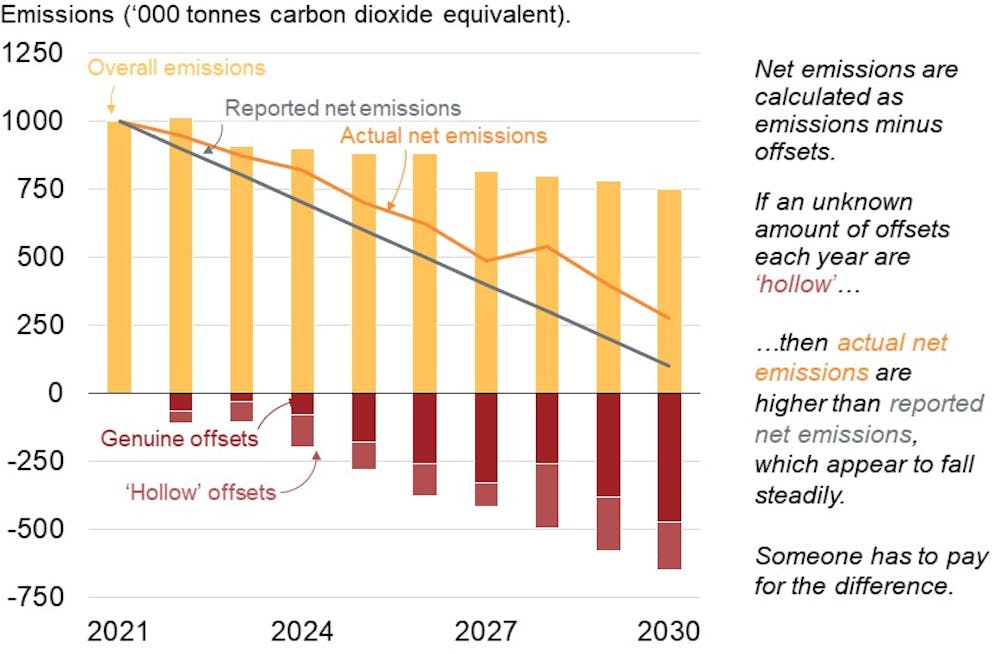
As the chart below shows, if there are too many emissions reduction or removal activities that are credited but didn’t actually happen (“hollow” offsets), then we get a false sense of progress towards net zero. Someone ends up overpaying, so the progress we do make costs more.


Poor integrity makes the cost of reducing emissions higher.
 Grattan Institute


This limits the market’s effectiveness. If buyers aren’t sure they’re getting what they pay for, they won’t pay as much. This pushes prices down, which limits the number of producers willing to do offsetting, because they won’t be paid as much.

More profoundly, these hollow credits give a dangerous false sense of security that emissions are reducing at a particular rate, when in fact they aren’t.

Still, we will need more carbon offsets Most offsetting in Australia is done by reducing emissions. But as we get closer to net zero, these offsetting options will disappear. There will literally be fewer emissions to reduce, and those that remain will be more difficult and more expensive to eliminate.

Even with strong policies to reach net-zero emissions in time, Australia will need offsets for hard-to-abate emissions sources, such as aviation, cement and beef cattle. The only option to deal with these emissions will be to offset them by deliberately removing carbon dioxide from the atmosphere.

Australia has plenty of land for planting trees to draw down carbon dioxide from the atmosphere, but we don’t have plenty of water or productive soil, and we’ll have even less as the climate warms.

Governments should invest in research and development and early-stage technology development, such as direct-air carbon capture and storage. While these technologies are very expensive and might not work at scale, it would be better to find that out now than in 2050.

Most importantly: governments should put in place stronger policies to reduce emissions. The earlier reports in the Grattan Institute’s Towards Net Zero series have recommendations for cutting emissions from transport, industry, and agriculture.

Every tonne of greenhouse gas going into the atmosphere is contributing to global warming and climate change. The tonne we don’t emit is the tonne we don’t have to offset.

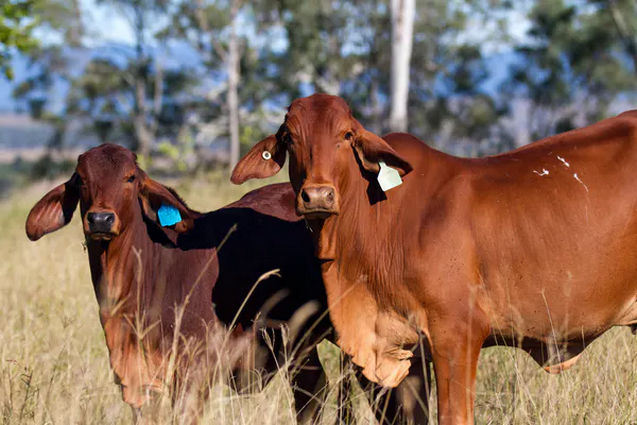
Cattle is a major source of emissions in Australia. Shutterstock

Offsetting needs integrity

Clearly, we need offsetting to reduce emissions — but only if it’s done with integrity. In our latest report, we explain how to make this happen.

We recommend the federal government returns to its original commitment made in 2014 to review every method for creating offsetting units in the emissions reduction fund, every four years. It should allocate additional resources to do this, with independent experts.

International rules to underpin integrity and trade in offsetting units should be settled at the next month’s international conference on climate change (COP26) in Glasgow.

If negotiations drag on, we recommend the federal government put in place rules around the export of Australian offsetting units anyway, to stop potential integrity issues emerging.

Both these actions will show the government is serious about maintaining integrity in its offsetting units. Regular reviews may find problems are minimal – that would be a good outcome.

But if there’s widespread perception that offsetting is some sort of dodgy cheat, then the government will find it even more difficult to use it as a policy tool. So being transparent about problems and moving to fix them quickly is the best solution.

Links

Lethal Heating is a citizens' initiative