10/02/2025

GLOBAL: Climate Change Ecological Overview - Lethal Heating Editor BDA

Fire coral that experienced severe bleaching in the 2016 mass bleaching event. The Ocean Agency / XL Catlin Seaview Survey / Richard Vevers

This Global Climate Change Ecological Overview is part of a series examining the impact of Lethal Heating in key areas, including:

Climate change is reshaping ecosystems at an unprecedented rate, disrupting the delicate balance of nature.

Rising temperatures, extreme weather, and shifting climate patterns are driving biodiversity loss, altering habitats, and threatening the stability of life on Earth.

Here’s a broad ecological overview of its impact:

1. Biodiversity Loss & Species Extinction

  • Mass Extinction Event: Scientists warn that we are in the midst of the sixth mass extinction, with species disappearing up to 1,000 times the natural rate.
  • Habitat Destruction: Rising temperatures and human-driven land changes (deforestation, agriculture, urbanization) are shrinking vital habitats.
  • Ecosystem Collapse: Coral reefs, rainforests, and polar regions are experiencing dramatic declines, affecting countless species.

Key Examples:

  • Coral bleaching is devastating marine biodiversity.
  • Polar bears, penguins, and Arctic species are losing their icy homes.
  • Amphibians, already sensitive to temperature changes, face alarming extinction rates.

2. Oceanic Changes & Marine Disruption

  • Warming Oceans: Higher temperatures disrupt marine life, altering fish migration patterns and causing mass die-offs.
  • Acidification: The absorption of excess CO₂ is making oceans more acidic, threatening shellfish, corals, and marine food chains.
  • Deoxygenation: Warmer waters hold less oxygen, creating "dead zones" where marine life struggles to survive.

Key Examples:

  • Coral reefs could disappear by 2050, affecting 25% of marine species.
  • Fishing-dependent communities face economic collapse due to declining fish stocks.
  • The Great Barrier Reef has suffered multiple bleaching events, reducing its ability to recover.

3. Forests & Terrestrial Ecosystems

  • Wildfires: Increased temperatures and prolonged droughts fuel massive wildfires, destroying forests and releasing carbon back into the atmosphere.
  • Deforestation & Desertification: Deforestation in the Amazon and elsewhere not only destroys habitats but also reduces carbon sequestration.
  • Changing Migration Patterns: Animals are shifting their ranges toward the poles or higher altitudes in search of cooler climates, disrupting food chains.

Key Examples:

  • The Amazon Rainforest, once a carbon sink, is nearing a tipping point where it may become a carbon source.
  • North American birds are migrating earlier, leading to mismatches with food availability.
  • Permafrost thaw in the Arctic is releasing ancient methane, accelerating warming.

4. Freshwater Systems & Extreme Weather

  • Melting Glaciers & Rising Sea Levels: Polar ice is melting at alarming rates, raising sea levels and threatening coastal ecosystems.
  • Droughts & Floods: Climate change is intensifying both droughts and heavy rainfall, destabilizing freshwater ecosystems.
  • Water Scarcity: Many rivers, including the Colorado and Ganges, are drying up due to changing precipitation patterns and human overuse.

Key Examples:

  • Himalayan glaciers, crucial for billions in Asia, are rapidly melting.
  • The Mississippi River has experienced both extreme flooding and record-low levels.
  • The once-thriving Aral Sea has nearly disappeared due to climate and human activity.

5. Ecosystem Tipping Points & Feedback Loops

  • Amazon Rainforest Collapse: The loss of trees could turn it from a carbon sink to a carbon source, worsening climate change.
  • Arctic Ice Loss: As ice melts, less sunlight is reflected away, accelerating warming in a dangerous feedback loop.
  • Methane Release from Permafrost: Melting permafrost could unleash massive amounts of methane, a potent greenhouse gas.

Final Thought

The ecological consequences of climate change are profound, affecting every corner of the planet. 

The web of life is unravelling, and unless urgent action is taken, the damage could be irreversible. 

The fate of ecosystems—and ultimately humanity—depends on how we respond today. 

Will we act in time, or will we witness the slow collapse of nature as we know it?

Links

09/02/2025

GLOBAL: Climate Change Social Overview - Lethal Heating Editor BDA


This Global Climate Change Social Overview of  is part of a series examining the impact of Lethal Heating in key areas, including:

Climate change is not just an environmental crisis.    

It is a social crisis affecting communities, economies, and cultures worldwide. 

It exacerbates existing inequalities, disrupts livelihoods, and reshapes how societies function.

Here’s a broad social overview of its impact:

1. Climate Inequality: Who Suffers the Most?

  • Vulnerable Communities: Developing nations, low-income families, and indigenous groups bear the brunt of climate disasters despite contributing the least to greenhouse gas emissions.
  • Women & Children: Women, especially in rural areas, face greater challenges as they are often responsible for securing food and water, resources increasingly threatened by climate change.
  • Climate Refugees: Rising sea levels and extreme weather events displace millions, creating a growing refugee crisis with social and political consequences.

2. Public Perception & Climate Denial

  • Generational Divide: Younger generations, particularly Gen Z, are more climate-conscious, while older groups may be more sceptical due to political or economic interests.
  • Misinformation: Fossil fuel interests and some political groups fuel climate scepticism through misleading narratives, delaying action.
  • Eco-Anxiety: The growing fear of environmental catastrophe is affecting mental health, particularly among youth.

3. Changing Lifestyles & Consumer Behaviour

  • Rise of Sustainability: More people are embracing plant-based diets, reducing waste, and advocating for green policies.
  • Corporate Greenwashing: Some companies exploit environmental concerns with misleading eco-friendly branding, often without real impact.
  • Activism & Movements: Groups like Fridays for Future and Extinction Rebellion are pushing for systemic change through protests and legal action.

4. Social & Political Conflict

  • Resource Wars: Scarcity of water, food, and arable land is sparking tensions between nations and communities.
  • Policy Battles: Climate policies are a divisive issue, with some governments aggressively pursuing green energy while others resist change due to economic interests.
  • Justice Movements: Calls for climate justice demand that polluters (mainly wealthy nations and corporations) be held accountable for damages.

5. The Future: Hope or Collapse?

  • Youth-Led Change: As younger generations enter politics and business, there is hope for stronger climate action.
  • Technological Innovation: Advances in renewable energy, carbon capture, and sustainable agriculture could mitigate some effects.
  • Uncertain Outcomes: Without urgent action, social instability, mass migrations, and worsening inequalities could define the 21st century.

Final Thought

Climate change is not just about science and numbers—it’s about people. The choices we make today will shape the kind of world future generations inherit. Will society rise to the challenge, or will division and denial lead to greater catastrophe?

Links

The Guardian: Climate change target of 2C is ‘dead’, says renowned climate scientist

Environment editor

Prof James Hansen says pace of global heating has been significantly underestimated, though other scientists disagree
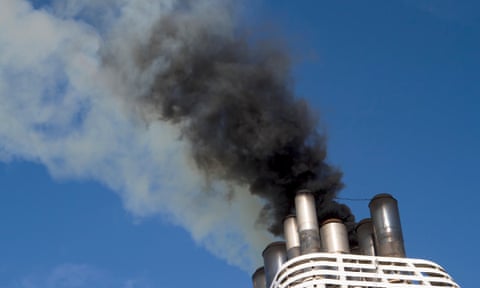
A ship’s funnel emitting black smoke
The analysis concluded that recent cuts in sun-blocking shipping pollution have raised temperatures more than thought. Photograph: scphoto/Alamy


The pace of global heating has been significantly underestimated, according to renowned climate scientist Prof James Hansen, who said the international 2C target is “dead”.

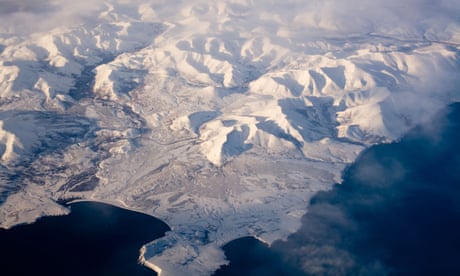
Aerial view of frozen land in the north pole
Temperatures at north pole 20C above
average and beyond ice melting point.
Read more
A new analysis by Hansen and colleagues concludes that both the impact of recent cuts in sun-blocking shipping pollution, which has raised temperatures, and the sensitivity of the climate to increasing fossil fuels emissions are greater than thought.

The group’s results are at the high end of estimates from mainstream climate science but cannot be ruled out, independent experts said.

If correct, they mean even worse extreme weather will come sooner and there is a greater risk of passing global tipping points, such as the collapse of the critical Atlantic ocean currents.

Hansen, at Columbia University in the US, sounded the alarm to the general public about climate breakdown in testimony he gave to a UN congressional committee in 1988.

“The Intergovernmental Panel on Climate Change (IPPC) defined a scenario which gives a 50% chance to keep warming under 2C – that scenario is now impossible,” he said. “The 2C target is dead, because the global energy use is rising, and it will continue to rise.”

The new analysis said global heating is likely to reach 2C by 2045, unless solar geoengineering is deployed.

The world’s nations pledged in Paris in 2015 to keep global temperature rise below 2C above preindustrial levels and to pursue efforts to limit it to 1.5C. The climate crisis has already supercharged extreme weather across the world with just 1.3C of heating on average in recent years destroying lives and livelihoods – 2C would be far worse.

Prof Jeffrey Sachs, also at Columbia University, said: “A shocking rise of warming has been exposed by, ironically, a reduction of pollutants, but we now have a new baseline and trajectory for where we are.”

Climate scientist Dr Zeke Hausfather, who was not part of the study, said it was a useful contribution. “It’s important to emphasise that both of these issues – [pollution cuts] and climate sensitivity – are areas of deep scientific uncertainty,” he said.

“While Hansen et al are on the high end of available estimates, we cannot say with any confidence that they are wrong, rather that they just represent something closer to a worst-case outcome.”

In the new study, published in the journal Environment: Science and Policy for Sustainable Development, Hansen’s team said: “Failure to be realistic in climate assessment and failure to call out the fecklessness of current policies to stem global warming is not helpful to young people.”

They said the IPCC analysis was heavily reliant on computer models and that the complementary approach they took of making more use of observations and climate analogues from the distant past was needed.

The world has seen extraordinary temperatures over the last two years. The primary cause is the relentless rise in CO2 emissions from the burning of fossil fuels. The peak of the El Niño climate cycle in 2024 added an extra temperature boost.

However, these two factors do not fully explain the extreme temperatures, or their persistence after the El Niño ended in mid-2024. This left puzzled climate scientists asking if there was a worrying new factor not previously accounted for, or if the extra heat was an unusual but temporary natural variation.

A key focus has been on emissions from shipping. For decades, the sulphate particles produced by ships burning fuel have blocked some sunlight from reaching the Earth’s surface, suppressing temperatures.

But in 2020, new anti-pollution regulations came into force, sharply cutting the level of the aerosol particles. This led to more heat from the sun reaching the surface, which scientists measure as watts per square metre (W/m2).

Hansen’s team’s estimate of the impact of this – 0.5W/m2 – is significantly higher than five other recent studies, which ranged from 0.07 to 0.15 W/m2, but would explain the anomalous heat. Hansen’s team used a top-down approach, looking at the change in the reflectivity over key parts of the ocean and ascribing that to the reductions in shipping emissions. The other studies used bottom-up approaches to estimate the increase in heat.

“Both approaches are useful and often complementary,” said Dr Gavin Schmidt, director of Nasa’s Goddard Institute for Space Studies. “But I think in this case, Hansen’s approach is too simple and doesn’t factor in changes in Chinese emissions, or internal variability.”

The new study also argues that the planet’s climate sensitivity to rising carbon emissions has been underestimated, partly because of the underestimation of the impact of reduced shipping emissions.

Climate sensitivity is defined by scientists as the temperature rise that would result from a doubling of CO2 levels in the atmosphere. Again, Hansen’s team have used a different method to most scientists and come up with a higher estimate.

The IPCC, a collaboration of the world’s climate scientists, found that the computer models that best reproduce past temperatures have a climate sensitivity of 2.5C to 4C.

Hansen’s team took a simpler approach, calculating the potential range in temperature rises for a doubling of CO2 and then using data on how much heat the Earth has trapped to estimate the most likely climate sensitivity. Their estimate is 4.5C. Cloud formation, which is affected by global heating and aerosol pollution, is a key source of the uncertainties.

Anomalously high temperatures have continued in January 2025, which set a new record for the month and confounded expectations that temperatures would drop with the current La Niña, the cooler part of the El Niño cycle. “This unexpected record may presage higher temperatures this year than many of us thought,” said Hausfather.

Hansen’s group also argues that the accelerated global heating they predict will increase ice melting in the Arctic.

“As a result, shutdown of the Atlantic Meridional Overturning Circulation (Amoc) is likely within the next 20-30 years, unless actions are taken to reduce global warming – in contradiction to conclusions of IPCC.

“If Amoc is allowed to shut down, it will lock in major problems including sea level rise of several metres – thus, we describe Amoc shutdown as the ‘point of no return’.”

The central estimate of another recent study on the timing of an Amoc collapse was 2050.

However, Hansen said the point of no return could be avoided, based on the growing conviction of young people that they should follow the science. He called for a carbon fee and dividend policy, where all fossil fuels are taxed and the revenue returned to the public.

“The basic problem is that the waste products of fossil fuels are still dumped in the air free of charge,” he said. He also backed the rapid development of nuclear power.

Hansen also supported research on cooling the Earth using controversial geoengineering techniques to block sunlight, which he prefers to call “purposeful global cooling”.

He said: “We do not recommend implementing climate interventions, but we suggest that young people not be prohibited from having knowledge of the potential and limitations of purposeful global cooling in their toolbox.”

Political change is needed to achieve all these measures, Hansen said: “Special interests have assumed far too much power in our political systems. In democratic countries the power should be with the voter, not with the people who have the money. That requires fixing some of our democracies, including the US.”

Links

Lethal Heating is a citizens' initiative