Wednesday, June 22, 2016

China's Plan To Cut Meat Consumption By 50% Cheered By Climate Campaigners

The Guardian - 

New dietary guidelines could reduce greenhouse gas emissions by 1bn tonnes by 2030, and could lessen country's problems with obesity and diabetes
China now consumes 28% of the world's meat, including half of its pork. Photograph: Wong Campion/Reuters
The Chinese government has outlined a plan to reduce its citizens' meat consumption by 50%, in a move that climate campaigners hope will provide major heft in the effort to avoid runaway global warming.
New dietary guidelines drawn up by China's health ministry recommend that the nation's 1.3 billion population should consume between 40g to 75g of meat per person each day. The measures, released once every 10 years, are designed to improve public health but could also provide a significant cut to greenhouse gas emissions.
The Chinese Communist party has found unusual allies among Hollywood celebrities, with actor Arnold Schwarzenegger and director James Cameron involved in a series of new public information adverts encouraging Chinese people to consume less animal flesh to help the environment.
Should the new guidelines be followed, carbon dioxide equivalent emissions from China's livestock industry would be reduced by 1bn tonnes by 2030, from a projected 1.8bn tonnes in that year.
Globally, 14.5% of planet-warming emissions emanate from the keeping and eating of cows, chickens, pigs and other animals – more than the emissions from the entire transport sector. Livestock emit methane, a highly potent greenhouse gas, while land clearing and fertilizers release large quantities of carbon.
"Through this kind of lifestyle change, it is expected that the livestock industry will transform and carbon emissions will be reduced," said Li Junfeng, director general of China's National Center on Climate Change Strategy and International Cooperation.
"Tackling climate change involves scientific judgement, political decisions, entrepreneurial support, but at last, it still relies on involvement of the general public to change the consumption behavior in China. Every single one of us has to believe in the low-carbon concept and slowly adapt to it."
Meat has gone from rare treat to a regular staple for many Chinese people. In 1982, the average Chinese person ate just 13kg of meat a year and beef was nicknamed "millionaire's meat" due to its scarcity.
The emergence of China as a global economic power has radically altered the diets of a newly wealthy population. The average Chinese person now eats 63kg of meat a year, with a further 30kg of meat per person expected to be added by 2030 if nothing is done to disrupt this trend. The new guidelines would reduce this to 14kg to 27kg a year.
China now consumes 28% of the world's meat, including half of its pork. However, China still lags behind more than a dozen other countries in per capita meat consumption, with the average American or Australian consuming twice as much meat per person compared to China.
According to a new report by WildAid, the predicted increase in China's meat consumption would add an extra 233m tonnes of greenhouse gases to the atmosphere each year, as well as put increased strain on the country's water supply, which is already blighted by polluted and denuded rivers and groundwater.
The report warns that unchecked Chinese meat consumption will also degrade its arable land and worsen the country's problems with obesity and diabetes. An estimated 100 million Chinese people have diabetes, more than any other country.
Research released by the thinktank Chatham House in 2014 forecast that China alone is expected to eat 20m tonnes more of meat and dairy a year by 2020 and warned that "dietary change is essential" if global warming is to not exceed the 2C limit eventually imposed at the climate accord in Paris last year.
A separate report by scientists at the Oxford Martin School this year found that the widespread adoption of vegetarianism around the world could bring down greenhouse gas emissions by nearly two-thirds.
"China's move to cut meat consumption in half would not only have a huge impact on public health, it is a massive leadership step towards drastically reducing carbon emissions and reaching the goals set out in the Paris agreement," said James Cameron.
"Animal agriculture emits more than all transportation combined. Reducing demand for animal-based foods is essential if we are to limit global warming to 2C as agreed at COP21."

Links

New Crop Varieties 'Can't Keep Up With Global Warming'

BBC - Matt McGrath

Drought conditions in countries including Zimbabwe have impacted maize yields in recent years. Getty Images
Crops yields around the world could fall within a decade unless action is taken to speed up the introduction of new varieties.
A study says temperatures are rising faster than the development of crop varieties that can cope with a warmer world.
In Africa, researchers found that it can take 10-30 years before farmers can grow a new breed of maize.
By the time these new crops are planted, they face a warmer environment than they were developed in.
The scientists behind the study, published in the journal Nature Climate Change, looked closely at the impact of temperature rises on crop duration - that's the length of time between planting and harvesting.
They found that in a warmer world durations will be shorter meaning these varieties will have less time to accumulate biomass and yields could be affected.

Out of date
In their paper, the researchers write that crop duration will become significantly shorter as early as 2018 in some regions but by 2031, the majority of maize-growing areas of Africa will be affected.
"The actual changes in yield may be different but this effect is there, the impact of this change in duration will occur unless breeding changes," said lead author Prof Andy Challinor from the University of Leeds.
"The durations will be shorter than what they were bred for - by the time they are in the field they are, in terms of temperature, out of date."
New varieties of maize need between 10-30 years of development before they are ready to be grown by farmers.
The scientists say the lag is down to a combination of factors including the limited number of crops you can grow in a season, the need for government approved testing and there are also a number of problems of access to markets that can increase the time it takes before the farmers have the new seeds to plant.
Increasing the speed of development is important but according to Prof Challinor, so is making smarter assumptions about future conditions.
The researchers say that the shortening of the gap between planting and harvesting could impact yields. Getty Images
"We can use the climate models to tell us what the temperatures are going to be," he told BBC News,
"We can then put those temperature elevations into the greenhouses and then we can breed the crops at those temperatures. People are beginning to do this, but this paper provides the hard evidence of the necessity of it."
Researchers are also working on the impact of heat stress on crops at sites in Zimbabwe, Kenya and Ethiopia. Data from these trials is being used to identify species that could cope with warmer conditions.
But would the use of genetic modification (GM) help speed up this type of work?
"GM does some things faster, so you would get a new variety of crop faster," said Prof Challinor.
"But it doesn't get you out of the testing requirement in fact the testing may in fact be greater and it doesn't help it all with farmers accessing seeds and markets - the problem will remain even for a magic GM crop."
Better techniques and more money for research are the keys according to others in this field, familiar with the study.
"Investment in agricultural research to develop and disseminate new seed technologies is one of the best investments we can make for climate adaptation," said Dr Andy Jarvis, from the International Centre for Tropical Agriculture,
"Climate funds could be used to help the world's farmers stay several steps ahead of climate change, with major benefits for global food security."
The researchers believe that the study also has implications beyond Africa, especially in the maize growing regions of the tropics.

Links

Climate Change To Affect How And Where Fruit Is Grown

Fairfax - 

Red apples could be a bit less red as temperatures rise due to climate change, Royal Galas are likely to suffer more sun damage, and some fruit growers are likely to rip out trees and opt for different varieties.
The looming impact of climate change on the fruit growing industry is detailed in a new report out of the University of Melbourne, which says climate change could affect what is grown and where in some Australian apple growing regions.
The report concentrates on science, but as climate change affects farmers and the fruit that they grow, a changing climate is likely to have some impact on the apples displayed on the shelves of Australian supermarkets in future years.
Northern Victoria's Goulburn Valley, one of the biggest apple-growing districts in Australia, faces a real threat from a rise in the number of hot days in January that could lead to "sun damage" on Royal Gala apples, the report warns.

Royal Gala apples
Royal Gala heat experiment. Supplied.
Royal Gala heat experiment. Photo: Supplied

Royal Gala is a popular variety picked from about January onwards in the Goulburn Valley. Its maturity and the early weeks of harvest coincide with the hottest weather of the Victorian summer, which comes in February and January.
The report author Rebecca Darbyshire said Goulburn Valley growers got a blast of hot weather in early 2009 that illustrated the severe potential consequences of sun damage.
"(For) early season varieties it is a significant risk and they've already experienced it, this is happening. Some of the growers lost huge amounts of their crop, somewhere between 30 and 70 per cent," she said.
"What we found is that that risk of damage is likely to definitely increase into the future. By 2030 on average about nine days in January will be crossing the threshold for damage for Royal Gala, that's nearly a third of the whole month," she said.
But Dr Darbyshire said strategies could be implemented to address the threat posed by higher temperatures, such as netting and "overhead sprinklers" to cool the apples.
Royal Gala apple orchard under netting. Supplied.
Royal Gala apple orchard under netting. Photo: Supplied

Golden Delicious apples
A Golden Delicious apple.
A Golden Delicious apple. Photo: Rob Banks

The report said that growing regions in WA and one in south-east Queensland could face warmer winters beyond 2030 that would not deliver the chill needed for growing Golden Delicious apples.
But the researchers said other regions where Golden Delicious is grown such as the Yarra Valley east of Melbourne, Batlow in New South Wales and Huonville in Tasmania "face little risk and cropping of Golden Delicious is not expected to be limited in relation to winter chill".

Pink Lady apples
Dr Darbyshire and fellow researcher Sigfredo Fuentes also investigated the possible impact of climate change on flowering times for Pink Lady apples (also known as Cripps Pink apple).
Pink Lady apple trees in bloom. Supplied
Pink Lady apple trees in bloom. Photo: Supplied

The investigators found that "flowering will likely be delayed as climate change progresses".
"This means that flowering will occur in warmer temperatures which may have positive (increased final yields) and negative (lower firmness values and greater yellow background colour) impacts on production."
Pink Lady apples.
Pink Lady apples. Photo: Penny Stephens


Link

Climate Change: Poll Finds Support For Strong Action At Highest Level Since 2008

The Guardian - 

Galaxy polling finds only 17% of voters think the Coalition has a credible climate plan and only 20% think Labor does
Protesters in favour of action on climate change in Melbourne
Protesters in favour of action on climate change in Melbourne. The Climate Institute found the Greens' and Glenn Lazarus Team's policies on climate change were the strongest and most credible. Photograph: Ratnayake/Rex Shutterstock
Support for strong action on climate change is at its highest level since 2008, with much sought after uncommitted voters showing the strongest support, according to Galaxy polling commissioned by the Climate Institute.
Despite that, voters were dissatisfied with both Labor and Coalition policies, with only 17% saying the Coalition had a credible climate plan and only 20% saying Labor did.
Those findings fitted with an assessment of the main parties' policies conducted by the Climate Institute, which concluded the Coalition plan was "currently inadequate" and Labor's merely had "pathways to credibility".
They found the Greens' and Glenn Lazarus Team's policies on climate change were the strongest and most credible.
Concern about climate change rose significantly since the last federal election, from 53% in 2013 to 72% in 2016.
Concern among Coalition voters jumped the most, from 41% in 2013 to 62% now.
But uncommitted voters were the most likely to be concerned about climate change, with 76% of them either "fairly" or "very" concerned, according to the national polling of 1,100 people.
Almost two-thirds of respondents agreed Australia should be a world leader in finding solutions to climate change, up from 52% in 2012.
Only 23% thought Australia should wait for other countries before strengthening its post-2020 emissions targets.
And 60% of voters thought delaying action would cause shocks to jobs and energy supplies.
The Climate Institute also assessed what they described as the "credibility" of the parties contesting government or they thought were likely to be re-elected to the Senate.
Each of the six parties was assessed on the basis of their 2030 emissions reduction targets and their timeframe for achieving net zero emissions.
The Climate Institute also looked at the implications for global warming if all countries matched that party's targets and how Australia would rank on per capita emissions among the G20 if that party's policies were adopted.
The Greens and the Glenn Lazarus Team came out as being ranked equally among G20 nations, with their policies putting Australia eighth among G20 nations and causing a temperature rise of between 1.5C and 2C.
The Coalition was at the bottom of parties that had a climate policy, putting Australia at 18th spot among G20 nations and resulting in temperature rises of between 3C and 4C.
Labor performed better but wasn't consistent with keeping warming under 2C and left Australia at 15th among G20 nations.
The Nick Xenophon Team came out in the middle, doing better than Labor but not as well as the Greens.
The Jacqui Lambie Network was the worst, unable to be properly assessed since they don't have any targets.
John Connor, the chief executive of the Climate Institute, said the polling and assessments showed there was a clear opportunity for government develop constructive climate change and energy policies.
"Our research shows that all our political parties need to do more to develop policies that not only build credibility but also build community and investor confidence," he said.
"This is a critical finding, given that both major parties are promising key reviews next year amid greater domestic and international scrutiny."
The Climate Institute called for three policy steps:
•
Pre 2050 net zero emission objectives, with credible emission reduction pathways and regular independent processes of review.
• Economic and community strategies to manage the transition to decarbonisation.
• Integration of climate risks and opportunity assessments into core decision making.
"After 10 turbulent years, Australian business and the voting public have tapped into international trends about the economic and environmental benefits of climate action," Connor said.
"Our main political parties urgently need to catch up."

Links

Tuesday, June 21, 2016

'We'Ve Turned The Corner': Australia Set To Cash In On Low-Cost Renewable Energy

Fairfax - 

The cost of producing electricity from renewable energy could be slashed by as much two-thirds within 10 years, making it competitive with coal-fired power, experts say.
And the cost of doubling the world's total output of clean energy by 2030 would be lower than a "business as usual" approach because of the stunning production costs.
The winds of change: renewables are set to give coal a run for its money.
The findings are fuelling calls for Australia to re-evaluate its reliance on coal-fired power and speed up its transition to clean energy, which the coalition has slowed by abolishing the carbon price and lowering the Renewable Energy Target.
A new report by the International Renewable Energy Agency (IRENA), an intergovernmental organisation, says the cost of solar photovoltaics (PV) could be slashed by 59 per cent by 2025 to 6 US cents per kilowatt hour.
The cost of offshore wind could reduce by as much as 35 per cent in less than a decade, with the cost of onshore wind slashed by 26 per cent.
Bill Shorten dances with locals during a trip to Kiribati to raise awareness of climate change.
Bill Shorten dances with locals during a trip to Kiribati to raise awareness of climate change. Photo: ABC
Report author Michael Taylor told Fairfax Media the rapid advances being made in the renewable tech sector meant the idea that renewable energy was unaffordable and hugely expensive compared to energy produced by fossil fuels was now outdated. "We've turned quite a corner … it's easy to realise a little bit after the fact that we've turned another corner and I think indeed we have done that in the last six months to a year," he said.
Mr Taylor said the rapid deterioration in the costs of wind and solar energy meant that Australia, blessed with both, was poised to produce low-cost electricity.
"In Australia, with the quite high retail electricity prices you've seen, renewables is now a highly competitive opportunity for Australia and to focus on resource extraction to the extent of all else perhaps should be re-evaluated," he said.
"It's obviously a debate for Australia to have, but what we can say in terms of the transition and the economics is that it's definitely one we encourage Australia to have."
The research follows BP's annual review of world energy, which found "rapid technological gains" have supported strong growth for solar and wind power. Both recorded "solid growth" in 2015 "at the expense of coal."
The report calculated global renewable energy consumption to be 2.8 per cent, up from 0.8 per cent a decade ago.
Renewables accounted for 6.7 per cent of global power generation, with China recording a whopping 21 per cent growth and Germany 23 per cent. Coal's share of global primary energy consumption fell to its lowest level since 2005 at 29 per cent.

'Coal is a very important part of the energy agenda'
Shortly after becoming prime minister, Malcolm Turnbull lauded Australia's "cleaner coal" as one solution to "energy poverty."
He noted the rapid advances being made in wind and solar, but said "coal is a very important part of the energy agenda" and he rejected calls for a moratorium on new coal mines.
Opposition leader Bill Shorten has also rejected such calls, telling the leaders of Pacific countries affected by rising sea levels that he had "made it very clear Labor is not going to stop coal mining."In June 2015, the Liberal and Labor parties agreed to lower the Renewable Energy Target from 41,000 gigawatt hours of renewable energy supply by 2020 to 33,000 GW-hours or 23.5 per cent. This followed a push from within the Coalition to abolish or drastically cut the renewable energy target.
Many Liberals deny the science of climate change, while others believe the renewable energy sector should rely less on government mandates and subsidies.
The Coalition government's decision to abolish the carbon price has led to a 5.6 per cent increase in emissions from the electricity sector.
Mr Shorten wants half of Australia's energy produced by renewables by 2030, but has only committed to a goal and not a mandated target.

Costs lower than business than usual
Mr Taylor said the new analysis showed the world could double its output of clean energy by 2030 and stay on target for reaching its climate change goals. He said that scenario would still cost less than current policies centred on coal.
"Once you take into account the environmental costs that would be avoided ... and the fact that costs have come down, it would be less than business as usual," he said. "There are net economic benefits for this transition."
And he said IRENA's estimates of the cost reductions were on the conservative side.
"If history has told us anything with renewables, you can be quite optimistic and we can still be surprised," he said.
"No-one anticipated the rapid decline [in the costs of] solar PV modules that we saw between 2009 and 2013 – that wasn't part of the orderly plan in the transition, but it happened," he said.
Mr Taylor said energy policies over the next 15 years would be critical."We're in a critical phase – the cost of renewables has come down dramatically," he said.
"The decisions we make over the next five to 10 years are going to be critical to how successful we are in avoiding dangerous climate change."

Links

How The Coalition Is Using Clean Energy Financing As An Election Slush Fund

The Guardian - Michael Slezak

Some in the sector fear the government is trying to defund the Clean Energy Finance Corporation by stealth. The truth may be a little more mundane
A 'reef fund' will be created with $1bn of Clean Energy Finance Corporation money if the Coalition returns to office. Photograph: Alamy
After trying in vain to dismantle the Clean Energy Finance Corporation, the Coalition is now using Labor's $10bn financing scheme as an election slush fund, throwing its money at the Great Barrier Reef, at "smart cities" and even at the steel industry in South Australia.
These announcements left some clean energy sector experts crying foul, saying the government was trying to squeeze the CEFC for every last drop, and defund it by stealth.
That might be the case but the truth could be more mundane. The announcements probably amount to little, leaving the spending pledges bereft of substance – but equally doing little to harm the CEFC.
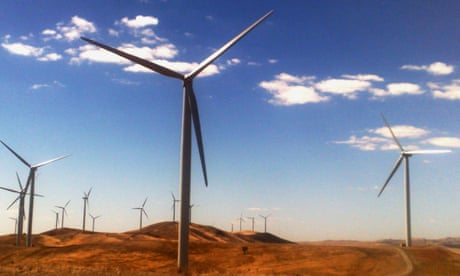
By anyone's reckoning, the CEFC has been a success. According to its 2015 annual report, it invested $1.4bn, financing projects worth a total of $3.5bn, which would reduce 4.2m tonnes of CO2-equivalent emissions annually. And it did all that while making a profit. But under the Tony Abbott, who called the CEFC "Bob Brown's bank", the Coalition tried unsuccessfully to abolish it, tried unlawfully to stop it operating, and tried – also possibly unlawfully – to stop it investing in windfarms and small-scale solar.
When Turnbull became prime minister he conceded the government had failed to abolish the CEFC but stopped short of giving it his backing.
"We do not support government banks performing roles that can be performed by the private sector … yes it has done some good work, the question is whether it is an appropriate use of government money," he said in question time in October, refusing to concede it played a "crucial" part in Australia's emissions reduction.
But now it is certainly playing a crucial role in Turnbull's re-election campaign.
So far, more than $2bn of the CEFC's money has been leveraged as election commitments. First Turnbull suggested up to $100m from the CEFC and EFIC (a similar organisation that finances export ventures) could be used to provide a loan for South Australia's steel industry. Then last week $1bn was carved off for a so-called "reef fund". And on Monday another $1bn of the CEFC's money was used to fund Turnbull's "smart cities" policy.
Together with Turnbull's earlier move to defund the Australian Renewable Energy Agency and take $1bn from the CEFC to make a new Clean Energy Innovation Fund in its place, John Grimes from the Solar Council – Australia's peak solar industry body – is convinced this is all part of a covert plan to abolish the CEFC.
"Their agenda has been very clear all along, to abolish the Clean Energy Finance Corporation," Grimes said. "What Malcolm Turnbull is doing it is abolishing it by other means.
"He's making a series of announcements where he's trying to get kudos … but actually what he's doing is taking the funding that is essential to push forward the renewable energy projects and help transition the economy, and using them for other purposes."
But without a change to the CEFC Act – which the government hasn't flagged any intention to pursue – no government decision can stop the CEFC from doing its best to "facilitate increased flows of finance into the clean energy sector".
Grimes said that was no comfort, since the Coalition hadn't promised not to amend the act if it had the numbers after the election.
Ariane Wilkinson from Environment Justice Australia said that limiting the scope of what the CEFC could invest in by too much could fall foul of the law – as was suggested could have been the case when the Coalition government tried to stop the CEFC from investing in windfarms.
But assuming it stays within the law, and doesn't try to change the legislation, what do these policy announcements amount to? Probably not much, in the end.
Take last week's reef announcement. The policy was that the CEFC would be directed to invest $1bn into projects that tackled both climate change and water quality issues on the Great Barrier Reef.
Jon Brodie is one of Australia's leading experts on water quality and coral reefs. He's been involved in writing hundreds of technical reports on the matter and authored a plan for how to improve water quality on the reef.

Guardian Australia asked him which of those recommendations could be assisted by money loaned to clean energy projects. "Well, I wouldn't have thought any of them," he said.
Stuart Bunn is director of the Australian Rivers Institute at Griffith University. Asked what sorts of projects could be funded with CEFC loans, he replied: "The odd thing is that nothing really leaps to mind."
He said that even if there were water quality projects that could be funded with loans for clean energy projects, they would be futile, since there were very particular locations and farmers that needed to be targeted, and incentive schemes like low-interest loans were unlikely to target those precise spots.
Cane farmers – the main target for water quality projects – have also said they're unsure how the financing could be used.
What's more, it's probably not really a $1bn fund, in any meaningful sense. A spokesman for the environment minister, Greg Hunt, said the fund would provide "up to" $1bn.
And we can be sure that, as with all CEFC money, it won't be spent unless the projects stack up.
What's more, the Coalition has said the fund will be used to fight both climate change and water quality. But despite being asked several times, Hunt's office has so far refused to answer questions about whether any percentage of the fund will be required to be spent on projects with water-quality co-benefits.
In response to that questioning, Hunt's office said climate change was the biggest long-term threat facing the Great Barrier Reef. But if it was including funding for climate change mitigation as part of a "reef fund", it might as well claim the full $10bn in the CEFC as part of it.
The "smart cities" policy funding looks similar. The CEFC already spends money on "smart cities" projects. Financing commercial buildings already happens. In fact commercial buildings are the second biggest sector to receive loans from the CEFC. In 2014 the chief excecutive of the CEFC, Oliver Yates, delivered a detailed presentation on how the CEFC was working to "making cities liveable". "The CEFC has been playing a role in this space to date," says Kane Thornton, chief executive of the Clean Energy Council. "I'm not sure if this changes things substantially."
But Thornton thinks the directive from the government to focus on clean energy projects in cities will give the CEFC some renewed focus on that sector. "There will be more opportunities and more scope for cities, local councils, building managers etcetera to go down the clean energy path."
And overall, Thornton said the CEFC had so much money to throw around that these limitations on where it could lend its money can spend its money weren't going to negatively impact the industry.
"I think it would be an issue if the CEFC only had a small amount of resources at its disposal but it does have a significant pool of funds to invest and these sorts of directives are within its scope, and I think it helps to give it some focus rather than depleting its funds."
But that is exactly what other groups have picked up as the key problem with the announcement. "This is another politically driven, piecemeal policy that sees us yet again responding to a political need rather than building a decent plan for our future energy needs," said Claire O'Rourke, national director of Solar Citizens, a group that represents households with rooftop solar.
She said these moves distracted from what the CEFC was really designed to do. "The global transition to renewables is already under way. Australia needs a national plan to harness the multibillion-dollar renewables boom and manage the orderly transition to 100% clean renewable power," she said.
"Australia stands to gain an $800bn slice of the global renewable energy investment boom, and we will miss out on jobs, growth and investment if we don't get on with it now – this is what the CEFC is really for."
The plundering of CEFC funds – using it as an election slush fund – isn't likely to hurt the clean energy industry much, but it is unlikely to do any good either.

Links

Brexit Means Little To Refugees Prepared To Die Fleeing Climate Change

New Statesman - Diane Abbott*

Britain can shut its borders, but it can't alone stop climate change.
It's June and it's pouring. In the UK, we have just had the wettest winter on record and are heading for the wettest spring. Globally, NASA tells us that every month since November 2015 has been the hottest since records began. The World Meteorological Organization warned this week that "fundamental change" is now happening in the global climate.
But the large economies and temperate climes of Europe and North America are for now spared the worst of global warming. It is poorer countries who have had no role in pushing up the temperature that are not so lucky.
Africa is experiencing a continent-wide drought – its worst in living memory. International humanitarian relief has come a long way since the days of Live Aid, and famine has been averted in the hotspots of Somalia, Ethiopia, Malawi and Zimbabwe. But millions of farmers are on the move. Most head to the cities and the slums. But others hand over their savings and often their lives on the dangerous crossing from lawless Libya to Europe.Climate change is making conflicts worse

Low-lying island nations such as the Seychelles, Tuvalu and the Maldives face being wiped off the face of the earth within decades due to sea-level rise.
Climate change is drying up arable land across the Persian Gulf, Iraq, Syria, Lebanon, Israel, Palestine and Egypt, once known as the Fertile Crescent and the cradle of civilisation.
The Syrian civil war followed four huge and consecutive droughts. These uprooted 1.5 million farmers, who fled to the cities. They formed a tinder box. And the chaos sown by the US invasion in neighbouring Iraq provided a spark.
Currently, Baghdad suffers eight extreme heat days a year. In the best case scenario, where the average global temperatures is controlled to within two degrees, this will jump to 90 extreme heat days. In other words, this makes Baghdad uninhabitable for humans for a third of the year.
But in the West, instead of clamping down on our carbon emissions that are driving climate change, we are clamping down on helping its victims.

Brexit won't stop climate change

We are told by the likes of Boris Johnson and Nigel Farage that by leaving Europe that we can pull up a drawbridge and the immigrants just won't come.
This is nonsense. Whether we are in or out of Europe, the interconnected forces of climate change, conflict and resource crunch mean that people will flee to stability, and for many, particularly citizens of former British colonies, that inevitably means here. Borders mean little to people who are prepared to die, as estimated 3,500 did trying to cross the Mediterranean to Europe last year.
If we are truly interested in slowing immigration we must think long term. That means working with both Europe and the governments and societies of the developing world to address the root causes of instability.
This means ending our multi-billion pound annual subsidy to the multinational fossil fuel industry.
It means mobilising export credit and aid for small scale renewable projects and climate finance for mitigation to create sustainable energy sources. Germany, which is on track to for 45% renewable energy by 2030, and Barbados, which is powered 100% by renewable energy should be our guides in this pursuit.
Lastly, it means recognising that our colonial and industrial history, as well as our role in recent years of destabilising vast areas of the Middle East and North Africa, mean that we have no right to pull up the drawbridge even if we could.
We share a smaller and more globalised world with the men, women and children in the camps of Greece and Calais who have fled war, poverty and climate change. They simply want to contribute to European societies and economies by making something of their lives.
This is a reality that cannot be ignored with an Out vote. If your neighbour's house is on fire, you will not save yourself – or them – by locking your door.

*Diane Abbott is Labour MP for Hackney North and Stoke Newington, and shadow secretary of state for international development.

Lethal Heating is a citizens' initiative