10/05/2021

(AU The Guardian) AGL Takes Greenpeace To Court Over Use Of Its Logo In ‘Biggest Climate Polluter’ Campaign

The Guardian

Energy giant objects to use of its logo on posters and online advertising that use phrases like ‘generating pollution for generations’

Protesters against AGL’s natural gas import terminal in Victoria. The company has launched legal proceedings to have its logo removed from a Greenpeace climate campaign. Photograph: Melanie Burton/Reuters

Energy giant AGL has launched legal action against Greenpeace Australia Pacific over a campaign that targets the company as Australia’s biggest corporate greenhouse gas emitter.

It comes after the environment group launched a report and campaign with posters and online advertising that feature AGL’s logo and phrases such as “generating pollution for generations” and “Still Australia’s biggest climate polluter”.

AGL has commenced legal proceedings in the federal court and is seeking to have its logos removed from the campaign, alleging copyright infringement.

Victoria blocks AGL's gas terminal on environmental groundsRead more

Greenpeace Australia Pacific has labelled the legal bid an attempt to stifle organisations that highlight the damage fossil fuel companies are causing to the climate.

The environment group said it would argue it is fair use of the logo because the campaign featured it for the purpose of satirical criticism “of the dissonance between AGL’s public relations statements and its lack of action on climate change”.

A directions hearing is set down for Tuesday.

AGL has rejected the suggestion it is seeking to shut down public debate.

“AGL reserves its rights to defend its brand under Australian law,” a spokesman said.

“We have no intention to stifle public debate. The legal application seeks to prevent unlawful use of our brand as part of a third party campaign and is not intended to silence the campaign itself.”

Katrina Bullock, the general counsel for Greenpeace Australia Pacific, said the case could be important in determining the extent to which charities and non-government organisations could run campaigns of the kind launched by Greenpeace “without fearing litigation”.

“Legal tactics like the ones AGL are using are the kind of tactic multibillion-dollar fossil fuel companies use … to try to tie up the resources of anyone who speaks out against them,” she said.

AGL says it will link bosses’ bonuses to lowering emissionsRead more
Glenn Walker, the senior campaigner for Greenpeace Australia Pacific, said the legal bid was an attempt to sink the environment group’s campaign but “the truth is on our side”.

“AGL likes to slap a wind turbine on their ads to hide their dirty coal pollution, and now they’re trying to slap a lawsuit on us to keep us quiet,” he said.

“This is yet another attempt by the coal industry to stop grassroots organisations from exposing the damage that it is doing to the climate, to the environment and to human health.”

AGL is Australia’s largest corporate greenhouse gas emitter, reporting more than 40m tonnes of scope 1 emissions in 2019-20, more than double the next largest emitter.

Last year, AGL announced it would begin linking executive bonuses to lowering emissions from the start of the 2021-22 financial year.

Links

(AU Canberra Times) Australia Remains In A Climate Transition Muddle

Canberra Times - John Hewson

FRUSTRATING: Endless political point-scoring and blame-shifting is wasting precious time. Picture: Shutterstock

Author
Dr John Hewson AM is an honorary professor at the Crawford School of Public Policy, Australian National University, and is a former leader of the Liberal Party.
Anyone looking in on Australia's response to the climate challenge would be justifiably confused and dismayed.

Much worse if they had tuned in to Scott Morrison's comments to the recent Biden climate summit.

If they are able to cut through the rhetoric, spin, claim and counterclaim, misrepresentation and fake news of the so-called political climate wars - mostly point-scoring and blame-shifting with little genuine policy development or implementation - they would find themselves being buffeted around almost daily by a multiplicity of media reports of various targets, projects and technologies, with considerable difficulty determining their significance.

At best, they would be bemused and disturbed, by all this white noise in a country that has everything going for it to provide it with the best basics to lead the world in transition to a low-carbon society by mid-century.

We have enviable endowments of land, solar, wind, graphite, lithium and recyclable wastes, with the technologies to exploit them for the essential transitions across all sectors.

Rather than being tagged globally as a most conspicuous laggard in our response to climate, we could easily be a globally significant leader - an energy superpower.

It's a muddle, with several decades squandered at the cost of billions of dollars of investment and growth, and hundreds of thousands of jobs, yet leaving us exposed to ever more frequent and intense extreme weather events, and the rapidly mounting costs of their impacts.

With the disturbing vacuum in national political leadership failing to put in place an effective longer-term strategy for the essential transitions, the states, businesses, households and key institutions have stepped up, attempting to fill the void.

For example, against Morrison's mere "preference" to achieve net zero emissions by 2050, the states, many businesses and key industrial and other organisations have adopted the target as a firm commitment.

Moreover, as Morrison sticks with the totally inadequate 2030 target to reduce emissions by 26-28 per cent - less than half what is required to achieve 2050 net zero - Victoria has now moved to 28-33 per cent by 2025, and 45-50 per cent by 2030.

While Morrison scaremongers about this, it is easily achievable with appropriate transition thinking and planning.

For example, Victoria could accelerate the closure of the coal-fired Loy Yang B and Yallourn power stations, and/or incentivise the transition of households from gas-fired heating and cooking.

It would be so much better if the responses were unified and consistent across the country, especially as actions taken by some may complicate the whole system.

For example, Australia has the highest and fastest rollout of roof top solar in the world. But this means that power prices often sink to zero or negative around midday, as with wind often at night, but rocket up in the evening and morning peaks.

This has changed the business model of solar and wind projects, especially as they can no longer count on the subsidy from the Renewable Energy Target.

The Australian Energy Market Operator is now recognising locational disadvantages by imposing marginal loss factors on their output.

Consequently, there is a considerable industry shake-up under way, with many of these projects now on the market at substantial discounts.

These projects now need to be made dispatchable with load-shifting storage.

Denying the commercial reality that solar and wind generation are cheaper, with negligible emissions, and are readily bankable and insurable, Morrison is pushing ahead supporting gas generation, potentially stranded assets.

At best, gas will only have a role as a "peaker", the limit of which has been put at about 200MW.

Yet we have seen federal and state government financial support for two much larger gas projects in Tallawarra and Kurri Kurri in New South Wales in just the last week.

Hydrogen has become the flavour of the moment, even though we are a long way from seeing it commercially viable at scale.

Green hydrogen is too expensive in power generation even if the government achieves its technology goal of $2/kg, foreshadowing a better future in transport, and as a diesel replacement.

The move towards 100 per cent renewables has been constrained by the fact that coal-fired power was built near coal mines, and solar and wind projects where the sun and wind were best - not actually where it was most needed.

The states are now competing in transition.

Australia desperately needs leadership - and a national and co-ordinated approach to the transition - across all key sectors, power, transport, regenerative agriculture, building codes and materials and industrial processes.

Links

(Newsweek) Australia Isn't Doing Enough To Address Climate Change | Opinion

Newsweek

Demonstrators hold up placards outside the Australian Open during a climate protest rally in Melbourne on Jan. 24. Manan Vatsyayana/AFP/Getty Images

Author
Cat Woods is a freelance writer based in Australia. She writes on art, culture and travel for international publications, and regularly writes on music for both U.S. and Australian publications.
The views expressed in this article are the writer's own.

Australia should receive a mighty "F" for its failure to confront climate change—our churlish government is in denial.

Prime Minister Scott Morrison's blustering, factually questionable presentation at the recent Leaders Summit on Climate exposed to the world how embarrassingly ill-prepared Australia is for the social, economic and environmental impact of its reliance on coal and water-intensive agriculture.

Likely, the forests won't burn down, sea levels won't swallow up our neighbors in the Pacific and lead to major wars over scarce resources in Morrison's lifetime nor in the lifetime of his government, so who can blame him for being so disinterested in the plight of Australians now, and for generations to come?


A report by think tanks including the NewClimate Institute, the Climate Action Network and Germanwatch measured emissions, renewable energy, energy use and policy across 57 countries in 2019.

The resulting 2020 Climate Change Performance Index ranked Australia as one of the worst, rating 0.0, on climate policy. The yearly report, published since 2005, is an independent monitoring tool used to track countries' climate protection performance.

The report noted the urgency of meeting targets, plans to reach those targets and genuine commitment to phasing out harmful use of fossil fuels—all relating to rising temperatures and increasing lack of predictability of seasons and weather.

Extreme weather in 2019, including Cyclone Idai which overwhelmed Mozambique, a record-breaking heatwave in India months later and the destructive bushfires in Australia all provide evidence of fundamental change in climate.

Bushfire and Natural Hazards CRC, made up of various emergency service agencies, departments and non-government organizations around Australia, said it will take decades to appreciate the economic costs of the 2020 bushfires on the economy.

"What we can safely say, with weeks left to go, is that these fires are by far Australia's costliest natural disaster," researchers Paul Reid and Richard Denniss said on Australia's academic editorial site, The Conversation. According to them, the cost of the bushfires was close to 100 billion Australian dollars.

Australia does not exist as an island though, if you'll forgive the pun. Our policies and actions—or inaction—on climate has direct consequences for other nations. The Pacific islands, our closest neighbors, are extremely vulnerable to climate change.

According to the Secretariat of the Pacific Regional Environment Programme (SPREP), the direct results of sea temperatures rising due to ice caps melting include loss of coastal infrastructure—many islands in the Pacific are low-lying.

More intense storms, floods, cyclones and droughts are predicted, along with the failure of subsistence crops and coastal fisheries, loss of coral reefs and the spread of diseases like cholera, typhoid, malaria and dengue due to saltwater and floods contaminating freshwater supplies.

Morrison's speech at the Leaders Summit included the claim, "We are also providing $1.5 billion in practical climate finance focusing on our blue Pacific family partners in our region." This amount was already factored into the existing aid budget. It is not an additional amount.

In 2019, Australia ended its contributions to the U.N.'s Green Climate Fund, designed to enable richer nations assist low-income countries to cut their emissions.

Morrison's speech (and the dubious accuracy of his claims) did not impress Australian academics who focus on climate issues.

"[The prime minister should] stop misleading citizens and perplexing climate diplomats about Australia's climate policy performance by making up numbers that bear no relationship to the international recognized system of measuring national emissions under the U.N. Framework Convention on Climate Change," said Robyn Eckersley, a political science professor at the University of Melbourne.

She shared how Morrison should address climate change.

"Acknowledge that Australia is especially vulnerable to climate change, and that the cost of early and aggressive action is cheap—with many co-benefits—when compared to the cost of not acting."

Eckersley said that Australia should stop subsidizing fossil fuels, develop a transition plan for all coal mines and coal-fired plants, enact climate legislation that includes interim and long-term targets based on advice from an independent statutory committee and commit to a target of 100 percent renewable electricity by 2035.

She also recommended Morrison reinstate contributions to the U.N.'s Green Climate Fund.

Professor Hilary Bambrick, head of school at the School of Public Health and Social Work at the Queensland University of Technology, shared similar thoughts. Her research focuses on the health impacts of climate variability and change.

"Australia is continuing to fail in climate leadership," she said. "Addiction to fossil fuels, demonstrated to the world by PM Morrison at the climate summit, is bad for climate and it's bad for our health.

We need to urgently ramp up our investment in clean renewable energy to have a healthy, livable future. Australia continues to spruik its woefully inadequate reduction targets and at the same time promote new fossil fuel developments in coal and gas.

If we don't make deep and urgent cuts to fossil fuel emissions, we will increasingly see catastrophes of the scale of, and beyond, the black summer fires."

As other nations rise to the challenge and intend to meet ambitious targets set by President Joe Biden for 2030, Australia's prime minister missed his opportunity to show the world that Australia is serious when it comes to combating climate change.

If only Australians voted leaders in on their policies beyond the next election.

Next year may be our chance to elect someone who is serious about addressing climate change.

Links

09/05/2021

(The Guardian) The Young People Taking Their Countries To Court Over Climate Inaction

The Guardian |  |  |  | Children and young adults around the world are demanding action from governments on global heating and the ecological crisis

Chinese climate activist Howey Ou on hunger strike in Lausanne, Switzerland, 19 April 2021.  Photograph: Laurent Gilliéron/EPA

Sofia Oliveira, aged 16

Sofia Oliveira is one of six young Portuguese people who have filed a lawsuit against 33 countries with the European court of human rights, demanding that governments do more to reduce emissions and safeguard their future physical and mental wellbeing. Last October the Strasbourg-based court granted the case priority status.

Sofia and her brother André

After we announced that we were six youths from Portugal who were suing 33 countries for not doing enough to reduce emissions and fight climate change, the response was bigger than anything I had imagined. Media called from around the world. And it made me so happy and hopeful.

I’ve been worried about climate change for a long time. When I was 11 years old, my younger brother André, who is also one of the young people in this case, had a terrible asthma crisis. The weather was hot and dry, and he was suffocating.

Here in Portugal the effects of climate change are increasingly visible: heatwaves that cause water shortages and affect food production, and violent wildfires that give us anxiety. Sometimes I think, if climate change is already so extreme, what will it be like in the near future if we do nothing about it? So one of the most important reasons I’m involved in this case is to help my little brother have a good future, along with my parents, myself and the next generation.

Right now, the courts have told the governments that they need to reply by the end of May. The 33 countries tried to have the case dismissed, but the court said no. And we were so happy. Imagine, 33 of the biggest economies in the world saying, “We don’t want this” and six youths saying, “We are going to do this.”

I think we might win the case. I hope the case will make things right, that it will make countries lower their emissions and stop using so many fossil fuels. This case is revolutionary – it has shown that together our voice is strong and can reach the whole world.

As told to Ashifa Kassam.


Saúl Amaru Álvarez Cantoral, 15

Saúl, who goes by his second name, Amaru, is one of seven Peruvian children who have filed a complaint against the Peruvian state for its alleged failure to adequately halt deforestation in the Amazon. They argue that their futures are severely compromised due to the climate crisis, particularly their right to enjoy a healthy environment, along with their rights to life, water, and health. The case was filed in December 2019, but has not progressed due to the Covid-19 pandemic.

Saúl Amaru Álvarez (second from right in blue shirt) and his co-plaintiffs outside court in Lima, Peru Photograph: Saúl Amaru Álvarez 

We filed this lawsuit because the state does not really develop national policies to protect the environment. By raising our voice as children and teens, we can make the state listen to us and develop more concrete measures to combat climate change.

We were inspired by Greta Thunberg and the idea that children and teenagers can make a difference. We believe that the young should raise our voices when the adults don’t, especially when our politicians are not the best.

In our Amazon, the main problem is deforestation. There are no measures to resolve this problem. The amount they cut down goes up every year, so if we don’t halt this problem now, it will get worse and worse and be more difficult to stop.

Since I was little, I was taught about the problem of pollution and climate change, but I never thought about taking action because I assumed that politicians would take care of it, or I should grow up and become a professional to make changes. Then I realised I could do something as a teenager without letting any more time pass – I could take action.

You can witness climate change. Adults always tell you what the weather was like before; the seasons, for example, are more uncontrolled. How can it be that one day it is hot and the next day it is cold?

We are waiting for a response to the lawsuit because it is a long process. Plus, we have a lot of problems in the country. We are constantly in crisis, so I think it’s not a priority at the moment.

I think we can win. I almost take it for granted that we will because our cause is a just cause. It’s the first lawsuit of its kind in Peru and I hope, for that reason, that it might be the beginning of something and the first of many more.

As told to Dan Collyns.


Anjali Raman-Middleton, 17

Raman-Middleton, who lives in south London, is one of the co-founders of the air pollution campaign Choked Up.

Choked Up campaign members Anjali Raman-Middleton (centre) with Nyeleti Brauer-Maxaeia and Destiny Boka-Batesa Photograph: Martin Godwin/The Guardian 

I went to primary school with Ella Kissi-Debrah [who died as a result of air pollution] and, like her, grew up just off the South Circular road in London, so I have lived with the reality of air pollution all my life.

I met the three other founders of Choked Up – who are all young women of colour from south London – on the Advocacy Academy programme last year. It was great to meet people who, like me, felt so passionately about clean air and the environment and who also recognised how people of colour were being disproportionately affected by the environmental crisis – whether in the UK with air pollution, or in the global south with the impacts of climate change.

Too often our experiences are overlooked by an environment movement that is predominantly white and middle class. As young people of colour, we found that frustrating. But I am hopeful this can change because young people are becoming more aware of the intersectionality of climate justice.

There is a growing understanding that it is not just as simple as “solving or fixing” climate change – there is a whole system, a whole multitude of other issues around racial and social justice that are intertwined with the climate crisis. Choked Up aims to make those connections and foreground the experiences of young people of colour. We chose air pollution as our campaign because all four of us live in heavily polluted areas and see every day the often devastating impact it has on our communities.

As told to Matthew Taylor.


Jamie Margolin, 19

Jamie Margolin organised a youth climate march at 15 and co-founded the youth climate action movement This Is Zero Hour at 16. She is a plaintiff in the Our Children’s Trust lawsuit against the government in her home state of Washington, US.
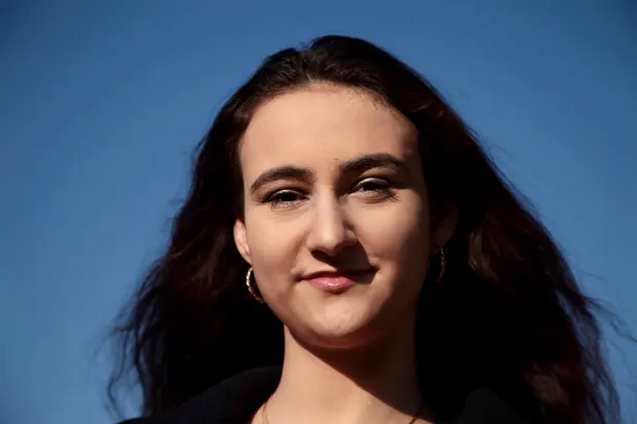
Jamie Margolin. Photograph: Bojana Novakovic 

When I first started, I was kind of under the illusion that Democrat equals climate action. I didn’t understand that just because I lived in a blue state, it didn’t mean my leaders would automatically listen to me.

Well, I stepped out of that reality really quickly. I joined a lawsuit suing the state of Washington for denying my generation our rights to life, liberty and the pursuit of happiness by continuing to worsen the climate crisis. But lawsuits take years. I couldn’t just wait around for the courts to do their thing.

It was a perfect storm – of absolute hell. There were the wildfires that blew over the city of Seattle, covering it in a thick layer of smog. It was really scary because the Pacific north-west is known for amazing air quality – it’s clean and crisp. Suddenly that was gone. I couldn’t breathe, to the extent that it hurt. And then there was Hurricane Maria, Hurricane Harvey, all of these climate disasters. And the last president pulled us out of the Paris climate accords. It was all of these things that came together.

This was before Fridays for Future, before Greta Thunberg started striking. Youth climate mobilisations were not in vogue. The Standing Rock movement, which was big at the time, was started by indigenous young people, so it’s not like young people weren’t mobilised. It just wasn’t something people paid attention to.

When I was 15 years old, I found other youth activists on social media, and we organised 25 youth climate marches, with the main one in Washington, DC. We also had a youth climate lobby day around the country. The movement has changed the culture. Things that were niche are now common knowledge. Greta and I are now legal adults. We have to understand there’s wisdom in each generation.

I identify as a lesbian. When you’re part of a marginalised community, you have to actively fight for justice for your community, while also fighting for climate justice. I’m in film school right now, and I’m not studying to make climate documentaries. The thing I’m super passionate about is LGBT representation in the media, and storytelling. People are often very surprised when I tell them my dream job is to write gay Disney princess movies.

I have dreams beyond just trying to stop the end of the world. No one wants to think about climate change. Everyone has other dreams. When I was a little child, I wasn’t like, “Some day I hope to narrowly escape planetary destruction.” That wasn’t my dream. But I’m doing this because I have to, for survival.

As told to Emily Holden.


Howey Ou, 18

One of China’s only youth climate activists to take part in Fridays for Future and Extinction Rebellion activities in recent years, before beginning to inspire a handful of others to take similar action.

Howey Ou: ‘Although we expect difficulty, we still dare to exist’ Photograph: Howey Ou

Ou Hongyi, also known as Howey Ou, demonstrates for climate action, even though demonstrations are forbidden in China without explicit approval of the authorities. In October, Howey sat alone in front of a hotel for more than 10 hours to protest about the lack of ambition in the hotel industry in China to reduce carbon emissions.

But while some youths in China have become energised by Ou’s activism, many attempts to take part in protests have been scuttled, including plans for protests on 19 March.

“Police interfered before the action happened,” Ou said. “Two activists I know of went to Chengdu, but their families were called and they warned them, or tried to scare them, to not take part. They were told to go to the Chengdu NGO management office to ‘provide information’ separately in the days before the action, then on Friday morning [19 March] they were taken to the police station for formal interrogation, required to sign documents, had their DNA samples taken, and were released that night. So they did not go out on the streets.

“The next week, when they returned home, the police met them at the train station like old friends, and they were visited again by police later in the week.”

“Other than these, I spoke with other students who organised at their schools but they now have no more intention to organise any Fridays for Future actions. They’ve been warned by their schools or had conflicts with their parents and stopped.”

She is currently in Europe, and recently went on hunger strike in protest at industrial policies there. She remains defiantly positive about the role that protest can play.

“This is not about how much suppression we received, but the bright part is that although we expect difficulty, we still dare to exist. We dare to tell the truth about the climate and ecological emergency, we dare to challenge the capitalist and consumeristic world. We refuse to be prisoners of injustice.”

As told to Michael Standaert.

Links

More Than One Way For Animals To Survive Climate Change

Phys.org

Credit: CC0 Public Domain

As climate change continues to trigger the rise in temperature, increase drier conditions and shift precipitation patterns, adapting to new conditions will be critical for the long-term survival of most species.

Researchers at the University of New Hampshire found that to live in hotter more desert-like surroundings, and exist without water, there is more than one genetic mechanism allowing animals to adapt.

This is important not only for their survival but may also provide important biomedical groundwork to develop gene therapies to treat human dehydration related illnesses, like kidney disease.

"To reference a familiar phrase, it tells us that there is more than one way to bake a cake," said Jocelyn Colella, a postdoctoral researcher in .

 "In other words, there are several ways for animals to adapt to desert conditions and discovering this genetic flexibility offers a silver lining to all that will increasingly be forced to acclimate to hotter, drier settings."

In their study, recently published in the Journal of Heredity, researchers compared the genetic mechanisms of three species of mice found in warm and dry areas; the cactus and canyon mice, both found predominately in desert habitats, and the North American deer mouse, which can also be found in colder, wetter climates in the northern United States.

The researchers hypothesized that similar in each species would be critical to survive in desert environments.

What they found was that each species used a different mechanism, meaning different genes and functions allowing for the same adaptation. One species adapted through mutational genetic changes over time and another used changes in gene expression which can occur more quickly and may be the more efficient evolutionary route.

"We were excited by the findings because if our research had only found one gene that was critical to adapting to warmer, drier conditions it would suggest that it would be challenging for other animals to respond to , but our work says there are multiple evolutionary options that enable desert survival," said Colella.

The findings could also provide foundational information for biomedical research in developing for human kidney disease.

"Because mice are physiologically similar to humans, this type of evolutionary work offers important first steps toward identifying and understanding genes that control complex traits like dehydration, which can compromise human kidneys causing lifelong, ," said Matt MacManes, associate professor of genome enabled biology.

Each year millions of people die of dehydration related illness around the world. Experts say even minor dehydration can compromise the kidneys causing lifelong issues.

Links

(AU Climate Council) Kicking The Gas Habit: How Gas Is Harming Our Health

Climate Council -  |  |  | 

Download Report
Decades of aggressive marketing to Australians has led to several misconceptions about gas.

In reality, gas is far from clean; it is a polluting fossil fuel that is already harming our health, wellbeing and, of course, the climate.

With more gas in the mix, this risk of harm only increases.

This report is about Australia’s gas industry, the threat it poses to our health, and the way out: of kicking the gas habit for a cleaner, healthier, and more prosperous future.

Key findings

1. Unconventional gas development, including fracking, is exposing Australian communities to unnecessary health risks.
  • Gas extraction and processing involves many hazardous substances including those that cause cancer, interfere with hormones, trigger asthma and contaminate the local environment through airborne pollution and wastewater.
  • Unconventional gas extraction, including coal seam gas and shale gas, with or without fracking, introduces further risks to human health.
  • There is growing overseas evidence of health impacts on communities living close to gas wells, including on reproductive and respiratory health.
  • Evidence of negative health impacts in Australia is emerging, and while independent research, free of any ties to the gas industry, from here is limited, this is consistent with overseas studies.
  • Continued expansion of gas across the country puts more Australians at risk of adverse health impacts.

 2. Burning gas at home can harm our children’s health.
  • Far from the “clean and natural” image that the gas industry markets, the use of gas for heating and cooking indoors carries many health risks.
  • Cooking with gas is estimated to be responsible for up to 12% of the burden of childhood asthma in Australia. A child living with gas cooking in the home faces a comparable risk of asthma to a child living with household cigarette smoke.
  • Better ventilation, including modern extraction fans over stoves, flues for gas heaters and other safety measures like ensuring appliances are properly serviced or opening windows can reduce – but not eliminate – these risks.

3. Children and poorer households are at highest risk from, and most likely to be harmed by, gas production and use.
  • Gas production and use poses additional risks for babies and children. At the production phase there is mounting evidence of associations between living close to unconventional gas extraction and impacts upon early-life development. Within homes, the indoor air pollution from gas used for heating, cooking and hot water disproportionately risks children’s health.
  • In addition, poorer households are more exposed to the harmful effects of gas appliances: they are less able to afford proper maintenance, and more likely to be renting or living in public housing where they rely on old, poorly maintained gas appliances.
4. Gas is a polluting fossil fuel. Governments can prevent health issues, and reduce harm, by helping households, and the country, get off gas.
  • While today’s gas may have once been a welcome upgrade from still dirtier fuels such as town gas, wood, coal or kerosene, gas appliances have fast become a poor and polluting cousin to more efficient and healthier electric alternatives.
  • Simple, practical policy steps from governments like ending mandatory gas connections for new residential developments – as has occurred in the ACT – and incentives that help people replace gas appliances with electrical alternatives, will speed up the switch already underway and promote better health outcomes.
5. Clean energy alternatives like solar and wind are the key to a prosperous, healthy future for all Australians.
  • Australia does not need to rely on gas for domestic energy security or for export revenue. As the sunniest and windiest inhabited continent on Earth, Australia is blessed with some of the world’s best renewable energy resources – enough to support both our own energy needs and a large renewable powered export industry.
  • Renewables, like solar and wind, backed by storage, like batteries and pumped hydro, now offer the cheapest sources of electricity for Australians.
  • For households, shifting from as to efficient electric appliances can save money over time and be good for our health, while reducing burdens on the healthcare system.
Links

08/05/2021

(The Guardian) Global Heating Pace Risks ‘Unstoppable’ Sea Level Rise As Antarctic Ice Sheet Melts

The Guardian

World faces ‘abrupt jump’ in pace of ice loss around 2060 unless emissions reduced to meet Paris agreement goals, study warns

An undated photo courtesy of Nasa showing the Thwaites glacier in western Antarctica. This tipping point for Antarctica could be triggered by a global temperature rise of 3C above the preindustrial era. Photograph: AFP/Getty Images

The current pace of global heating risks unleashing “rapid and unstoppable” sea level rise from the melting of Antarctica’s vast ice sheet, a new research paper has warned.

Unless planet-heating emissions are swiftly reduced to meet the goals of the Paris climate agreement, the world faces a situation where there is an “abrupt jump” in the pace of Antarctic ice loss around 2060, the study states, fueling sea level rise and placing coastal cities in greater peril.

Carbon offsets used by major airlines based on flawed system, warn experts Read more
“If the world warms up at a rate dictated by current policies we will see the Antarctic system start to get away from us around 2060,” said Robert DeConto, an expert in polar climate change at the University of Massachusetts and lead author of the study.

“Once you put enough heat into the climate system, you are going to lose those ice shelves, and once that is set in motion you can’t reverse it.”

DeConto added: “The oceans would have to cool back down before the ice sheet could heal, which would take a very long time. On a societal timescale it would essentially be a permanent change.”

This tipping point for Antarctica could be triggered by a global temperature rise of 3C (5.4F) above the preindustrial era, which many researchers say is feasible by 2100 under governments’ current policies.

The new research, published in Nature, finds that ice loss from Antarctica would be “irreversible on multi-century timescales” should this happen, helping raise the world’s oceans by 17cm to 21cm (6.69in to 8.27in) by the end of the century.

If the world was able to meet commitments made in the Paris deal, however, the research found Antarctica would contribute 6cm to 11cm of sea level rise by the end of the century, on a par with the current rate of ice loss.

Under the Paris agreement, governments have vowed to limit dangerous global heating below 2C hotter than preindustrial times, with efforts to keep the increase to 1.5C.

“It’s really the next few decades that will determine the sea level rise from Antarctica,” De Conto said. “These ice shelves won’t be able to just grow back.”

Scientists have increasingly issued warnings over the fate of the huge amount of ice stored in Antarctica which, if it all melted, would raise global sea levels by 57 metres, completely submerging the world’s coasts.

While this won’t happen in any sort of foreseeable timescale, even a small increase in ice loss would be felt in global sea levels. Of particular concern is the western section of the Antarctic ice sheet, with scientists currently exploring the rate of decline experienced by the Thwaites glacier, also known as the doomsday glacier.

In a worst-case scenario, the loss of the glacier, which is about the size of Britain and 1km deep, would raise sea levels by 65cm.

Antarctica is being winnowed away by a warming atmosphere as well as the heating oceans, with warming seawater entering crevasses and gnawing away at “pinning points” that hold enormous bodies of ice to submerged bedrock.

A rapid acceleration of melting could cause a cascading effect where huge amounts of ice and water flow uninterrupted into the Southern Ocean.

Once in motion, the impacts from such dramatic ice loss would unfurl over centuries. “In the century after 2100 it’s potentially catastrophic,” said DeConto. “If we did nothing at all to reduce emissions we could get 5 metres of sea level rise just from Antarctica by 2200, at which point you’d have to remap the world from space. It would be unimaginable.”

DeConto’s paper uses a mode that incorporates temperature increase and ice loss, as well as the dynamic processes at play in Antarctica that present challenges in predicting exactly what will happen as the world continues to heat up.

Another study published in Nature on Wednesday, by scientists at King’s College in London, finds the sea level will rise by 0.5cm every year by 2100 if the global temperature rise hits 3C. DeConto said the other paper is an “impressive piece of work” but differed from his paper, which factored in compounding impacts from the loss of ice shelves.

“Neither of these papers are the last word, this is ongoing work,” he said. “Basically we are going to have to cope with continued sea level rise. The real question is whether it will be at a manageable or unmanageable rate for us.”

Orrin Pilkey, a sea level rise expert at Duke University who was not involved in the research, said the paper is an “important attempt to relate the Paris agreement to reality”.

He added: “I would consider this a thoughtful and even frightening but credible contribution which should provide a very strong basis to get on with implementation of the Paris agreement.”

Andrea Dutton, an expert in sea level rise at University of Wisconsin–Madison, who was a co-author, said the paper “addresses an important and pressing question” of what the Paris climate targets will mean for future sea level rise.

“We are already struggling with the amount of sea level rise that has occurred over the past century,” said Dutton, who added that a major acceleration in Antarctic melting will “bring about coastal retreat and migration on a scale that we have never before witnessed”.

“We will not be able to just adapt because it is impossible to just engineer our way out of this,” she said. “The conclusion is a stark reminder of the urgency in making deep and sustained cuts in our greenhouse gas emissions.”

Links

Lethal Heating is a citizens' initiative