MIT Technology Review
- James Temple (Review Senior Editor)It looks increasingly clear that we'll at least sidestep the worst-case
scenarios.

|
Getty
|
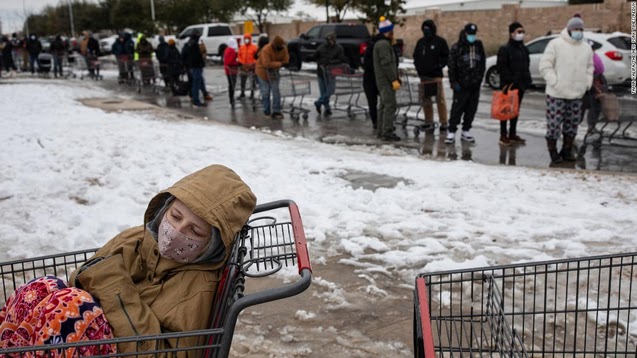
The deadly consequences of climate change only grew clearer this
year, as record-shattering
heat waves,
floods, and wildfires
killed
thousands
and strained the limits of our disaster responders.
In the closing days of 2021, scientists
warned
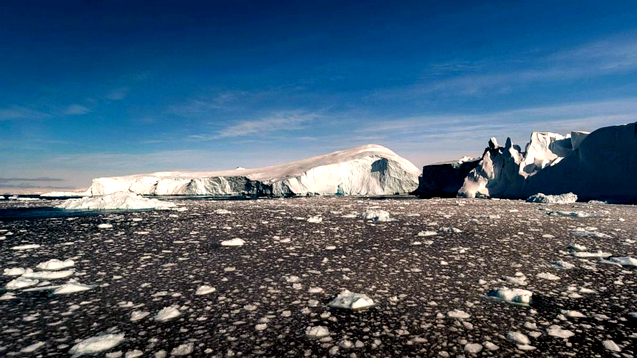
that the eastern ledge of a Florida-size glacier is about to
snap off of Antarctica and US legislators found they may have
flubbed their best chance
in a decade to enact sweeping climate policies.
But amid these stark signs, there were also indications that
momentum is beginning to build behind climate action. Indeed,
there’s good reason now to believe that the world could at least
sidestep the worst dangers of global warming.
Princeton energy researcher Jesse Jenkins accurately, and
colorfully, pinpointed the weird moment we’ve arrived at in
a recent tweet: “We’re no longer totally f$%@ed. But we’re also far from
totally unf$@%*ed!”
To be sure, the limited progress isn’t nearly enough. We’ve
taken far too long to begin making real changes. World events
and politics could still slow or reverse the trends. And we
can’t allow a tiny bit of progress in the face of a generational
challenge to ease the pressures for greater action.
But it’s worth highlighting and reflecting on the advances the
world has made, because it demonstrates that it can be done—and
could provide a template for achieving more.
Momentum
So what are the signs of progress amid the climate gloom?
The grimmest scenarios that many fretted about just a few years
ago look increasingly unlikely. That includes the 4 or 5 °C of
warming this century
that I
and
others
previously highlighted as a possibility.
The UN climate panel’s earlier high-end emissions scenario,
known as RCP 8.5, had found that global temperatures could rise
more than 5 °C by 2100. Those assumptions have been frequently
included in studies assessing the risks of climate change,
delivering the eye-catching top-end results often cited in the
press. (
Guilty.)
Some argue
that it wasn’t all that plausible in the first place. And the
scenario seems increasingly far-fetched given the rapid shift
away from coal-fired power plants, initially to lower-emitting
natural gas but increasingly toward carbon-free wind and solar.
Global emissions
may have already flattened
when taking into account recent revisions to land-use changes,
meaning updated tallies of the forests, farmlands, and
grasslands the world is gaining and losing.
Today, if you layer in all the climate policies already in place
around the world, we’re now on track for 2.7 °C of warming this
century as a middle estimate, according to
Climate Action Tracker. (Similarly, the UN’s
latest report
found that the planet is likely to warm between 2.1 and 3.5 °C
under its “intermediate” emissions scenario.)
If you assume that nations will meet their emissions pledges
under the Paris agreement, including the new commitments timed
around
the recent UN summit in Glasgow, the figure goes down to 2.4 °C. And if every country pulls
off its net-zero emissions targets by around the middle of the
century, it drops to 1.8 °C.
Given the increasingly strict climate policies and the
plummeting costs of solar and wind, we’re about to witness an
absolute
boom in renewables development. The International Energy Agency, well known for
underestimating the growth of renewables in the past,
now says
that global capacity will rise more than 60% by 2026. At that
point, solar, wind, hydroelectric dams, and other renewables
facilities will rival the worldwide capacity of fossil-fuel and
nuclear plants.
Sales of new electric vehicles, bumping along in the low single
digits for years, are also taking off. They’ll reach around 5.6
million this year, leaping more than 80% over 2020 figures, as
automakers release more models and governments enact
increasingly aggressive policies,
according to
BloombergNEF.
Electric vehicles climbed from 2.8% of new sales in the first
half of 2019 to 7% during the first half of 2021, with
particularly large gains in China and Europe. Zero-emissions
vehicles will make up nearly 30% of all new purchases by 2030,
the research firm projects.
Progress
Meanwhile, there are plenty of signs of technological progress.
Researchers and companies are figuring out ways to produce
carbon-free steel
and
cement. Plant-based meat alternatives are getting
tastier and more popular
faster than anyone expected. Businesses are building
increasingly large plants
to suck carbon dioxide out of the air. Venture capital
investments into climate and clean-tech startups have risen to
levels never before seen, totaling more than $30 billion through
the third quarter, according to PitchBook.
And here’s an important and counterintuitive finding: While
dangerous, extreme weather events are becoming increasingly
common or severe, the world seems to be getting a lot better at
keeping people safer from them. The average number of deaths
from natural disasters has generally dropped sharply in recent
decades.
“We have better technologies to predict storms, wildfires, and
floods; infrastructure to protect ourselves; and networks to
cooperate and recover when a disaster does strike,”
noted
Hannah Ritchie, head of research at Our World of Data, in an
recent Wired UK essay, citing
her own research.
This provides additional hope that with the right investments
into climate adaption measures like seawalls and community
cooling centers, we’ll be able to manage some of the increased
risks we’ll face. Rich nations that have emitted the most
greenhouse gases, however, must provide financial assistance to
help poor countries bolster their defenses.
A realistic baseline
Some folks have seized on these improving signs to argue that
climate change isn’t going to be all that bad. That’s nonsense.
The world is, by any measure, still dramatically underreacting
to the rising risks.
A planet that’s nearly
3 °C hotter
would be a far more dangerous and unpredictable place. Those
temperatures threaten to wipe out coral reefs, sink major parts
of our coastal cities and low-lying islands, and subject
millions of people to far greater risks of extreme heat waves,
droughts, famines, and floods.
In addition, we could still be underestimating how sensitive the
atmosphere is to greenhouse gases, as well as the spiraling
impacts of climate tipping points and the dangers that these
higher temperatures bring. And there’s no guarantee that nations
won’t backtrack on their policies and commitments amid economic
shocks, conflicts, and other unpredictable events.
But to be sure, a 3 °C warmer world is a much more livable place
than a 5 °C warmer one, and a far more promising starting line
for getting to 2 °C.
“The point isn’t to say that that’s a good outcome,” says Zeke
Hausfather, director of climate and energy at the Breakthrough
Institute. “The point is, that’s the baseline we’re working with
now. And it’s easier to imagine much more rapid declines from
there.”
In some ways, it’s especially notable that the world has made
this much progress without sweeping climate policies in many
nations, and despite all the poisoned, partisan politics
surrounding climate change.
The shifts to natural gas, then solar and wind, and increasingly
EVs were all aided by government support, including loans,
subsidies, and other policies
that pushed the underlying technologies into the marketplace.
And the business-driven scale-up process rapidly cut the costs
of those technologies, helping them become ever more attractive.
Increasingly competitive and business-friendly clean
alternatives promise to
simplify the politics
of further climate action. If more and more nations enact
increasingly aggressive policies—carbon taxes, clean-energy
standards, or far more funding for research and demonstration
projects—we’ll drive down emissions ever faster.
The world isn’t ending
There are other reasons to take note of the modest progress we
are making.
Progressive US politicians now casually repeat the claim that
climate change is an “existential threat,” suggesting it will
wipe out all of humanity. After a 2018 UN report noted that
global warming could reach 1.5 °C between 2030 and 2052, climate
activists and media outlets contorted that finding into versions
of “We have 12 years to save the planet!”
If so, it would now be down to nine. But 1.5 °C isn’t some
scientifically determined threshold of societal collapse. Though
the world will miss that goal, it remains crucial to fight for
every additional half-degree of warming beyond it, each of which
brings steadily higher risks.
Meanwhile, climate research does not suggest that the 3 °C of
warming we’re now roughly on target for would transform the
entire planet into some uninhabitable hellscape.
So no, climate change is not an existential threat.
But that sentiment has certainly taken hold. Earlier this year,
researchers at the University of Bath surveyed 10,000 young
people, aged 16 to 25, in 10 countries to assess the levels of
“climate anxiety.” More than half, 56%,
agreed
with the statement “Humanity is doomed.”
It’s standard stuff for politicians and activists to overstate
dangers and demands, in the hopes of pushing toward some
compromise solution. And the growing climate fears and the
increasingly influential climate activist movement have
undoubtedly put greater pressures on politicians and business to
take these issues more seriously, helping to drive some the
policy changes we’ve seen. They deserve real credit for that.
But insisting that the world is at the edge of collapse, when
it’s not, is a terrible message for young people and carries
some real risks as well. It clearly undermines credibility. It
could lead some people to simply lose hope. And it could compel
others to demand extreme and often counterproductive responses.
“It’s time to stop telling our children that they’re going to
die from climate change,” Ritchie
wrote. “It’s not only cruel, it might actually make it more likely
to come true.”
When people don’t see a “
reasonable path forward,” they begin to rationalize unreasonable ones.
Among those I hear with surprising frequency: We must shut down
all fossil-fuel infrastructure, and end oil and gas extraction
now. We must fix everything with today’s technologies and reject
the “predatory delay” tactic of continued investment in
clean-energy innovation. We have to halt consumption,
construction, and economic development. Or even: We must smash
the global capitalist system that caused all the problems!
Balancing the trade-offs
None of that strikes me as somehow more politically feasible
than fixing our energy systems.
We do have to shut down fossil-fuel plants, replace vehicles,
and switch to new methods of producing food, cement, steel, and
other goods—and relatively quickly. But we have to do it by
developing alternatives that don’t pump greenhouse gases into
the atmosphere.
If we adjust the goalpost back to 2 °C, which is regrettable but
only realistic at this point, we have several decades yet to
carry out the transformation required. Under a modest emissions
scenario, the world won’t exceed that threshold until around
2052 as a middle estimate, Hausfather’s
analysis of latest UN climate report suggests.
What we can’t do is just shut down the infrastructure that
drives the global economy—not without massive damage to jobs,
food, health care, and safety. We’d sacrifice the economic
resources we need to develop a more sustainable economy, as well
as to make our communities more resilient to the coming climate
dangers.
Those in rich countries, especially, have no
business telling poor countries that they must halt development,
perpetually locking billions of people in economic and energy
poverty.
If we’re worried about climate change because of the suffering it will
impose on people, then we have to care about the human trade-offs entailed
in how we address it as well. Weighting those properly requires dealing
honestly what with the science does and doesn’t say, recognizing the
limited progress we are making, and not resorting to hyperbole simply
because we think it will spur the actions we hope to see.
It’s a cruel and dangerous fantasy that we’ll ever halt climate change by
counting on or forcing people to live impoverished lives, forgoing food,
medicine, heating, or air conditioning in an increasingly erratic and
menacing world.
We need more activist pressure and more aggressive climate policies to
confront the threats of climate change. But ultimately, we must invent and
build our way out of the problem. And the rare bright spot of good news is
that we’re beginning to see evidence that we can.
Links - Recent articles by James Temple