Sunday, February 09, 2025

GLOBAL: Climate Change Social Overview - Lethal Heating Editor BDA


This Global Climate Change Social Overview of  is part of a series examining the impact of Lethal Heating in key areas, including:

Climate change is not just an environmental crisis.    

It is a social crisis affecting communities, economies, and cultures worldwide. 

It exacerbates existing inequalities, disrupts livelihoods, and reshapes how societies function.

Here’s a broad social overview of its impact:

1. Climate Inequality: Who Suffers the Most?

  • Vulnerable Communities: Developing nations, low-income families, and indigenous groups bear the brunt of climate disasters despite contributing the least to greenhouse gas emissions.
  • Women & Children: Women, especially in rural areas, face greater challenges as they are often responsible for securing food and water, resources increasingly threatened by climate change.
  • Climate Refugees: Rising sea levels and extreme weather events displace millions, creating a growing refugee crisis with social and political consequences.

2. Public Perception & Climate Denial

  • Generational Divide: Younger generations, particularly Gen Z, are more climate-conscious, while older groups may be more sceptical due to political or economic interests.
  • Misinformation: Fossil fuel interests and some political groups fuel climate scepticism through misleading narratives, delaying action.
  • Eco-Anxiety: The growing fear of environmental catastrophe is affecting mental health, particularly among youth.

3. Changing Lifestyles & Consumer Behaviour

  • Rise of Sustainability: More people are embracing plant-based diets, reducing waste, and advocating for green policies.
  • Corporate Greenwashing: Some companies exploit environmental concerns with misleading eco-friendly branding, often without real impact.
  • Activism & Movements: Groups like Fridays for Future and Extinction Rebellion are pushing for systemic change through protests and legal action.

4. Social & Political Conflict

  • Resource Wars: Scarcity of water, food, and arable land is sparking tensions between nations and communities.
  • Policy Battles: Climate policies are a divisive issue, with some governments aggressively pursuing green energy while others resist change due to economic interests.
  • Justice Movements: Calls for climate justice demand that polluters (mainly wealthy nations and corporations) be held accountable for damages.

5. The Future: Hope or Collapse?

  • Youth-Led Change: As younger generations enter politics and business, there is hope for stronger climate action.
  • Technological Innovation: Advances in renewable energy, carbon capture, and sustainable agriculture could mitigate some effects.
  • Uncertain Outcomes: Without urgent action, social instability, mass migrations, and worsening inequalities could define the 21st century.

Final Thought

Climate change is not just about science and numbers—it’s about people. The choices we make today will shape the kind of world future generations inherit. Will society rise to the challenge, or will division and denial lead to greater catastrophe?

Links

The Guardian: Climate change target of 2C is ‘dead’, says renowned climate scientist

Environment editor

Prof James Hansen says pace of global heating has been significantly underestimated, though other scientists disagree
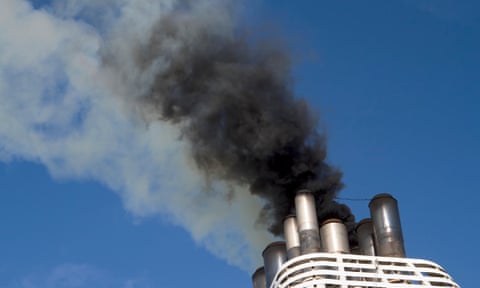
A ship’s funnel emitting black smoke
The analysis concluded that recent cuts in sun-blocking shipping pollution have raised temperatures more than thought. Photograph: scphoto/Alamy


The pace of global heating has been significantly underestimated, according to renowned climate scientist Prof James Hansen, who said the international 2C target is “dead”.

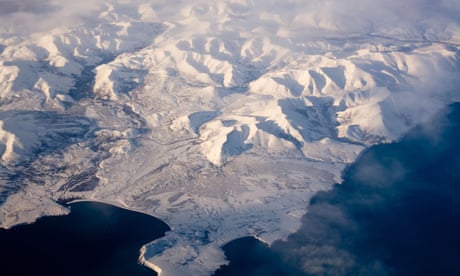
Aerial view of frozen land in the north pole
Temperatures at north pole 20C above
average and beyond ice melting point.
Read more
A new analysis by Hansen and colleagues concludes that both the impact of recent cuts in sun-blocking shipping pollution, which has raised temperatures, and the sensitivity of the climate to increasing fossil fuels emissions are greater than thought.

The group’s results are at the high end of estimates from mainstream climate science but cannot be ruled out, independent experts said.

If correct, they mean even worse extreme weather will come sooner and there is a greater risk of passing global tipping points, such as the collapse of the critical Atlantic ocean currents.

Hansen, at Columbia University in the US, sounded the alarm to the general public about climate breakdown in testimony he gave to a UN congressional committee in 1988.

“The Intergovernmental Panel on Climate Change (IPPC) defined a scenario which gives a 50% chance to keep warming under 2C – that scenario is now impossible,” he said. “The 2C target is dead, because the global energy use is rising, and it will continue to rise.”

The new analysis said global heating is likely to reach 2C by 2045, unless solar geoengineering is deployed.

The world’s nations pledged in Paris in 2015 to keep global temperature rise below 2C above preindustrial levels and to pursue efforts to limit it to 1.5C. The climate crisis has already supercharged extreme weather across the world with just 1.3C of heating on average in recent years destroying lives and livelihoods – 2C would be far worse.

Prof Jeffrey Sachs, also at Columbia University, said: “A shocking rise of warming has been exposed by, ironically, a reduction of pollutants, but we now have a new baseline and trajectory for where we are.”

Climate scientist Dr Zeke Hausfather, who was not part of the study, said it was a useful contribution. “It’s important to emphasise that both of these issues – [pollution cuts] and climate sensitivity – are areas of deep scientific uncertainty,” he said.

“While Hansen et al are on the high end of available estimates, we cannot say with any confidence that they are wrong, rather that they just represent something closer to a worst-case outcome.”

In the new study, published in the journal Environment: Science and Policy for Sustainable Development, Hansen’s team said: “Failure to be realistic in climate assessment and failure to call out the fecklessness of current policies to stem global warming is not helpful to young people.”

They said the IPCC analysis was heavily reliant on computer models and that the complementary approach they took of making more use of observations and climate analogues from the distant past was needed.

The world has seen extraordinary temperatures over the last two years. The primary cause is the relentless rise in CO2 emissions from the burning of fossil fuels. The peak of the El Niño climate cycle in 2024 added an extra temperature boost.

However, these two factors do not fully explain the extreme temperatures, or their persistence after the El Niño ended in mid-2024. This left puzzled climate scientists asking if there was a worrying new factor not previously accounted for, or if the extra heat was an unusual but temporary natural variation.

A key focus has been on emissions from shipping. For decades, the sulphate particles produced by ships burning fuel have blocked some sunlight from reaching the Earth’s surface, suppressing temperatures.

But in 2020, new anti-pollution regulations came into force, sharply cutting the level of the aerosol particles. This led to more heat from the sun reaching the surface, which scientists measure as watts per square metre (W/m2).

Hansen’s team’s estimate of the impact of this – 0.5W/m2 – is significantly higher than five other recent studies, which ranged from 0.07 to 0.15 W/m2, but would explain the anomalous heat. Hansen’s team used a top-down approach, looking at the change in the reflectivity over key parts of the ocean and ascribing that to the reductions in shipping emissions. The other studies used bottom-up approaches to estimate the increase in heat.

“Both approaches are useful and often complementary,” said Dr Gavin Schmidt, director of Nasa’s Goddard Institute for Space Studies. “But I think in this case, Hansen’s approach is too simple and doesn’t factor in changes in Chinese emissions, or internal variability.”

The new study also argues that the planet’s climate sensitivity to rising carbon emissions has been underestimated, partly because of the underestimation of the impact of reduced shipping emissions.

Climate sensitivity is defined by scientists as the temperature rise that would result from a doubling of CO2 levels in the atmosphere. Again, Hansen’s team have used a different method to most scientists and come up with a higher estimate.

The IPCC, a collaboration of the world’s climate scientists, found that the computer models that best reproduce past temperatures have a climate sensitivity of 2.5C to 4C.

Hansen’s team took a simpler approach, calculating the potential range in temperature rises for a doubling of CO2 and then using data on how much heat the Earth has trapped to estimate the most likely climate sensitivity. Their estimate is 4.5C. Cloud formation, which is affected by global heating and aerosol pollution, is a key source of the uncertainties.

Anomalously high temperatures have continued in January 2025, which set a new record for the month and confounded expectations that temperatures would drop with the current La Niña, the cooler part of the El Niño cycle. “This unexpected record may presage higher temperatures this year than many of us thought,” said Hausfather.

Hansen’s group also argues that the accelerated global heating they predict will increase ice melting in the Arctic.

“As a result, shutdown of the Atlantic Meridional Overturning Circulation (Amoc) is likely within the next 20-30 years, unless actions are taken to reduce global warming – in contradiction to conclusions of IPCC.

“If Amoc is allowed to shut down, it will lock in major problems including sea level rise of several metres – thus, we describe Amoc shutdown as the ‘point of no return’.”

The central estimate of another recent study on the timing of an Amoc collapse was 2050.

However, Hansen said the point of no return could be avoided, based on the growing conviction of young people that they should follow the science. He called for a carbon fee and dividend policy, where all fossil fuels are taxed and the revenue returned to the public.

“The basic problem is that the waste products of fossil fuels are still dumped in the air free of charge,” he said. He also backed the rapid development of nuclear power.

Hansen also supported research on cooling the Earth using controversial geoengineering techniques to block sunlight, which he prefers to call “purposeful global cooling”.

He said: “We do not recommend implementing climate interventions, but we suggest that young people not be prohibited from having knowledge of the potential and limitations of purposeful global cooling in their toolbox.”

Political change is needed to achieve all these measures, Hansen said: “Special interests have assumed far too much power in our political systems. In democratic countries the power should be with the voter, not with the people who have the money. That requires fixing some of our democracies, including the US.”

Links

Friday, February 07, 2025

Is This the Year Global Warming Stopped?

Need to Know by Stephen Leahy

ADAM ZYGLIS / BUFFALO NEWS BUFFALONEWS.COM
 
Be ready for this: 
Claims that global warming has stopped because 2025 wasn’t as hot as 2024 or 2023. So stop worrying, climate change is over.

Wrong.

It is likely that 2025 will not be as hot as recent years.  recent years. The current cool phase (La Nina) of the ENSO cycle will mean the overall global temperature will be somewhat cooler on average: As in one or two-tenths of a degree cooler than in recent years. So 1.4C or 1.35C. 

A slightly cooler year in 2025 will still bring all kinds of extreme weather. (See America's Whipsaw Weather Future. How extreme weather is becoming extremely extreme.)

One important Need-to-Know is that the amount of heat trapped by our ever-accumulating carbon pollution will reach record highs. Over 90% of that heat will go into heating up the oceans, which are heating up 4 times faster than in the late 1980s.

Need-to-Know: A gobsmacking level of heat is building up in our oceans

The enormous amount of heat from the 41.6 billion metric tons of carbon pollution we added in 2024 will still be present in 2025. So will the heat from the trillion-odd tons of carbon that has been emitted over the past 150 years.

And we’ll add another 40 or 42 billion tons of heat-trapping carbon pollution in 2025.

All that heat is mostly hiding in the oceans, but it won’t stay there.


One zetajoule is equivalent to 10 times the world's electricity generation in 2020.

So, while 2025 should be a bit cooler overall, in two or three years, or, if we’re lucky, 5 years from today, global temperatures will soar again. We’ll likely push close to 2C, bringing destructive levels of extreme weather no human has ever witnessed.

That said, if 2025 turns out to be hotter than 2024, it means some unknown climate element has kicked in. That could push us to 2C and higher far sooner than expected.

Need-to-Know: The physics of global warming is relentless

Global warming doesn’t care if we ignore it or pretend that it’s not happening. Or that we’re too busy with some important crisis or conflict to do anything about it.

Global warming doesn’t bargain or forgive.

Global warming is relentless.

We need to remember this.

Links

Sunday, January 05, 2025

Australia 2024: Climate Change Impact - Lethal Heating Editor BDA

Climate change is a fundamental threat to life on Earth.

Here is its environmental, social, and economic impact on Australia:

Number of days each year where the Australian area-averaged daily mean temperature for each month is extreme. Extreme days are defined as those where daily mean temperatures are the warmest 1% of days for each month, calculated for the period 1910–2023. ©  Bureau of Meteorology
  • Extreme heat events: There has been an increase in the frequency and intensity of heatwaves since 1970.
    In 2019, there were 40 days with extremely high nationally-averaged mean temperatures, about 3 times more than any year prior to 2000. 
  • Changing rainfall patterns: Southern Australia is experiencing decreasing rainfall during cooler months, while northern Australia has seen increased rainfall since the 1970s.
    The intensity of heavy rainfall events has increased by 10% or more since 1979.
  • April to October rainfall deciles for the 30 years from 1994 to 2023. A decile map shows where rainfall is above average, average, or below average for this period compared to all years from 1900 (when reliable national rainfall records began) to 1993. Areas across northern and central Australia that receive less than 40% of their annual rainfall from April to October are faded. ©  Bureau of Meteorology

  • Longer fire seasons: The number and length of periods of dangerous fire weather have increased since the 1950s, especially in southern Australia.
    The 2024 State of the Climate Report indicates a continued increase in the number of dangerous fire weather days and a longer fire season for southern and eastern Australia.
There has been an increase in the number of days with dangerous weather conditions for bushfires. The map shows the change in the number of days per year (July to June) that the FFDI exceeds its 90th percentile of conditions observed from 1950–2024, between 2 periods: July 1950 to June 1987 and July 1987 to June 2024. The FFDI is an indicator of dangerous fire weather conditions for a given location. ©  Bureau of Meteorology
  • Rising sea levels and marine impacts: Sea levels around Australia continue to rise, increasing the risk of inundation and threatening coastal communities and infrastructure.
    This trend is projected to continue, with more frequent coastal floods expected. Oceans around Australia have warmed by around 1°C since 1910.
    The 2024 report warns of increased and longer-lasting marine heatwaves, affecting marine environments such as kelp forests and increasing the likelihood of more frequent and severe bleaching events in coral reefs, including the Great Barrier Reef.

The rate of offshore sea level rise (in cm per decade) around Australia measured using satellite altimetry from 1993 to 2023, and onshore sea level rise (coastal points) from the multi-decadal tide gauge dataset from the Australian Baseline Sea Level Monitoring Project. The colour scale applies to both the altimetry and tide gauge observations. ©  Bureau of Meteorology and NOAA


  • Economic impacts: Climate change is already affecting Australia's economy, with severe droughts reducing the country's gross domestic product by about 1%. By 2061, climate change impacts on agricultural conditions could lead to annual average production losses between $750 million and $1.5 billion.
  • Biodiversity threats: One in six species is at risk of extinction due to climate change, with Australia currently holding the title for the highest rate of mammal extinction in the world.
  • Coral Bleaching: Rising ocean temperatures and acidity are causing more frequent and severe coral bleaching events, with the Great Barrier Reef experiencing five mass bleaching events in just eight years.
  • Health Concerns: Heatwaves, which are becoming more frequent and intense, pose a significant health risk, particularly to vulnerable populations such as the elderly and infants. 
    Bushfires are also impacting air quality, while floods can contaminate drinking water supplies.
Six in 10 young Australians worry about climate change,with many experiencing extreme weather events first hand, according to a Mission Australia Youth Survey.

  • Displacement and Property Damage: Rising sea levels and more frequent extreme weather events are causing coastal erosion and flooding, potentially displacing communities and damaging homes. 
    By 2050, up to 2.6 million homes in Australia could be at moderate or high risk from climate change-related extreme weather.
  • Disproportionate Effects on Low-Income Households: Low-income earners are more likely to live in areas vulnerable to climate change impacts and have less capacity to adapt or relocate. 
    They also spend a higher proportion of their income on energy and water, making them more susceptible to price increases in these essential services.
  • Labor Productivity Decline: Increased frequency and intensity of heatwaves are projected to result in significant work losses. By 2061, between 700,000 and 2.7 million more days of work could be lost annually due to heat-related issues
  • Infrastructure Costs: More severe weather events and rising sea levels will increase the risk of natural disasters, leading to higher costs for infrastructure damage and repair.
  • Property and Insurance Impacts: Climate change-related events are affecting property values and increasing insurance premiums, particularly in high-risk areas.
To address these challenges, Australia needs to implement comprehensive strategies for climate change mitigation and adaptation, ensuring that vulnerable communities are protected and the transition to a low-carbon economy is equitable and just.

Links

Lethal Heating is a citizens' initiative